Wleń Palace: A Historic Residence in Poland
Site at a Glance
- Popularity
- Medium
- Country
- Poland
- Primary era
- Early Modern
- Eras represented
- Early Modern, Modern
- Civilizations
- German, Habsburg, Habsburg Austria, Holy Roman Empire, Kingdom of Bohemia, Kingdom of Prussia
- Site type
- Domestic
- Remains
- Elite Residence
On this page9 sections
History
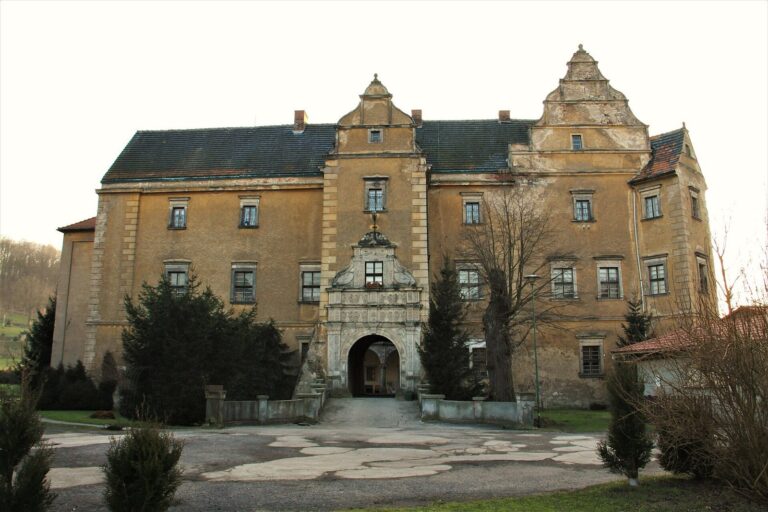
Wleń Palace is a sixteenth-century residence on the right bank of the Bóbr River in Poland. The Czedlicz family built it; they had ruled in the area since medieval times.
Seventeenth-century ownership
In the seventeenth century, the palace belonged to Hannos, a war commissioner, a military official with administrative duties during wartime. Swedish forces repeatedly damaged the building during this period.
Held d’Arlé and Rohrbeck
In 1741, Wawrzyniec Jakub Held d’Arlé, a captain in the Prussian royal cavalry, took over the estate. He remodelled the palace in French Baroque, a formal, richly ornamented style, and established a garden.
Wilhelm Rohrbeck acquired the estate in 1894 and directed a major renovation. A member of a Berlin society devoted to the study and cultivation of trees, he also substantially redesigned the park. Rohrbeck died in 1914, leaving his daughter Dorothea as his sole heir.
Violence, reuse, and repair
In 1921, Dorothea Rohrbeck and her 12-year-old cousin Ursula were shot and killed. After the Second World War, Soviet soldiers looted the palace, which was then divided into apartments for families arriving from the eastern borderlands.
In the 1970s, the building became a holiday and recreation centre. After it deteriorated and faced demolition, the director of the Polish Post’s Transport Department began repairs that saved it. The palace entered Poland’s register of historic monuments in 1981. In 2004, an entrepreneur from Gdańsk bought the property, which now houses a guesthouse.
Remains
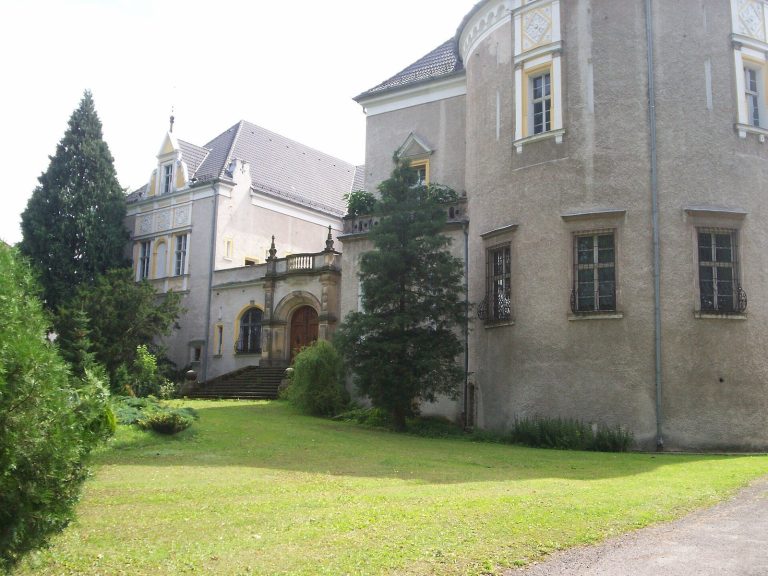
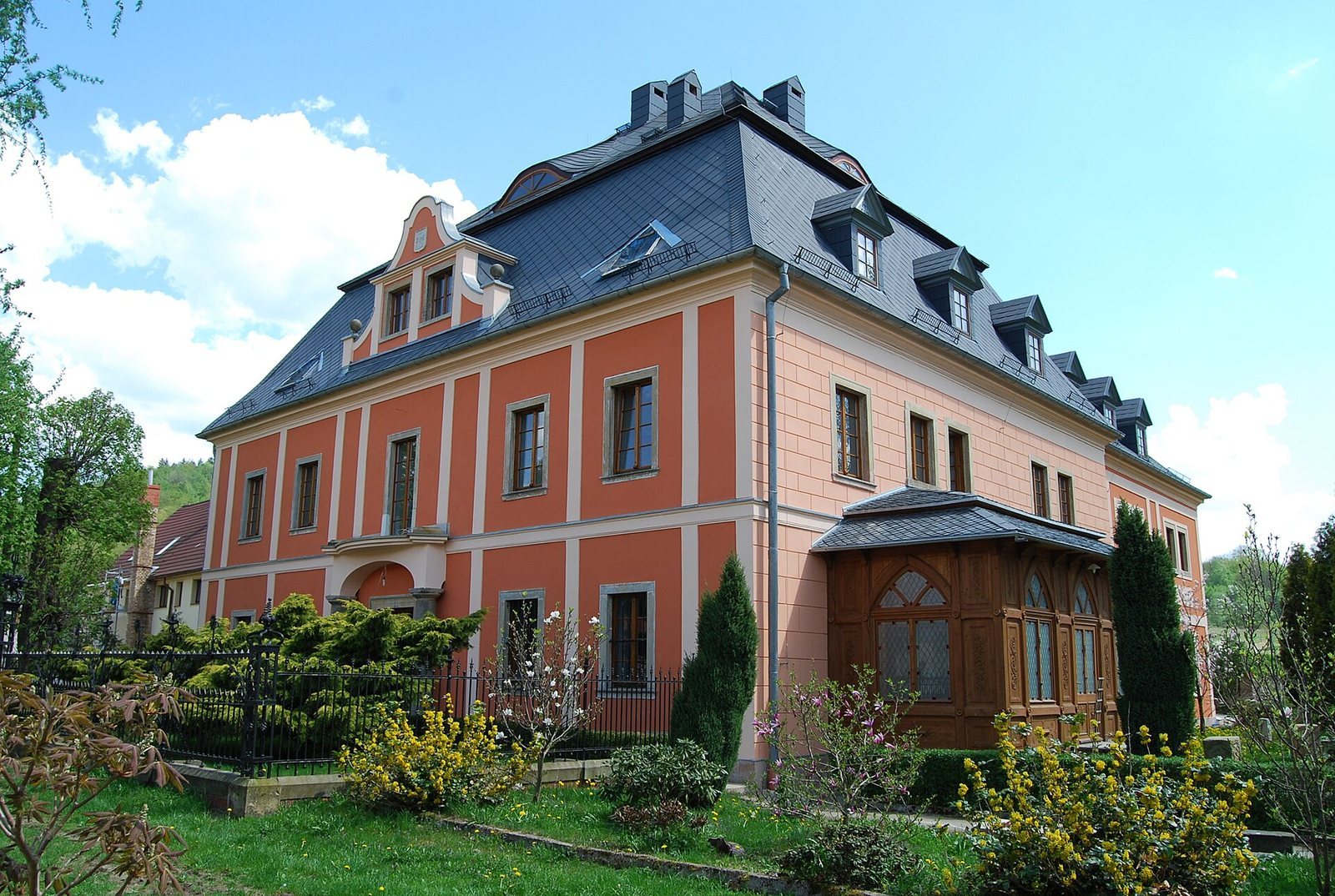
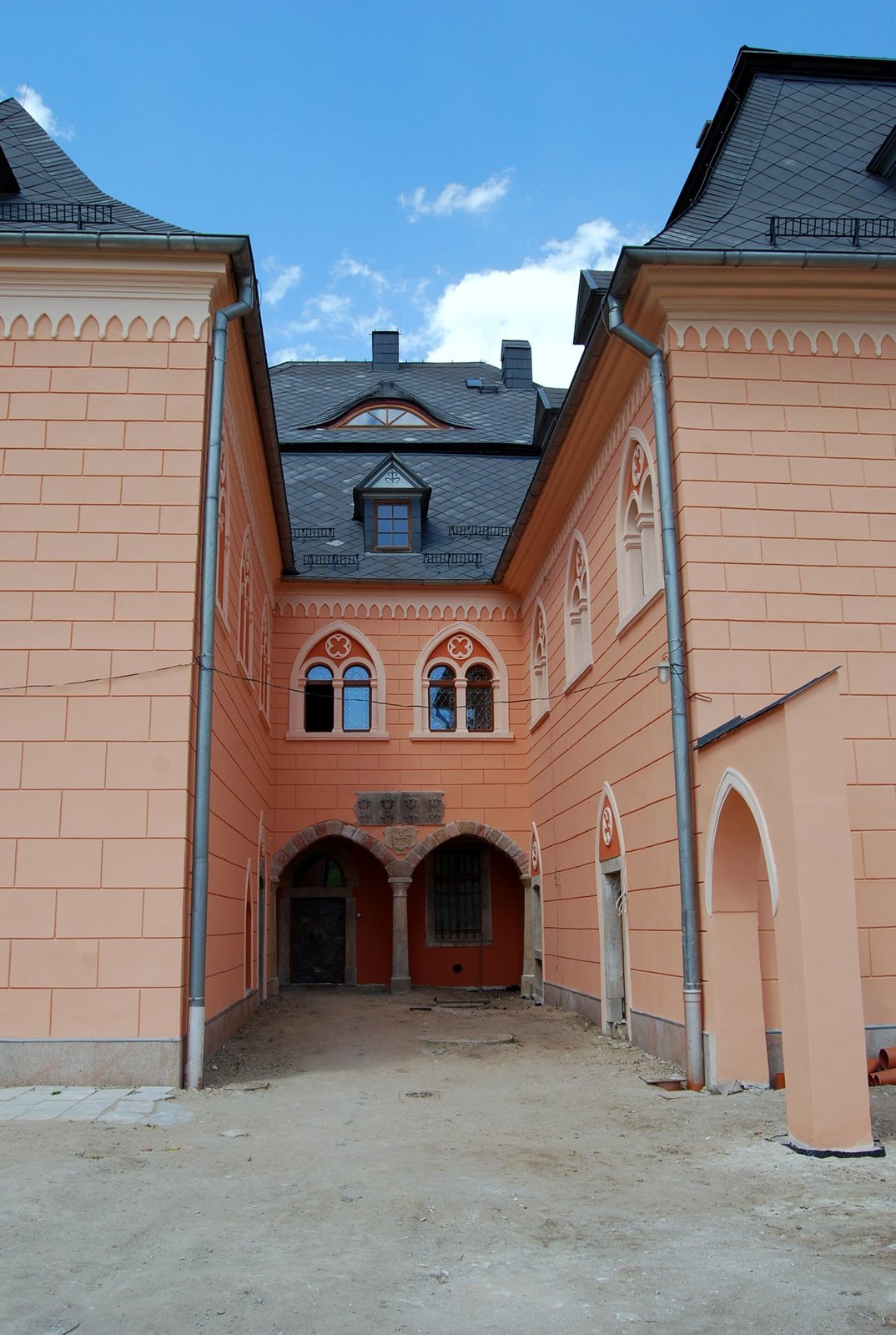
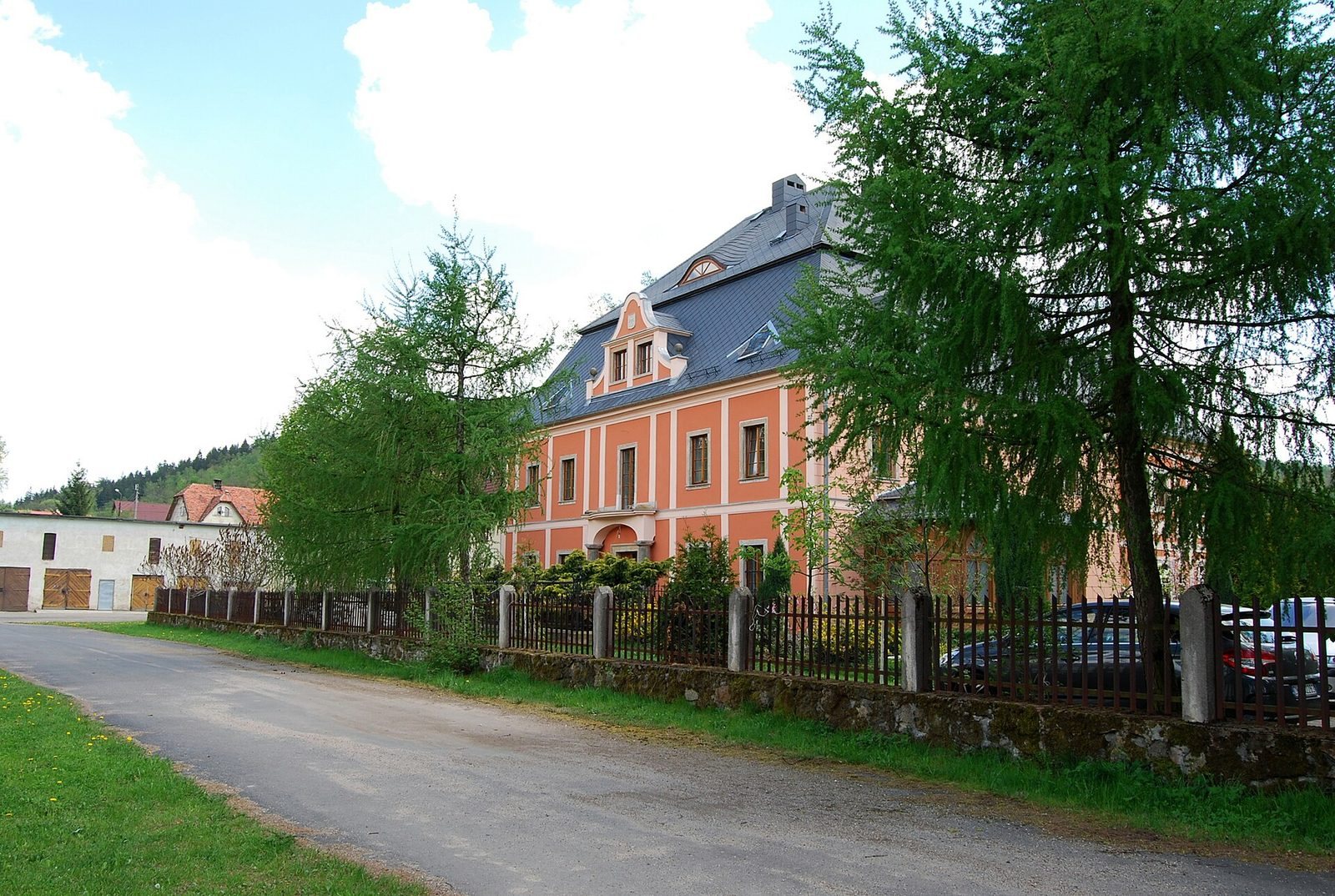
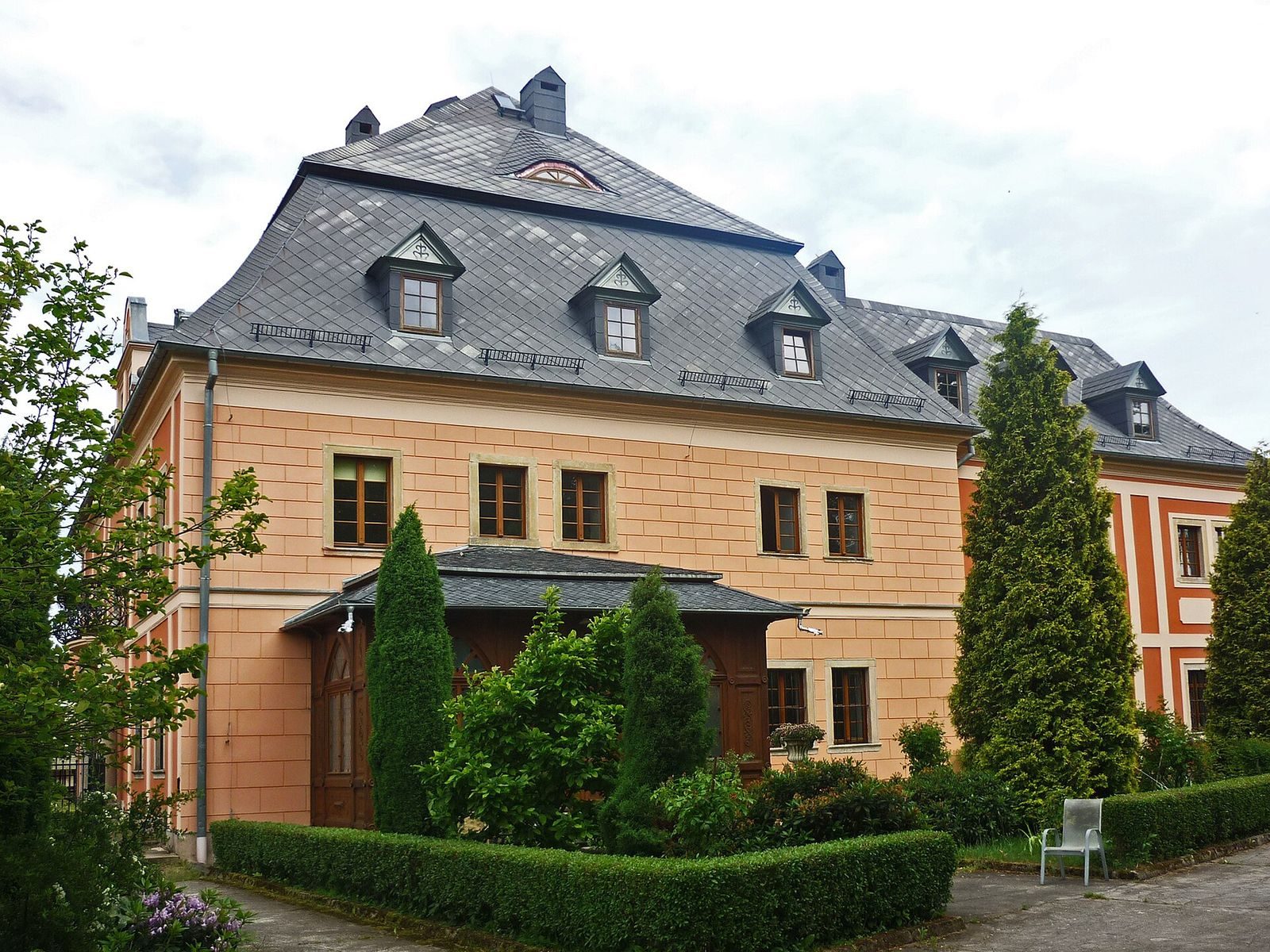
The palace is a two-storey building with a U-shaped plan around a narrow, rectangular courtyard. Its central block has a roof that slopes on all sides, with dormers, windows projecting from the roof, while two lower wings extend from it.
Palace and courtyard
Plan and exterior
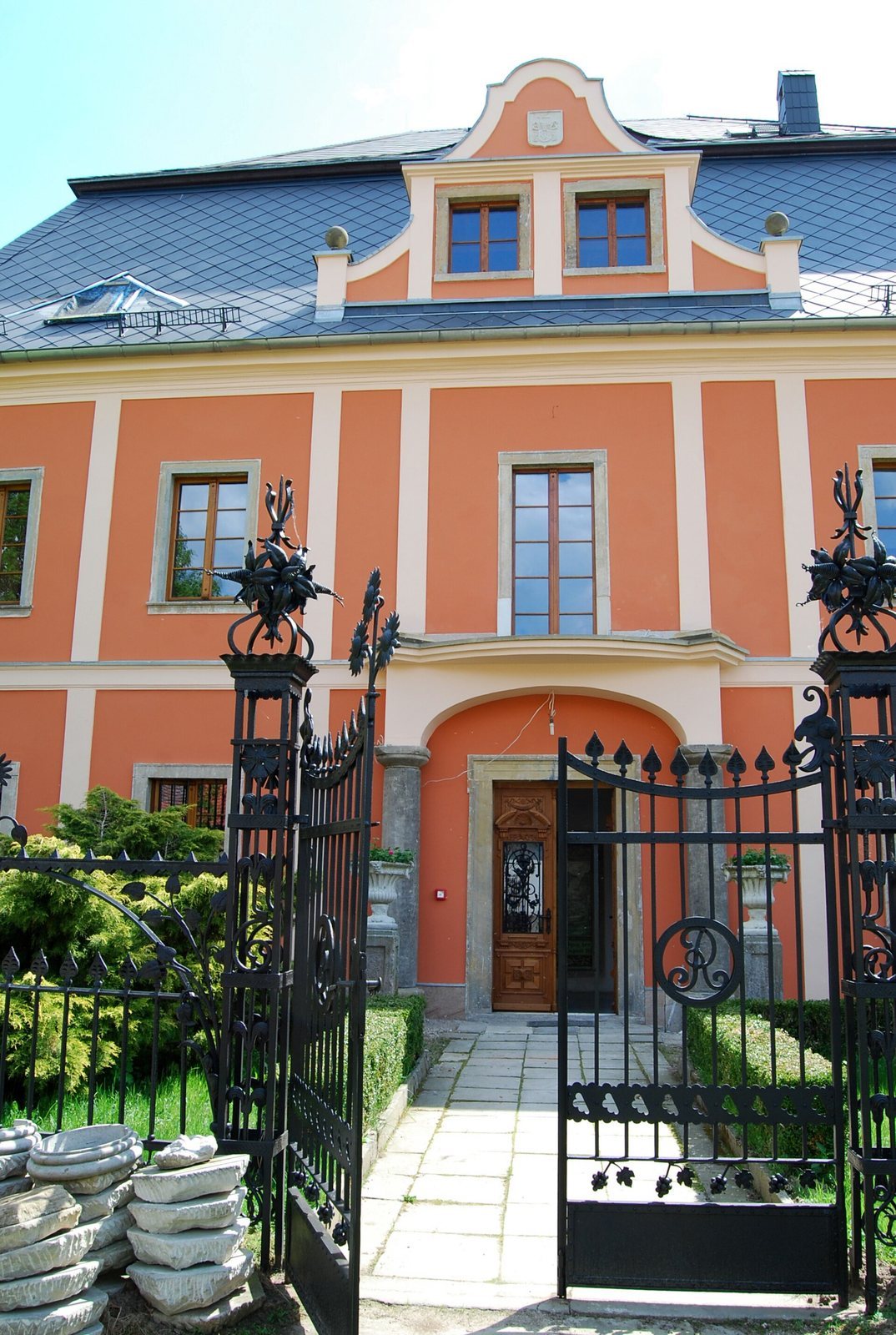
Rohrbeck’s renovation simplified the façade, covered the roof with slate, and enclosed the front area with wrought-iron fencing. The gable of the entrance dormer bears a Pomian coat of arms, a Polish family emblem identified with the current owner, Sławomir Osiecki.
Heraldic decoration
Above the courtyard arcades, rows of arches supported by columns, two recessed panels display eight coats of arms associated with the owners’ families. The first row shows Zedlitz, Gersdorf, Bindemann, and Kelbichen; the second shows Zedlitz, (Schaff)Gotsch, Seidlitz, and Rätzke. The panels associate the arms with the married couple Baltazar Czedlicz of Kleppelsdorf and Urszula Czedlicz of Komarna, and bear the date 1608.
Below the panels, above an arcade column, an ornamental frame called a cartouche displays the arms of Wawrzyniec Jakub Held d’Arlé and his family. Its inscription gives their period of ownership as 1741–1841.
Garden and park
Held d’Arlé’s garden was enclosed by a stone wall. Rohrbeck later reshaped the palace park, where rare trees and shrubs were planted.