Anta do Monte Abraão: A Neolithic Dolmen in Portugal
Site at a Glance
- Popularity
- Low
- Country
- Portugal
- Primary era
- Stone Age
- Eras represented
- Stone Age
- Civilizations
- Unclassified
- Site type
- Burial
- Remains
- Tomb
On this page6 sections
History
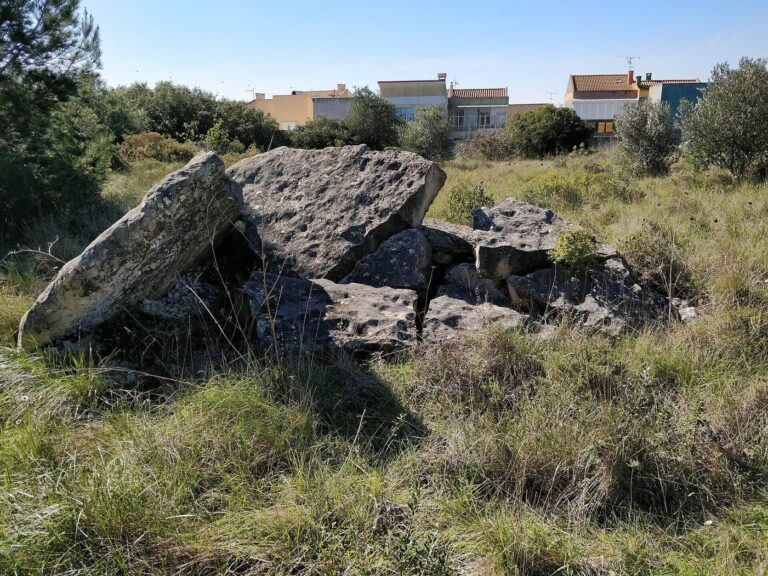
Anta do Monte Abraão is a megalithic tomb, or dolmen, in Belas, Portugal. In Portuguese, anta means a dolmen or one of its stones. The monument dates broadly to the middle or late Neolithic, or New Stone Age, around 4000–2500 BCE, a period marked by the spread of farming and settled communities.
Neolithic burial use
Excavations suggest that the tomb may have held the remains of about 80 people. Finds point to use from the late fourth to the middle of the third millennium BCE.
Discovery and later recognition
Portuguese geologist Carlos Ribeiro, a pioneer of prehistoric archaeology in Portugal, identified the dolmen in 1876 and excavated it through 1878. He published his findings in 1880. Apart from a later visit by archaeologist Vergílio Correia Pinto da Fonseca, the site attracted little further interest until the 1960s.
Anta do Monte Abraão, nearby Anta da Estria, and Anta da Pedra dos Mouros, also known as Anta do Senhor da Serra, are collectively called the Antas de Belas. In 1910, the three dolmens were protected as a National Monument under that group name. During the 1960s, archaeologists warned that urban growth and highway construction threatened the monuments; a nearby quarry was also identified as a danger.
Remains
Burial chamber and passage
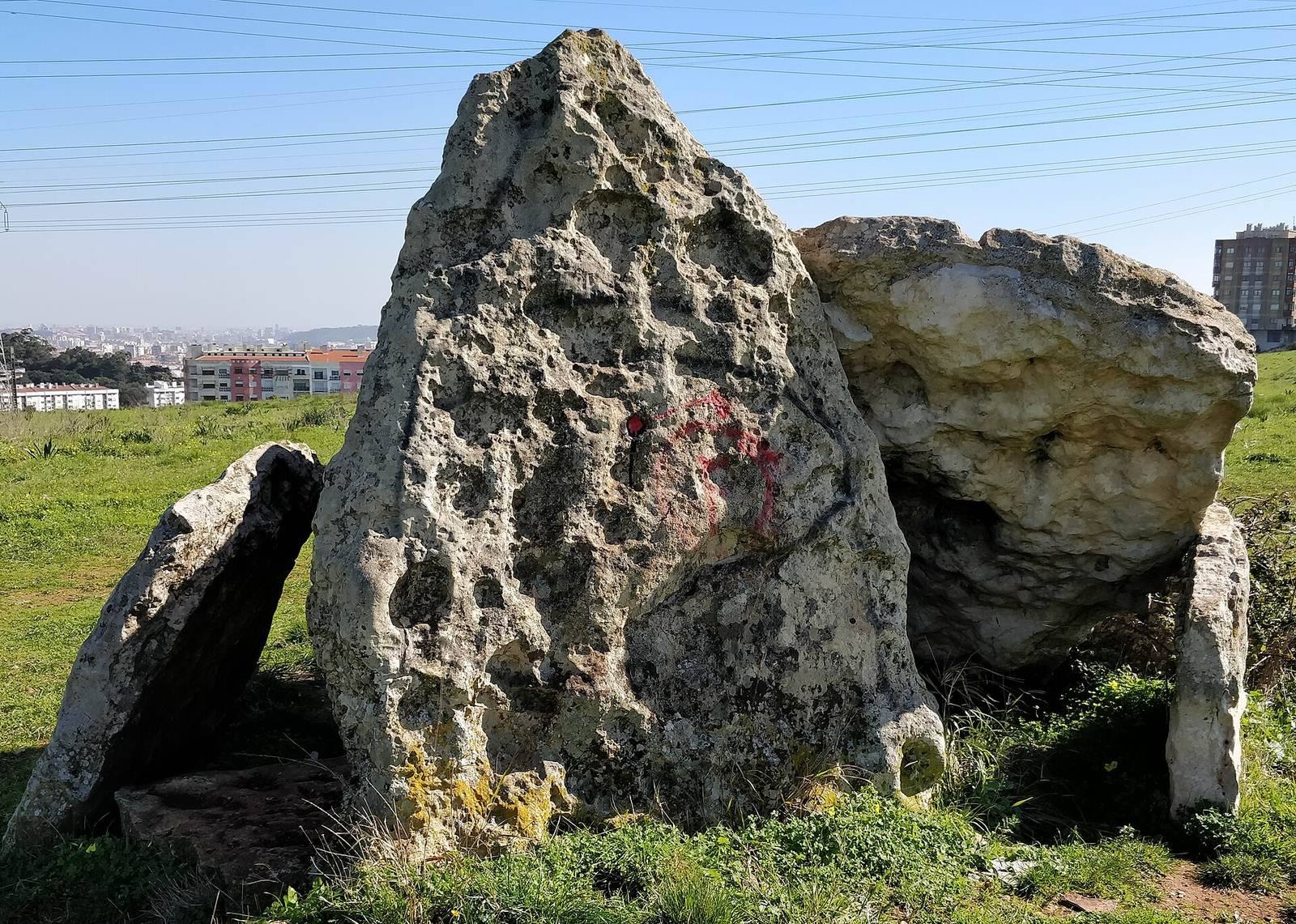
The tomb’s main elements are a polygonal chamber and an entrance passage, arranged on an east–west axis and built with limestone slabs. The chamber is about 3.6 metres across and originally had at least six upright supporting stones. Ribeiro’s excavations found three still in place. The passage was probably about 8 metres long and 2 metres wide, with three of its side slabs surviving. An earthen mound was considered likely to have covered the tomb.
Stone surfaces and finds
Some stones bear limited drawings, while the surviving surfaces are in poor condition and show extensive graffiti. Finds from the disturbed tomb include stone axes, flint tools and blades, 120 flint arrowheads, four club heads, ornaments, and pottery, including Bell Beaker ceramics associated with a prehistoric culture named for its distinctive bell-shaped vessels. Clay vessels were also recovered. The objects are held at the Portuguese Geological Museum in Lisbon.