Dolmen de Pierre-Folle, Thiré: A Prehistoric Burial Monument in France
Site at a Glance
- Popularity
- Very Low
- Country
- France
- Primary era
- Stone Age
- Eras represented
- Stone Age, Bronze Age
- Civilizations
- Unclassified
- Site type
- Burial
- Remains
- Tomb
On this page8 sections
History
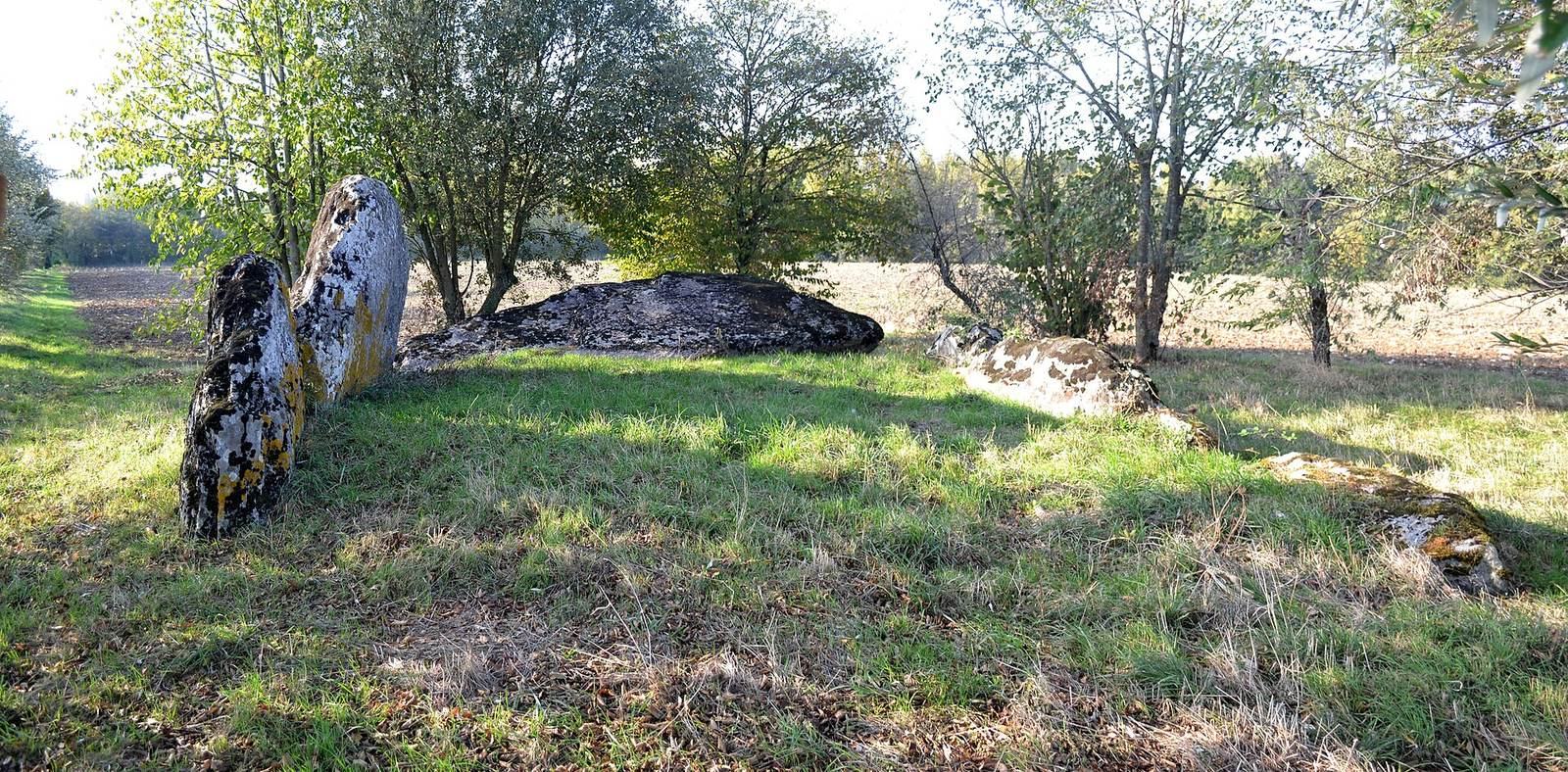
The Dolmen de Pierre-Folle, Thiré, is a prehistoric stone tomb in France, on a hillside near the Smagne River. Its use spans the Neolithic, Chalcolithic (Copper Age), Bronze Age, and later periods, when the chamber served as a burial place.
The monument is classified as an Angevin dolmen, a Loire-type covered passage tomb with a recessed entrance formed by two upright stones supporting a horizontal slab. It is also associated with the Bell Beaker cultural grouping, known for its characteristic bell-shaped pottery.
In 1968, the dolmen was designated a Historic Monument. Pierre Chaigneau and Roger Joussaume excavated it between 1968 and 1971.
Remains
Physical layout
Chamber and supports
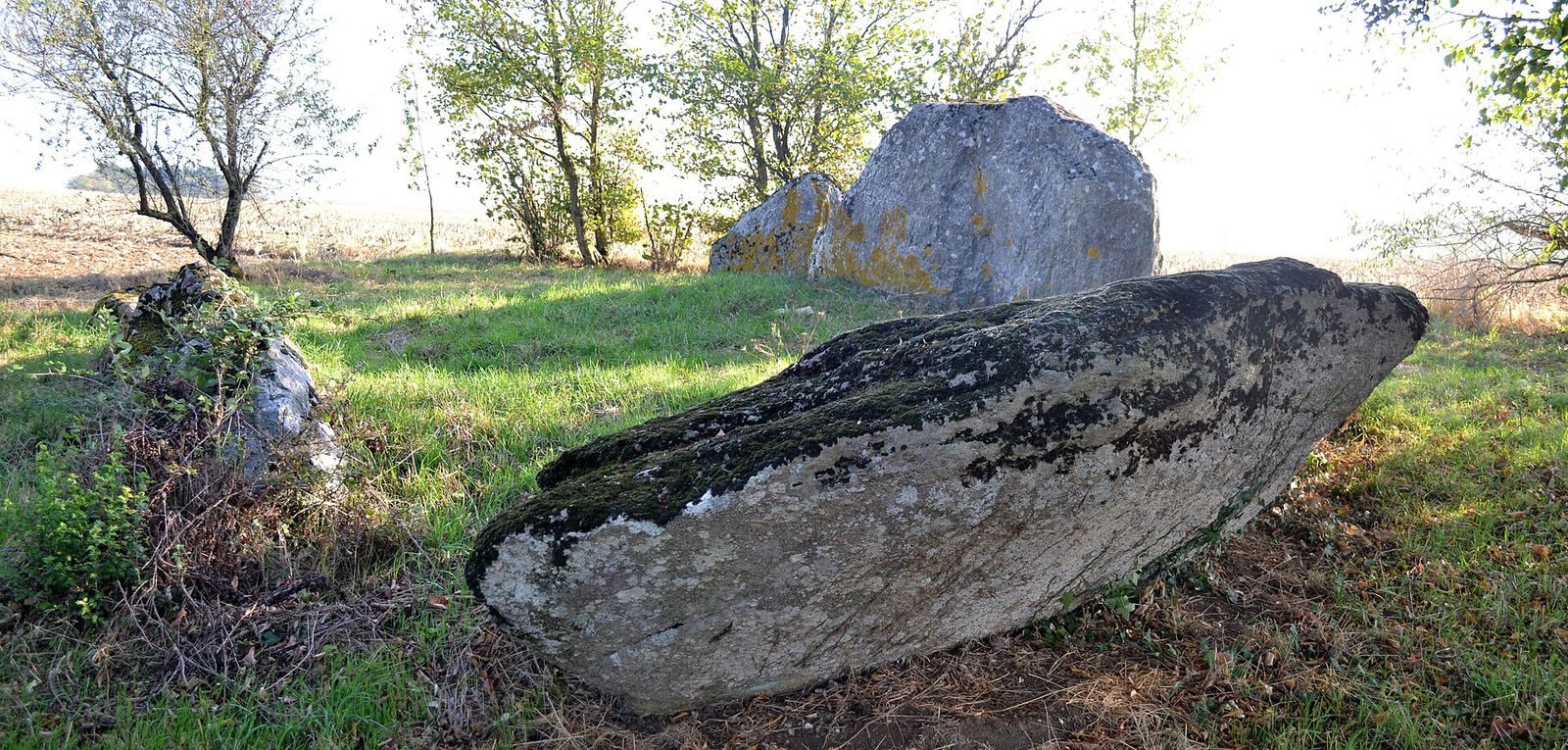
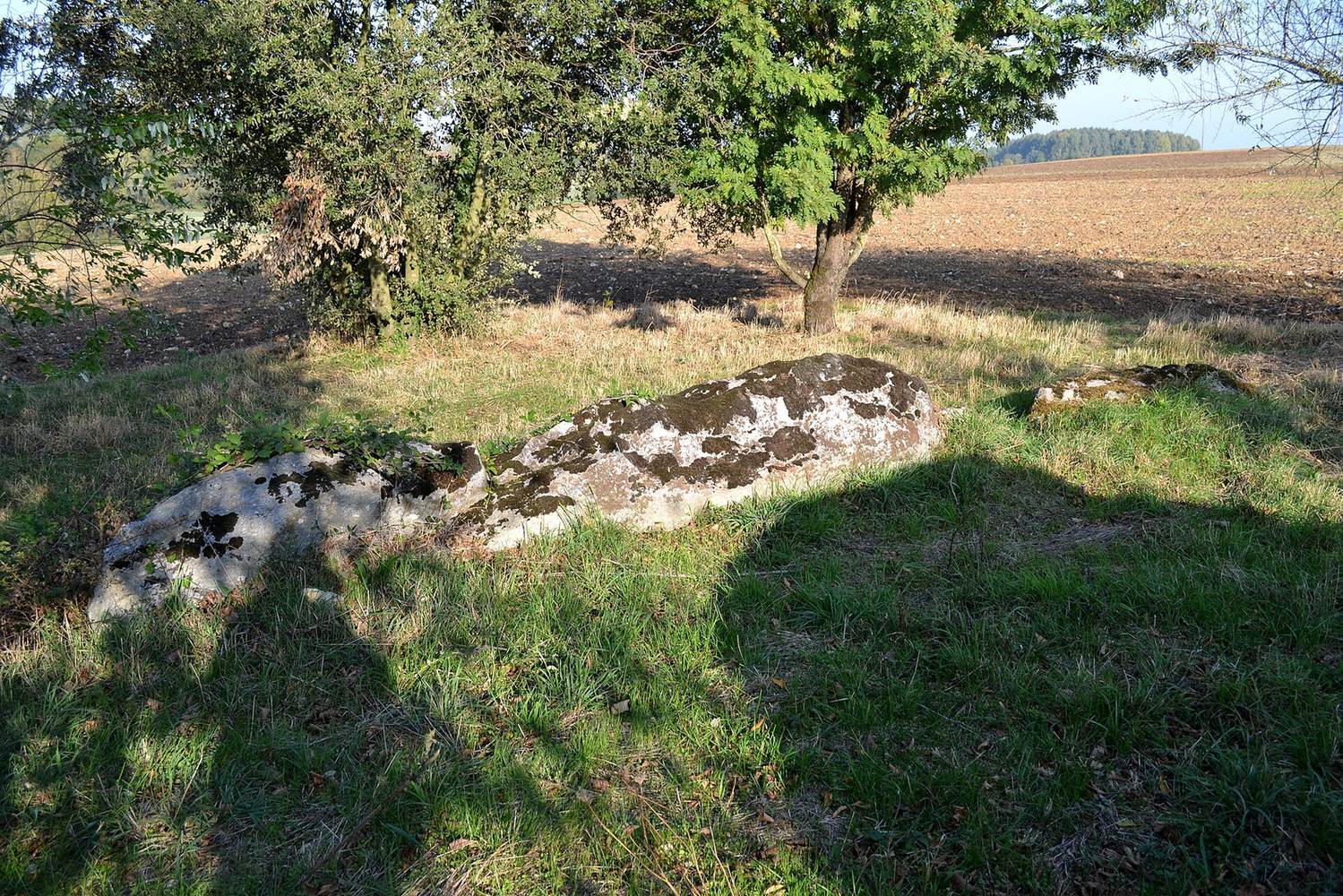
The rectangular chamber measures about 7 by 5 metres and opens to the southeast. Its upright stone slabs, or orthostats, comprise three supports along the southwest side (I, II, and VIII), a rear slab (III), two northeast supports (IV and V), and two stones at the entrance (VI and VII). Support II is 3.6 metres long and 2.5 metres high, with an estimated weight of 10 tonnes. The rear slab is 5.6 metres long and weighs an estimated 12 tonnes.
Support IV is about 4.4 metres long, while support V is about 2 metres long and up to 1 metre thick. Both now project only slightly above ground and may have been shortened by stonecutters. The supports and paving are made from two types of gneiss, a metamorphic rock. As the local bedrock is limestone, the gneiss was brought at least about 6.5 kilometres from the nearest quarrying site, Les Humeaux.
Floor and entrance features
Paving survives in the chamber’s northwest corner and near the entrance, suggesting that the floor may once have been paved throughout. Upright slate slabs in the eastern corner beside the entrance divided part of the interior. A posthole on the entrance axis, up to 0.30 metres across and 0.33 metres deep, points to a probable wooden feature.
Two parallel trenches in front of entrance supports VI and VII are nearly 4 metres long and 1 metre deep. They may mark an antechamber between the main chamber and a three-stone porch, formed by two uprights supporting a horizontal slab. This arrangement could make the monument an Angevin dolmen with an antechamber, comparable to La Roche-aux-Fées.
Burials and finds
Human remains
The human remains represent about 40 individuals, with most of the burials grouped in the eastern part of the chamber.
Objects
The stone assemblage includes 222 objects, alongside nearly 800 quartz pieces that were worked to varying degrees. Among the finds are four transverse arrowheads, whose cutting edges run across the shaft, including one of the Sublaines type; a piercing arrowhead with a tang and side barbs; and two slate plaques. Ceramic objects include a barrel-shaped vessel of the flowerpot type, 17 Bell Beaker vases representing a long period, and two cups decorated with cord impressions.
Gold ornaments comprise seven rectangular plaques, a disk, three tubular beads, and a perforated nugget. Bone objects include an incised tube, four buttons pierced by V-shaped channels, and four beads. Other ornaments include a limestone plaque, ten variscite beads (variscite is a phosphate mineral used as a gemstone), three amber pieces, two beads and a pendant, and a shell. The finds also include a bone punch, an awl, and a spiral copper ring.