Arca de Calaons: A Prehistoric Megalithic Necropolis in France
Site at a Glance
- Popularity
- Very Low
- Country
- France
- Primary era
- Stone Age
- Eras represented
- Stone Age
- Civilizations
- Unclassified
- Site type
- Burial
- Remains
- Necropolis
On this page7 sections
History
Arca de Calaons is a prehistoric necropolis of three megalithic funerary monuments in Catllar, France, near the boundaries with Eus and Molitg-les-Bains. The central stone cist, a small grave built from slabs, dates to the Middle Neolithic, approximately 3500–2500 BCE.
The medieval boundary charter
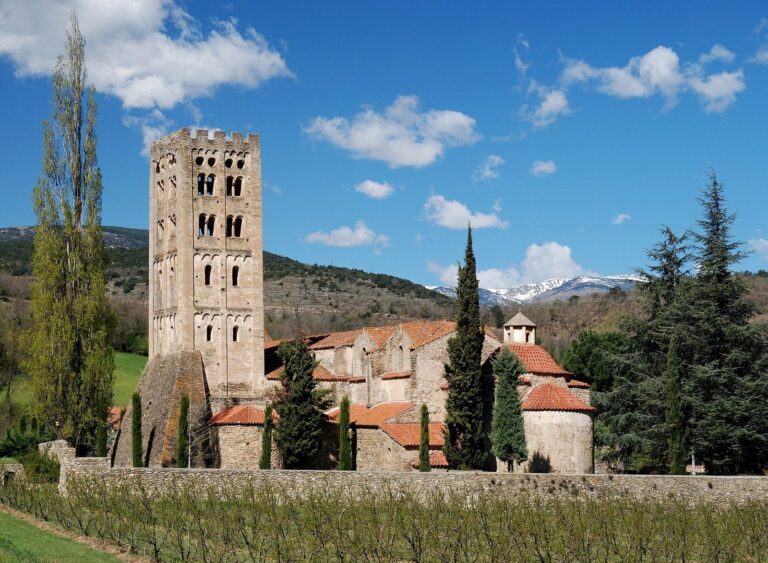
A charter dated 985 described the boundaries of the village of Calahons, then belonging to the Abbey of Saint-Michel de Cuxa, a medieval monastery in the eastern Pyrenees. It referred to a standing stone and a stone cist. Jean Abélanet later interpreted these references as identifying two of the monuments at Arca de Calaons.
Excavations and dating
One tomb was excavated in 1967, and Abélanet excavated the dolmen in 1968. The central cist is assigned to the Middle Neolithic, a phase of the later Stone Age generally associated with settled farming communities. Finds from the dolmen do not establish its date.
Remains
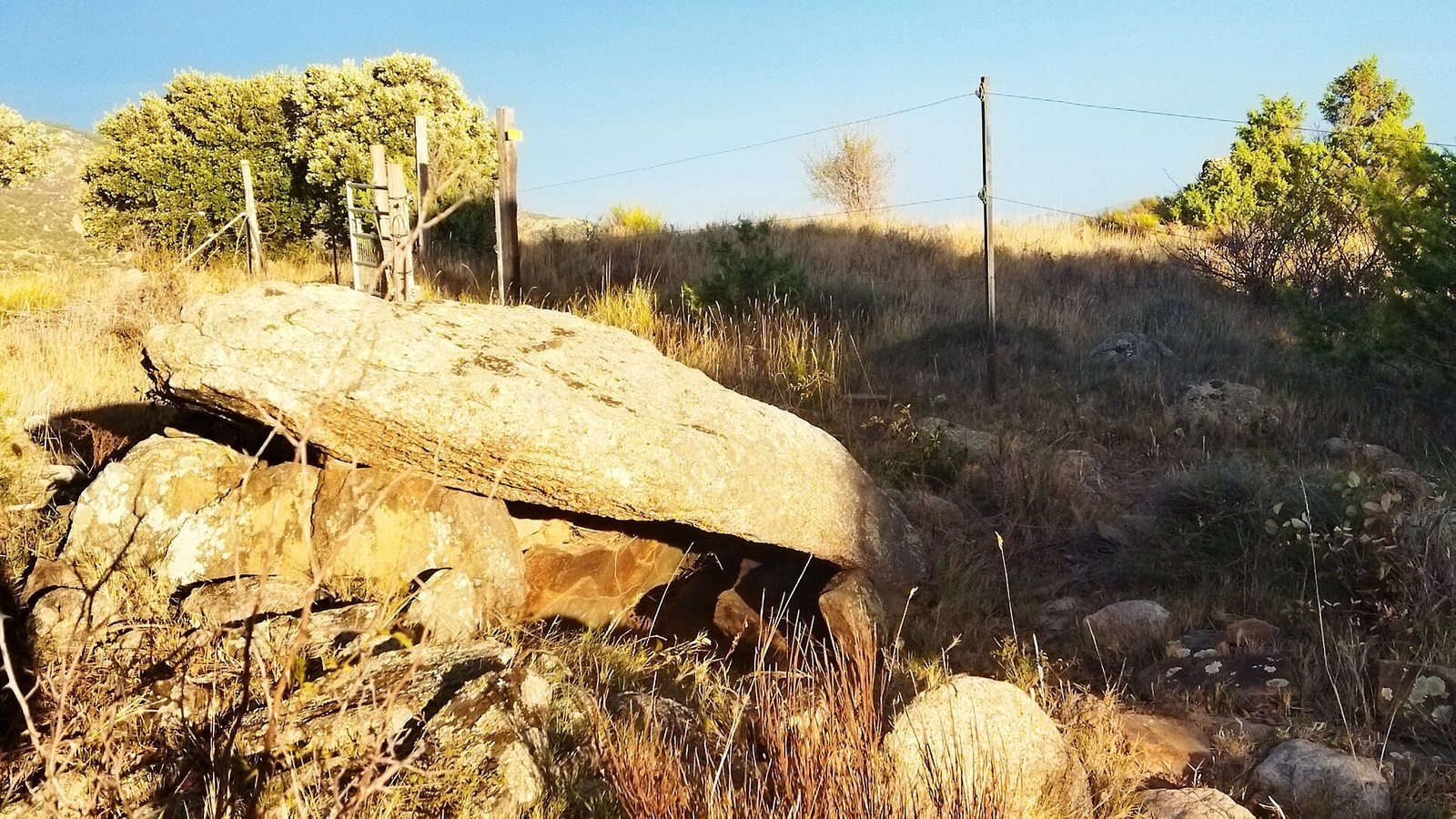
The three principal monuments are arranged from west to east as Dolmen I, the central Arca de Calaons II, and Dolmen III. They stand in Catllar near the boundaries with Eus and Molitg-les-Bains; Dolmen I lies on the Catllar–Molitg boundary. Dolmen III is a megalithic box tomb.
Dolmen I
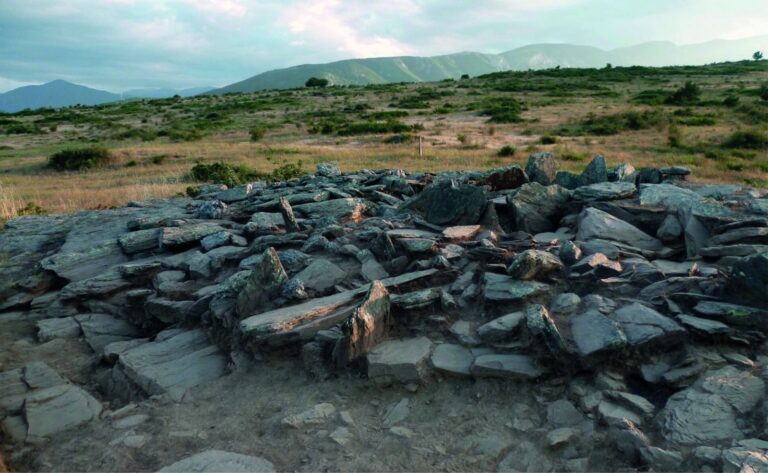
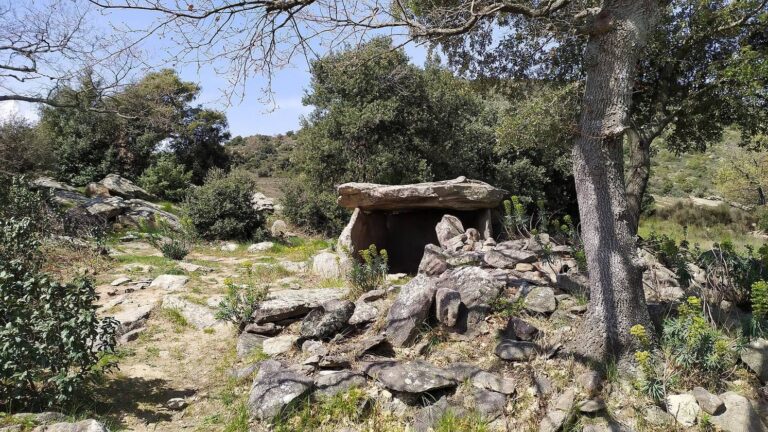
Dolmen I is a Catalan gallery tomb, a megalithic grave with a passage-like chamber. Its heavy granite capstone has caused supporting slabs to slump or break. The cracked end slab remains in place, and the original arrangement is uncertain. It appears to have had a passage and a chamber bounded by five slabs, with three on the southwest side and two on the northeast. The slabs have lost height, and the end slab projects beyond the side slabs. The entrance faces south-southeast, and the surrounding mound appears circular.
Excavation recovered a few sherds of plain pottery, a small flint flake, a quartz hammerstone, and a broken piece of polished schist with two clear holes. The schist fragment was probably part of an archer’s wrist guard. The pottery is too worn and indistinct to date the tomb.
Central Arca de Calaons II
Arca de Calaons II is a small, sunken stone cist classified as Solsonès type, a category named for Solsona. It measures 1.18 metres long, 0.75 metres wide, and 0.68 metres deep. A large diamond-shaped slab forms most of the floor, supplemented by smaller flat stones. The two side slabs barely rise above the surrounding ground. The original cover arrangement is uncertain, although a covering slab lies at an angle.
The cist’s small dimensions suggest that the deceased may have been placed in a contracted position. Finds include five sharp-edged arrowheads of blond flint, three grey-blue talc discs, two schist beads probably from a necklace, and a small ladle-shaped vessel. Its flat handle is perforated so the vessel could be suspended.
Other cists
A small cist built from friable schist slabs is surrounded by a roughly circular stone mound 6–7 metres across. Its surviving slabs are an end slab 0.30 metres high and two north-side slabs measuring 0.35 and 0.52 metres high. Excavation recovered a fragment of Roman pottery of the Graufesenque type, a ware associated with a pottery-making centre in southern France, dated to the first or second century CE.
Two small destroyed cists lie nearby, across a fence, and are generally called "Caixa."