Poggendorf Forest Megalithic Tombs: Funnel Beaker Burial Monuments
Site at a Glance
- Popularity
- Very Low
- Country
- Germany
- Primary era
- Stone Age
- Eras represented
- Stone Age
- Civilizations
- Unclassified
- Site type
- Burial
- Remains
- Tomb
On this page10 sections
History
The Poggendorf Forest megalithic tombs are prehistoric burial monuments in Süderholz, Germany, built by communities of the Funnel Beaker culture, a prehistoric European culture named for its characteristic pottery, around 3500–2800 BC.
Construction and later use
Four megalithic installations lie in this stretch of forest, and three were excavated in 1969 by German archaeologist Ewald Schuldt. Dolmen 3 was later reused by the Elbe-Havel group, a regional branch of the Single Grave culture, named for its burial practice. The Globular Amphora culture, named for its characteristic pottery, also reused Dolmen 3. Dolmen 4 may have been reused by this culture as well, but that attribution is uncertain.
Excavation
In the Sprockhoff catalogue, a register of megalithic tombs, Dolmen 3 is number 525 and Dolmen 4 is number 526.
Remains
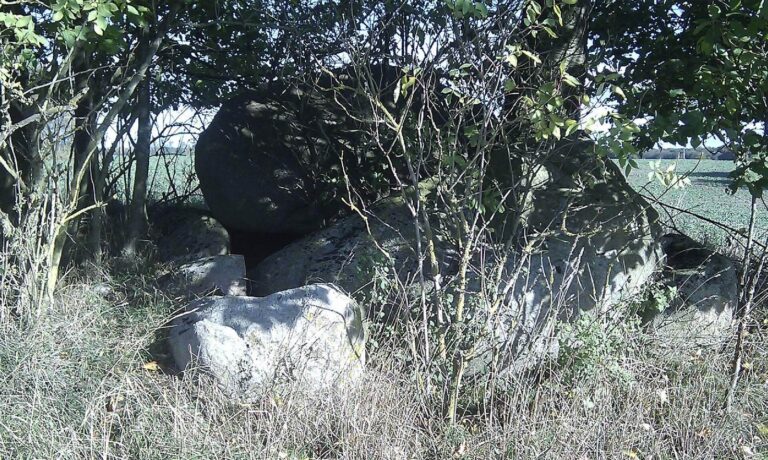
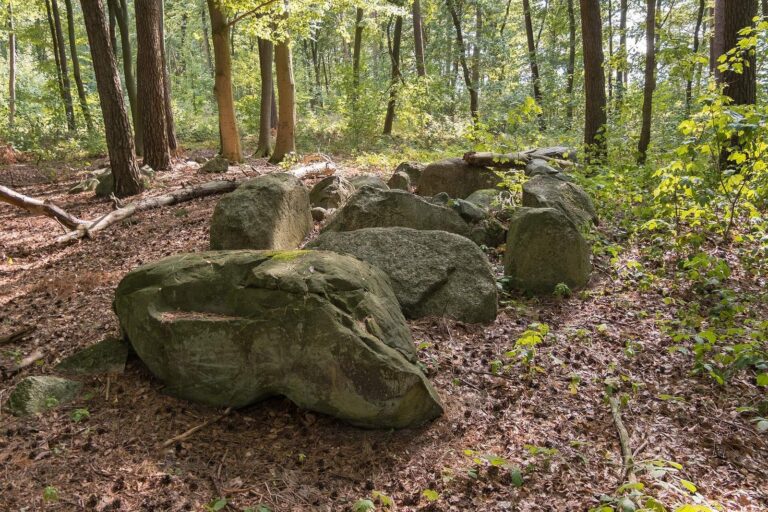
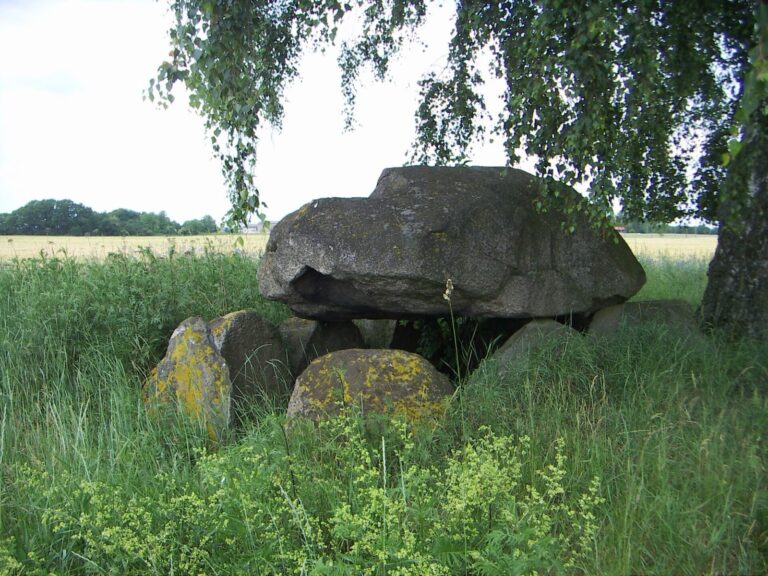
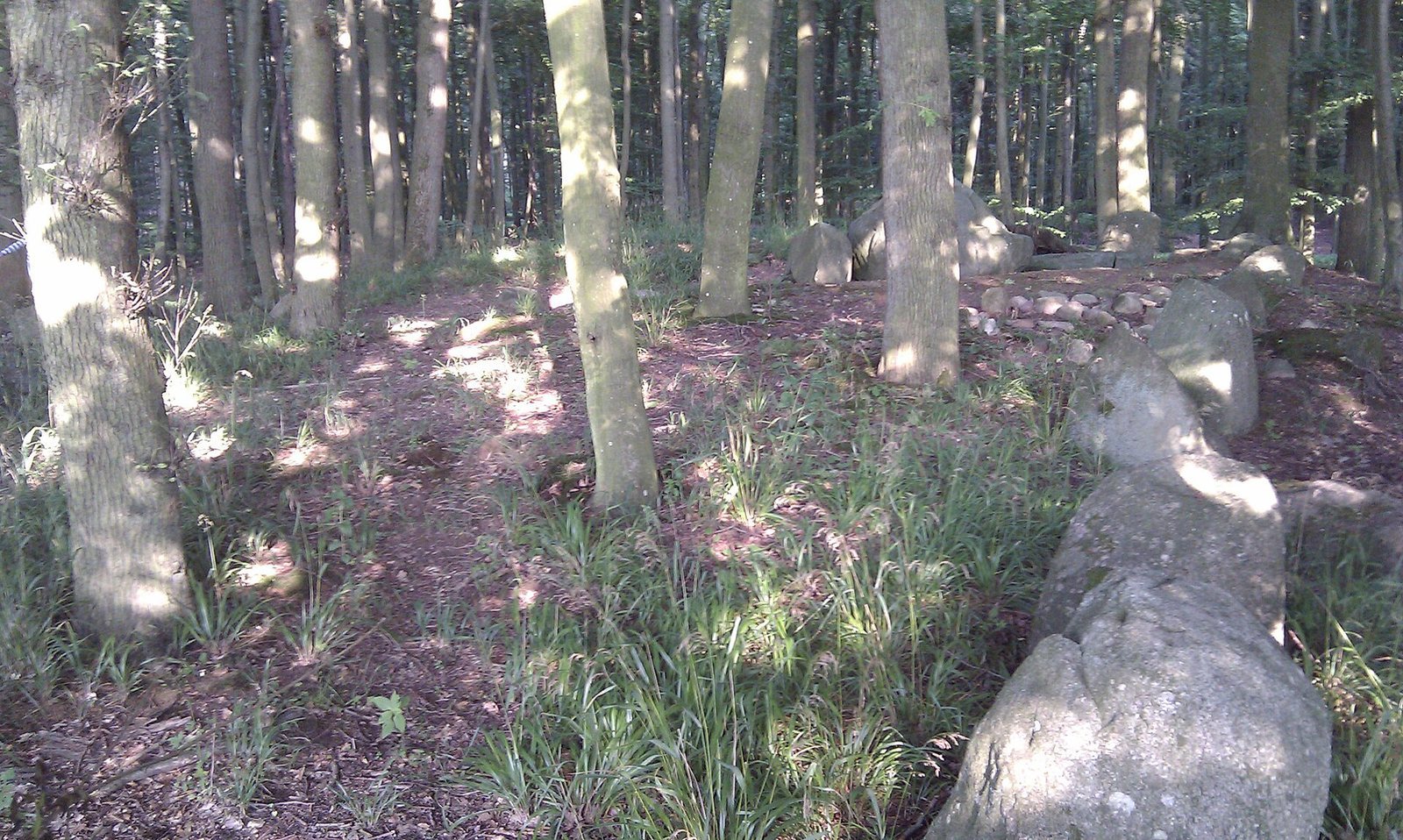
The roughly 10-kilometre-long forest section extends between Schmietkow to the northwest and Sassen to the southeast. Dolmen 3 stands near the forest’s northwestern edge, while Dolmens 4 and 6 are near its southern edge. The monuments comprise stone chambers formed by upright supports and heavy capstones; Dolmen 3 also lies within a stone-bounded enclosure.
Dolmen 3
Stone enclosure
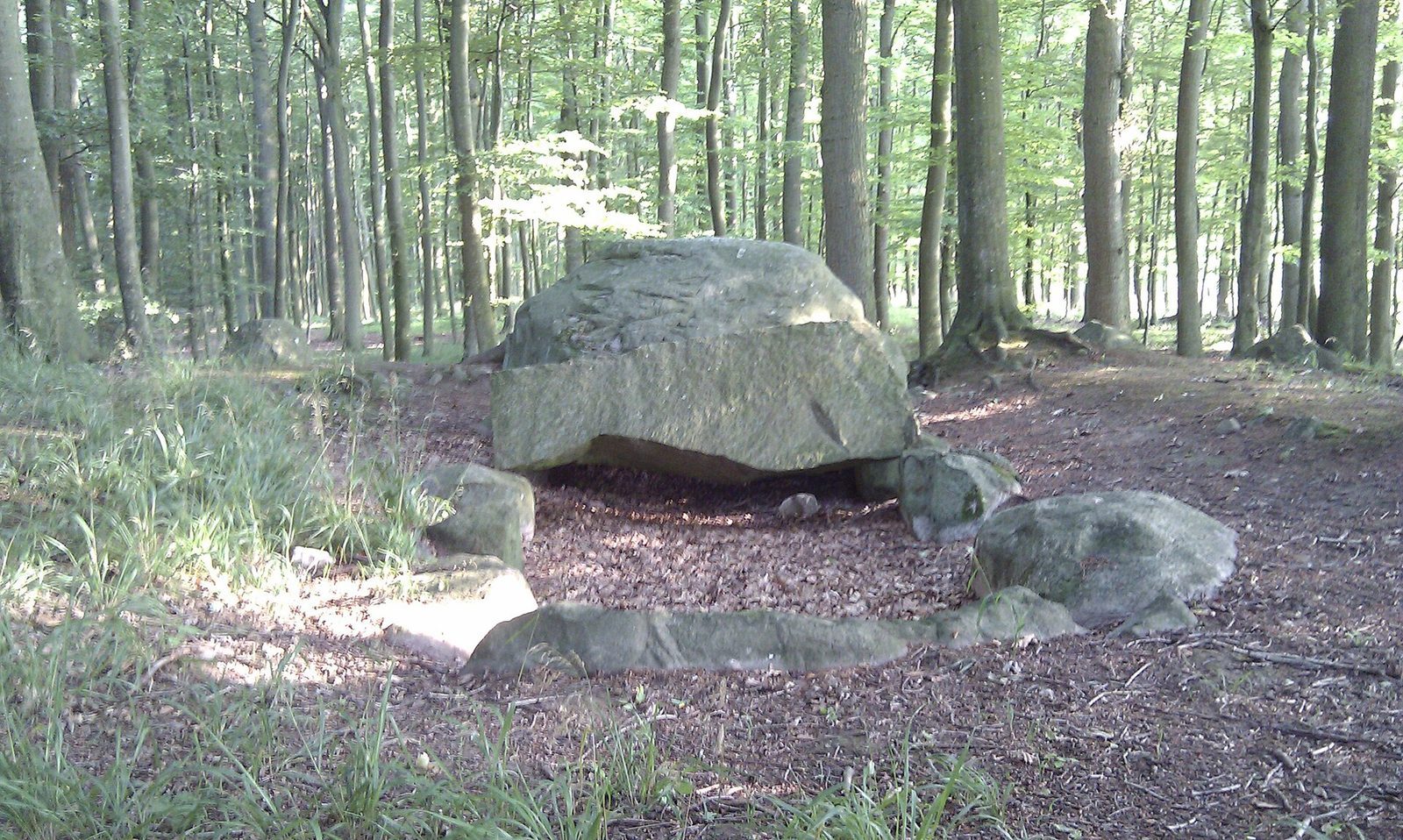
The chamber lies at an angle within a trapezoidal enclosure oriented roughly east–west, about 30 m long. Its width is 11 m at one end and 7.5 m at the other. Thirty of the enclosure’s original 46 edging stones remain, including one of its two guardian stones. Set into the enclosure’s broader end, the chamber complex runs north–south.
Chamber
Eighteen upright stones originally supported three large and two smaller capstones. The southern capstone, 1.2 m thick, and a split remnant lie on the chamber; smaller capstones remain over the entry chamber and passage, while other broken pieces lie outside the enclosure. Although the structure is damaged, its internal architectural elements survived when it was investigated.
A passage about 1.8 m long leads to an entry chamber, separated from the main chamber by a red-sandstone slab measuring 1.0 by 1.6 m and a half-stone as high as the supports. The main chamber is 6.5 m long, 2.0 m wide, and 1.6 m high. One compartment was identified in each chamber. The floor combined red-sandstone slabs, fired flint, and clay reddened by heat. Two capstones bear cup-shaped hollows, six on one stone and four on the other.
Burial finds
Finds included human bones, among them seven skulls, as well as charcoal, animal bones, and cremated remains. Grave goods comprised 783 pottery sherds, 27 arrowheads with cutting edges set across their points, 22 blades, eight hammerstones, six bone tools, and four blade scrapers. The vessels included four wide-mouthed pots, four double-conical vessels, four globular amphorae (round-bodied pottery vessels), three bowls, and one each of a barrel-shaped vessel, a tall pot, a spherical bowl, and a dish. Other objects were three axes with thickened butts, one flat axe, one bent-butt axe, a narrow chisel, a drill, a further arrowhead, and an amber bead shaped like a double axe.
Dolmen 4
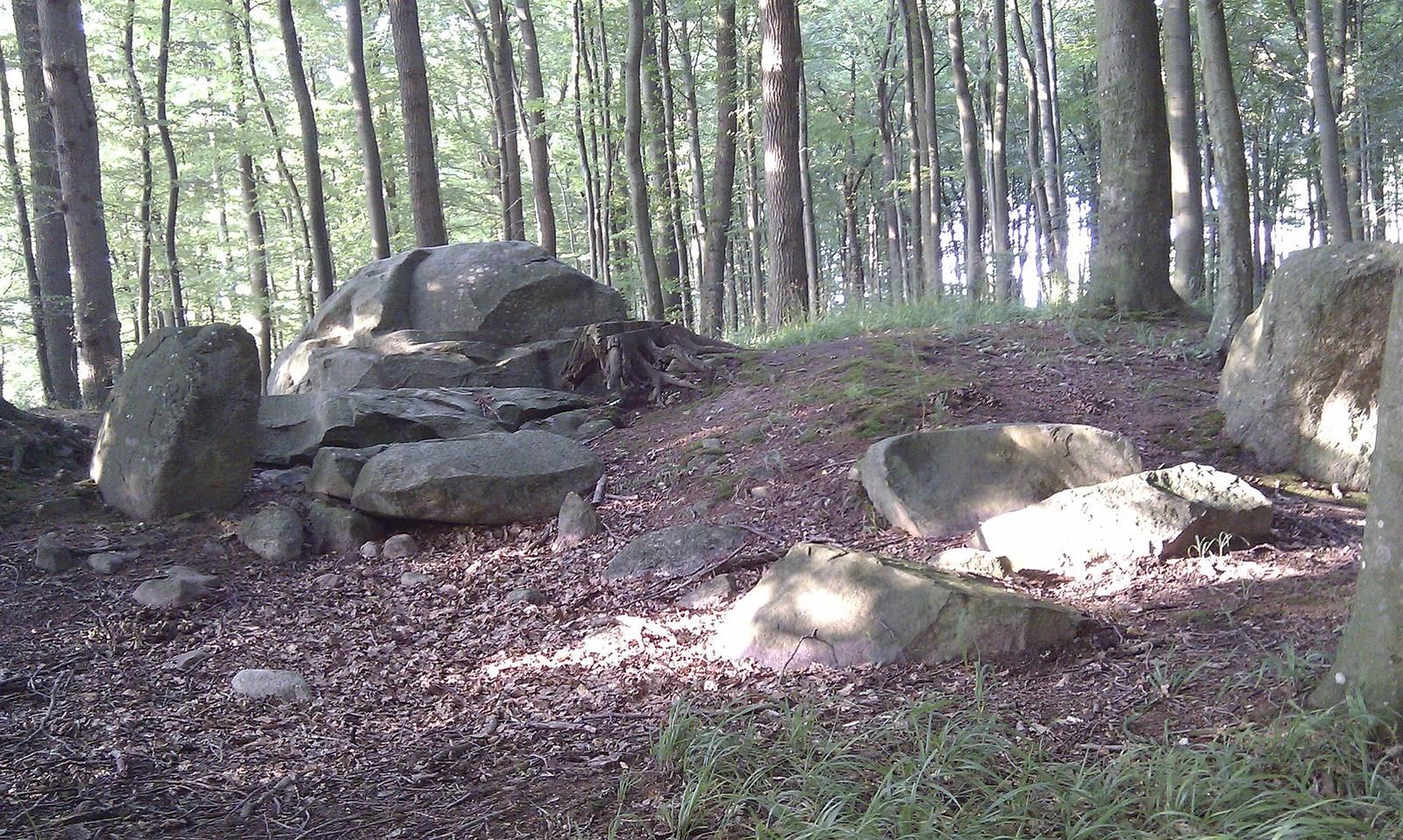
This dolmen lies within a stone mound and is oriented northeast–southwest. It was built with five pairs of supporting stones, two end stones, and four capstones. Three capstones survive: two have partly fallen into the chamber, while the third is broken beside it. One support stone bears 50 cup-shaped hollows, and a capstone has three. The chamber is 7 m long and 1.4 m high; its width varies between 2.0 m and 2.4 m.
Dolmen 6
Both capstones have been displaced to the chamber’s short ends.