Fountain of the Rosello: A Late-Renaissance Fountain in Sassari
Site at a Glance
- Popularity
- Medium
- Country
- Italy
- Primary era
- Early Modern
- Eras represented
- Early Modern, Modern
- Civilizations
- Crown of Aragon, Kingdom of Sardinia, Spanish
- Site type
- Civic
- Remains
- Fountain
On this page6 sections
History
The Fountain of the Rosello is a late-Renaissance fountain in Sassari, Italy, whose monumental structure was built by Genoese craftsmen between 1603 and 1606. The fountain is dated to 1295, while the spring it surrounds was known in Roman times as Gurusellu. The spring supplied the aqueduct serving Turris Libisonis, now Porto Torres, and later served as a landmark for travelers crossing the gate of the same name.
The monumental fountain and its water supply
Genoese craftsmen built the fountain around the spring between 1603 and 1606, and it was renewed in 1605. The work was financed by a public levy of 1,000 scudi, a historical currency unit. Its late-Renaissance design was considered innovative in the early seventeenth century and distinctive in Sardinia.
The spring supplied residents of the valley with water. Water carriers filled barrels and took them to homes on donkeys, with about 300 donkeys used for this work by the late nineteenth century. People also used the fountain to wash clothes and household linen. In 1849, English traveler John Warre Tyndale described deliveries obstructing house entrances, as a person, donkey, and barrel crowded the way.
Unrest and replacement statues
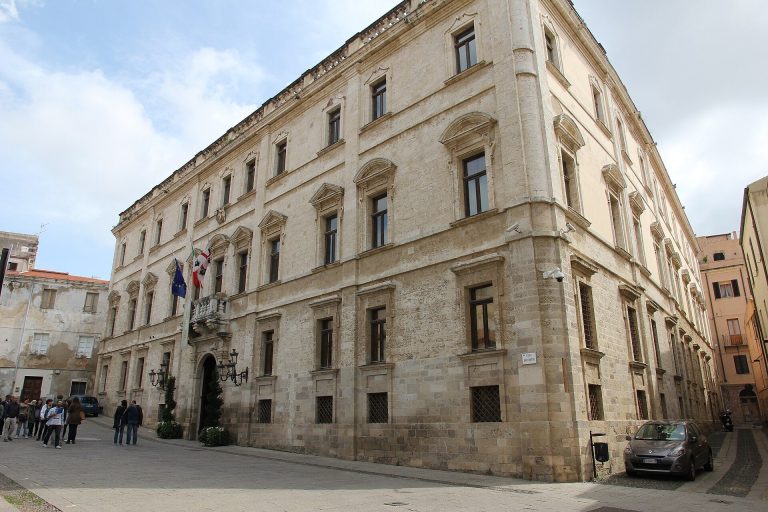
During anti-feudal unrest in 1795, three statues representing the seasons were destroyed. Four replacement figures were installed in 1828. The original statue of Summer survived and is preserved at Palazzo Ducale in Sassari. The fountain is widely regarded as a symbol of the city.
Remains
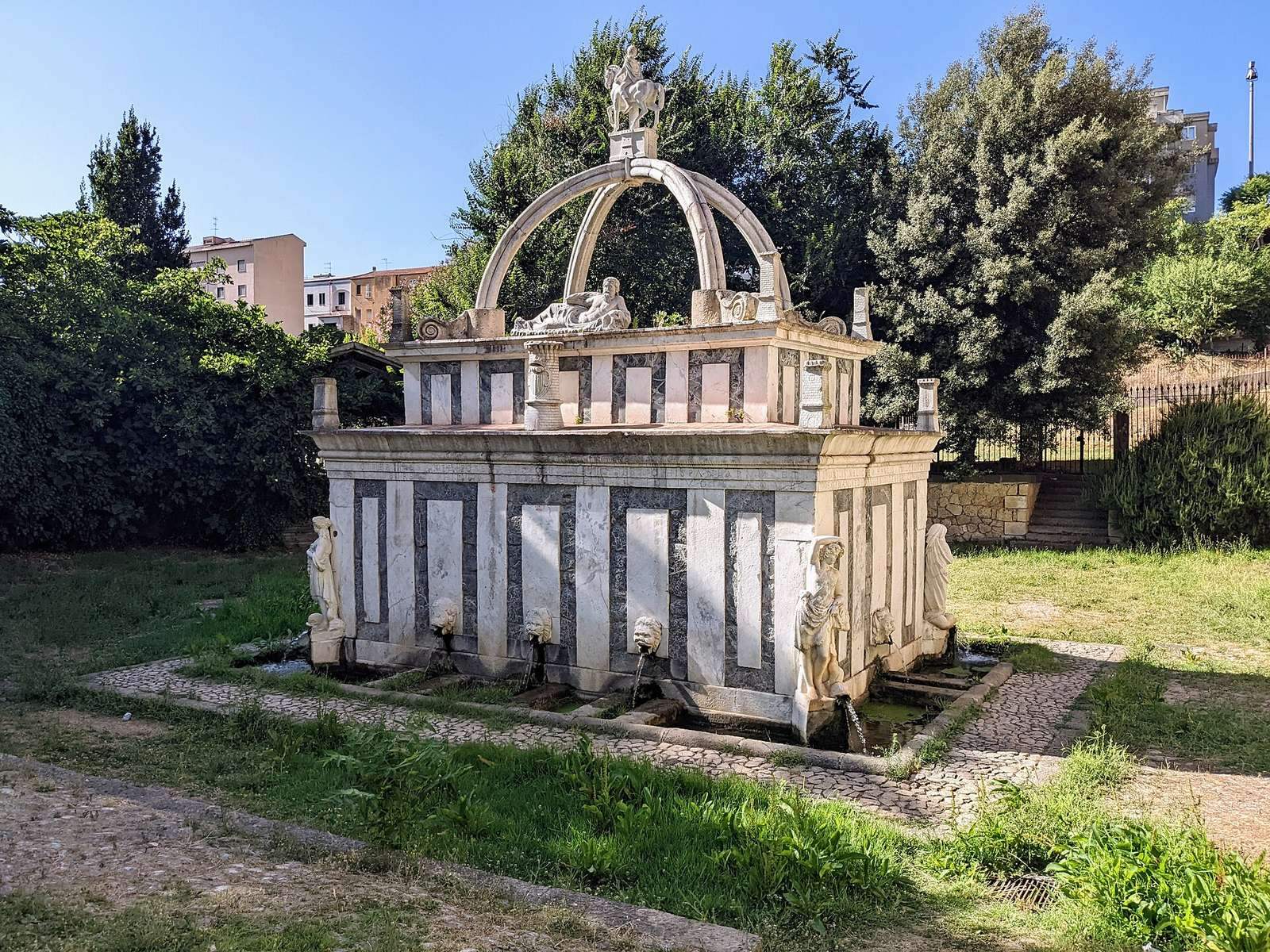
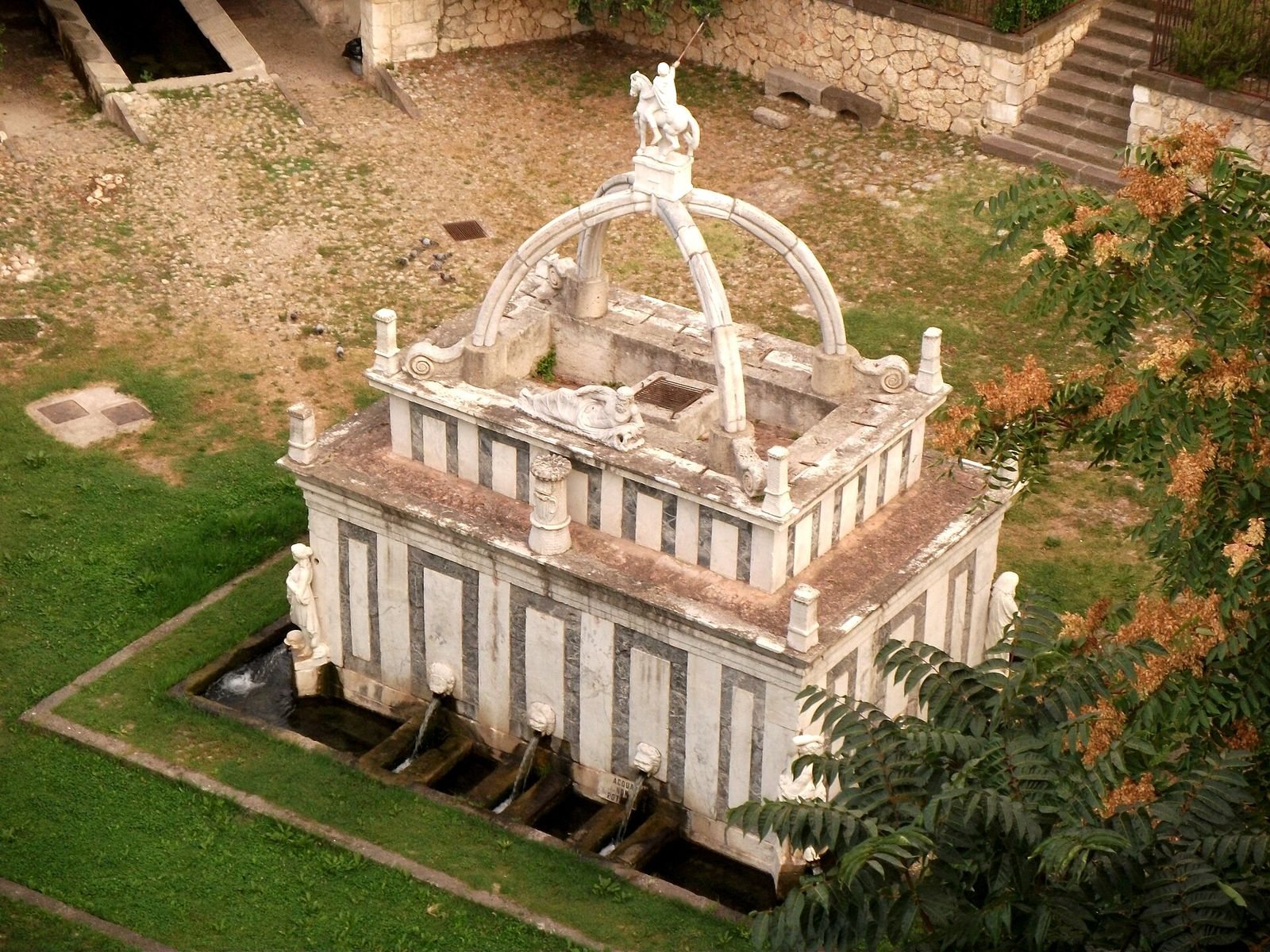
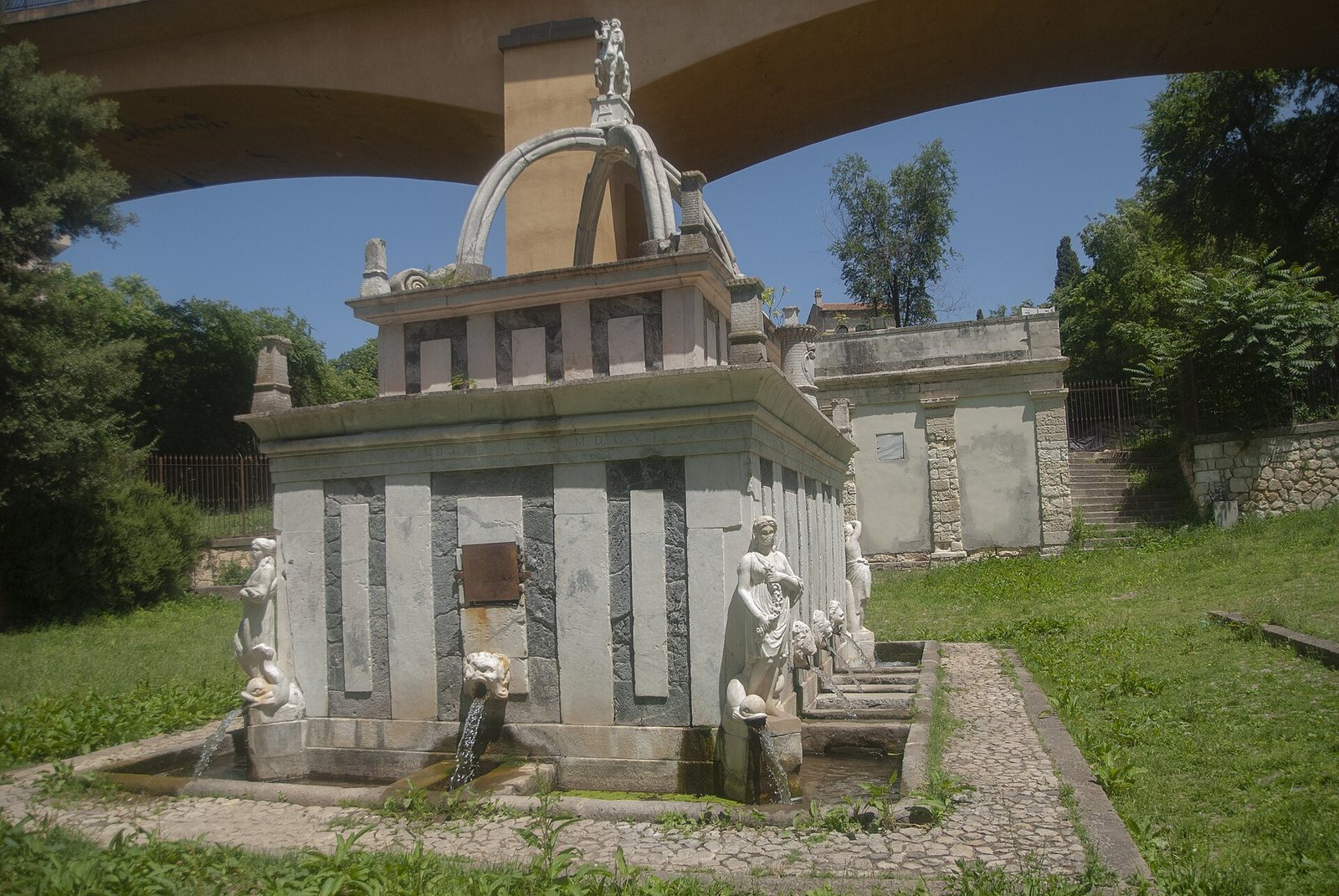
The fountain stands in Rosello Valley, at the foot of the Monte Rosello district, adjoining Sassari’s old district and beneath Rosello Bridge, built during Italy’s Fascist rule under Benito Mussolini. Its late-Renaissance composition has two rectangular tiers, with the lower tier larger than the upper. White marble forms most of the structure, contrasted with dark-stone panels.
Lower tier and seasonal figures
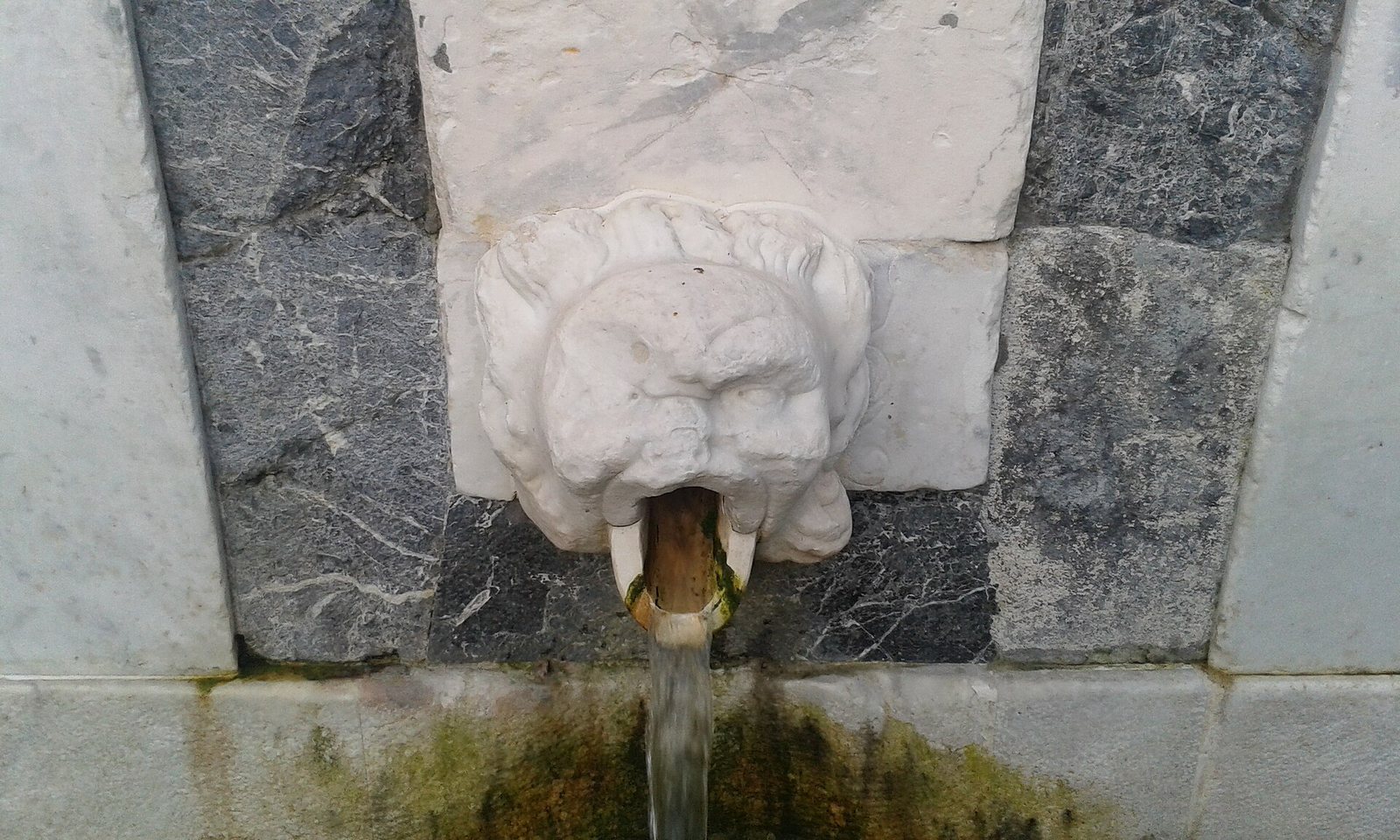
A cornice tops the lower tier. Beneath it, a dedication inscription runs along three sides, while the north face carries a foliage motif. The four faces are divided into sixteen rectangular panels. Eight frame lion heads that release water; four dolphin-shaped outlets stand at the bases of the seasonal figures. Together, these twelve outlets are called cantaros, meaning the fountain’s water outlets, and allegorically represent the passage of time. The figures portray Winter as a sleeping old man, Spring as a girl wearing a flower garland, and Summer as a woman holding a sheaf of wheat. Autumn appears as Hercules, the hero of Greek mythology, wearing the skin of the Nemean lion and a crown of vine leaves.
Four crenellated turrets mark the corners of the lower tier and symbolize Sassari. Two additional cylindrical turrets bear carved, vertically banded coats of arms belonging to the House of Aragon, the ruling house of the Crown of Aragon.
Upper tier
The smaller upper tier has rectangular panels and a plain cornice, with a turret at each corner. Two crossed arches support an equestrian statue of San Gavino, a Christian martyr venerated as Sassari’s protector. On the south face, a reclining river deity looks toward the city.