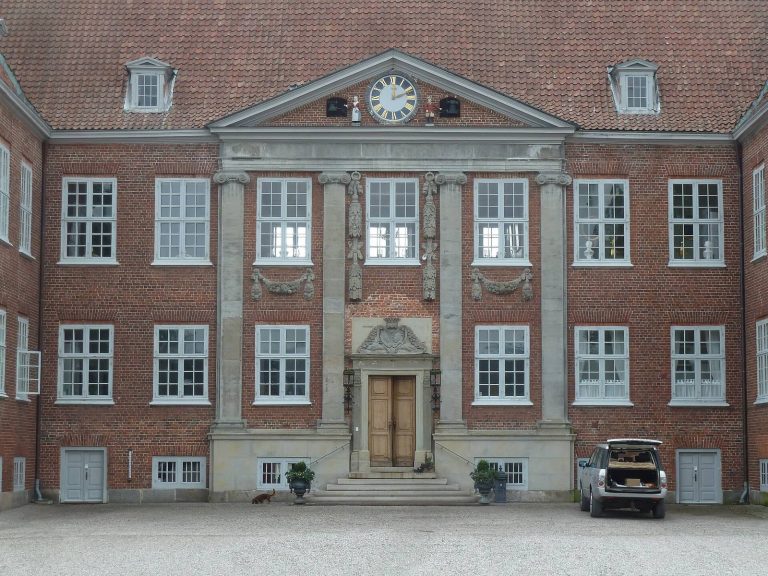
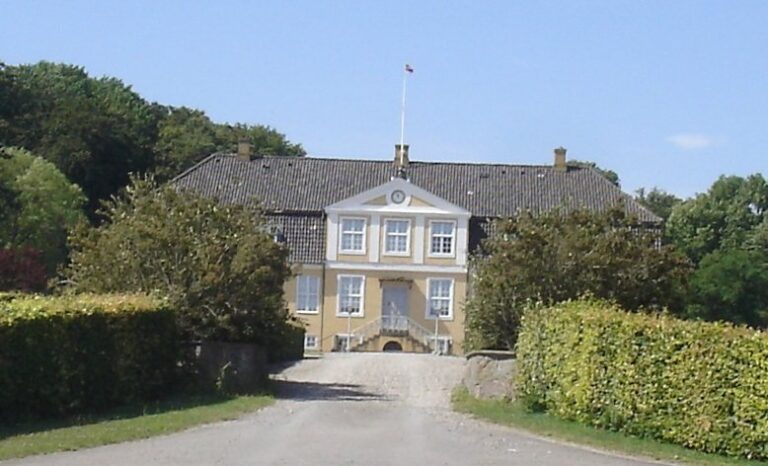
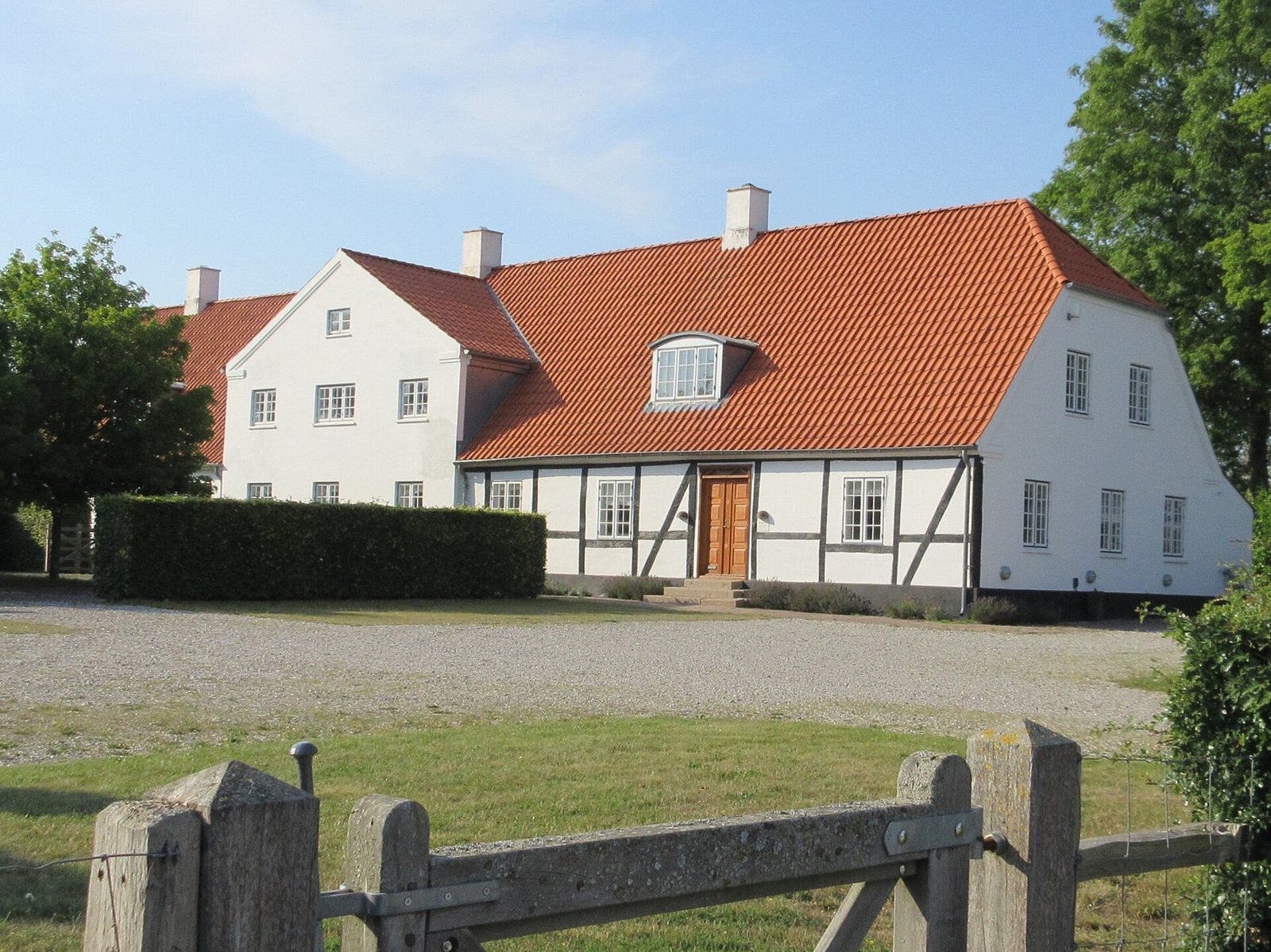
Strandegård: A Manor Estate in Denmark
Site at a Glance
- Popularity
- Low
- Country
- Denmark
- Primary era
- Unclassified
- Eras represented
- Unclassified
- Civilizations
- Unclassified
- Site type
- Domestic
- Remains
- Manor House
On this page4 sections
History
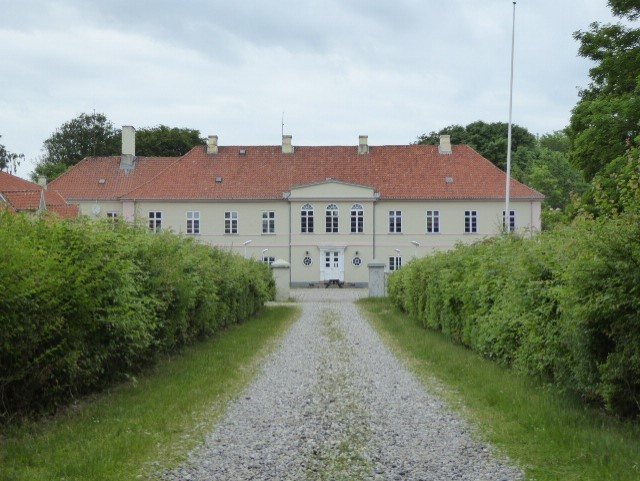
Strandegård is a manor estate in Faxe, Denmark, established by Axel Sehested in 1662 on the site of the former village of Fiskerhoved. The land had belonged to the Crown until Frederick III, king of Denmark and Norway, granted it to Sehested after the Second Northern War, a conflict between Sweden and Denmark-Norway that ended in 1660. Sehested sold the estate later in 1662 to Copenhagen merchant Hans Pedersen Klein.
Early owners, 1662–1731
Klein held Strandegård until 1667. After his death, his widow, Magdalene Mogensdatter, owned it from 1667 to 1671. Her second husband, Ernst Volcher, held the estate from 1671 to 1683, after which Magdalene held it again until 1686. That year, merchant Peder Jensen acquired Strandegård and kept it until 1699. His widow, Kirsten Ellen Andersdatter, retained it until 1707, when it was sold at public auction to Christian Juel.
After Juel died in 1717, his widow, Anne Margrethe Krag, kept the estate. Financial difficulties led her to sell it in 1731 to Otto Thott and his sisters Dorothea and Anne. Dorothea died in 1738, and Otto acquired Anne’s share in 1740. He already owned the estates of Gavnø and Lindersvold.
The Thott and Reedtz-Thott family, 1731–1921
Otto Thott had no children. In his 1780 will, he arranged for his estates to pass as an entailed family estate, with inheritance restrictions that prevented the land from being pledged, sold, or divided among heirs. The heir was Holger Reedtz, the grandson of Otto’s maternal uncle. He took the name Reedtz-Thott in 1786 and held Strandegård from 1797 to 1862. In 1805, he established the Barony of Gavnø from the estates, a hereditary noble estate carrying baronial status.
Holger’s son Tage succeeded him in 1862. Active in politics, Tage served as Council President, the title for the head of Denmark’s government. A Danish law passed in 1919 provided for the dissolution of baronies and other entailed estates, and the Barony of Gavnø was dissolved in 1921.
Twentieth century and present ownership
Tage’s son Otto succeeded him in 1923 and died without children in 1927. Strandegård then passed to Otto’s cousin, Holger Reedtz-Thott. Holger also died without children and left the estate to Axel Reedtz-Thott; Gavnø passed to the son of another cousin. Axel’s eldest son, Otto, succeeded him at Gavnø in 1973, while Axel transferred Strandegård to his youngest son, Ivan, in 1978. Strandegård remains in the Thott-Reedtz-Thott family. The estate covers approximately 1,300 hectares, slightly more than half of it farmland, with the rest consisting of forest and other natural habitats. It is managed as an organic farm.