Lindersvold: A Danish Manor House and Estate
Site at a Glance
- Popularity
- Very Low
- Country
- Denmark
- Primary era
- Modern
- Eras represented
- Early Modern, Modern
- Civilizations
- Danish
- Site type
- Domestic
- Remains
- Manor House
On this page6 sections
History
Lindersvold is a former manor house and estate in Faxe Municipality, Denmark, just north of Præstø Fjord. Christoffer Clausen Lindenov and his wife, Sophie Hartvigsdatter Pless, established it on land formerly belonging to the villages of Akselhoved and Hyllingeskov. The estate first appears in 1580.
Establishment under the Lindenov family
After Christoffer died in 1593 and Sophie in 1602, Lindersvold remained in the Lindenov family for nearly a century, although ownership after Christoffer’s death is unclear until Godske Lindenov acquired the estate in 1606. Godske, an admiral and Head of Bremerholm, Copenhagen’s royal naval yard, enlarged his holdings. Among his acquisitions was the village of Axelhoved, with eight farms and eight houses. After his death, Lindersvold passed first to his widow and then to his son, Christoffer Godskesen Lindenov.
War and rebuilding
Christoffer Godskesen succeeded his father as Head of Bremerholm, with the rank of admiral, in 1645. He opposed the war against Sweden in 1657 and fell from royal favor. Following an accusation of embezzlement, Frederick III dismissed him from court. In February 1658, during the Swedish attack on Copenhagen known as the Assault on Copenhagen, Christoffer was assigned to defend Christianshavn.
Swedish troops destroyed Lindersvold’s buildings during the wars of 1657-58 and 1658-60. Christoffer Godskesen rebuilt the main house in 1671.
Later ownership and agricultural use
Christoffer Godskesen sold the estate to his son-in-law Axel Urne in 1672. The following year, Urne transferred it to his brother-in-law Rabe von Schildern, husband of Merete Sophie Urne. After Rabe’s death in 1680, Merete Sophie managed Lindersvold for 44 years, enlarging its lands through exchanges and purchases. On her death in 1724, it passed to her daughter, Hedvig Sophie von Schildern Lindersvold, who sold it in 1728 to Kirstine Marie Krabbe, widow of Ulrik Kruse.
Lindersvold had formed part of the Barony of Gavnø from 1705. A barony was a landed estate associated with a hereditary title. Krabbe’s daughter married Otto Thott, and the Thott and Reedtz-Thott family held Lindersvold from 1732 to 1923. The estate later became part of the family’s entailed property, which was legally restricted from division or free sale. From 1871 to 1897, Ingo Marius Friis leased Lindersvold. A pioneer of cattle breeding in Denmark, he founded the Association for the Improvement of Cattle Breeding in the Parish of Roholte in 1884.
Land reform, child welfare, and education
The 1919 law on the dissolution of entailed estates ended the Barony of Gavnø. John Petersen acquired Lindersvold in 1923 and sold most of its land for smallholdings. His widow later sold the main house and remaining land to the Christmas Stamp Committee. The estate served as the Christmas Stamp Foundation’s fourth Christmas Stamp Home, a residential child-welfare institution, until 1959. Poul Billgren headed the home from 1946, and the foundation’s official 1934 Christmas stamp depicted the main house.
The independent institution Fælleseje acquired Lindersvold in 1994. It now operates as a private primary school for children with special challenges and as a training center for the Humana Volunteers program, which prepares participants for international development projects focused on sustainability, education, and community development.
Remains
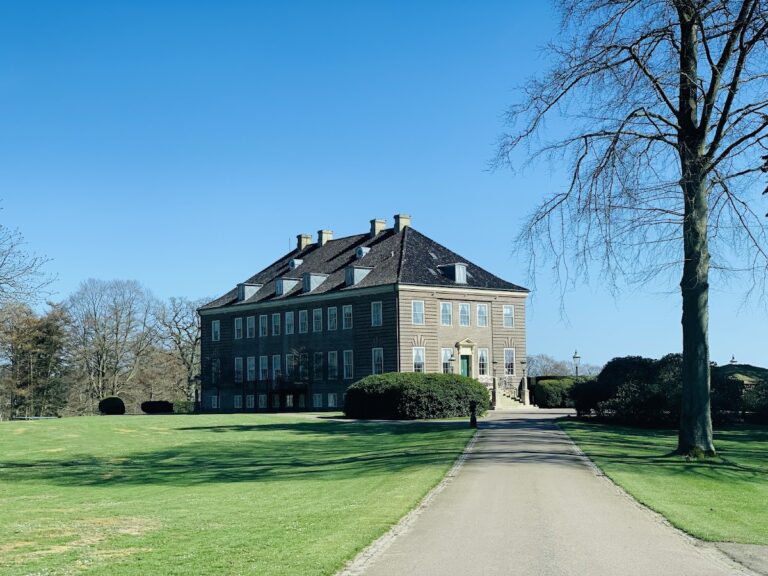
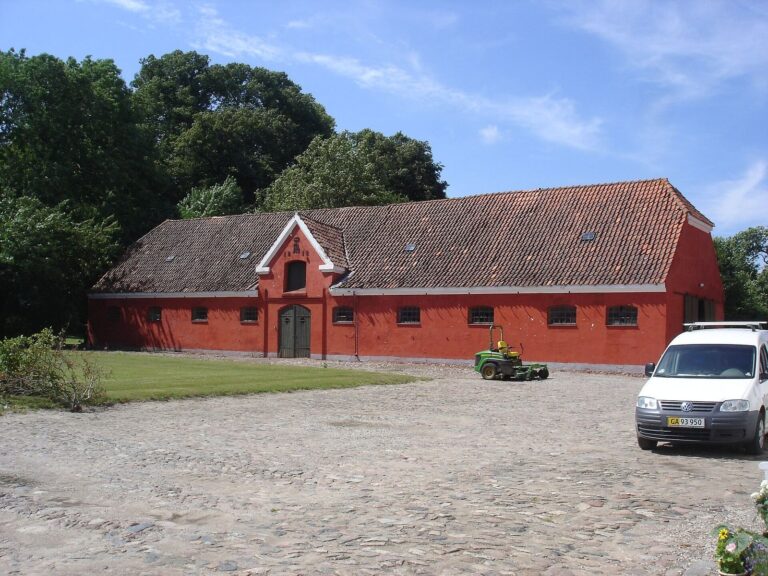
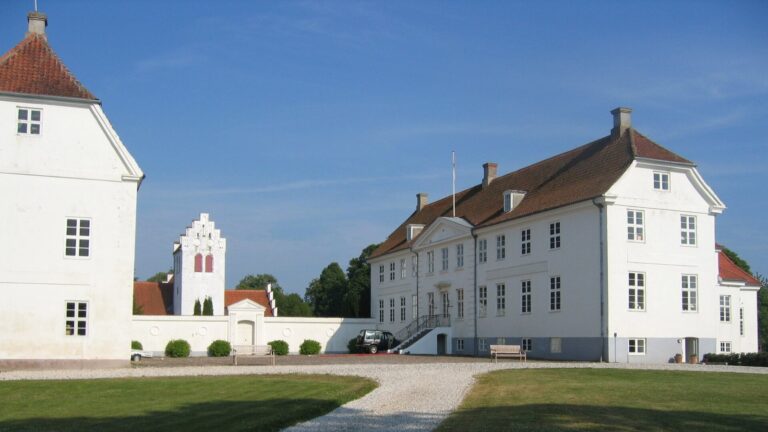
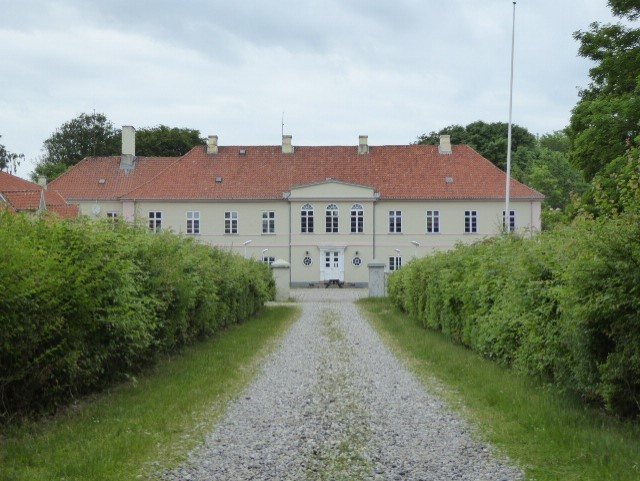
The main house is the estate’s principal described building. The house erected in 1671 was a two-storey, half-timbered structure. The current main building dates to 1830.