Großsteingrab Drosa: A Late Neolithic Megalithic Tomb in Germany
Site at a Glance
- Popularity
- Low
- Country
- Germany
- Primary era
- Stone Age
- Eras represented
- Stone Age
- Civilizations
- Unclassified
- Site type
- Burial
- Remains
- Tomb
On this page16 sections
History
Neolithic origins
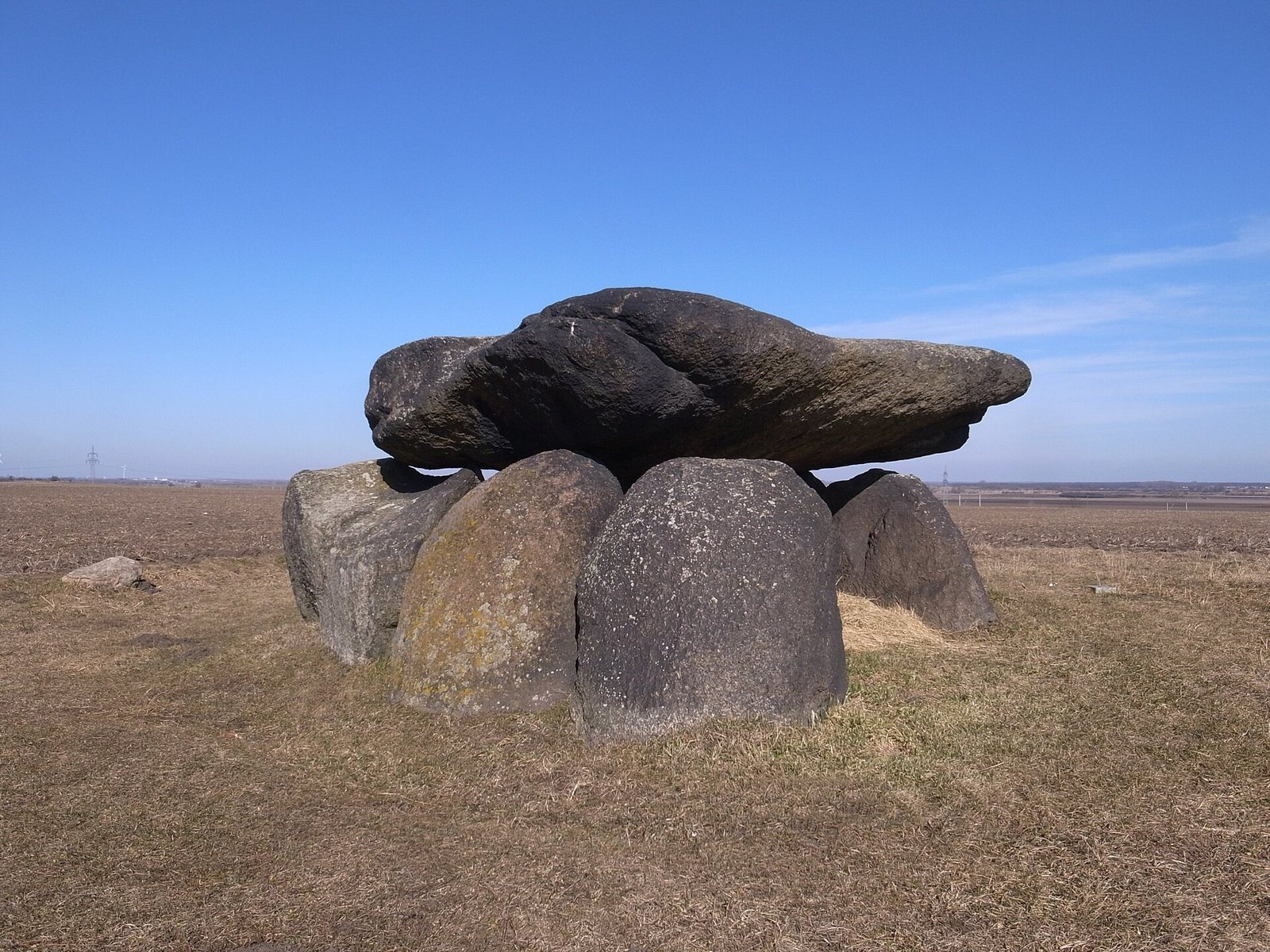
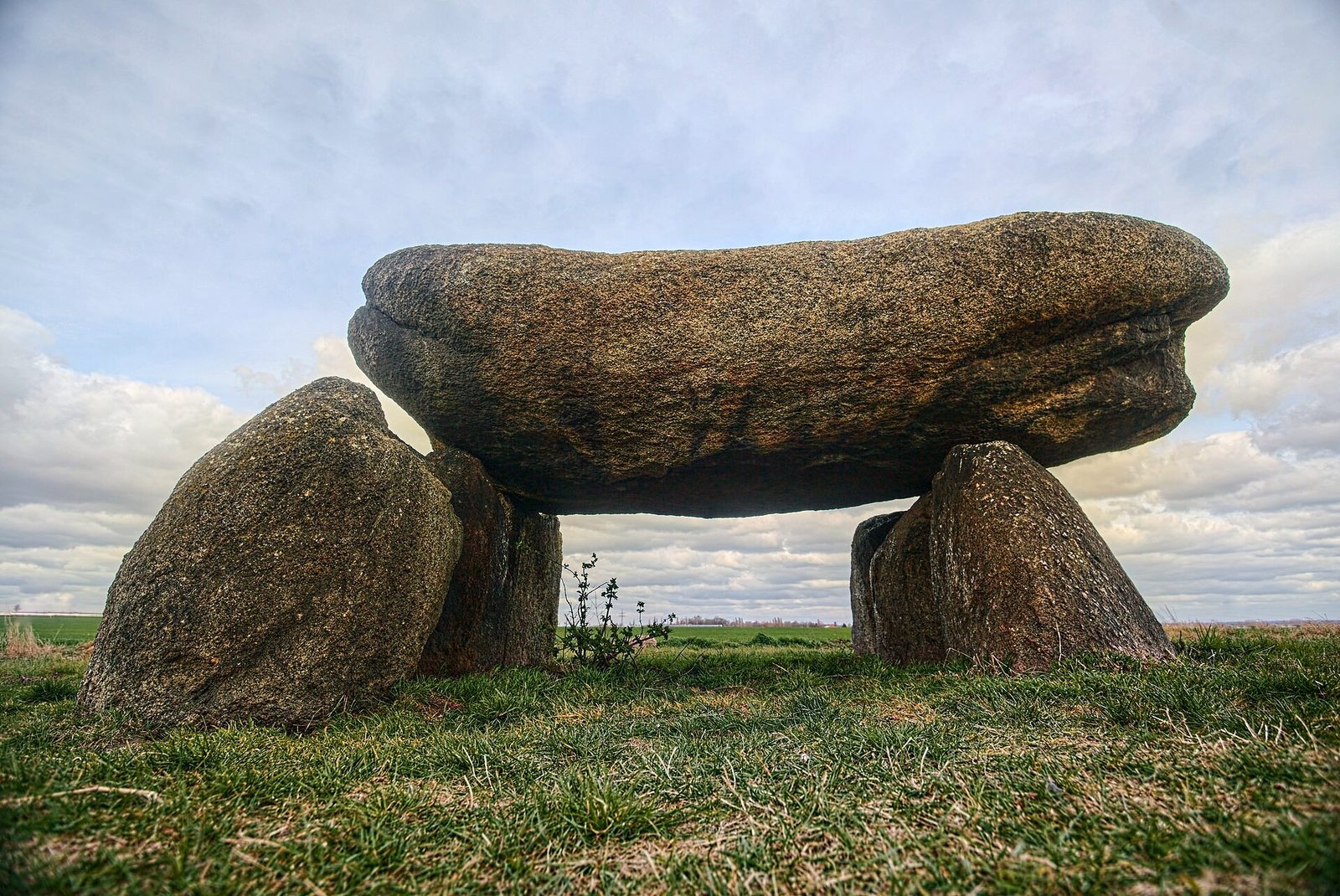
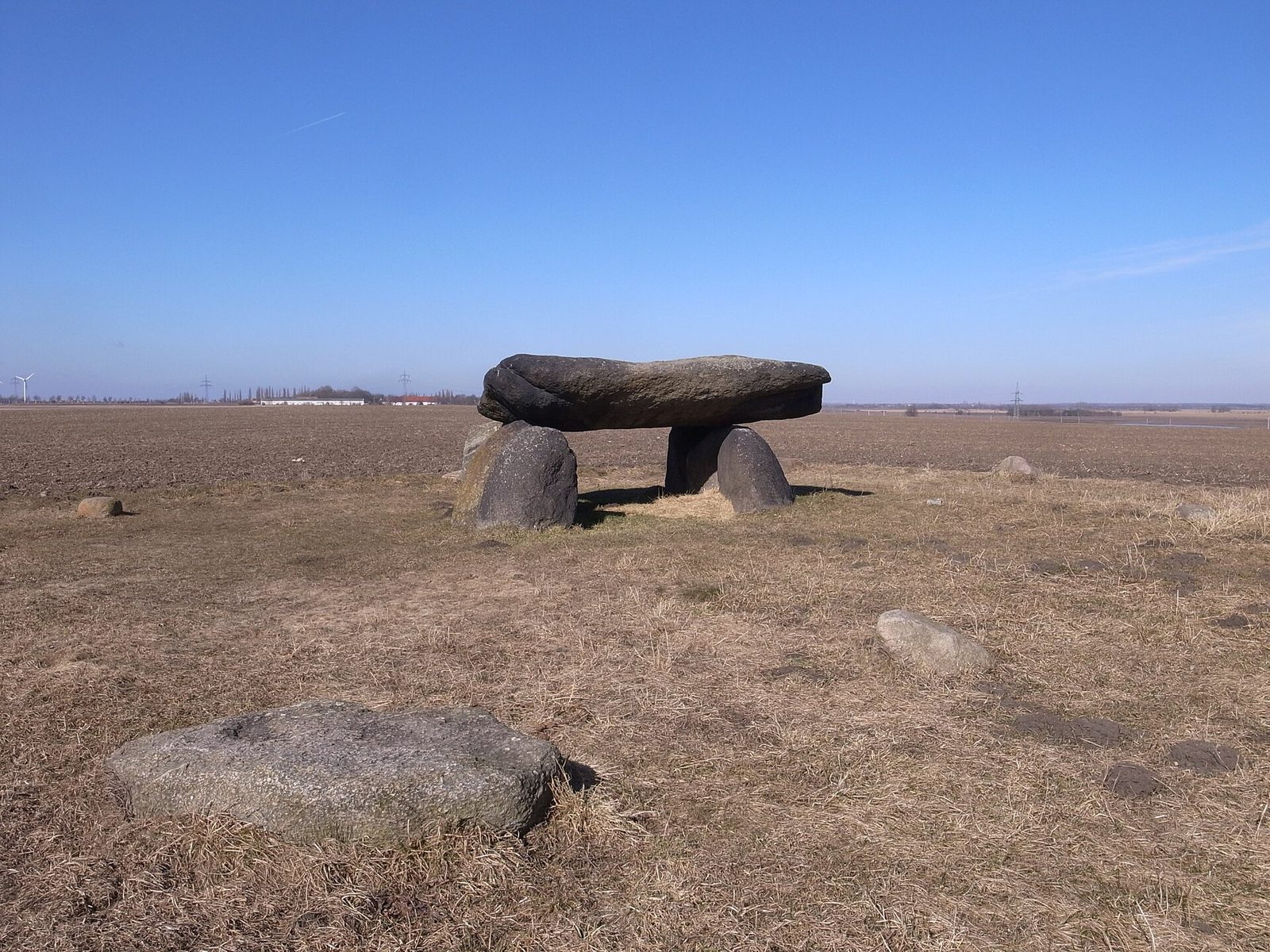
Großsteingrab Drosa is a Late Neolithic megalithic tomb in a field north of Drosa, Germany. It dates to about 3500–2800 BC and belongs to the Walternienburg-Bernburg culture, an archaeological classification for prehistoric communities and their material traditions. A megalithic tomb is a prehistoric burial monument built from large stones.
Local names and legends
Drosa originally had at least four megalithic tombs, and a local field-name suggests there may once have been a fifth. The Drosa tomb was already exposed by around 1700 and became known by the alternative name Teufelskeller, or Devil’s Cellar.
One local tale places the Devil in a forest that once covered the site. A young charcoal burner who had killed his mother made a twenty-year pact with him. After hearing the man’s confession, a priest reasoned that although the Devil might claim his body, his soul could be saved if he wandered the earth as a bull under a herdsman’s care. The Devil tore the man apart, and a bull then appeared near the tomb and joined a grazing herd. Each day, the herdsman found food and a silver coin on the capstone, until the gifts stopped after his grandson soiled the serving bowl.
Another legend says a giantess flung the large capstone from her slipper after it caught as she crossed a rock. A separate story identifies the tomb as the grave of Drusus, also known as Nero Claudius Drusus, a Roman general of the late first century BC. The tale says he reached the Elbe in 9 BC, died on his return, and was buried at Drosa; it also derives the place-name Drosa from Drusus.
Removal and excavation
Removal of the tomb began in 1903 during land consolidation. In spring 1904, workers cleared away the substantial mound, taking 70 cartloads of earth. The Köthen History Society excavated the site from 13 to 26 April that year under Otto Gorges. Finds went first to Köthen town hall and are now held by the Historical Museum for Middle Anhalt in Köthen. A perforated piece of coral found in the tomb after the excavation remained in private possession.
The association of several vessels with the tomb is uncertain. Some had been recovered before the excavation, while the 1904 work yielded two broken vessels near the passage’s opening into the chamber. Excavators assigned a Rössen-type label to vessels in this group, but that does not make them objects of the Rössen culture. Rössen was an earlier archaeological culture, preceding central German megalithic tombs and the Bernburg culture.
Remains
The tomb stands in a field at Drosa’s northern edge. Its stone chamber was covered by an earthen mound, and the surviving structure comprises six supporting stones and one capstone. The chamber ran from east-southeast to west-northwest, while the mound extended along a north-south axis.
Mound and exterior features
Mound and stone surround
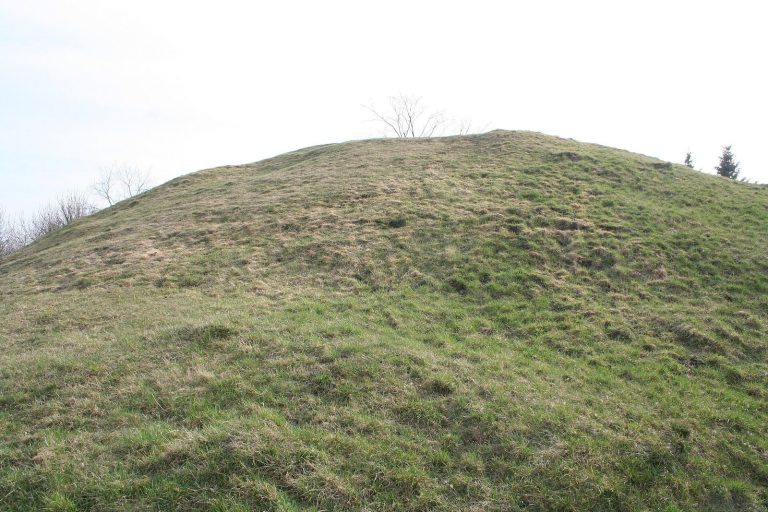
The mound extended 19–20 m along its north-south axis, with its base about 30 cm below the bottoms of the chamber wall stones. Two large granite blocks found near the tomb may have formed part of a stone surround. One is about 1 m high; the other is at least 2 m high and more than 1 m wide.
Stone cist and nearby deposits
A small sandstone cist, a stone-built burial container, lay about 1 m from one of the possible surround stones. Its cover slab measured 0.7 by 0.64 m and was 0.06 m thick; a base slab and four side slabs completed the container, with small stones filling the gaps. Charcoal and small flint pieces lay directly beneath it. Nearby were animal bones and teeth, pottery sherds, and a pointed flint scraper measuring 7.0 cm long, 1.5 cm high, and 1.25 cm wide.
Deposits around the mound
Near the passage entrance, sandstone slabs lay about 0.5 m deep, a level also described as 0.5 m above the mound’s base. Animal bones beside them were embedded in ash. At the southeast edge, animal bones and coarse, thick pottery sherds were found about 0.5 m deep, with a cattle horn core and further bones nearby. Sherds and flint nodules lay close above the natural ground. At the mound’s southeast end, 0.75 m above its base, finds included more bones, a pig mandible, cattle teeth, pottery sherds, and flints.
Chamber and passage
Burial chamber
The trapezoidal chamber was originally at least 9.2 m long. It measured 2.30 m across at the west-northwest end and 1.25 m at the east-southeast end. In 1904, 15 granite wall stones remained, each between 1.5 and 2 m high. The large surviving capstone at the west-northwest end is 4.20 m long, 3.33 m wide, and 0.75 m thick. A smaller capstone at the east-southeast end was destroyed in 1904.
A clay layer lined the outside of the chamber and survived locally to a height of 1 m. The chamber floor had two layers, gravel laid over thin limestone slabs.
Entrance passage
The passage entered at a right angle from the chamber’s south-southwest long side. It was 3 m long and 0.9 m wide. The three passage wall stones still present in 1904 stood just under 1.5 m high, and smaller stones filled the spaces between them. Like the chamber, the passage had paving of gravel over thin limestone slabs. At the junction, a vertical stone set into the ground formed a threshold 0.5 m high. An upright limestone slab and a gap of about 0.2 m between opposing passage stones suggest that a closure once occupied the opening. Gorges proposed that it may have been a wooden door.
Burials and finds
Burial evidence
Excavators identified two burial layers in the chamber. Their pottery links them with the Bernburg and Walternienburg cultures, although their precise relationship within the tomb cannot be established. Human bones were heavily fragmented. The position of one burial could be determined: the body lay crouched on its right side, lengthwise in the chamber, with the head toward the northeast. Four vessels accompanied it, a bowl in front of the mouth and three small cups in front of the chest.
Pottery
About 35 vessels came from the chamber, along with numerous sherds that could not be reconstructed. Six were flat, undecorated bowls, 7–10 cm high, with handles, loops, or double loops. Most of the other vessels were cups 4–7 cm high, decorated with lines, dots, zigzags, or herringbone patterns; two cups were notably taller. The assemblage also included bowls and beakers.
Other chamber objects
Other grave goods included a 6 cm stone axe, a saw, flint arrowheads and flakes, and a perforated slate plate 5.5 cm long. There was also a perforated bone, a beaver tooth, and perforated animal teeth worn as ornaments, identified as dog, horse, or deer, as well as one from an undetermined animal. A large rounded stone with two hollows may have served as a whetstone. Another object was a hollow bird bone coated with earth and verdigris; its coating crumbled during recovery.
The passage contained scattered stones, pottery sherds, and a few pieces of flint. The two broken ceramic vessels found near its opening into the chamber were slightly damaged.