Yoshima Kofun: An Early Japanese Keyhole-Shaped Burial Mound
Site at a Glance
- Rating
- 2.8
- Popularity
- Very Low
- Country
- Japan
- Primary era
- Classical
- External website
- Open
- Eras represented
- Classical
- Civilizations
- Unclassified
- Site type
- Burial
- Remains
- Burial Mound
On this page9 sections
History
Origins in the Kofun period
Yoshima Kofun is a kofun, or Japanese burial mound, in Shingū, Tatsuno, Hyōgo, Japan. It is estimated to have been built in the latter half of the third century, near the start of the Kofun period, when monumental tombs were constructed. It is considered the oldest kofun in the Harima region and among the earliest in Japan.
A large settlement at the nearby Shingu Miyauchi Site flourished during the middle Yayoi period. This earlier era is associated with settled communities and wet-rice agriculture.
Excavation and designation
The burial chamber was first excavated in the 1890s, when grave goods were recovered. A field inspection and report on the finds followed in 1925, involving archaeologist Sueji Umehara and other Hyōgo researchers.
In 1966, archaeologist Yoshio Kondo and Shingū Town surveyed the mound and excavated the chamber again. The site was designated a National Historic Site on May 22, 1978.
Remains
Mound and setting
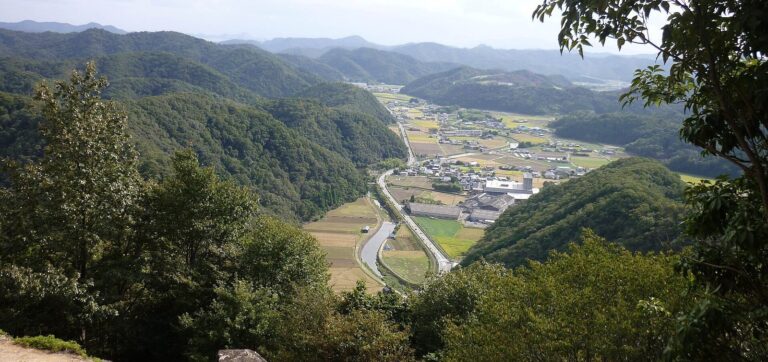
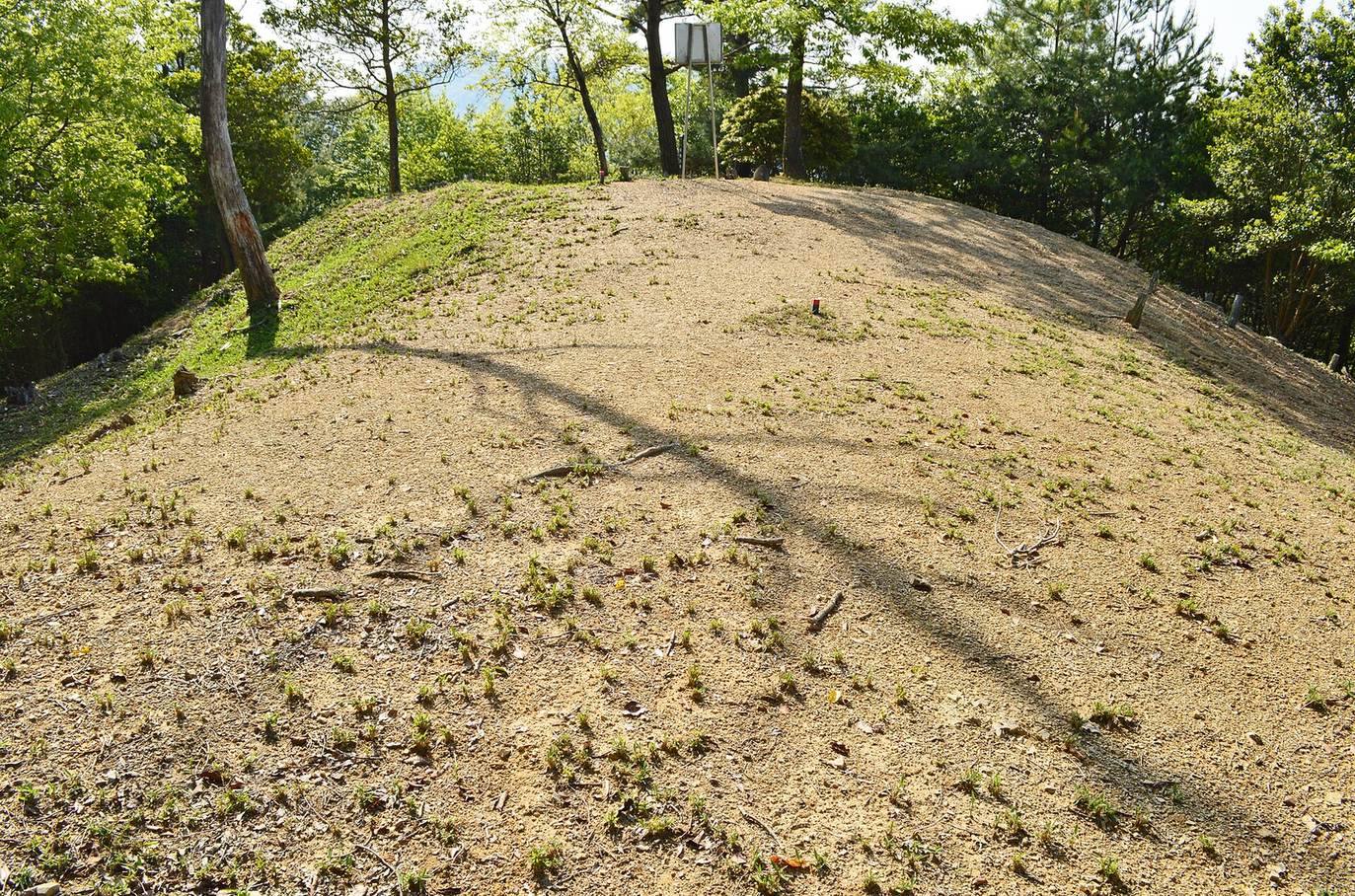
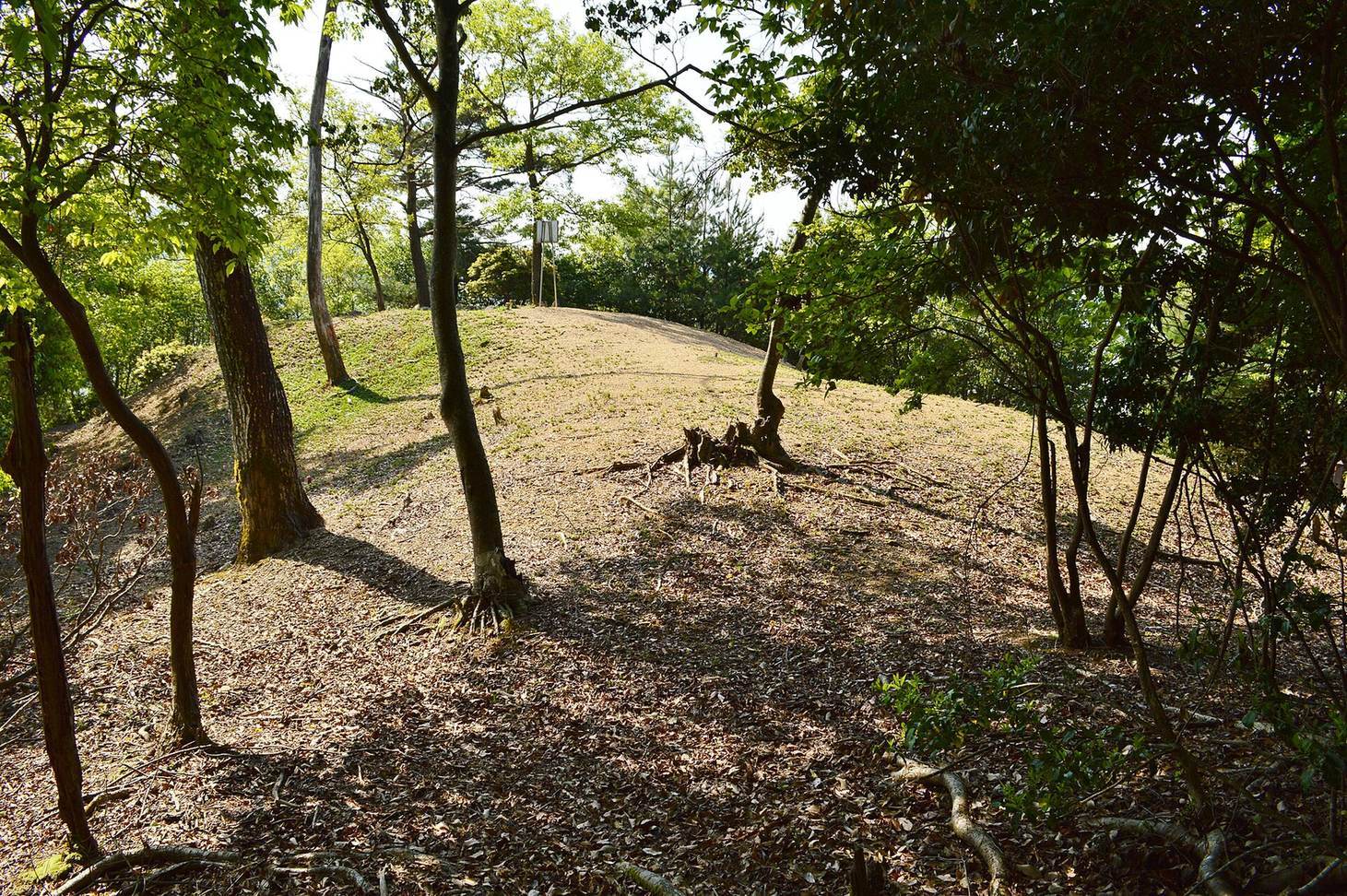
The 36-meter-long mound stands on a ridge about 250 meters above sea level, above the right bank of the Ibo River and overlooking its plain. Its asymmetrical keyhole shape has a circular rear section facing the plain, while the front was formed by cutting into the ridge.
Burial chamber
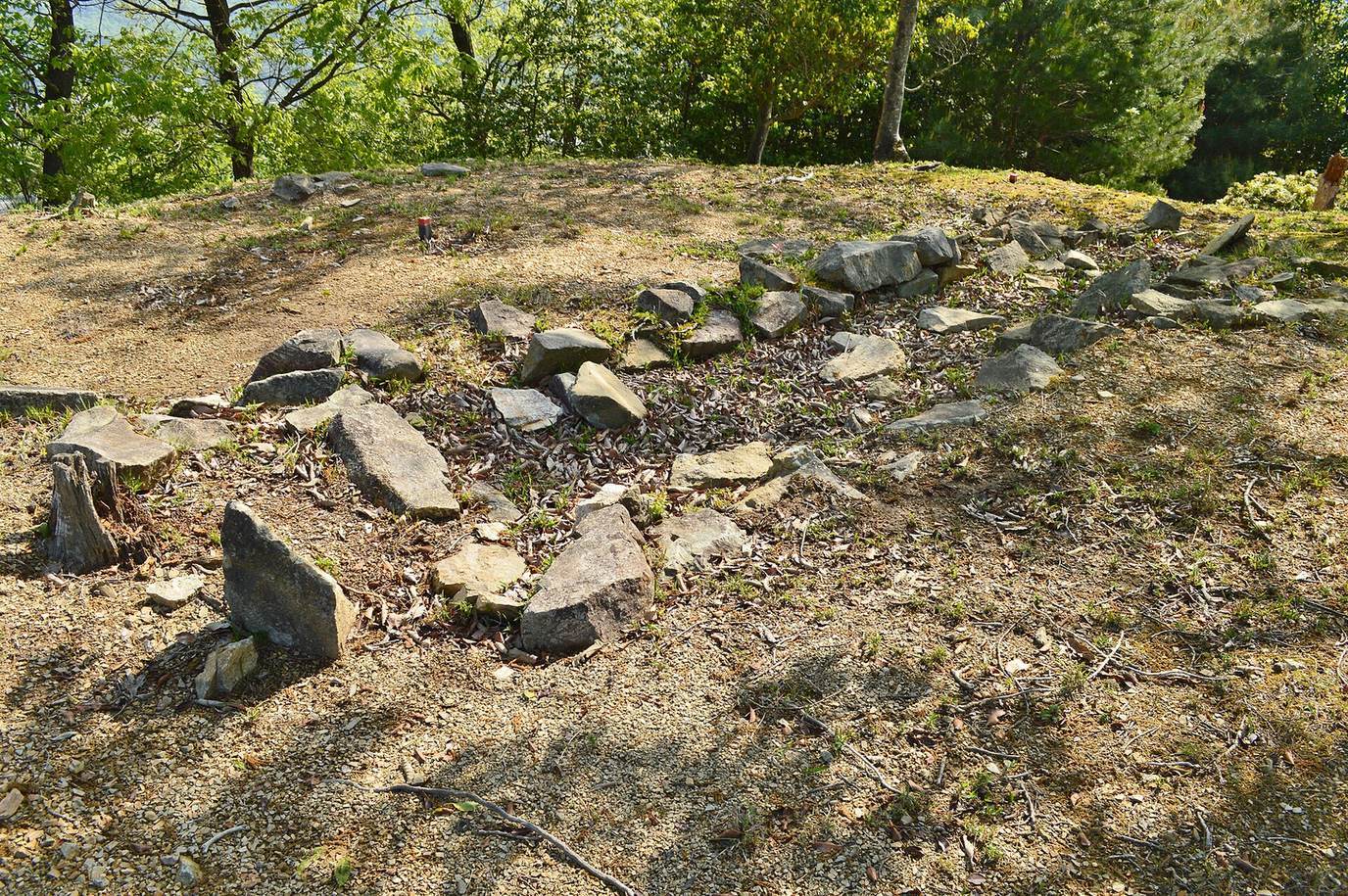
A stone burial chamber lies in the center of the mound’s circular rear section, angled across its main axis. Built from split stones, it measures about 5.4 meters long, 0.95 to 1.15 meters wide, and about 1 meter high. Traces inside indicate that it held a wooden coffin shaped like split bamboo.
Burial finds
Bronze mirrors
Six bronze mirrors imported from China during the Han dynasty were recovered. Two matching mirrors have triangular rims and designs featuring heavenly kings, the sun and moon, arabesques, four deities, and four beasts. Another triangular-rimmed mirror has a band of waves and a coiling dragon; a further example combines four-deity and four-beast designs with an inscription translated as “made by me.” The fifth mirror has an inscribed band of beasts, and the sixth bears an inward-facing flower pattern. Same-mold counterparts to the matching pair occur at five other kofun, while mirrors corresponding to the wave-pattern example occur at three others. The Tokyo National Museum holds the mirrors, and replicas are displayed at the Tatsuno City Buried Cultural Properties Center.
Beads and pottery
Other recovered objects include 38 glass beads and one pottery sherd.