Great Dolmen of Dwasieden: A Neolithic Tomb in Germany
Site at a Glance
- Popularity
- Low
- Country
- Germany
- Primary era
- Stone Age
- Eras represented
- Stone Age
- Civilizations
- Unclassified
- Site type
- Burial
- Remains
- Tomb
On this page6 sections
History
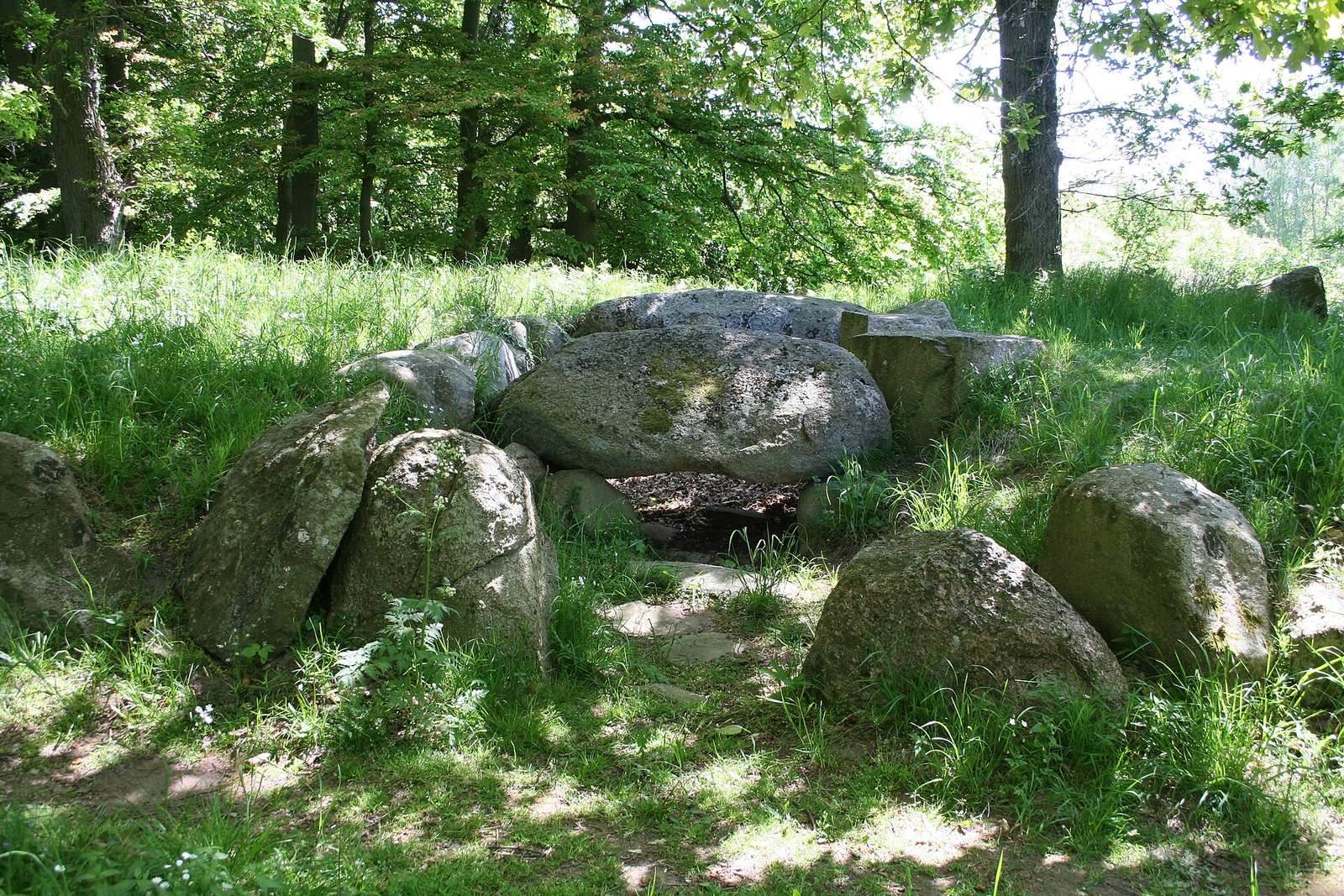
The Great Dolmen of Dwasieden is a Neolithic (New Stone Age) tomb built from large stones on the Jasmund Peninsula, on the island of Rügen in Sassnitz, Germany. Communities of the Funnelbeaker culture, an archaeological culture identified partly through its characteristic pottery, constructed it between 3500 and 2800 BC.
People of the Globular Amphora culture, another archaeological culture identified partly through pottery, later reused the tomb. In 1806, German Romantic painter Caspar David Friedrich depicted the monument. Drawings and sketches by Friedrich are held at the Ashmolean Museum of Art and Archaeology in Oxford.
Archaeologist Ewald Schuldt excavated the tomb in 1970. It is listed as Sprockhoff No. 472 in the catalogue of megalithic monuments compiled by archaeologist Ernst Sprockhoff.
Remains
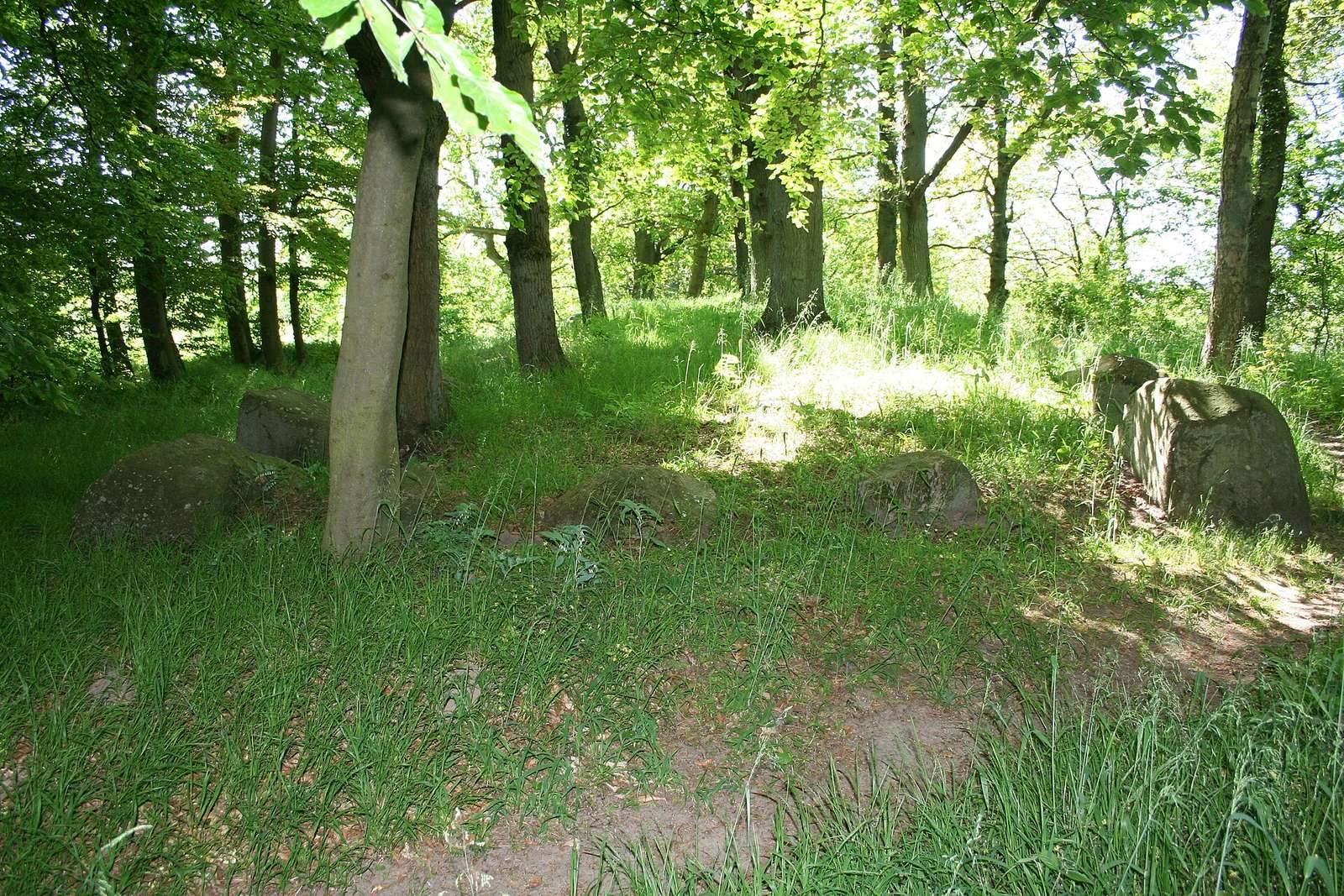
The monument consists of a trapezoidal burial mound and a stone chamber at its wider end. The mound runs roughly northeast to southwest, while the chamber is oriented roughly east to west.
Monument structure
Mound and boundary stones
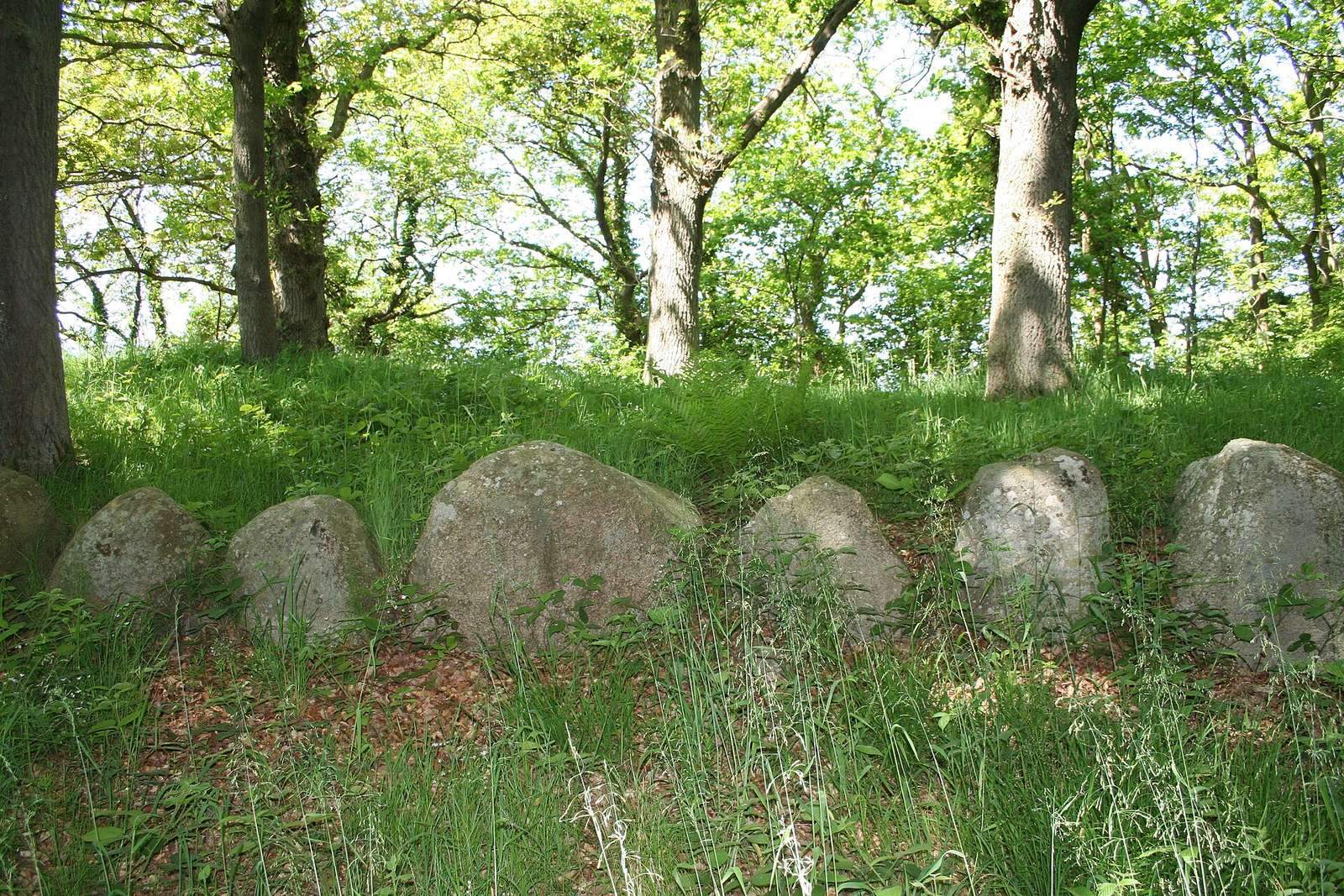
The mound is about 35 metres long and narrows from 12.5 to 7.5 metres wide. It lies south of Lancken, near the southwestern edge of a forest and less than 500 metres from the Baltic Sea. Of its 54 boundary stones, including four guardian stones, 41 survive. One guardian stone at the southwestern end fell in prehistoric times and bears 40 cup marks, small cup-shaped depressions. Another boundary stone has three such marks.
Burial chamber
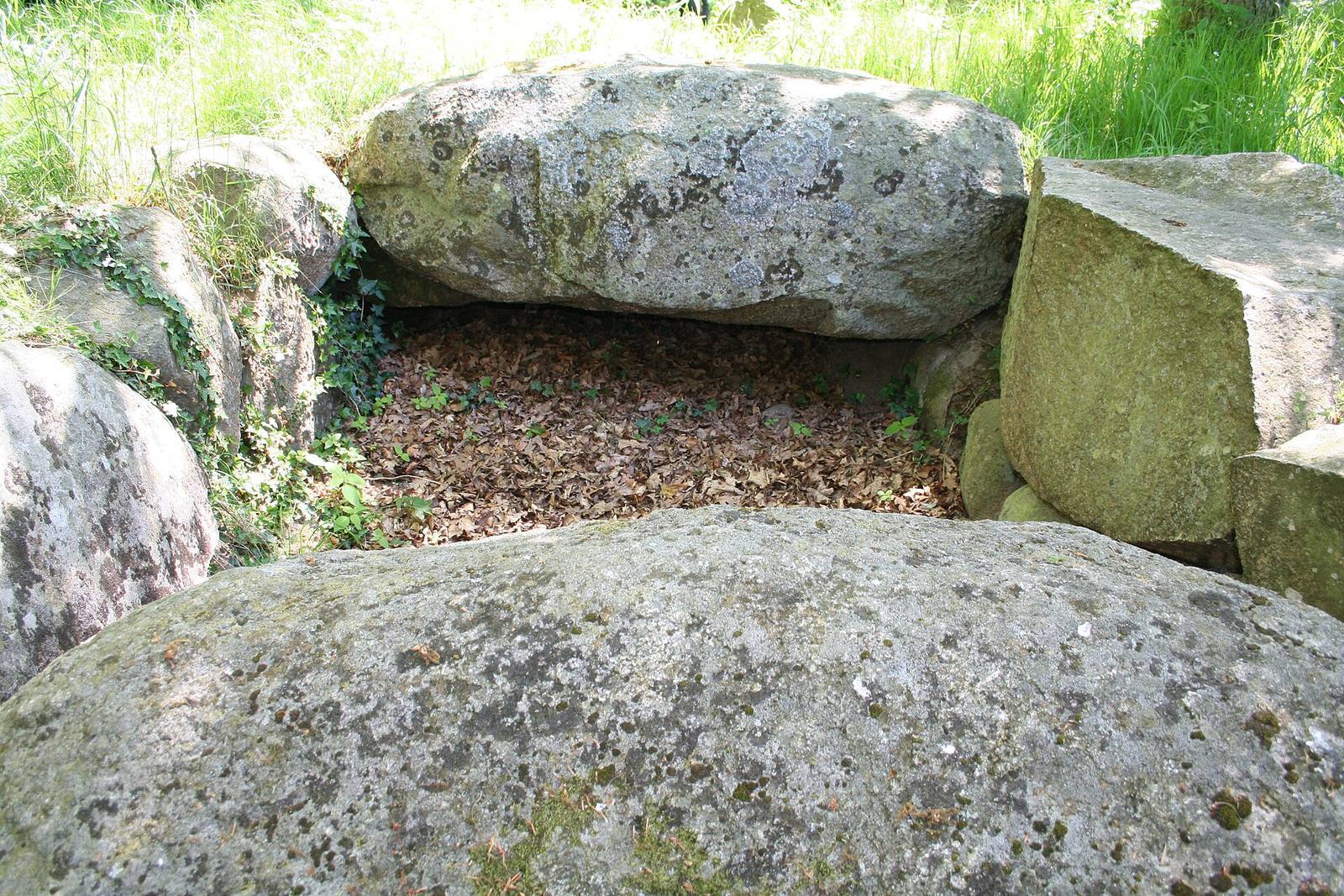
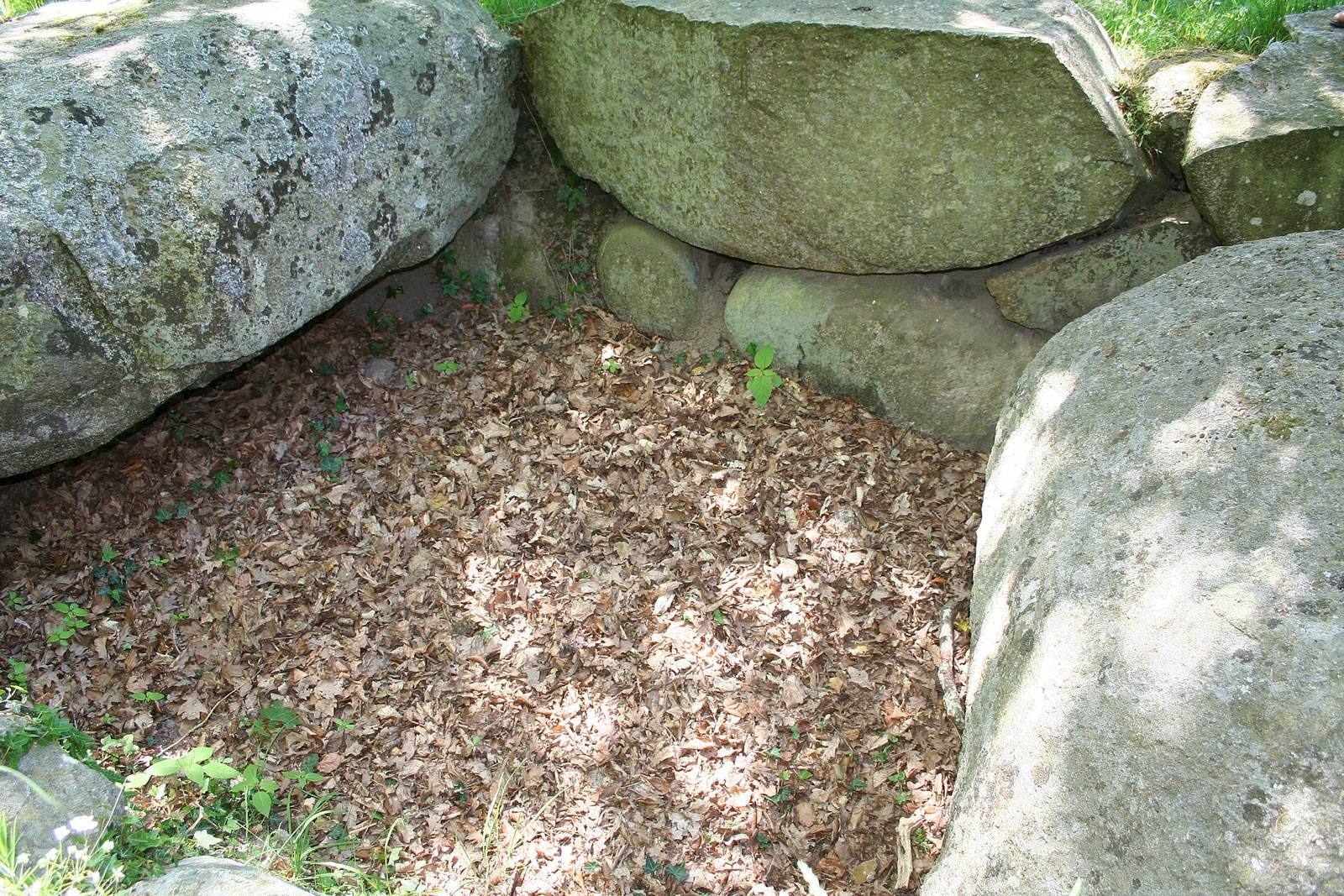
Set across the mound at its wider end, the chamber measures 4 metres long, 1.7 metres wide and 1.4 metres high. Its entrance faces west, an exceptionally rare arrangement for this type of tomb, and leads through a passage about two metres long. Seven upright stones and a half-stone of equal height form its supports. The structure also includes five slabs and six roof slabs, three large and three small; the central roof slab is missing. Red sandstone slabs, heat-treated flint and clay make up the floor.
Excavated objects
Finds include 1,777 pottery sherds, the largest quantity of pottery fragments from a single site in Mecklenburg-Western Pomerania. Other objects comprise 19 blades, 11 amber beads (two shaped like double axes), eight small bowls, six transverse arrowheads, six blade scrapers, five double-cone-shaped vessels, five bowls, two funnel-shaped bowls, one scraper, one hammerstone and one narrow chisel.