Sachsenwald Alter Hau 3: A Neolithic Chamberless Long Barrow
Site at a Glance
- Popularity
- Very Low
- Country
- Germany
- Primary era
- Stone Age
- Eras represented
- Stone Age
- Civilizations
- Unclassified
- Site type
- Burial
- Remains
- Burial Mound
On this page8 sections
History
Sachsenwald Alter Hau 3 is a chamberless long barrow, a long earthen mound, in the Sachsenwald forest in Schleswig-Holstein, Germany. It belongs to a group of monuments dating to about 3500–2800 BCE and associated with the Funnel Beaker culture, a Neolithic culture of northern Europe named for its characteristic funnel-shaped pottery.
Alter Hau comprises eight surviving chamberless long barrows in forest compartments 289 and 290, near Sachsenwaldau and the Bille, east of Hamburg. Further long barrows in the nearby Saupark have been destroyed. Ernst Sprockhoff, a German prehistorian and archaeologist, examined Alter Hau 3 in 1954 and listed it as catalogue number 291.
Remains
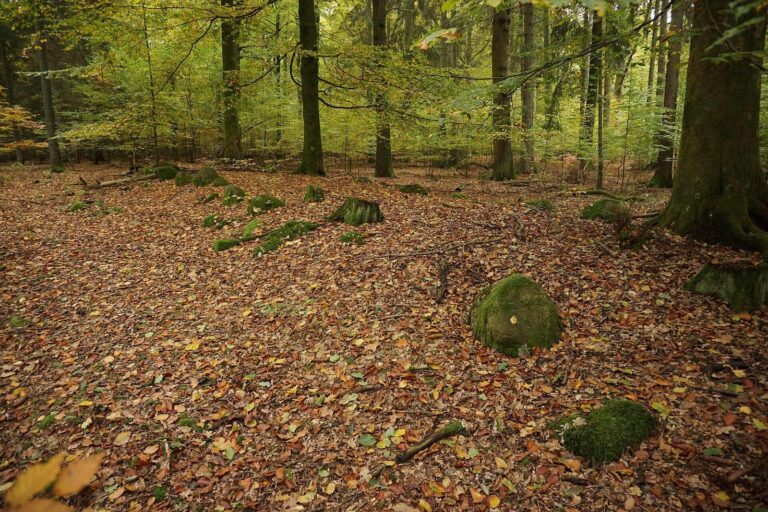
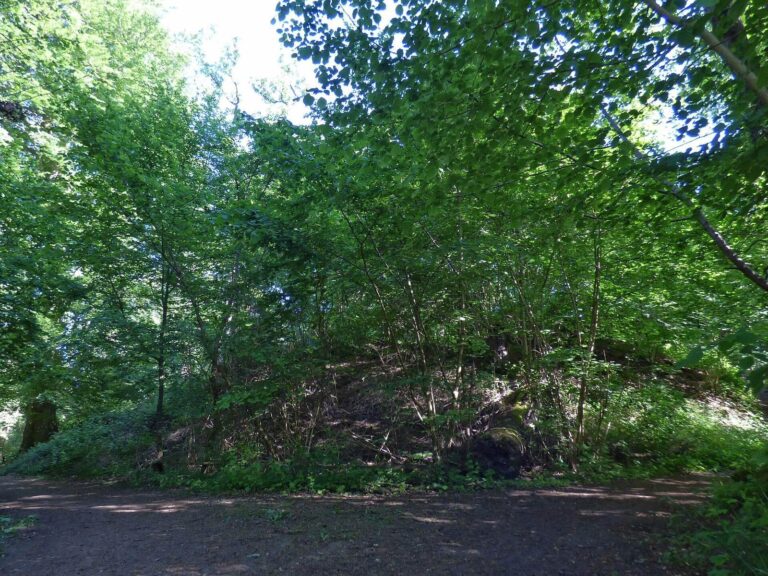
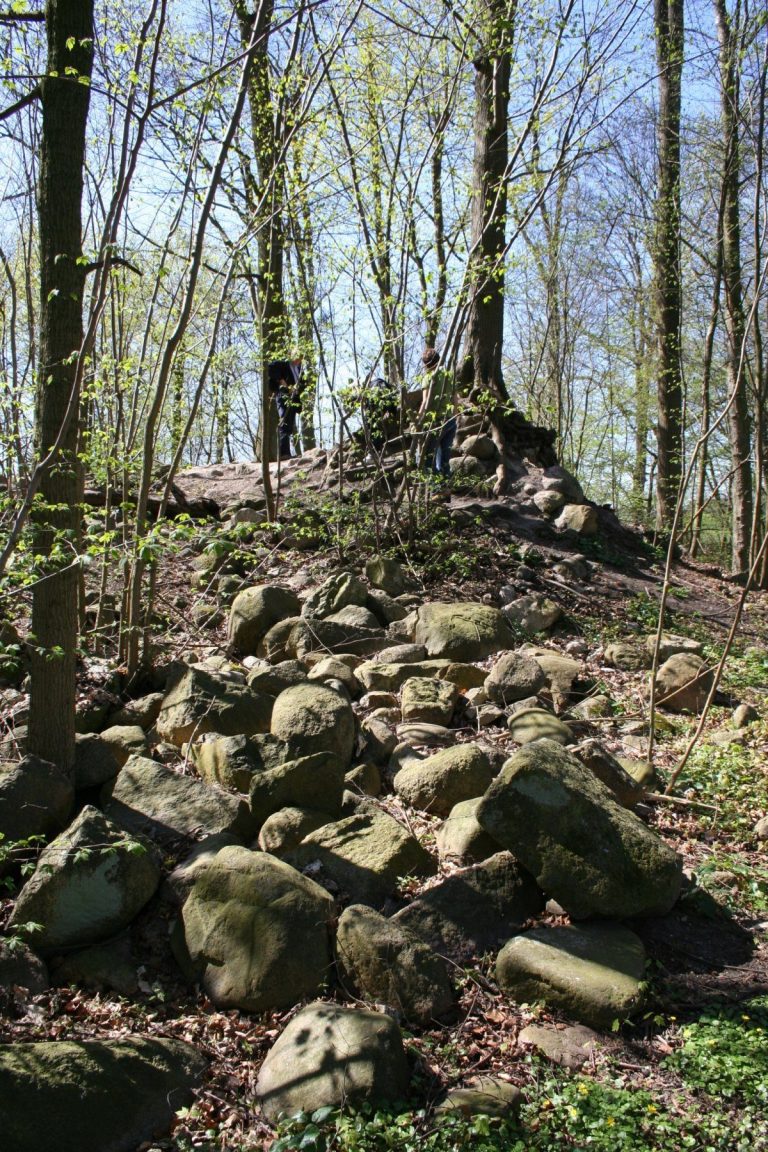
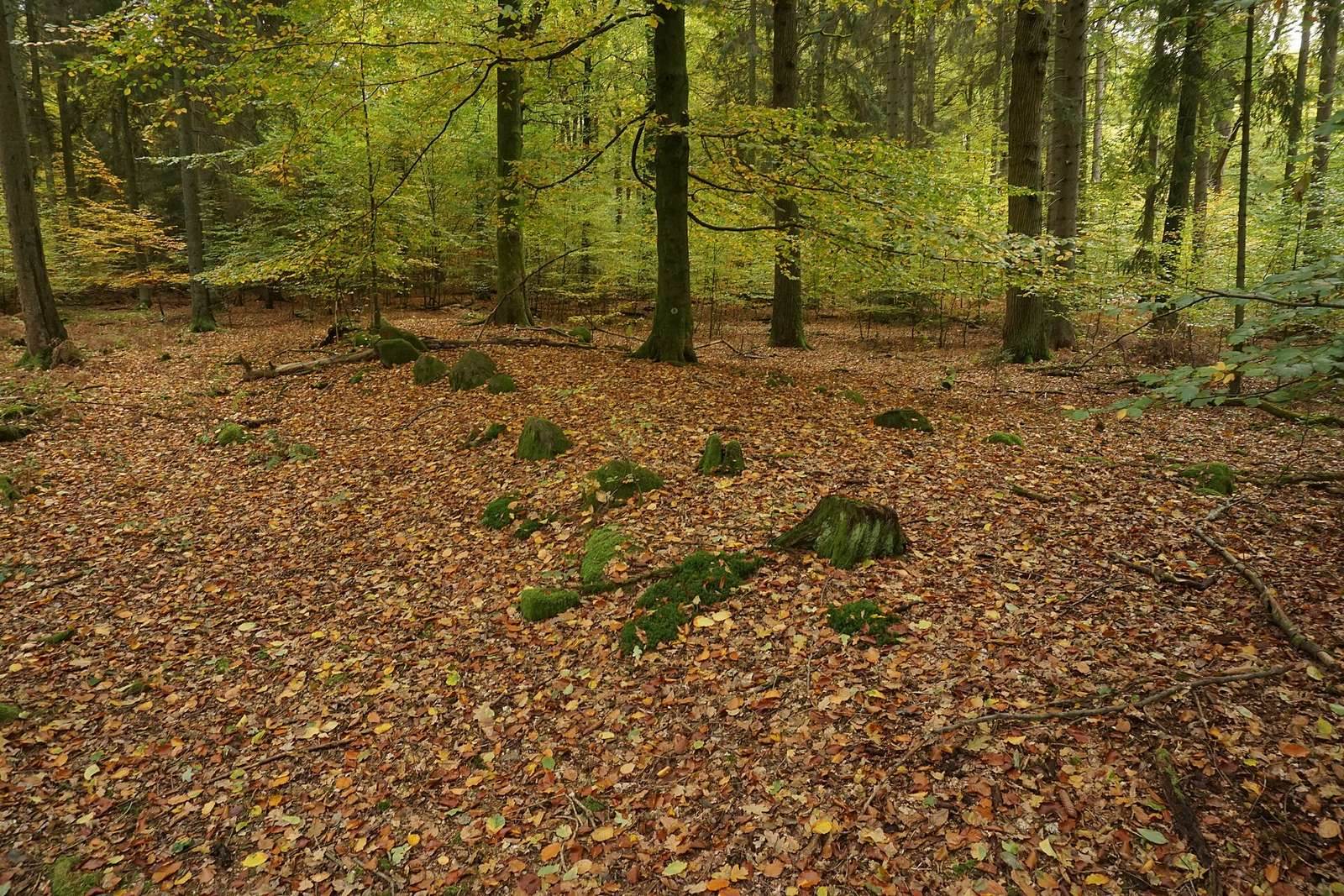
The mound extends from southwest to north-northeast and is about 50 m long and 3.25 m wide. Its height is approximately 0.75 m at the south-southwest end and 0.50 m at the north-northeast end. Boundary stones, too small to form a chamber, define parts of its long sides, with the southeastern side better preserved.
Mound and boundary stones
The surviving boundary stones measure about 0.75–0.90 m high and approximately 0.50 m across and in thickness. Small stones wedged into their setting holes helped keep them upright. Sprockhoff considered that they had settled about 0.2 m into the ground under their own weight, rather than having been deliberately buried to that depth.
Ground features and finds
Southwestern end and basin-shaped pit
At the southwestern end, the mound fill contained scattered pottery fragments and flint tools. Changes in soil color and concentrations of finds also occurred on the former ground surface. A bronze bracelet was recovered from the mound fill at roughly spade depth.
About 3 m from this end was a basin-shaped pit measuring 1 m across at the top and 0.3 m deep. Its grey fill differed from the surrounding natural soil, was locally hard, and contained charcoal fragments and heat-altered bone. Pottery in the pit included part of a Funnel Beaker vessel. Fragments from funnel-rim and conical-neck vessels, along with a thick, round scraper, lay on the fill and nearby on the former ground surface. Some surface fragments belonged to the vessel found in the pit. Sprockhoff interpreted the feature as a grave pit.
Additional pits
Near the middle of the mound, a rectangular pit parallel to its long axis measured 1.5 by 0.75 m and was about 0.30 m deep; it had dark fill. Beside it, near the mound’s edge, an oval pit aligned with the same axis measured 1.7 by 0.7 m and reached 0.4 m deep. Its fill was grey. Farther north, between 16 and 18 m from the southwestern end, two closely spaced pits cut into the former ground surface may have served as graves for uncremated bodies.
Surface discolorations and burning
About 8 m from the southwestern end, an elongated oval grey stain measured roughly 1.5 by 0.75 m and held a few undecorated pottery fragments. Around 11 m from that end, an oval area about 1 m across had soil fired brick-red to a depth of 0.10 m, with charcoal and mottling beneath the burned layer. Sprockhoff interpreted it as a place where burning had occurred. At about 14 m, a black-grey mottled patch measured 1.25 by 0.75 m and was up to 0.20 m thick; its fill contained charcoal particles and a few lumps of fired clay.
Vessel fragments farther along the mound
About 35–36 m from the southwestern end, fragments of a funnel-neck vessel lay 0.4 m below the surface near the mound’s center. They came from an indistinct black-grey patch about 1 m across, and the vessel appears to have been broken there.