Pedra Sobre Altra: A Prehistoric Megalithic Burial Monument in Catalonia
Site at a Glance
- Popularity
- Very Low
- Country
- Spain
- Primary era
- Bronze Age
- Eras represented
- Stone Age, Bronze Age, Early Modern
- Civilizations
- Spanish
- Site type
- Burial
- Remains
- Tomb
On this page6 sections
History
Pedra Sobre Altra is a prehistoric megalithic funerary monument in the Cadiretes massif near Tossa de Mar, Spain. Its chronology extends from the Neolithic into the Bronze Age, while its cultural facies, a recognizable archaeological expression of a broader culture, is dated to 2500–1800 BCE.
Later history and investigation
An inscription dated 1799 identifies the monument as a boundary marker between Tossa de Mar and Llagostera. Lluís Esteva Cruañas, J. Tarrús Galter, and E. Fa Tolosanes excavated it in the early 1980s. Pedra Sobre Altra is included in Catalonia’s Architectural Heritage Inventory and was designated a Cultural Asset of Local Interest on 13 December 1983.
Remains
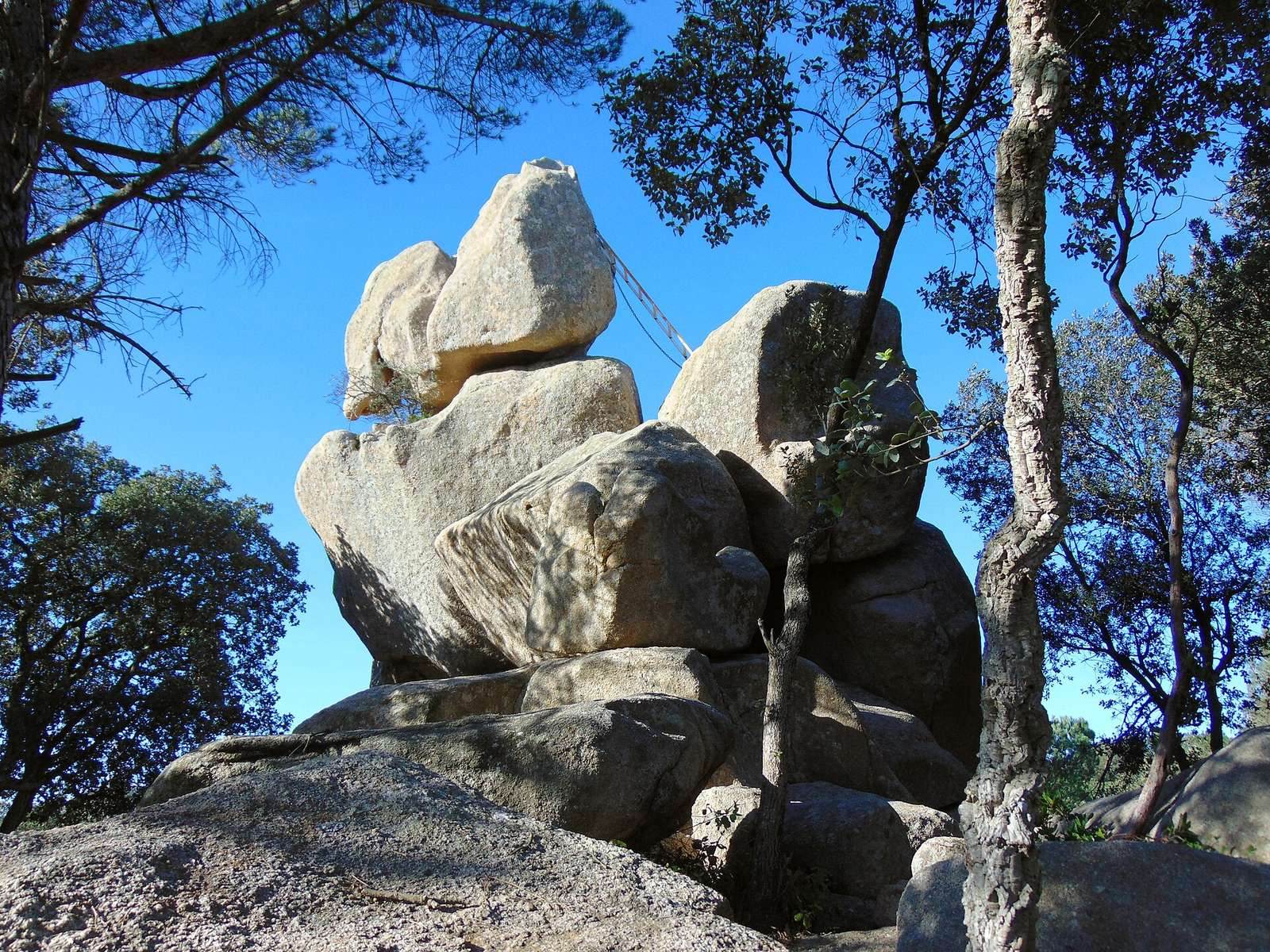
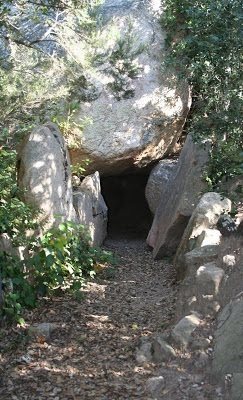
Pedra Sobre Altra is a paradolmen, a funerary monument combining natural rock with constructed elements. Its layout includes a cave-like burial chamber, a passage, and a mound raised over the burial. The builders adapted a natural granite shelter, enlarging it or forming a chamber in response to the rock and terrain. The monument faces southwest, at 233 degrees, an orientation shaped by its use of natural features.
Burial chamber and passage
A large, irregular granite block forms the chamber roof and measures about 4.8 by 3 by 4 metres. The interior reaches 6.60 metres in length. Its maximum width is 2.20 metres in the burial chamber and 1.20 metres in the passage. The stone slabs are up to about 1.6 metres high, 1.30 metres wide, and 0.60 metres thick.
Mound and associated rock
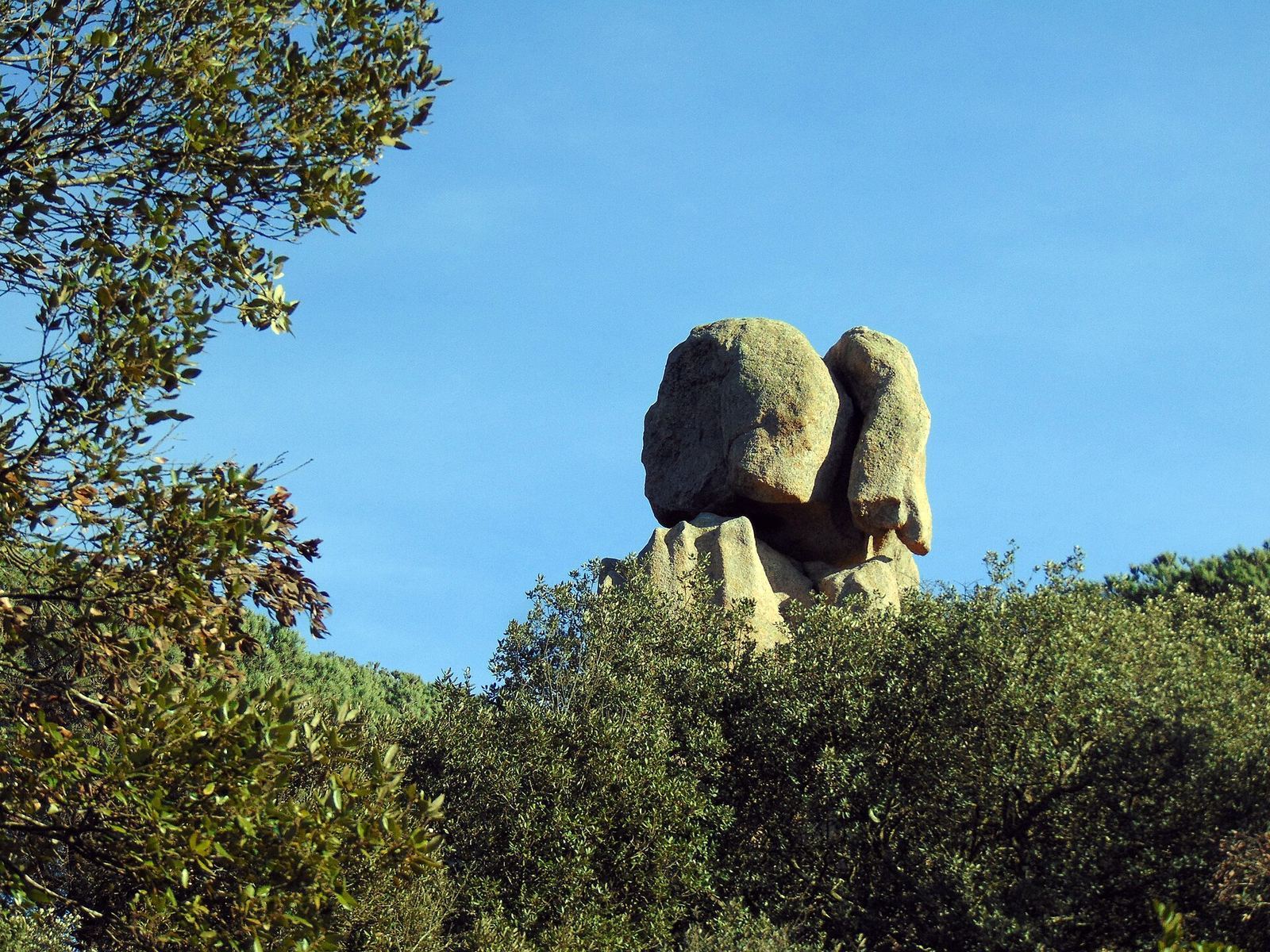
The burial mound is about 1.60 metres high, with a transverse axis of roughly 8 metres and a longitudinal axis of about 6 metres, measured from the chamber entrance. A separate large natural rock formation a few metres away also belongs to the megalithic complex.
Finds
Two fragments of an angular-profiled pottery vessel and a flint blade were found in front of the chamber entrance, 15 centimetres from the underlying rock.