Monument to Despot Stefan Lazarević at the Site of His Death in Serbia
Site at a Glance
- Popularity
- Medium
- Country
- Serbia
- Primary era
- Medieval
- Eras represented
- Medieval
- Civilizations
- Serbian Despotate
- Site type
- Civic
- Remains
- Monument
On this page4 sections
History
The Monument to Despot Stefan Lazarević at the Site of His Death is a medieval memorial at Crkvine, a hamlet of Markovac in Mladenovac, Serbia. His companions raised it in 1427 to mark where he fell from his horse. The builder was Đurađ Zubrović, a local lord and knight in Stefan’s retinue.
Stefan Lazarević and the memorial
Stefan (1377–1427), son and heir of Prince Lazar Hrebeljanović and Princess Milica, led a wing of heavy cavalry at the Battle of Ankara in 1402. The Byzantine emperor granted him the title of despot, a high rank below the emperor that also represented Serbia’s alignment with the Christian world. In 1403, Stefan made Belgrade his capital, and it became one of Europe’s important literary centers. Serbia flourished and recovered statehood under Stefan and his successor, Đurađ Branković, despite Ottoman attacks. That period of Serbian statehood ended in 1459.
Returning from the Hungarian court, Stefan stopped to hunt. As he reached out to receive a goshawk, he lost control of his body and fell from his horse. Tradition says that a sudden storm darkened the sky over Belgrade and thunder drowned out his final words, remembered as a call for Đurađ. His death was regarded as a calamity and the start of a severe crisis for Serbia, including the eventual collapse of the despotate and loss of state identity.
The church and later recognition
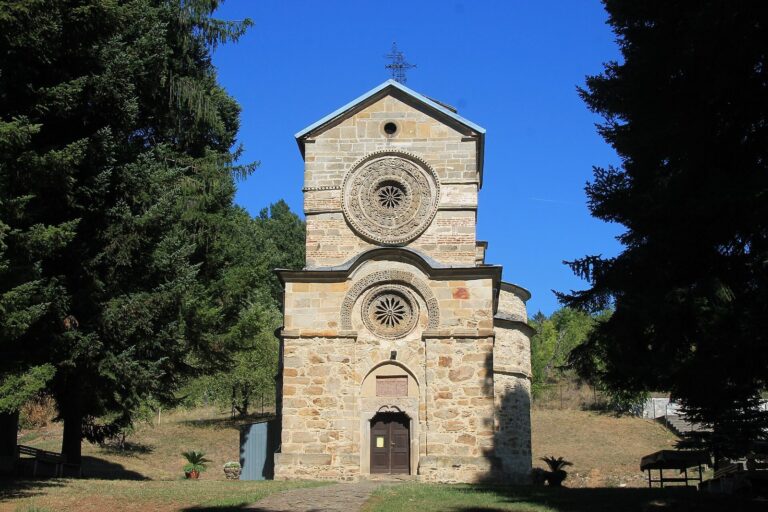
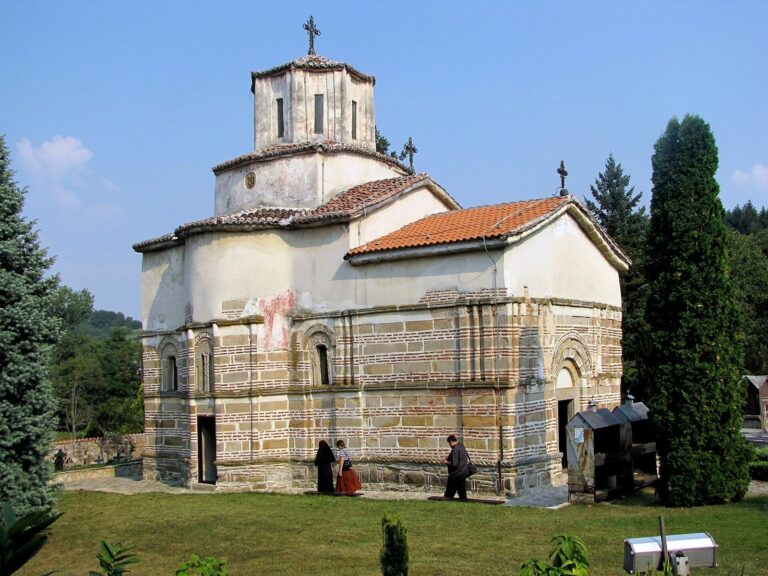
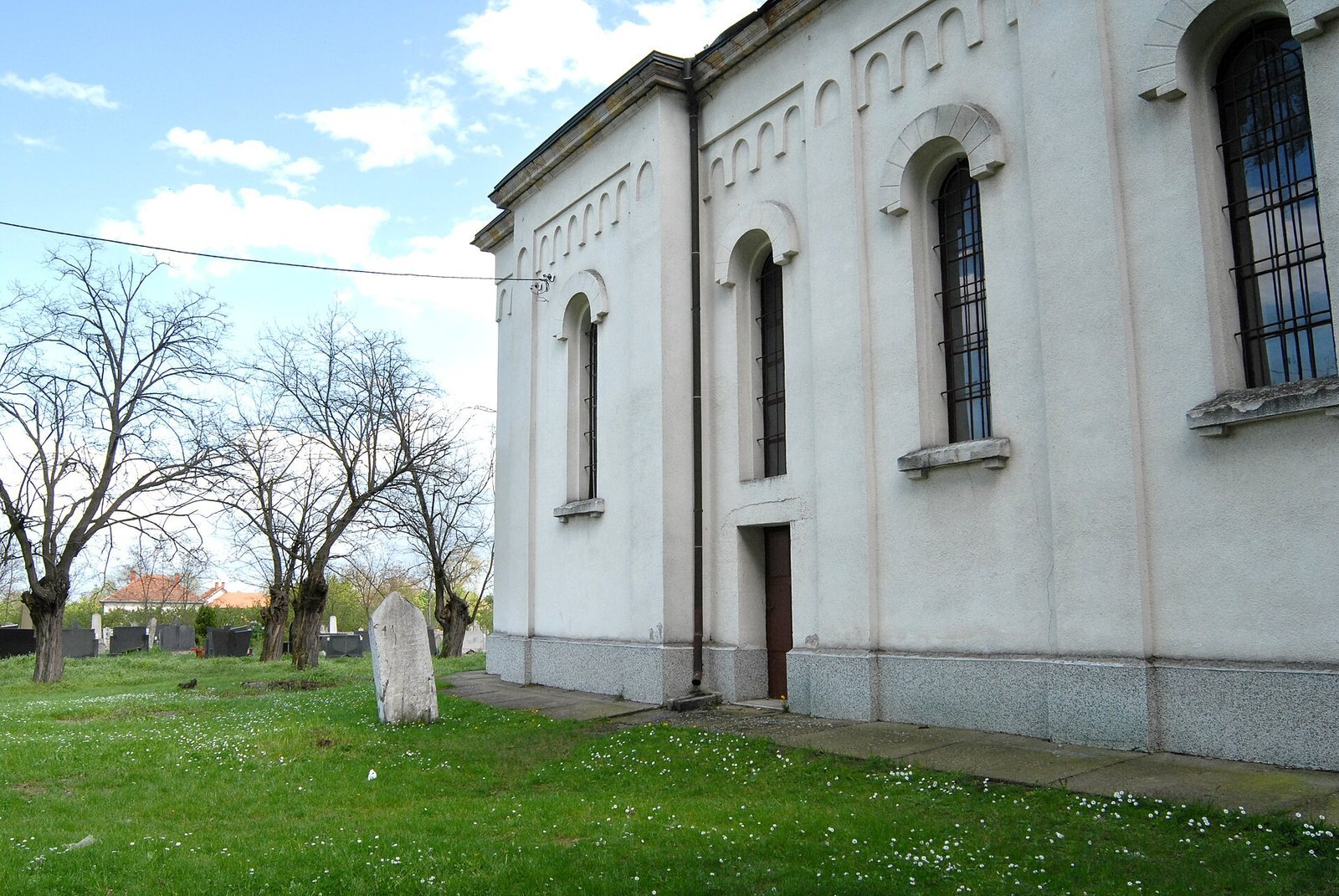
An earlier sacred building on the church site is thought to date to the fifteenth century. Tradition attributes its construction to Stefan in the Morava style, a medieval Serbian architectural tradition, and says he dedicated it to God. Prince Miloš Obrenović helped bring about the church’s restoration in 1836. In 1853–1854, Serbian icon painter Dimitrije Posniković made a screen bearing icons that separates the sanctuary from the main worship space. After earthquake damage, the restored church was demolished in 1884, and the present church was built on the site in 1886.
In 1979, the monument was protected as a Monument of Culture of Exceptional Importance.
Remains
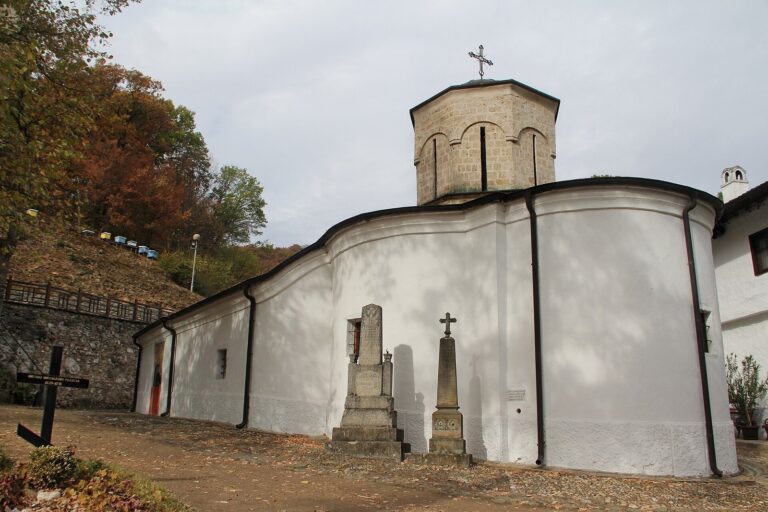
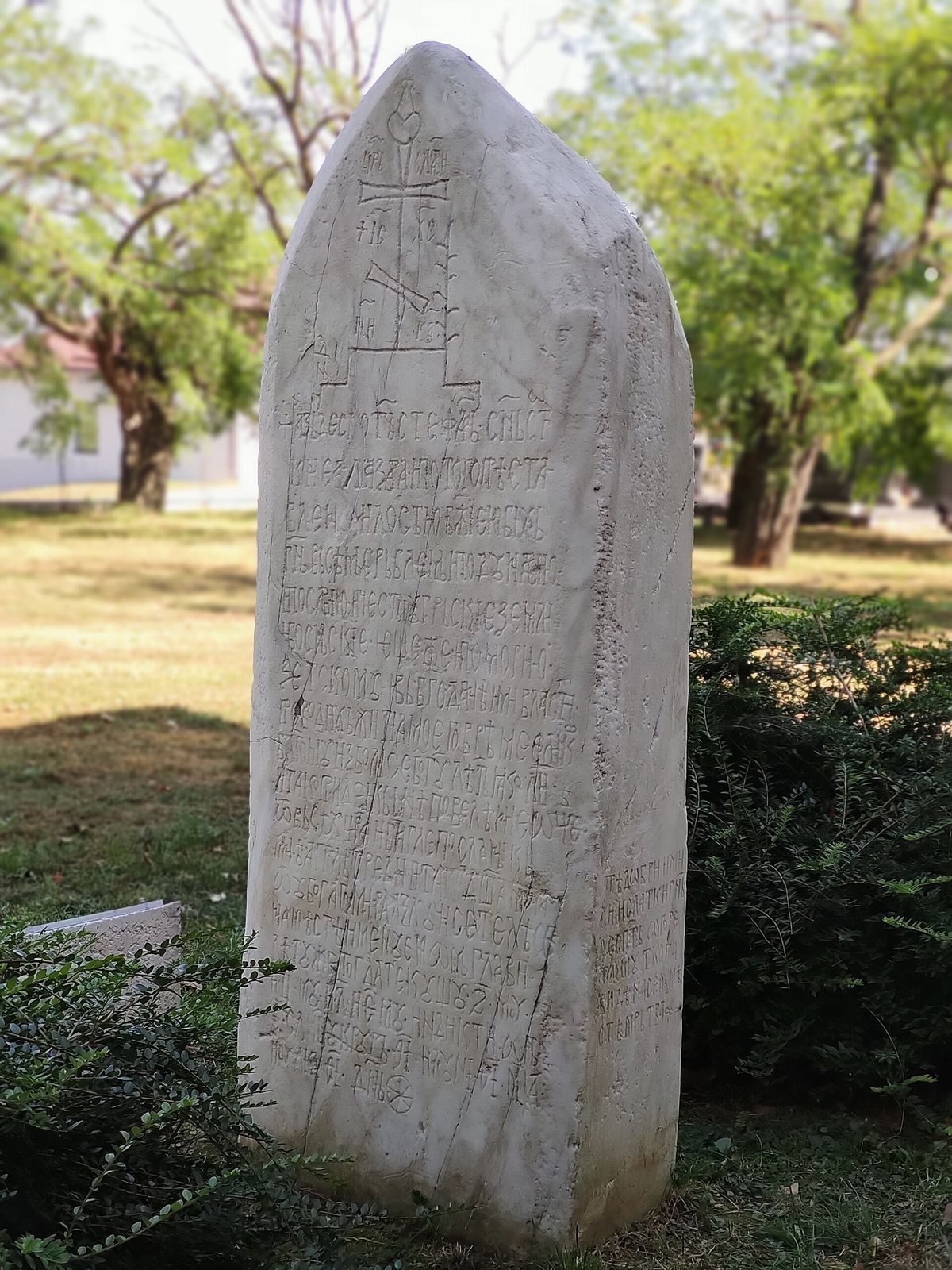
The monument stands in the courtyard of the Church of the Holy Prophet Elijah. It is a column or obelisk of Venčac marble, 186 centimeters high, 68 centimeters wide, and 26 centimeters thick. Its faces are polished white. The upright form was intended to evoke the elevation of Stefan’s rule and the immortality of his soul, and the stone remains in place from the medieval period to the present.
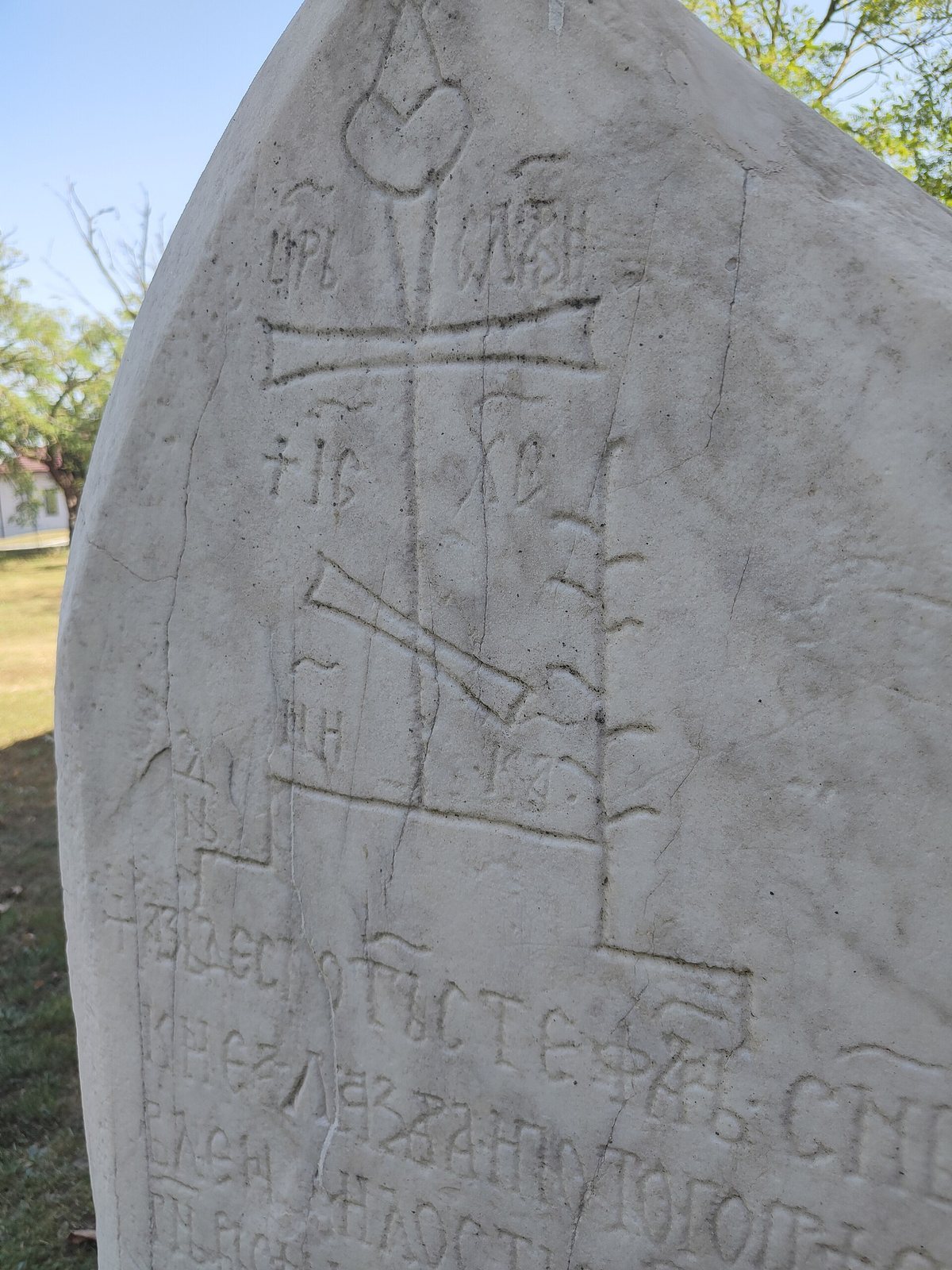
The main epitaph is inscribed in calligraphic lettering on the west face, below an engraved three-sided cross. It presents Stefan as the son of Saint Prince Lazar and a ruler by God’s grace over the Serbs and lands along the Danube and Sava, as well as parts of Hungarian territory and Bosnia and the Zeta coast. The text says he exercised God-given authority for 38 years and names Glava as the place where his soul left his body. It gives the date as 19 July, with the year written as 6,935, indiction 5 (a numbered year in a recurring dating cycle), and solar and lunar cycle numbers of 19.
An inscription beneath a cross on the east face names Đurađ Zubrović as the person who set up the stone. Another, on a narrow face, asks God to forgive priest Vukša. Beside the epitaph are an engraved image of Christ’s cross on Golgotha, the place associated in Christian tradition with his crucifixion, and an indistinct deer image that recalls the hunt. The epitaph’s solemn, ornate literary style makes it an important historical record and one of the notable texts of medieval Serbian literature. Its authorship is uncertain; it has been attributed either to Vukša or to Constantine the Philosopher, Stefan’s friend and biographer.