Mané-Bras Dolmens: A Neolithic Tomb Complex in France
Site at a Glance
- Popularity
- Low
- Country
- France
- Primary era
- Stone Age
- Eras represented
- Stone Age
- Civilizations
- Unclassified
- Site type
- Burial
- Remains
- Necropolis
On this page10 sections
History
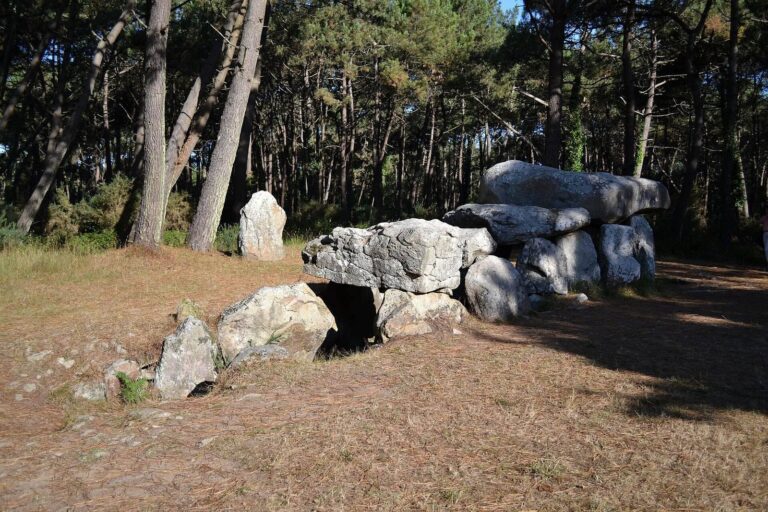
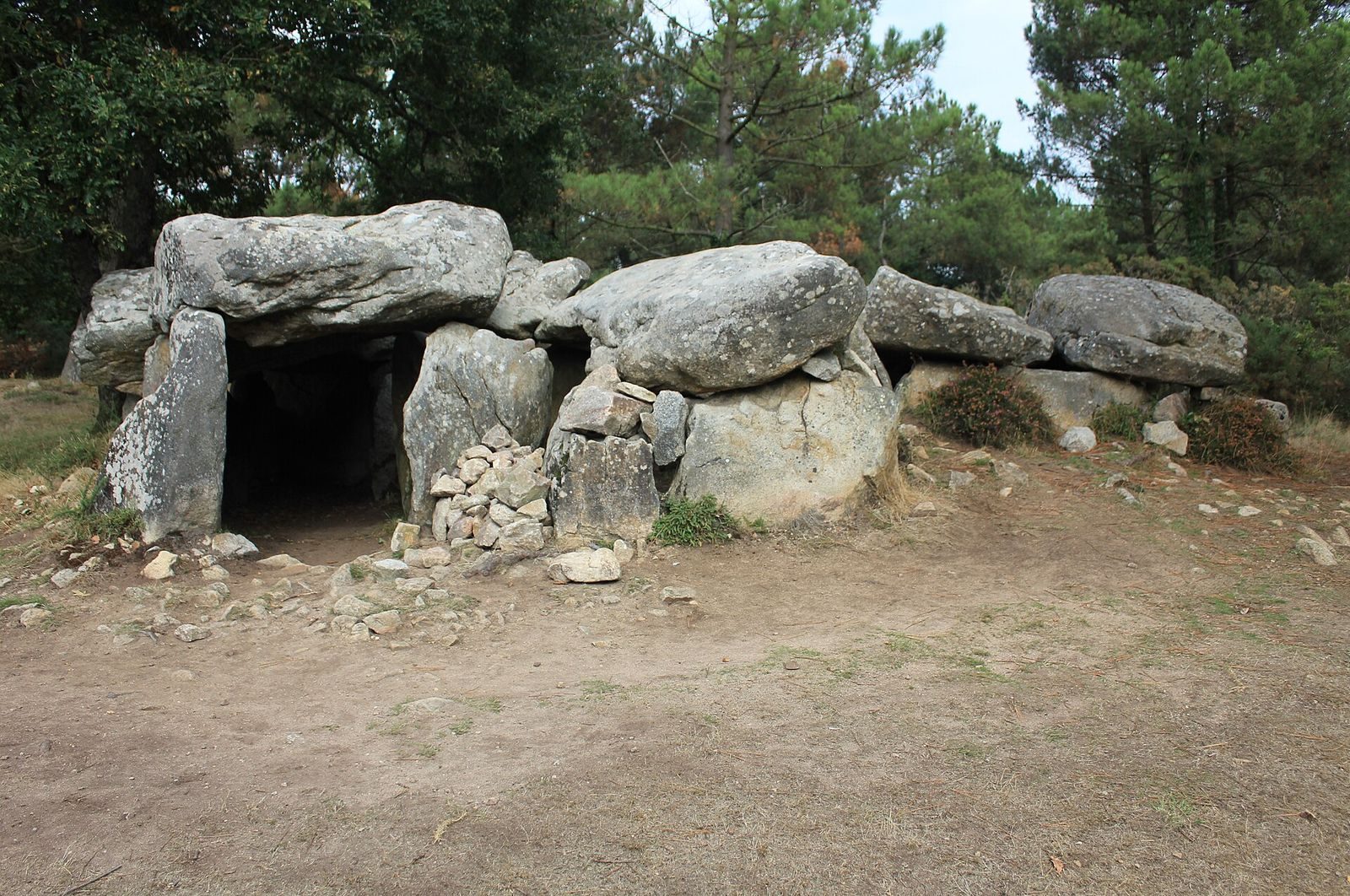
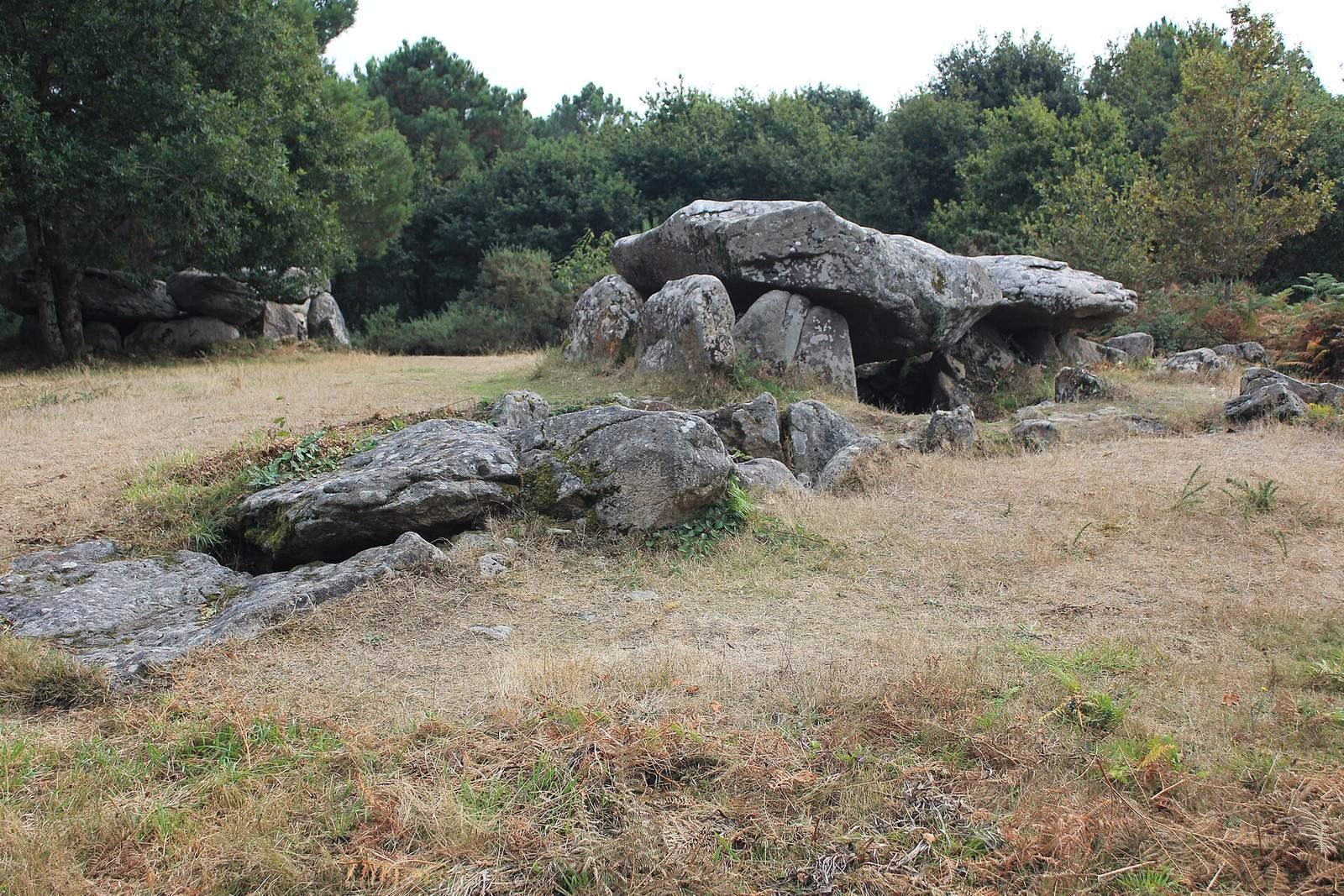
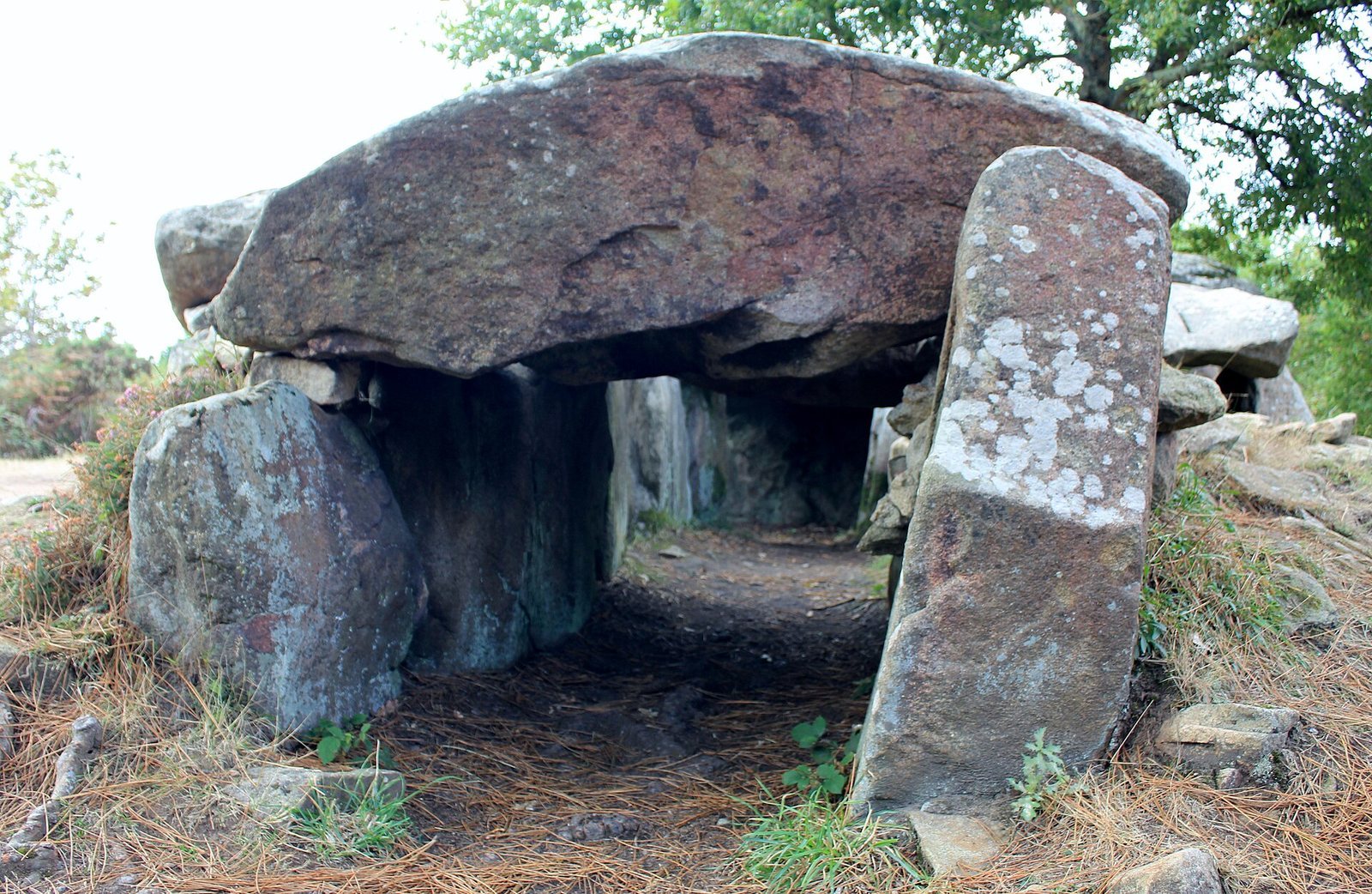
The Mané-Bras dolmens, also called the Dolmens of Lann-Mané-Bras, are a group of five prehistoric stone tombs with passages leading to burial chambers at Erdeven in Brittany, France. They date to the Neolithic, the later Stone Age before metal tools became widespread.
W. C. Lukis investigated the complex in 1867, followed by G. Chaplain-Duparc in 1877 and F. Gaillard in 1890. Gaillard recovered numerous vessels from a small central gallery. Zacharie Le Rouzic restored the monuments in 1923. They were classified as French historic monuments under orders dated 24 October 1921 and 12 March 1923.
Remains
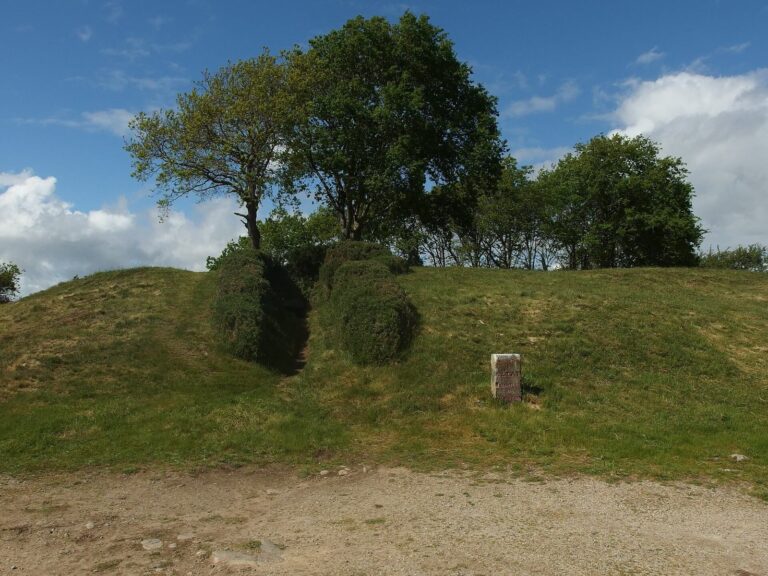
The five tombs occupy an oval-shaped natural hill at an elevation of about 30 m. Their arrangement comprises an isolated tomb to the southeast, three tombs within a shared cairn, or mound of stones, to the northwest, and a badly ruined tomb to the northeast. The Breton name Mané-Bras means “heath of the great mountain.”
Passage tombs
Northeastern tomb
The northeastern tomb is heavily ruined. Its passage runs along the chamber’s central axis and measures 5 m long by 1 m wide. The nearly circular chamber has an average diameter of about 2.5 m.
Northwestern tomb in the main cairn
The three tombs in the main cairn open toward the southwest and were built with alternating upright slabs and walls laid from stones without mortar. The northwesternmost has a Q-shaped outline. Its slightly curved passage is 3.6 m long and 1 m wide. The elongated chamber measures 2.8 by 1.8 m, with a small projection at its northeastern end.
Middle tomb in the main cairn
About 3 m southeast of the northwestern tomb, this monument has a sharply bent passage 8 m long and between 0.8 and 1.2 m wide. Its subrectangular chamber measures about 2 by 1 m and retains a roof slab. A second slab covers the end of the passage beside the chamber.
Southeastern tomb in the main cairn
About 1 m southeast of the middle tomb, this monument has a straight passage measuring 3 by 0.8 m. It leads to a trapezoidal chamber measuring 3.4 by 1.8 m. A small side chamber on the northwest side is about 1 m across in each direction. Two roof slabs cover the main chamber.
Largest southeastern tomb
The largest tomb stands southeast of the other monuments and is the only one that opens east-southeast. It may have had a separate cairn. Its passage measures 3.8 by 1.3 m and retains some of its covering slabs. The nearly square chamber, 4.8 by 4.3 m, is divided by slabs into four compartments: two aligned with the passage and two set across it. Each compartment has its own roof slab. An engraved slab in the passage bears a shield-like design topped by a head-shaped form, with a crook-like mark beside it. Archaeologist Serge Cassen has suggested that an upright slab in the fourth compartment may carry a raised boss topped by a four-sided design.
Nearby stone enclosure
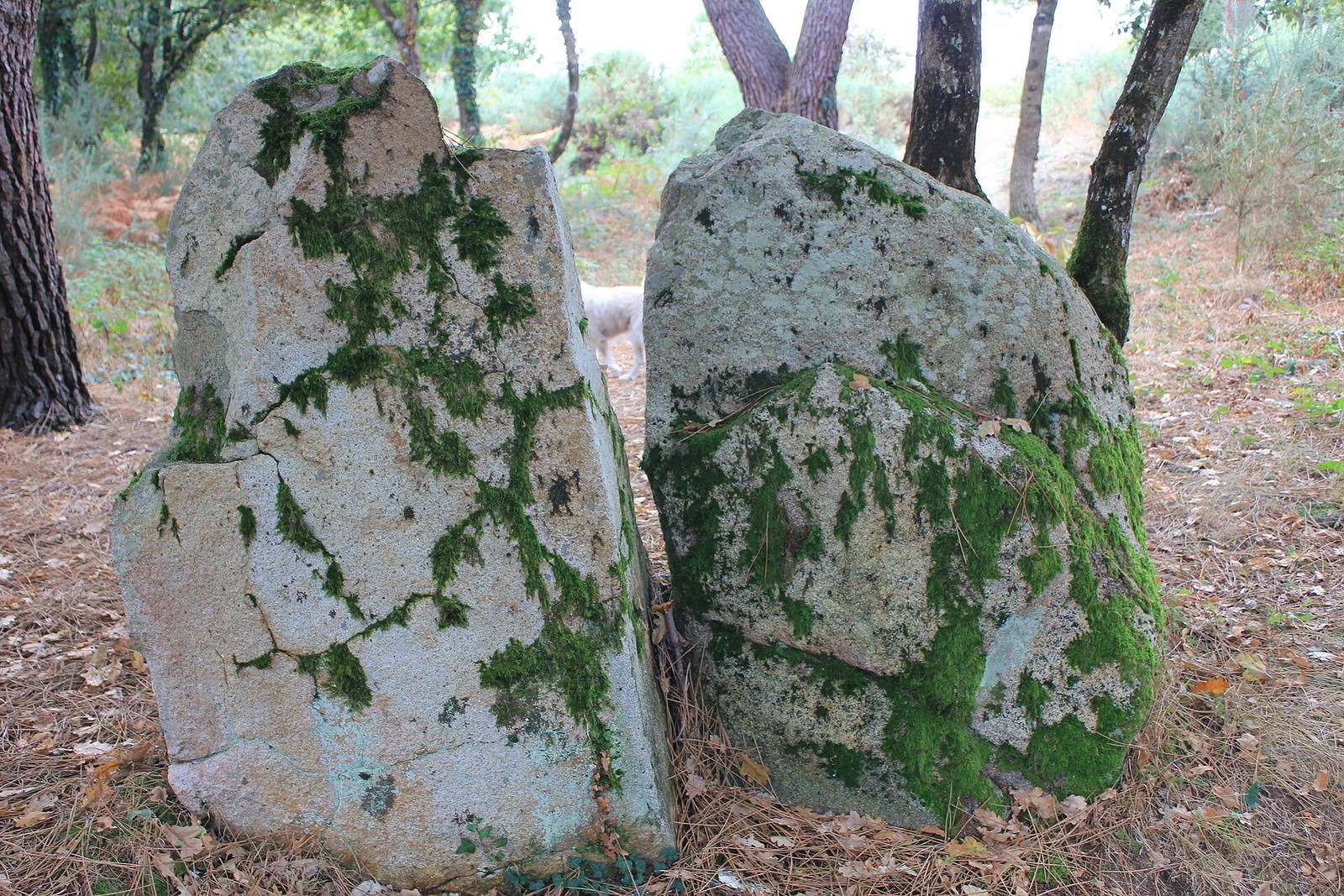
About 70 m south of the tomb complex are the remains of an enclosure made from large stones. Seven slabs stand upright and three lie horizontally.
Finds
Finds from Le Rouzic’s work include pottery fragments, a polished axe, a barbed arrowhead, a scraper, and flint flakes. These objects are held at the Museum of Prehistory in Carnac.