Dolmen de Soto: A Neolithic Burial Monument in Spain
Site at a Glance
- Popularity
- High
- Country
- Spain
- Primary era
- Stone Age
- Eras represented
- Stone Age
- Civilizations
- Unclassified
- Site type
- Burial
- Remains
- Tomb
On this page10 sections
History
Dolmen de Soto is a stone burial monument from the Neolithic near Trigueros in Huelva province, Spain, and its construction is estimated at 2500–3000 BC. The Neolithic was the later part of the Stone Age, associated in many regions with farming and settled communities.
Huelva province contains about 200 Neolithic ritual-burial sites, and Dolmen de Soto is one of them. The relatively small quantity of grave goods found here compared with other sites has been interpreted as evidence that the tomb was used for a comparatively short time.
Discovery and preservation
Before the tomb was recognized, the site was known as Cabezo del Zancarrón, also called Cabecillo del Zancarrón, and was regarded as a small hill. Armando de Soto Morillas discovered the monument in 1922 while preparing to build a house on his La Lobita estate, and excavations began that year.
In 1924, Spanish nobleman Jacobo Fitz-James Stuart, Duke of Alba, asked German archaeologist Hugo Obermaier to investigate the tomb. Obermaier identified burials and later published a book on the excavations and the funerary site. Spain designated the monument a National Monument in 1931. It remained privately owned until it passed into public administration in 1987, and restoration began in 2004.
A later First Art team from Portugal, Spain, and Wales carried out a detailed study of the engraved and painted stones in the passage and chamber. The results appeared in a monograph and a popular article.
Remains
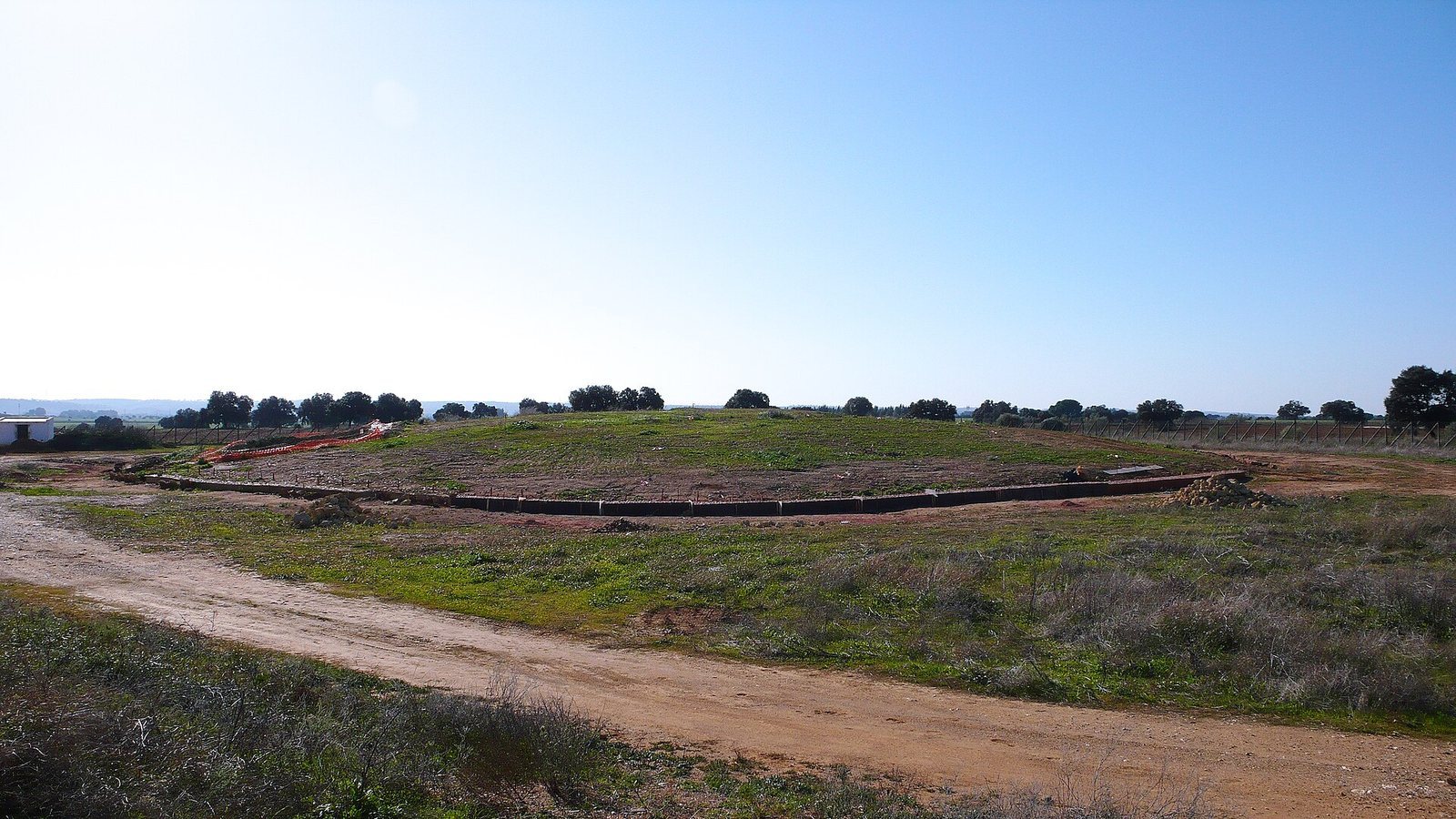
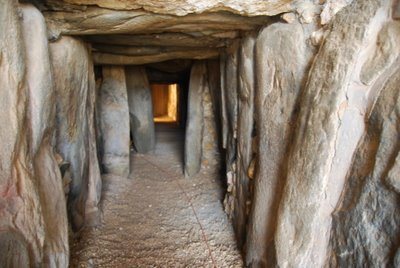
The underground tomb lies beneath a circular mound. A V-shaped passage runs from a western entrance toward an elongated chamber at the eastern end, widening gradually as it approaches the chamber.
Mound and perimeter
Mound construction
The mound measures about 60–75 m across and reaches a maximum height of 4 m, placing Dolmen de Soto among the largest dolmens in Western Europe. It consists of successive clay layers, with river pebbles of quartz and quartzite consolidating the upper surface.
Stone ring and walkway
A ring of upright limestone blocks marks the mound’s base and incorporates parts of an earlier Neolithic enclosure. An open walkway, about 5 m wide, surrounds the mound. Remnants of its paving are made from the same kinds of pebbles used on the mound’s upper layer.
Passage, chamber, and burial evidence
Passage and chamber
The passage extends about 21 m, increasing in width from roughly 0.8 m at its western entrance to 3.1 m beside the chamber. Its height rises from about 1.55 m at the entrance to approximately 4 m at the eastern end. The passage and chamber do not form sharply separated units. Thirty-one upright stones line one side and about 32 or 33 the other, with a terminal slab at the rear of the chamber. Twenty roof stones survive, and a cement slab was installed over the chamber. The uprights and roof stones include greywacke, calcarenite, granite, sandstone, quartzite, and dolomite; comparable stone occurs naturally within 5–30 km of the monument.
At the equinoxes, the rising sun illuminates the passage and chamber for a few minutes. This alignment has been interpreted as possibly expressing the rebirth of the dead.
Engravings and paintings
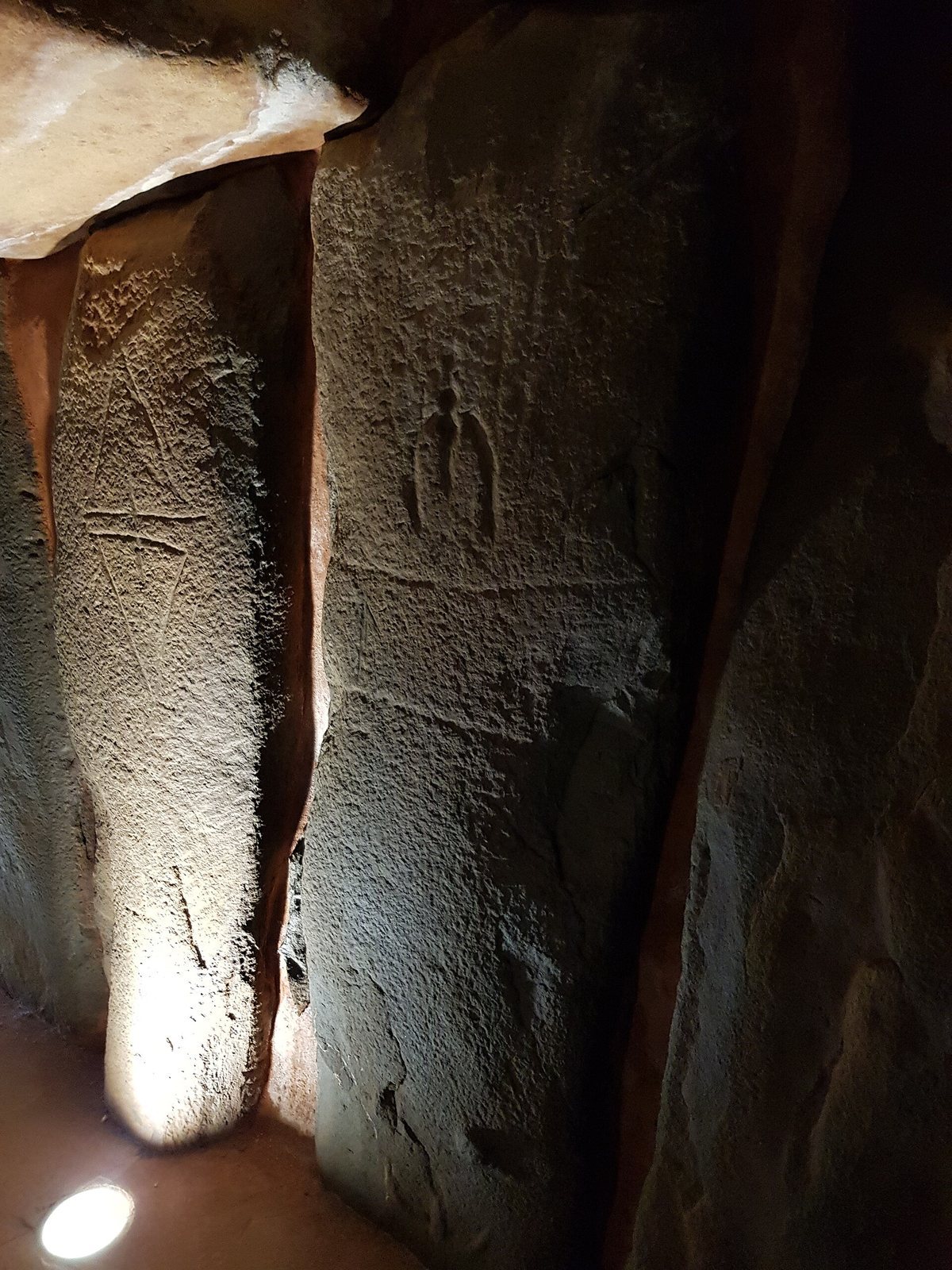
Forty-three upright stones bear engravings, including human figures, cups, knives, lines, and circles. Excavators observed the carvings in the 1930s, while paintings in poor condition were recognized in the 1990s. The interior may originally have been painted throughout. Upright stone 21 carries a face, a belt, and a trident. Because these images are inverted, the stone has been interpreted as a reused upright carved to represent a human figure.
Burials and grave goods
Excavations uncovered eight complete but poorly preserved skeletons: five beside the passage’s right wall, two near its left wall, and one in the chamber. Obermaier described the bodies as crouched beside decorated stones, with their arms and legs folded against them, and suggested they may have been wrapped in shrouds. Objects found beside or on the bodies included polished axes, knives, chisels, daggers, ivory bracelets, cups, and pottery, including bell-shaped vessels. Other finds included oysters and other marine shells, marine fossils, and animal remains from horse-family and cattle-family animals, pigs, and birds.