Izadkhast Caravanserai: A Safavid Roadside Inn in Iran
Site at a Glance
- Popularity
- Medium
- Country
- Iran
- Primary era
- Early Modern
- Eras represented
- Early Modern
- Civilizations
- Safavid
- Site type
- Economic
- Remains
- Caravanserai
On this page4 sections
History
Construction and use
Commissioned by Abbas I in the 1620s, the Izadkhast Caravanserai is a Safavid roadside inn for travelers and their animals in Izadkhast, Fars Province, Iran. Abbas I, also known as Abbas the Great, ruled Iran from 1588 to 1629 as a shah of the Safavid dynasty, which governed the country from 1501 to 1736. The inn served merchants and other travelers on Silk Road routes between Shiraz and Isfahan. The Silk Road was a network connecting regions through trade and travel, and the caravanserai offered a place to rest during long journeys.
Later use and heritage recognition
Two brothers, each addressed as a master, carried out restoration and rebuilding in a year recorded as 1265; the calendar is unspecified. Further restoration work was later underway under the supervision of Fars provincial cultural-heritage authorities. From 1945 to 1971, the building served as a police station.
Iran added the caravanserai to its national monument list as number 1112 in 1975. The Izadkhast complex, including the caravanserai and castle, joined UNESCO’s Tentative List in 2007. In 2023, the caravanserai became part of the World Heritage property “The Persian Caravanserai,” alongside 53 other caravanserais across 24 Iranian provinces. The World Heritage Committee inscribed the property at its 45th session in Riyadh under criteria recognizing cultural exchange and testimony to a cultural tradition or civilization. The collective listing was Iran’s 27th World Heritage property.
Remains
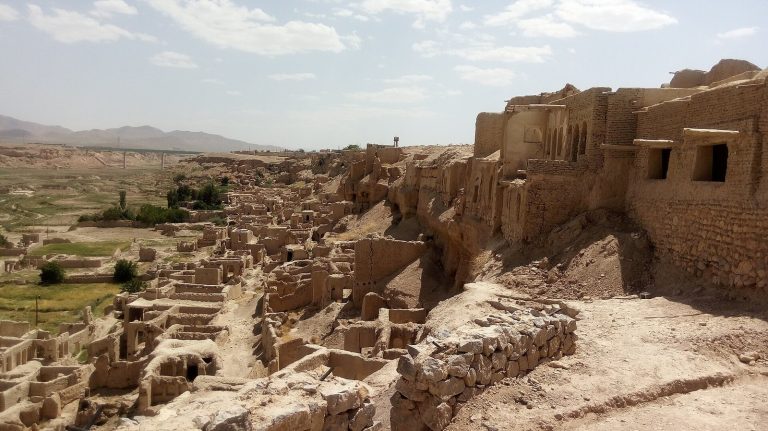
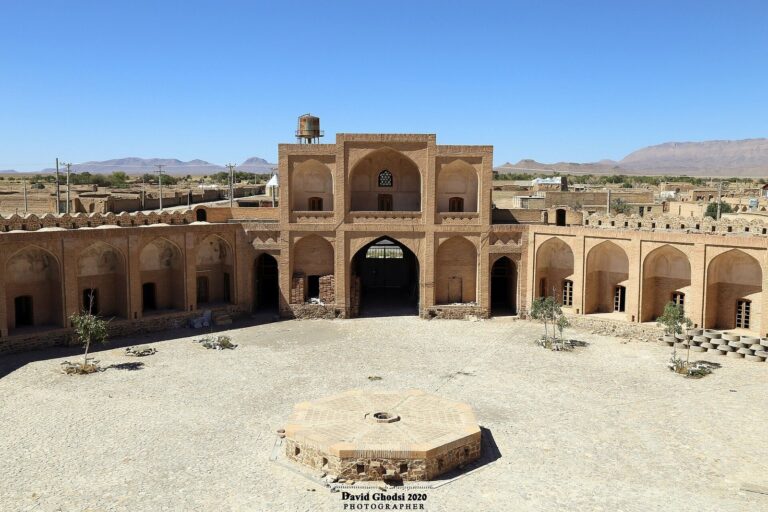
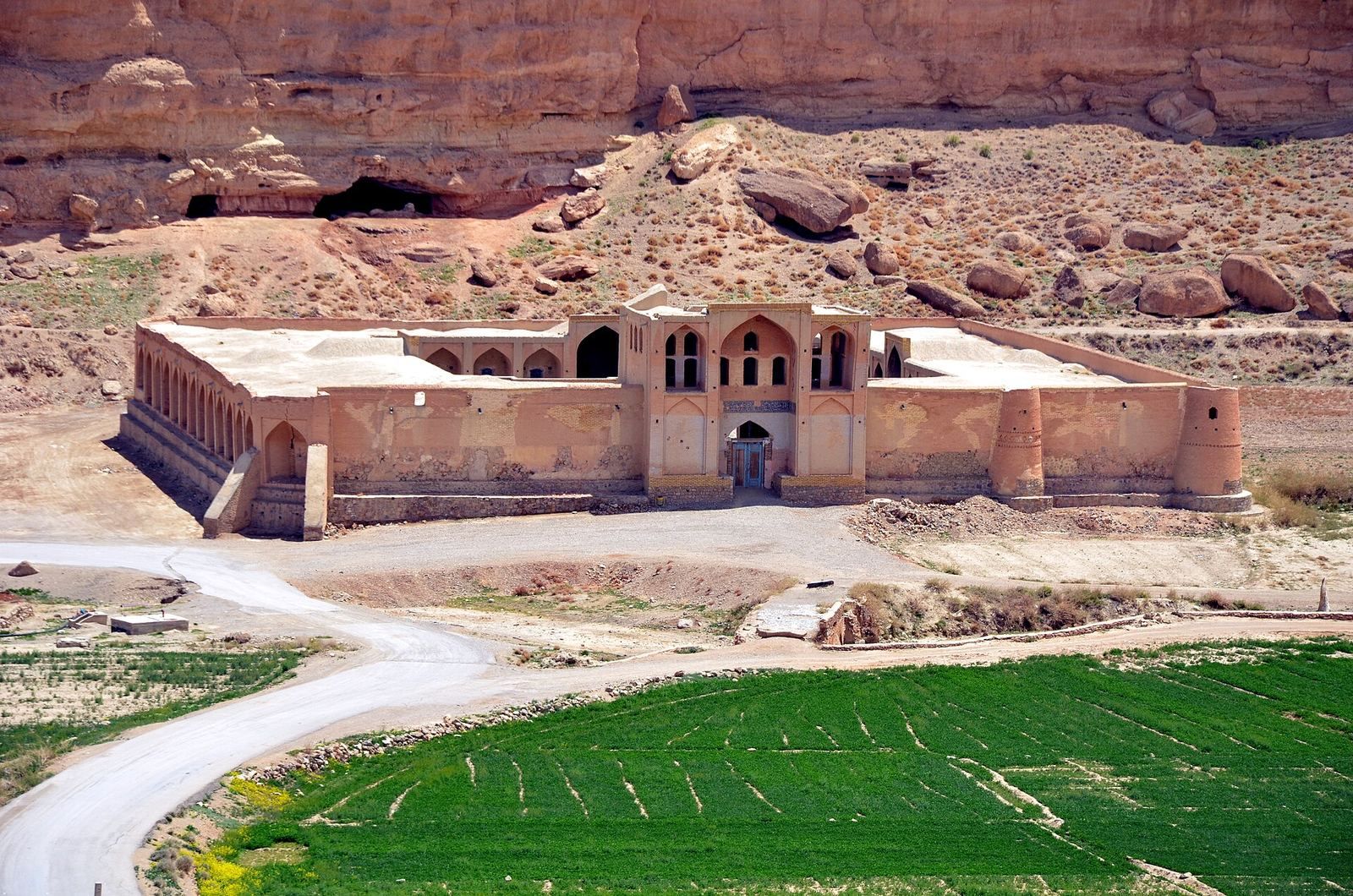
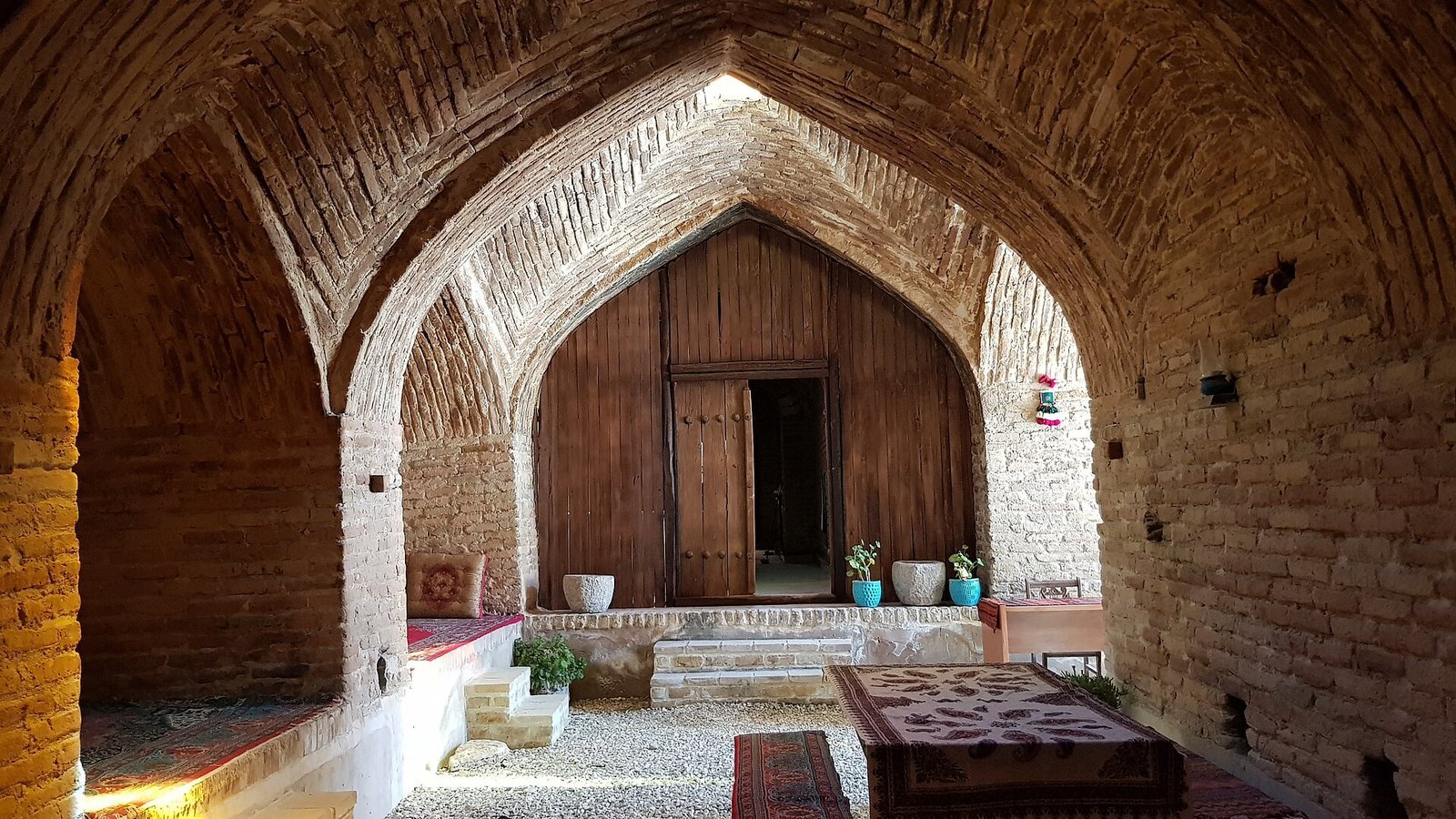
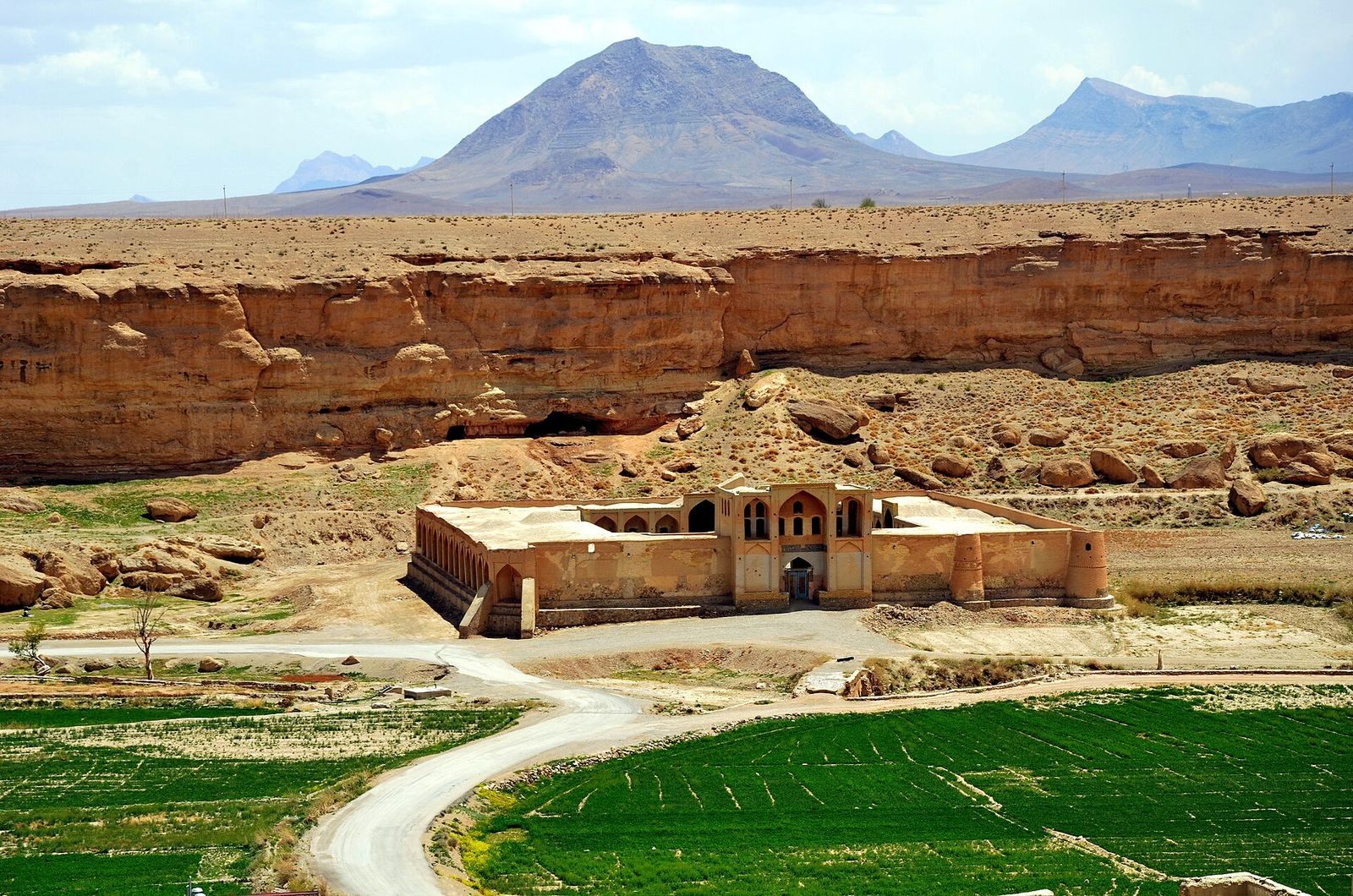
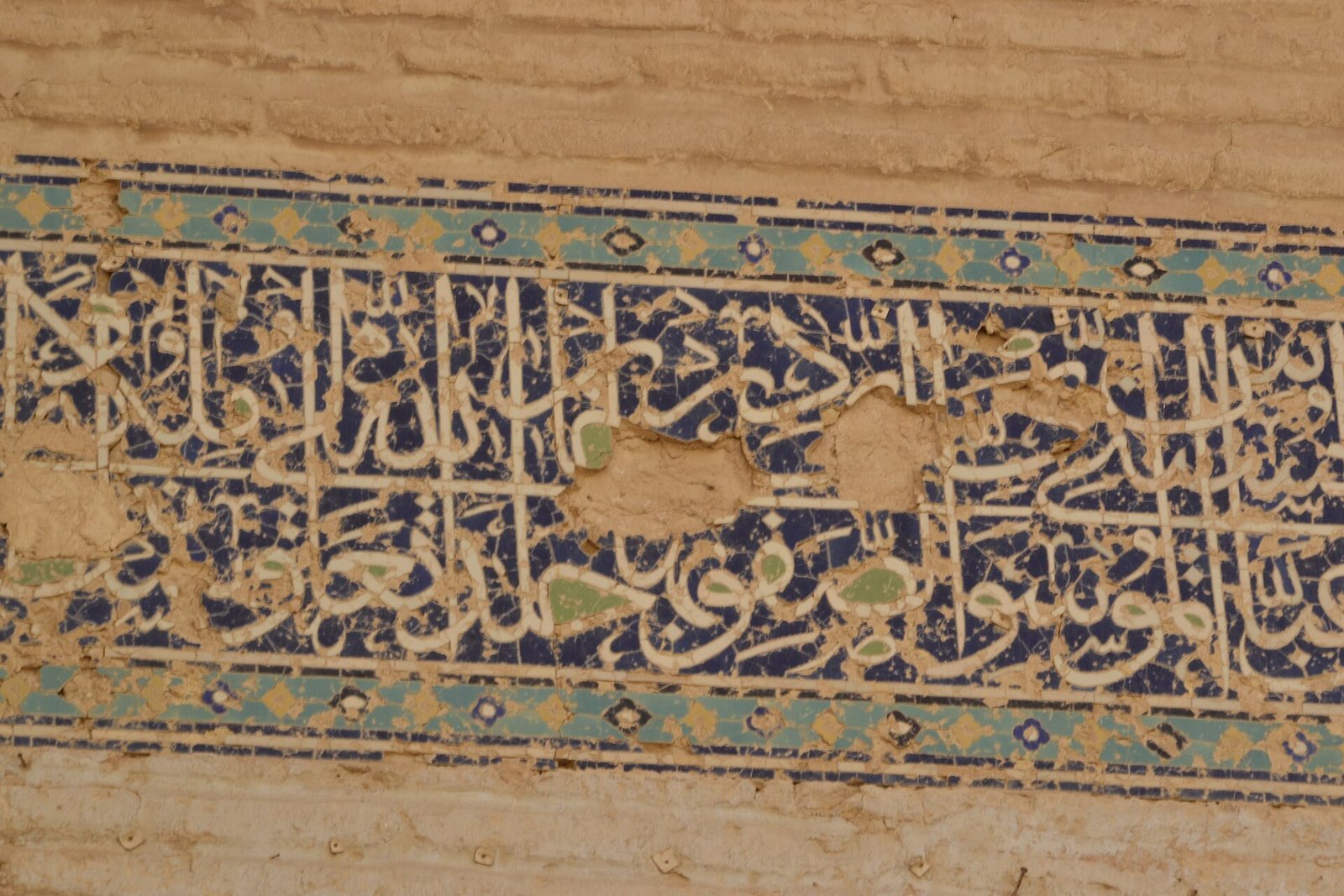
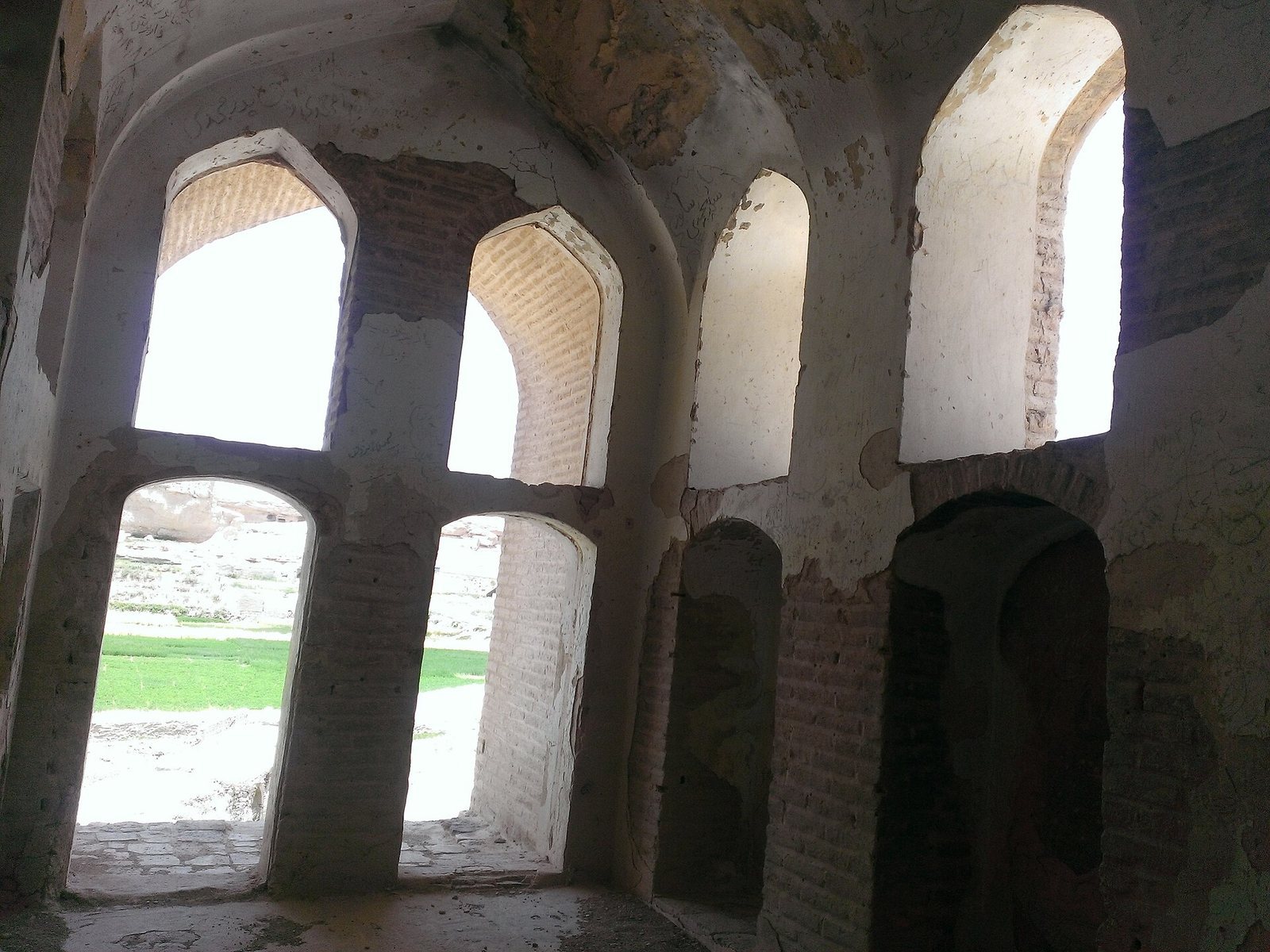
The caravanserai stands in a natural low basin within the historic Izadkhast complex, beside the Izadkhast River and facing Izadkhast Castle on nearby high bedrock. Its overall dimensions are 63 by 61 m, with a stated area of 3,843 m². The courtyard measures 35 by 35 m, or 1,225 m². The ruined building is Safavid in style and was constructed from rubble, brick, and mortar.