Madonna del Ghisallo: A Marian Sanctuary and Cycling Pilgrimage Site
Site at a Glance
- Popularity
- High
- Country
- Italy
- Primary era
- Early Modern
- Eras represented
- Early Modern, Modern
- Civilizations
- Duchy of Milan, Italian, Spanish
- Site type
- Religious
- Remains
- Sanctuary
On this page14 sections
History
The Madonna del Ghisallo is a Catholic sanctuary dedicated to the Virgin Mary in Magreglio, Italy. Its earliest construction date is uncertain, but it became a place of devotion for local travellers and, in 1949, Pope Pius XII proclaimed the Madonna del Ghisallo patroness of cyclists.
Origins and Marian devotion
A local legend tells of the medieval Count Ghisallo, who was attacked by bandits near Magreglio while travelling. He sought Mary’s protection at a roadside chapel and, after his rescue, the Madonna del Ghisallo came to be revered as a protector of travellers.
A notarial act from 1135 names Ghisallo as a locality between Civenna and Magreglio. By 1623, a religious building stood there: in July, residents of Magreglio received permission to celebrate Mass in a chapel they had rebuilt. In 1660, the priest G. B. Bonanome endowed Masses at the sanctuary, which developed into a Catholic place of devotion to Mary.
War and cycling patronage
During the Second World War, people came to the sanctuary to pray for protection. In 1944, the local community made a collective vow for the conflict to end. Each year, on the first Sunday of October, a procession and solemn Mass for peace commemorate that vow. A crown of gold, made from jewellery given by residents and visitors, was presented to Mary’s image in gratitude for protection during the war.
The sanctuary’s connection with cycling grew as riders visited and left offerings. In summer 1947, the priest Carlo Gnocchi organized a gathering attended by more than 3,000 people, around half of them cyclists. Ermelindo Viganò, the parish priest and rector from 1944 to 1985, promoted this association. After seeing riders cross themselves as they passed the chapel during the 1947 Giro di Lombardia, he proposed that the Madonna del Ghisallo become cycling’s patroness and wrote to Cardinal Alfredo Ildefonso Schuster in September 1947.
On 13 October 1948, Pope Pius XII lit a devotional lamp for the sanctuary at Castel Gandolfo. A relay of cyclists carried it to the chapel, with Gino Bartali and Fausto Coppi leading its arrival. A year later, on 13 October 1949, Pius XII formally proclaimed the Madonna del Ghisallo patroness of cyclists. Riders continue to make pilgrimages and leave offerings in gratitude or remembrance. The sanctuary also holds an annual blessing of bicycles and commemorative Masses for deceased cyclists.
Races and later commemorations
The climb became part of the Giro di Lombardia in 1919, when the race first used the southern approach. It has featured annually since, except in 1987, when an aircraft crash led to its omission. The ascent was often decisive, and prizes were awarded at the summit. A route change in 1963 reduced its influence on the result; when the race finishes in Como, the climb generally comes about 60 kilometres from the finish. The Giro di Lombardia is one of cycling’s five “Monuments,” a group of prestigious one-day races.
The Giro d’Italia, a multi-stage road race, has also included the climb on many occasions. During the race’s 15th stage in 2019, Dario Cataldo was first over the summit, where the ascent was assigned a second-category difficulty grade.
The sanctuary inspired Father Joseph Massie to establish a pilgrimage site for cyclists at Notre Dame des Cyclistes in France. In May 1961, Massie led a group of about ten French cyclists to Ghisallo, where Viganò welcomed them. In 1979, the sanctuary was formally twinned with the sanctuary of the Black Madonna of Częstochowa, a revered image of Mary in Poland. Ceremonies took place in Częstochowa on 22 September; on 26 September, documents signed by Pope John Paul II were presented during an audience with him.
The Fondazione Museo del Ciclismo–Madonna del Ghisallo was established in 2000. Its first initiative was a torch relay from the chapel to the Vatican, where a torch was delivered to Pope John Paul II. It now burns at the sanctuary as an eternal flame in memory of deceased cyclists. Pope Benedict XVI blessed the final stone of the nearby cycling museum on 31 May 2006, and the museum was inaugurated on 14 October that year.
Remains
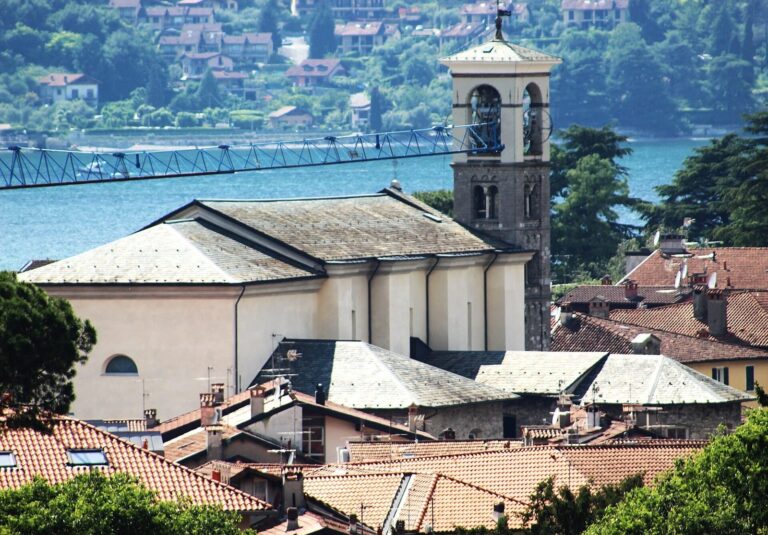
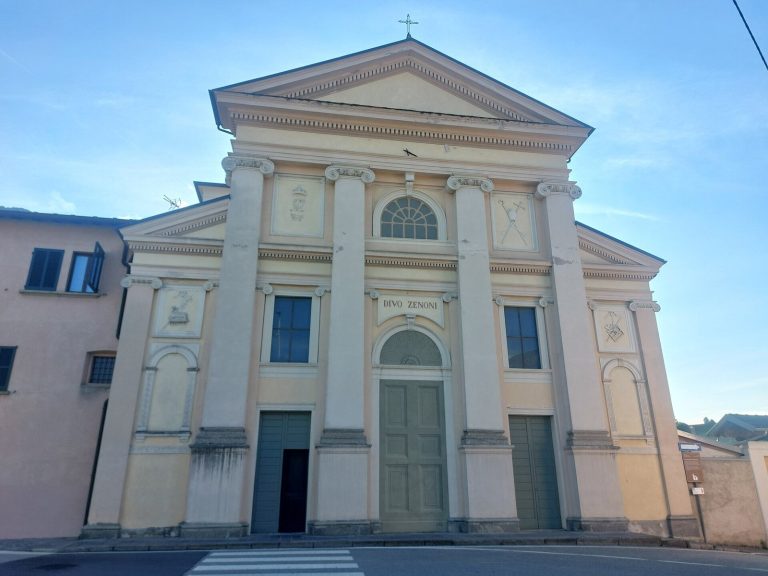
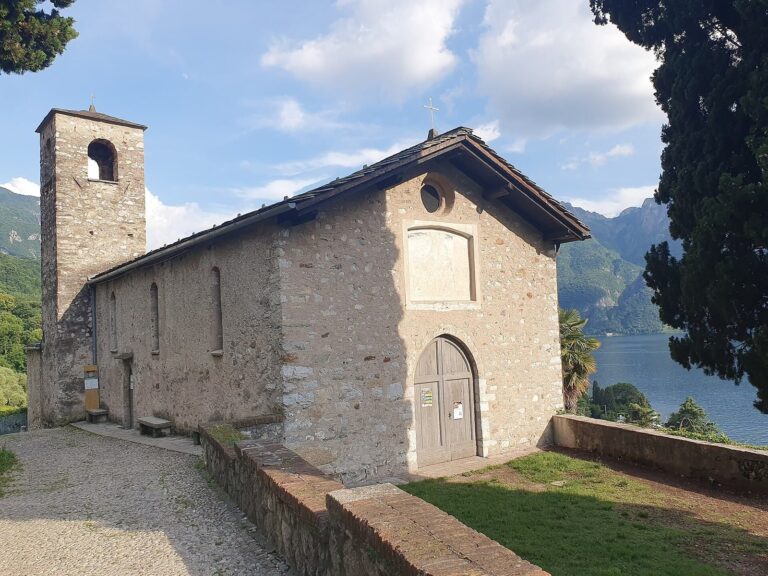
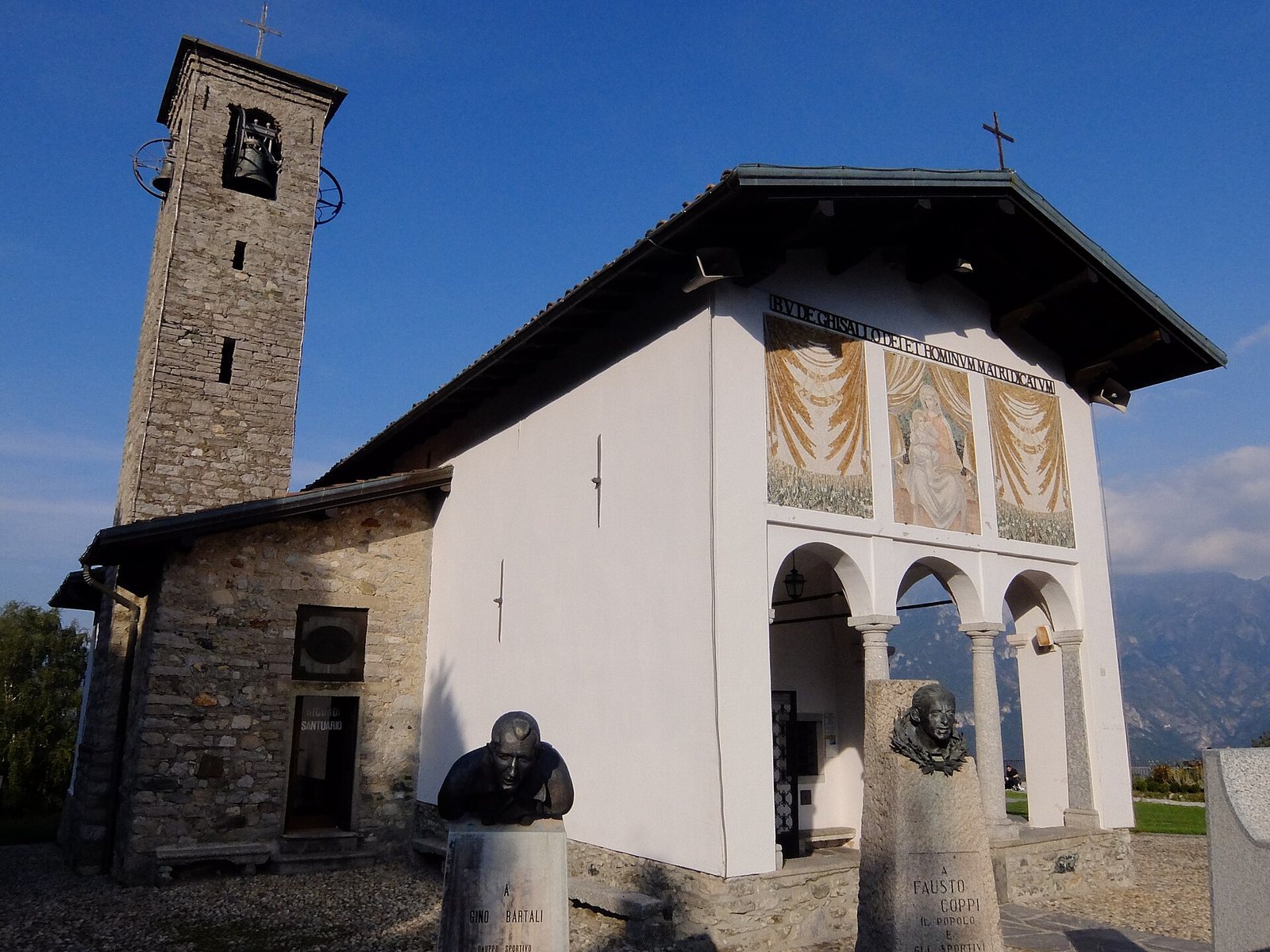
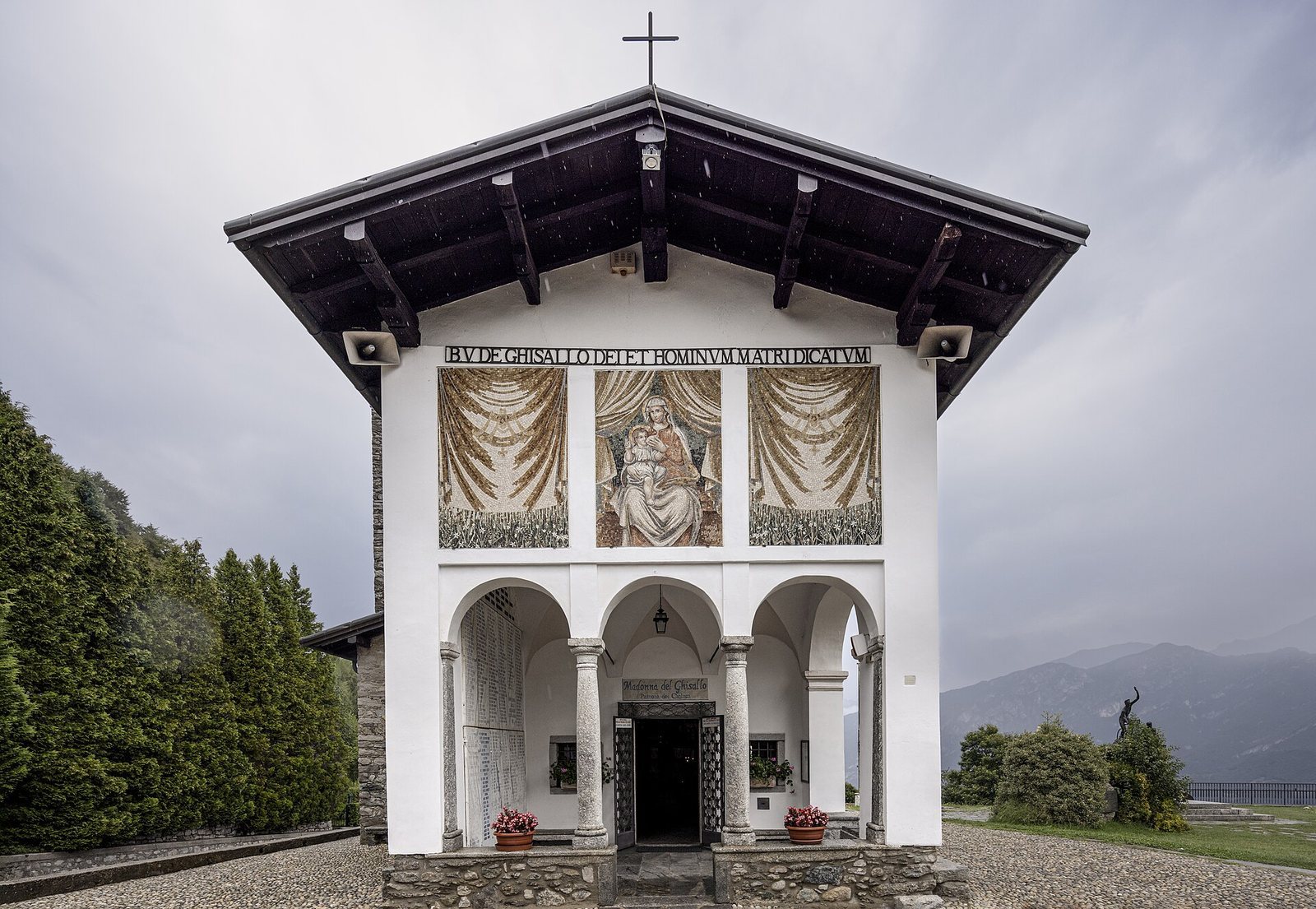
The sanctuary stands at the summit of the Colle del Ghisallo, about 754 metres above sea level. The SP41 crosses the pass beside the church, connecting Bellagio and Asso. The church has a single nave, the main space for the congregation, a rectangular area around the altar, and a covered entrance with three arches. Its altar is made of multicoloured marble. The cycling museum is next to the sanctuary, a monument to cyclists stands outside the church, and busts are arranged behind it.
The mountain pass
The northern approach from Bellagio begins at about 272 metres. Its first nearly four kilometres rise at an average gradient of about 9%, followed by a gentler stretch of roughly 1.5 kilometres near Guello and a slight descent towards Civenna. The final roughly 1.5 kilometres climb through six hairpin bends, averaging about 9.5%; gradients reach 14% on the earlier section and about 12% near the end. The southern approach from beyond Asso is about 8.8 kilometres long and mostly has gradients around 3%. About two kilometres below the summit, it passes Barni, where the gradient briefly exceeds 8%, then eases again through Magreglio.
Church furnishings
The Madonna del Latte
The church’s sixteenth-century image known as the Madonna del Latte depicts Mary nursing the infant Jesus. During restoration in 1950, it was removed from its original fresco surface, transferred to canvas and returned to the altar.
The bronze lamp
A bronze devotional lamp by sculptor Carmelo Cappello stands 1.4 metres high on an upright bronze support. Installed in October 1948 in memory of deceased cyclists, it incorporates four scenes from Italian cycling history.
Outdoor memorials
Monument to the Cyclist
Elio Ponti’s bronze Monument to the Cyclist was installed outside the church in 1973. It shows a victorious rider raising an arm beside an exhausted cyclist, representing victory and defeat.
Cyclists’ busts
Busts of Fausto Coppi, Gino Bartali and Alfredo Binda stand in a row behind the church, in that order from left to right when viewed with the church behind them. Paolo Todeschini made the Coppi bust after the cyclist’s death. Binda’s bust was erected in November 1992.
Cycling offerings and memorabilia
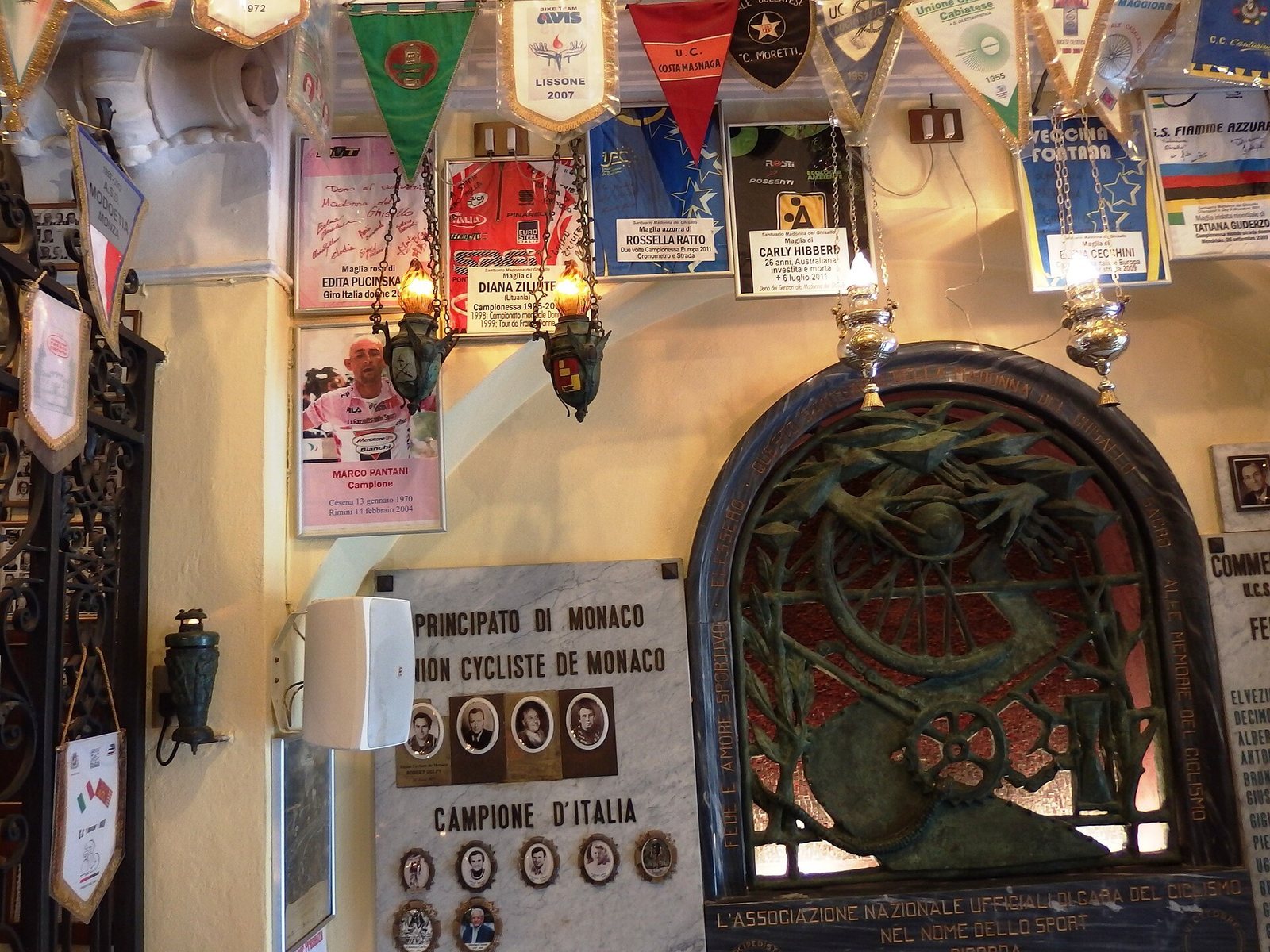
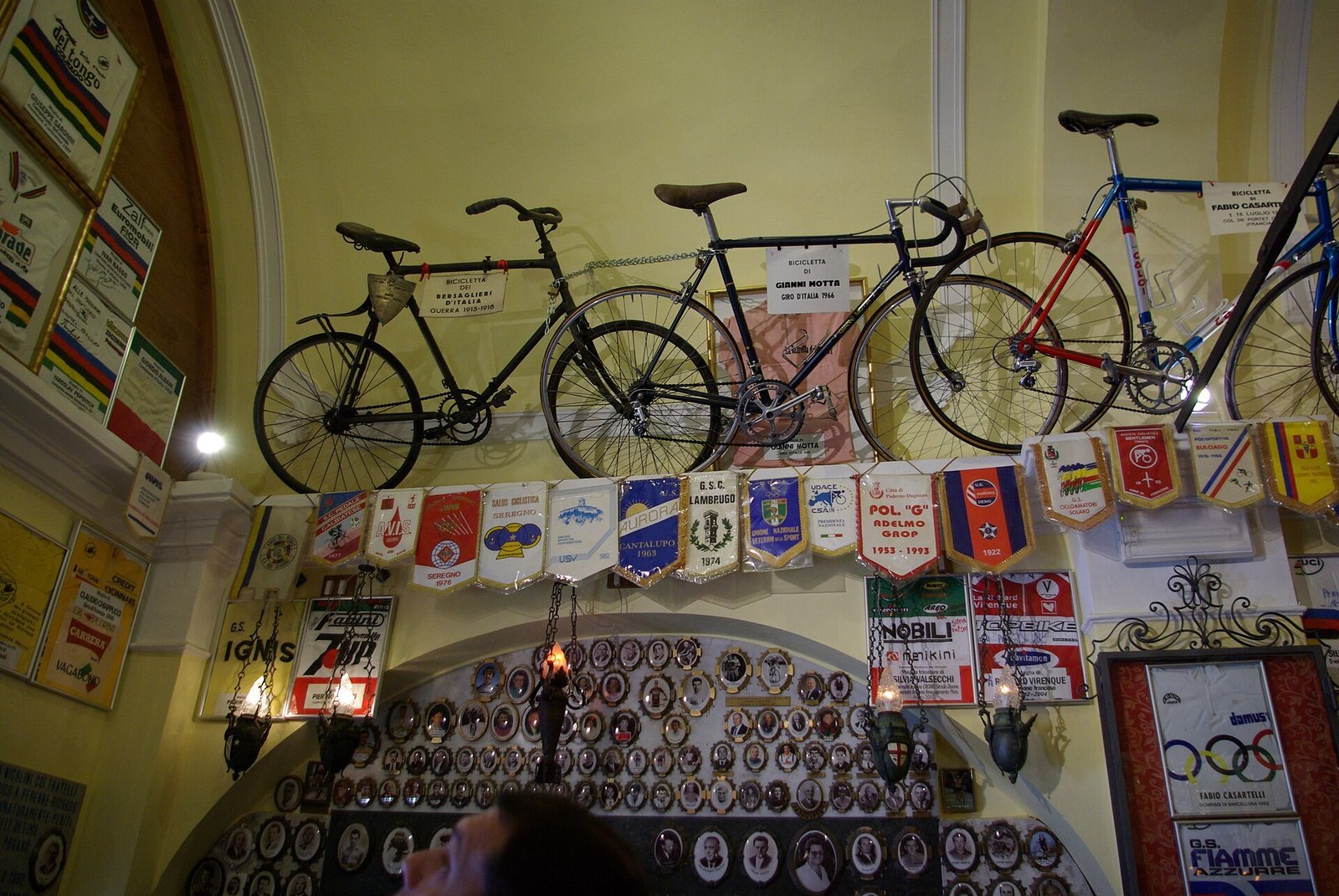
The sanctuary houses bicycles, jerseys, cycling-club pennants, photographs and memorial offerings associated with riders including Bartali, Coppi, Fiorenzo Magni, Eddy Merckx, Felice Gimondi, Gianni Motta and Francesco Moser. Bartali donated bicycles associated with his Tour de France victories in 1938 and 1948. One particularly damaged bicycle belonged to Fabio Casartelli, who died in a crash while descending the Col de Portet d’Aspet during the 1995 Tour de France. Casartelli had won the 1992 Olympic road race.
Cycling museum
The museum beside the sanctuary occupies three levels and has large windows overlooking the surrounding mountains. Designed by architect Davide Bergna, its collections cover competitive cycling, recreational riding and the bicycle’s role in everyday life. Its final stone bears the inscription Omnia vincit amor, meaning “Love conquers all.”