Palazzo Altemps: Renaissance Palace and Museum of Ancient Sculpture
Site at a Glance
- Popularity
- High
- Country
- Italy
- Primary era
- Medieval
- Eras represented
- Medieval, Early Modern
- Civilizations
- Papal States
- Site type
- Domestic
- Remains
- Elite Residence
On this page18 sections
History
Ancient and Medieval Setting
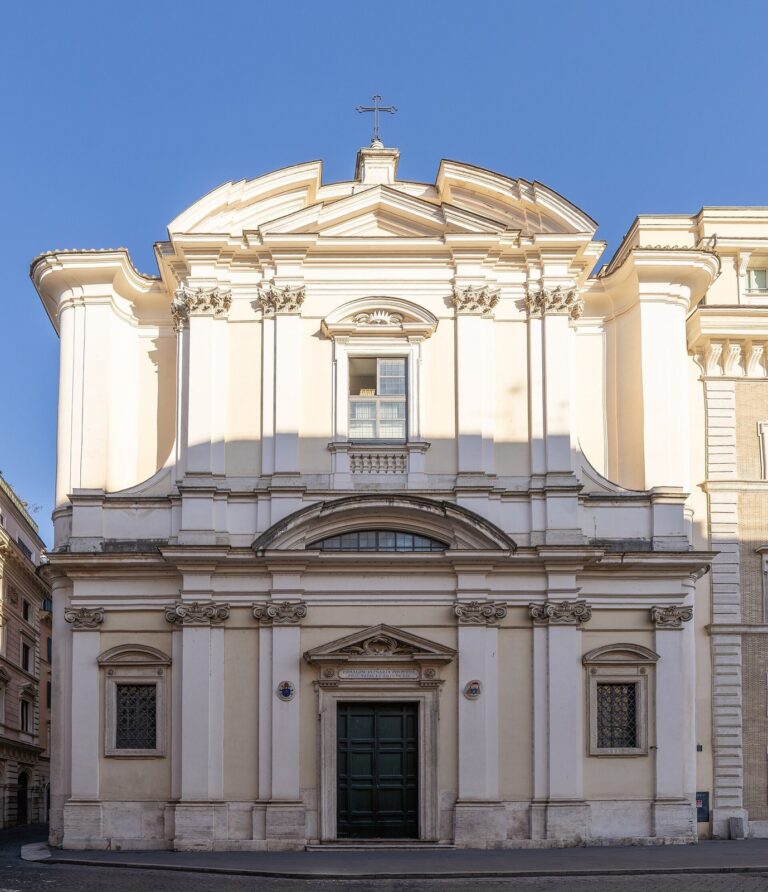
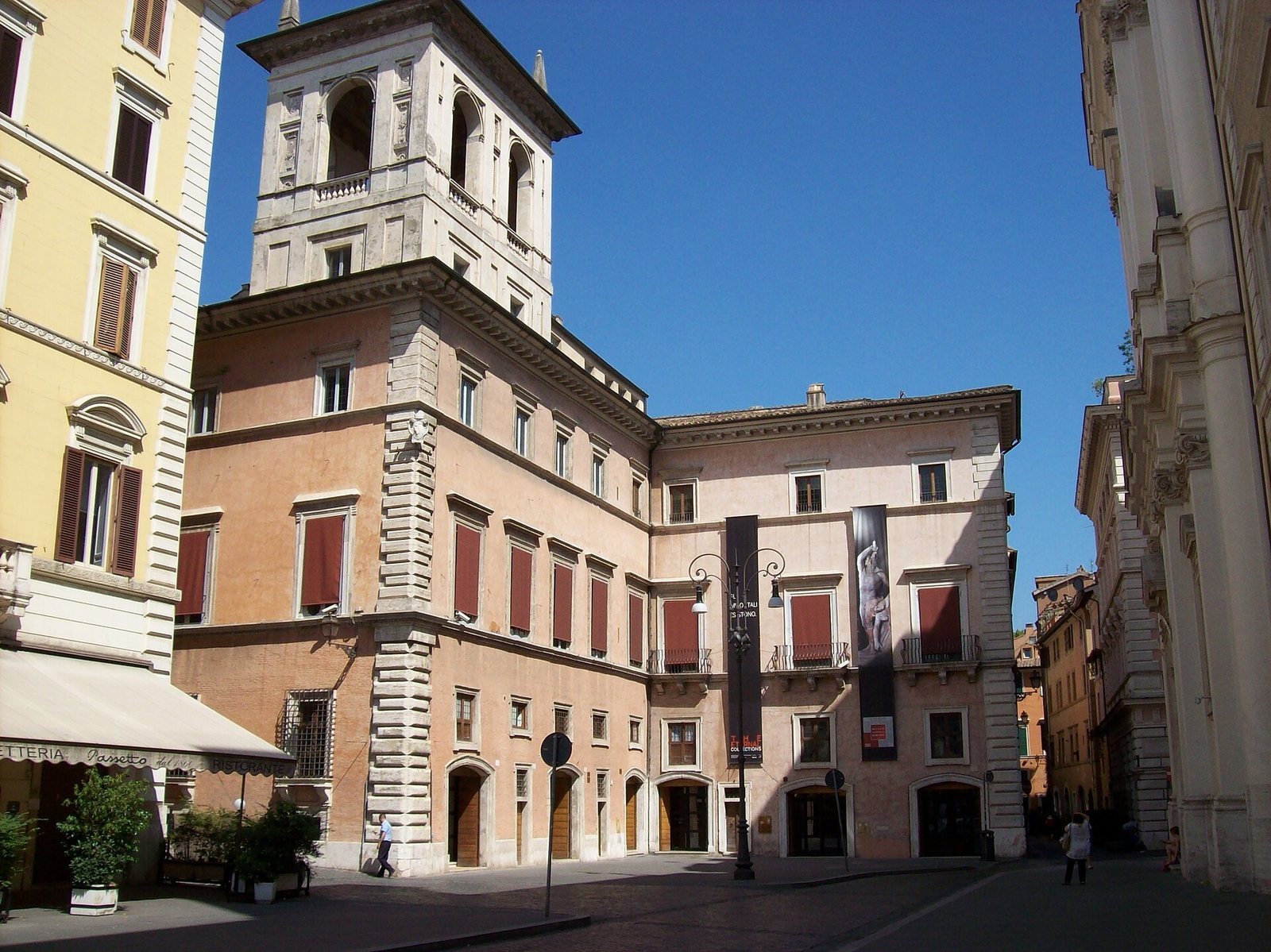
Palazzo Altemps is a Renaissance palace on Piazza di Sant’Apollinare in Rome, Italy. Construction began in 1477 for Girolamo Riario, a relative of Pope Sixtus IV. The palace later housed noble families and diplomatic residents, and it is now one of the four sites of the Museo Nazionale Romano.
The surrounding area was a center of Rome’s marble trade from the Augustan period. One of the city’s two marble ports stood about 160 metres upstream from the Aelian Bridge. It also housed the Statio rationis marmorum, an imperial office that administered the marble monopoly. Stone for buildings in the Campus Martius, an area of ancient Rome, and for sculpture was unloaded and worked there. The landing place was discovered in 1891, then destroyed during construction of the Tiber embankments. Traces of workshops extend across the area between Sant’Andrea della Valle, the Chiesa Nuova, and the river. Unfinished works and tools from the late Trajanic period suggest that some workshops may have been abandoned in haste.
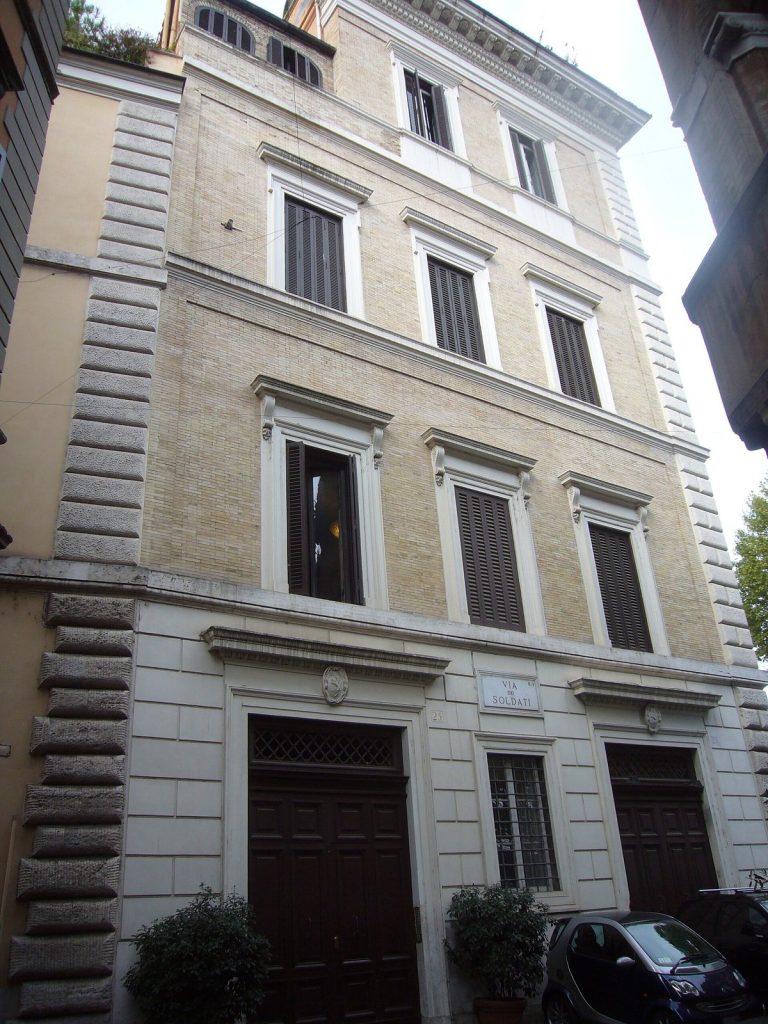
In the medieval period, aristocratic families occupied Rome’s ancient remains, while rival political factions divided the city. The Colonna controlled the Ghibelline eastern sector and the Orsini the Guelph western sector. A patrol walkway between the Parione and Colonna districts ran nearby, along the route of present-day Vicolo dei Soldati. As the need for fortifications declined and the downturn following the Avignon papacy, when the papal court was based in Avignon rather than Rome, eased, building activity returned to the Campus Martius. The palace began to take shape there in the fifteenth century.
Riario, Soderini, and Altemps
Work began in 1477, in connection with Girolamo Riario’s marriage that year to Caterina Sforza. Riario was a nephew of Sixtus IV, though he may instead have been the pope’s natural son. The building remained unfinished in 1480, and its design is attributed to Melozzo da Forlì. After Sixtus IV died in 1484, the Riario family lost influence; the palace was plundered and remained in that condition for an extended period.
Cardinal Francesco Soderini bought the palace in 1511 and enlarged and decorated it with work by Antonio da Sangallo the Elder and Baldassarre Peruzzi. Sangallo directed work on the principal courtyard in 1513–1517, Peruzzi continued it, and Martino Longhi the Elder completed it in 1585–1589. From 1513 to 1518, the palace was the residence of Cardinal Innocenzo Cybo, a member of the Medici family. It later housed the Spanish ambassadors.
Cardinal Marco Sittico Altemps acquired the property in 1568 and had it remodeled to designs by Martino Longhi the Elder. He established a library that was later incorporated into the Vatican Library and began collecting ancient sculpture. The palace became the Altemps family residence. Marco Sittico’s natural son Roberto, the first Duke of Gallese, served as prefect of the papal forces in Avignon under Sixtus V. In 1586, at the age of 20, Roberto was executed by the pope after accusations of adultery and marriage to a member of the rival Orsini family.
In 1604, Pope Clement VIII gave the remains of Pope Anicetus to the Altemps family for their private chapel. Giovanni Angelo Altemps, the second Duke of Gallese, commissioned a large chapel painting in 1617 to commemorate his father Roberto’s execution, which he considered unjust. Giovanni Angelo also built the palace’s first theatre, later known as the Teatro Goldoni. The Academy of Arcadia, a literary society, was founded there in 1690.
Diplomatic, Educational, and Museum Uses
Cardinal Melchior de Polignac lived in the palace from 1725 to 1732, using it as France’s diplomatic residence. It became a setting for Roman social and artistic life. The poet and dramatist Pietro Metastasio read his plays there, and Mozart performed there during his 1770 stay in Rome.
In the nineteenth century, the palace passed to the Holy See. From 1871 to 1903 it housed the Christian school founded by Francesco Saverio de Merode, which then moved to Piazza di Spagna. The Accademia Nazionale dei Lincei, a learned academy based in Rome, also used the building. It later housed a Spanish seminary founded by Pope Leo XIII.
The Italian Ministry of Cultural Heritage acquired the palace in 1982 for restoration and museum use. After restoration work and the recovery of decorative features, it became one of the four sites of the Museo Nazionale Romano in 1997. The museum brought historic collections back into former residences associated with major collectors; Palazzo Altemps presents sculpture from collections including those of the Ludovisi, Boncompagni, and Mattei families.
Remains
The palace covers 4,435 square metres and stands a short distance north of Piazza Navona. Its façades reflect successive building phases and are asymmetrical. The complex includes a principal courtyard, decorated rooms, a private theatre, a chapel, and a viewing tower. Historic sculpture is displayed throughout its galleries and rooms.
Palace Architecture
Façades and Tower
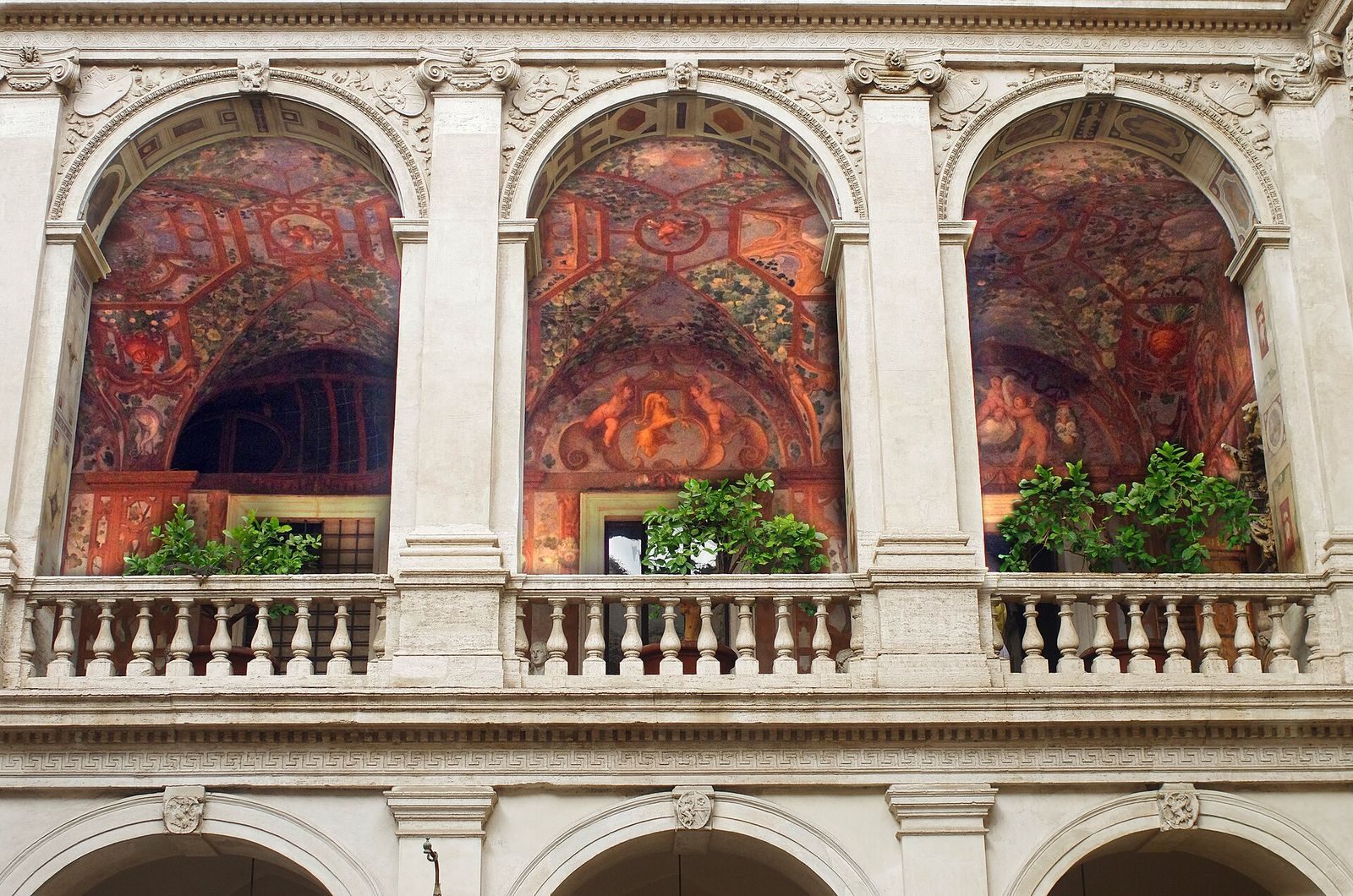
Martino Longhi the Elder gave one façade the form of a loggia, a covered gallery open along one side. His son Onorio Longhi is also credited with designing the façade. The tower is set off-center and has arched openings, with obelisks on its roof. Coats of arms belonging to successive owners appear on the interior and exterior façades.
Principal Courtyard
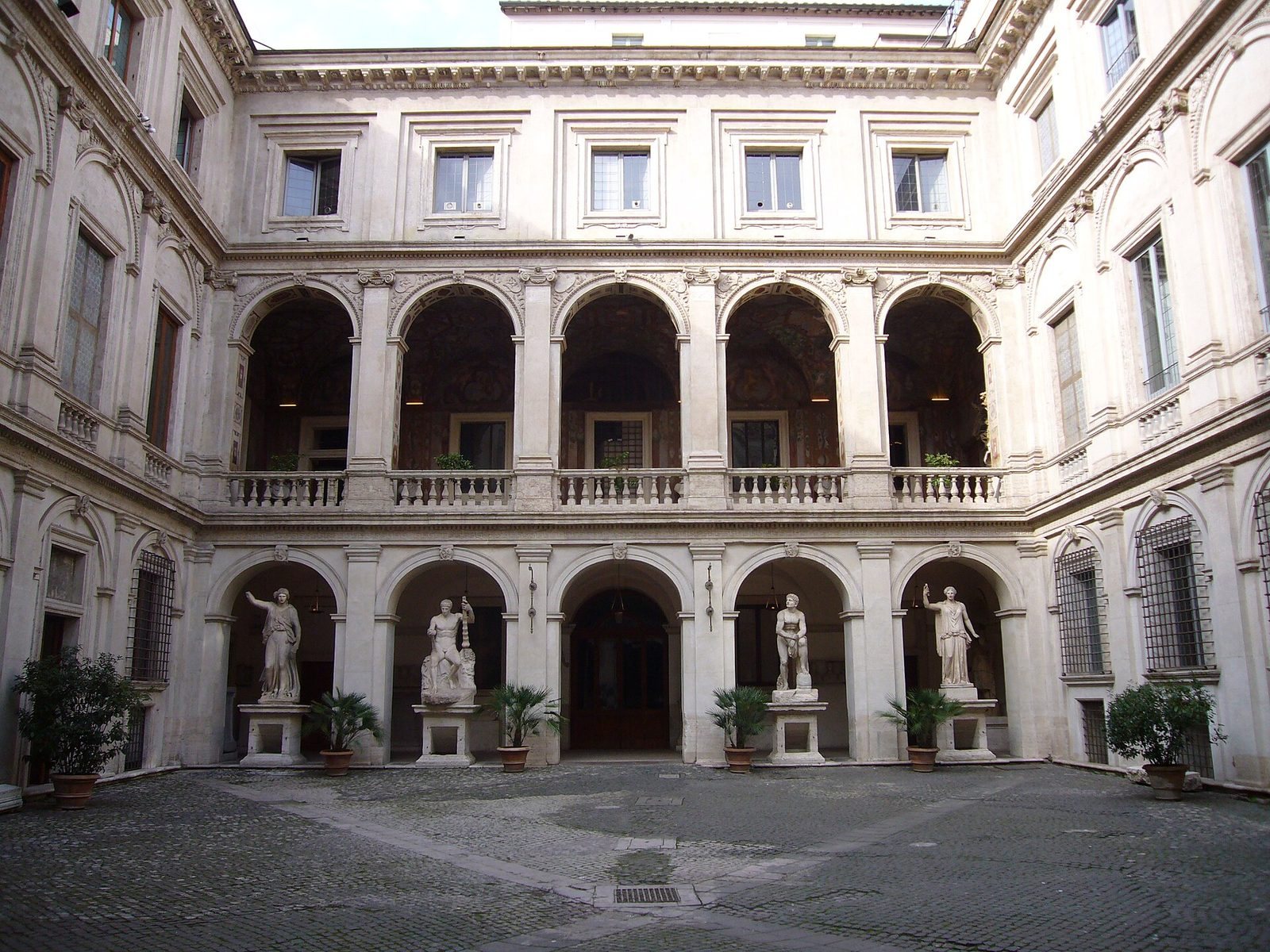
The principal courtyard has a two-storey arcade. Stucco ornament decorates its southern arcade, while Antonio Viviani painted the walls and vaulted ceilings of the loggia.
Interiors and Chapel
Rooms from the Riario Residence
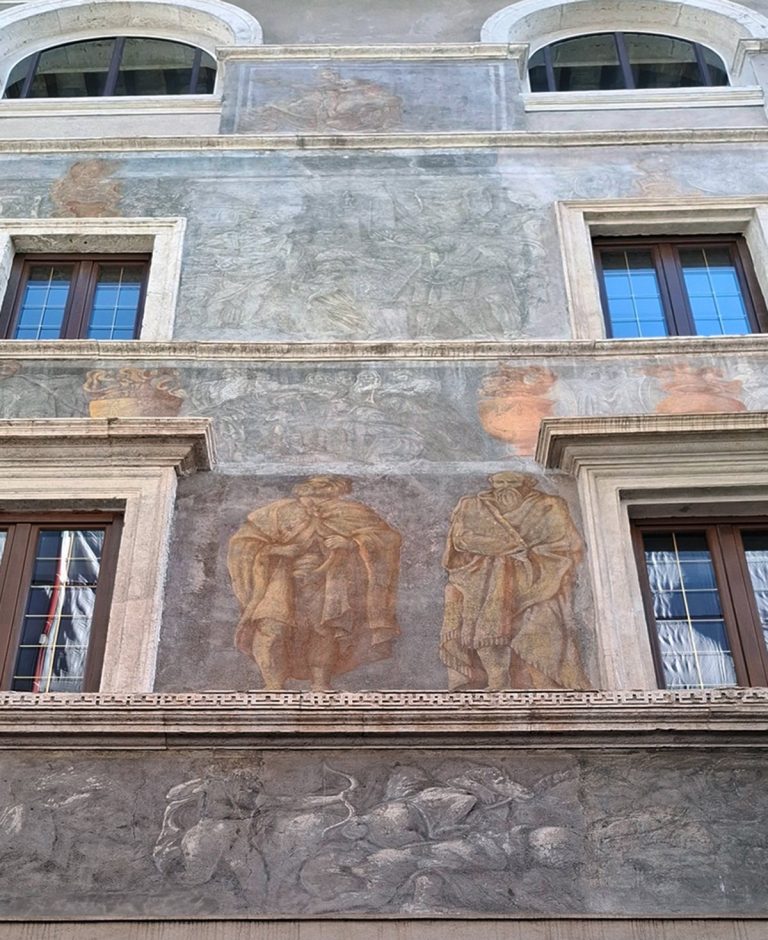
Several rooms belonging to Girolamo Riario’s original residence survive. One retains a complete fresco, a painting made on wet plaster, depicting Riario’s marriage to Caterina Sforza. In the Sala della piattaia, restoration brought to light further marriage scenes in paintings attributed to Melozzo da Forlì’s school.
Church of Sant’Aniceto
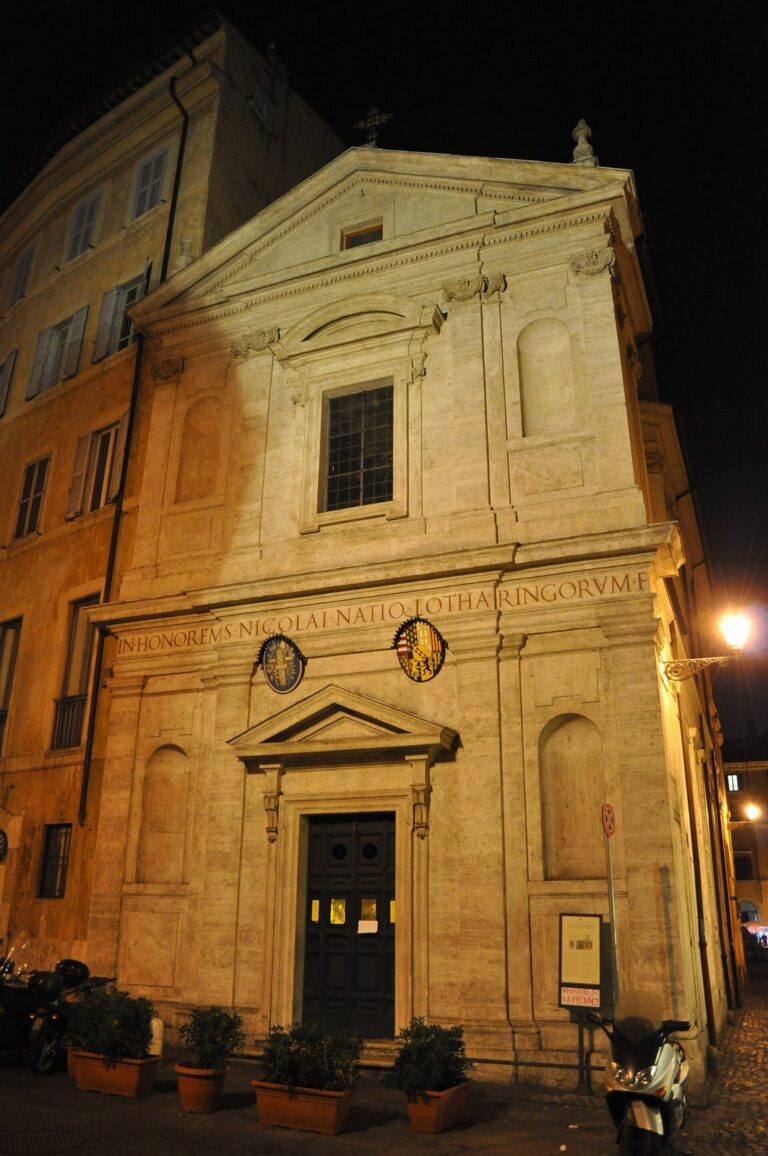
The palace church of Sant’Aniceto was built in 1603–1607 and its decoration has been fully restored. A large fresco inside depicts Roberto Altemps’s execution.
Sculptural Displays
Courtyard and Ground-Floor Sculptures
The courtyard arcades and ground floor display works from the Ludovisi collection, including sculptures found in Rome and its surroundings. They include Athena Parthenos, Dionysus with a satyr, and the Ludovisi Hermes, alongside busts, relief carvings, and sarcophagi.
First-Floor Works
The first floor displays the sculptural group Orestes and Electra, attributed to Menelaus, and the Ludovisi Ares. A large marble head is identified uncertainly as Hera or Juno. Goethe called it his “first love in Rome” and obtained a copy for his study during his Italian journey of 1786–1787. The Ludovisi Throne is also displayed in the palace.
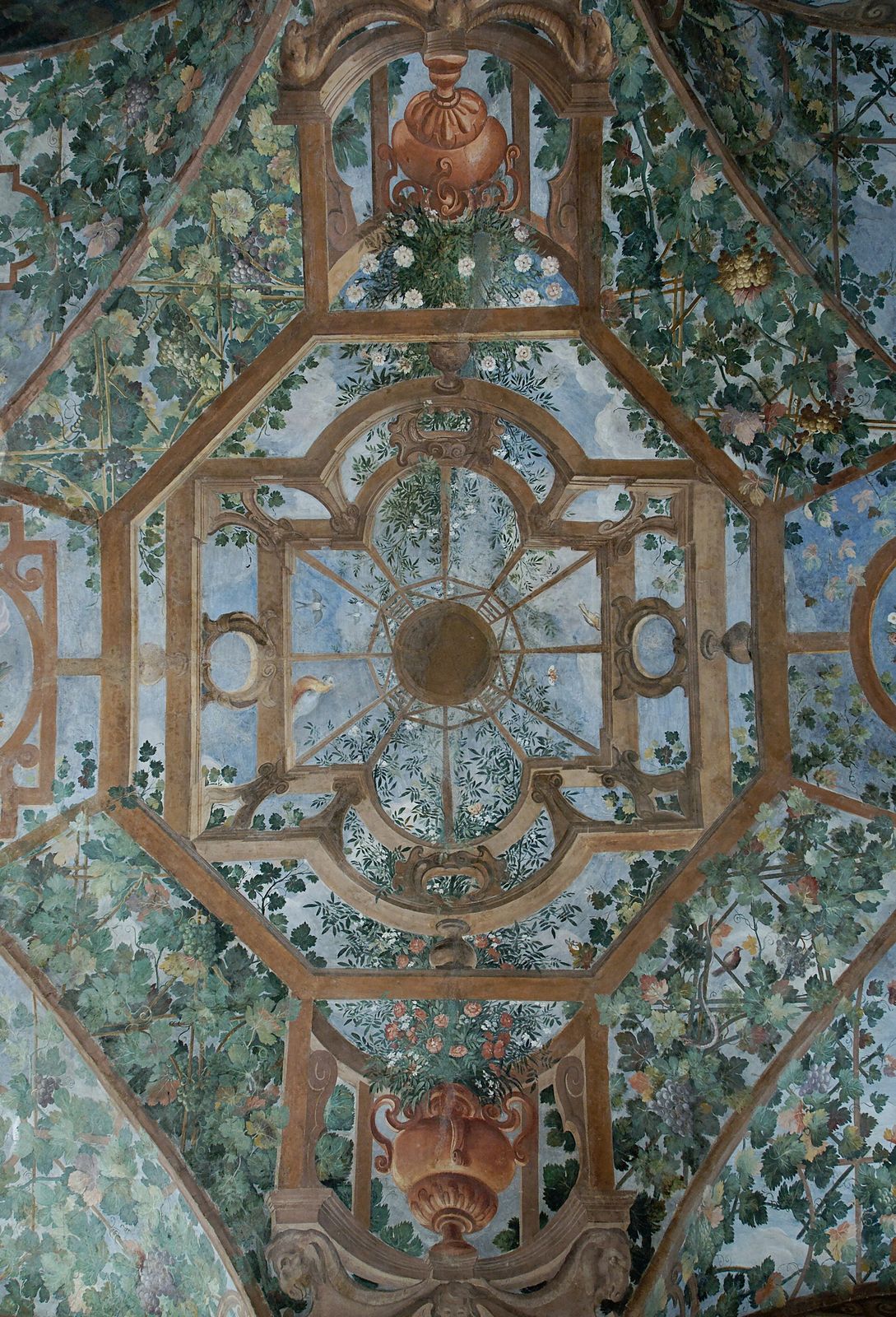
Painted Loggia
The Painted Loggia has vaulted ceilings and curved panels at its end walls, decorated with grotesques and floral motifs. It displays Roman sculptures from Cardinal Altemps’s collection.
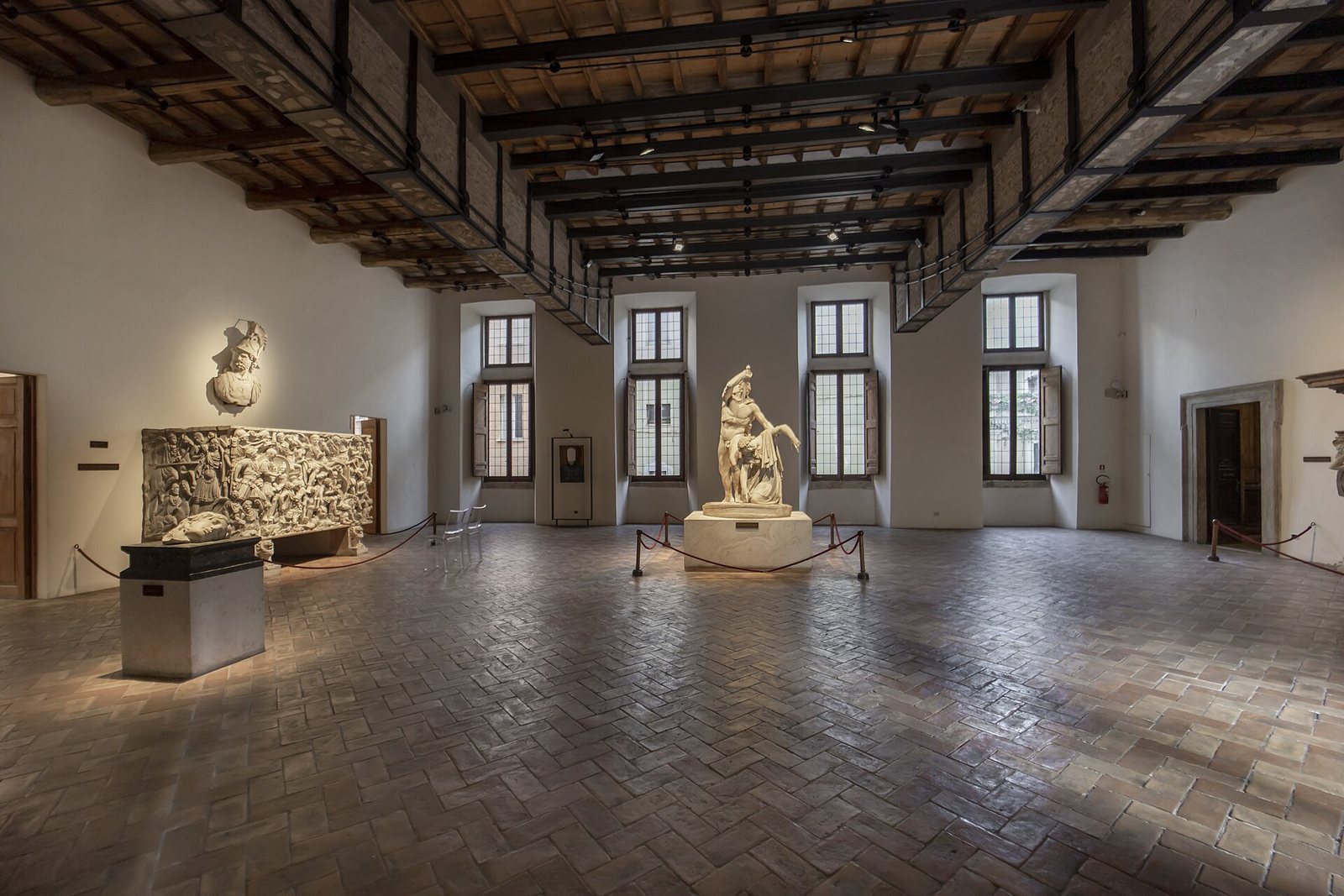
Salon with the Fireplace
The Salon with the Fireplace contains the Great Ludovisi Sarcophagus and a marble replica of a group showing a Gaul killing his wife and himself. Made in the early second century CE, the replica follows a Pergamene original, probably in bronze. Attalus I, a Hellenistic king of Pergamon in Asia Minor, commissioned the original to commemorate victory over the Galatians, Celtic groups settled in that region. The sculpture is also known as the Ludovisi Gaul or the Suicide of the Galatian.
Mattei and Del Drago Sculptures
Sculptures from the Mattei collection are displayed in galleries flanking the courtyard and in a ground-floor room. They once decorated Ciriaco Mattei’s villa and gardens on the Caelian Hill. The south gallery also contains four reliefs from the Del Drago family collection, which the German scholar Johann Joachim Winckelmann admired.
D’Annunzio Apartments
Sculptures in the D’Annunzio Apartments were found in Rome’s Campus Martius, where a sanctuary to the Egyptian goddess Isis once stood. Some came from Egypt; others were made in Rome in an Egyptian style. The Room of the Mother Goddess displays a head of Ephesian Artemis discovered during excavations on Via Marmorata in 2009.
Many sculptures in the palace are Roman versions of Greek works. The Ludovisi acrolith, a statue with stone head and limbs and other materials elsewhere, and the Ludovisi Throne are identified as Greek originals and may have come from Magna Graecia, the Greek settlements of southern Italy. Roman portrait busts and sarcophagi are distinct works rather than imitations of Greek sculpture.