Tombeau de Merlin: A Neolithic Burial Monument Linked to Arthurian Legend
Site at a Glance
- Popularity
- High
- Country
- France
- Primary era
- Stone Age
- Eras represented
- Stone Age
- Civilizations
- Unclassified
- Site type
- Religious
- Remains
- Tomb
On this page5 sections
History
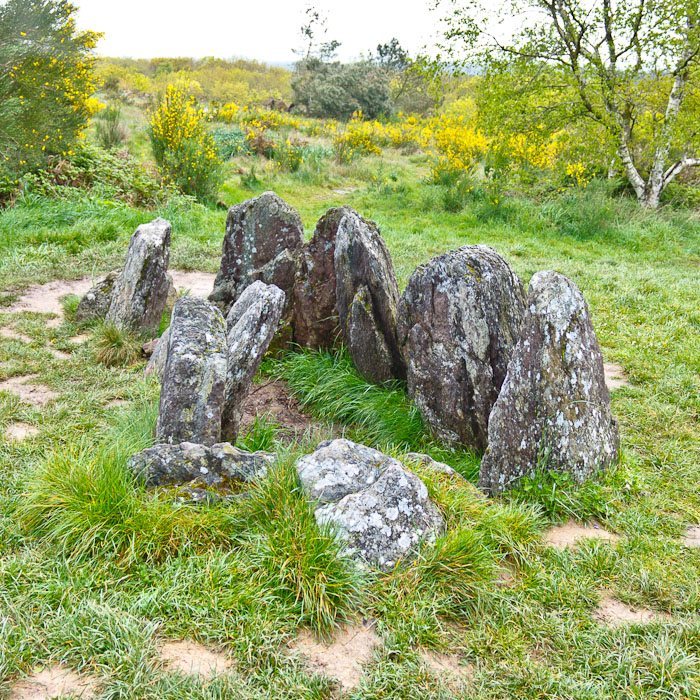
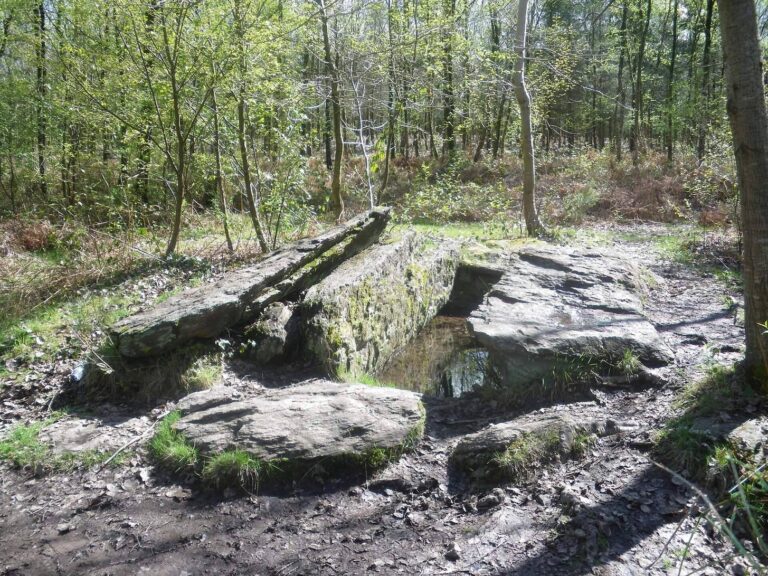
The Tombeau de Merlin is a ruined Neolithic covered gallery grave, a megalithic burial structure with a covered chamber or passage, in Paimpont, France. It dates to around 4000 BC and was later linked by legend, not archaeological evidence, to Merlin, the enchanter of Arthurian literature.
Legend and proposed locations
A tradition recorded from the twelfth century placed Merlin’s tomb in Brocéliande, a legendary forest whose precise location was uncertain. In the Lancelot-Grail, a cycle of medieval French prose romances, Merlin withdraws from the world because of his love for Viviane, a fairy figure also associated with the Lady of the Lake. Another version says that Viviane confines him in a cave.
In 1811, the poet Auguste Creuzé de Lesser suggested that Merlin might be buried in Brocéliande. In 1820, judge and scholar Jean Côme Damien Poignand placed the tomb in the Forest of Paimpont, in the commune of Saint-Malon-sur-Mel and near Talhouet Abbey. Local people had already spent about twenty years searching the area for treasure.
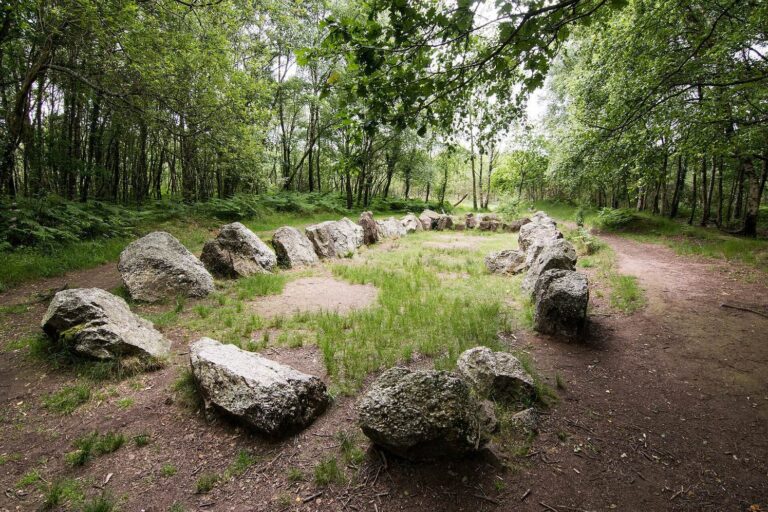
In 1825, Blanchard de la Musse associated a covered gallery grave in the forest’s northern part with Merlin, and Théodore Hersart de la Villemarqué placed the tomb in the same area. An 1846 Romantic engraving instead showed an imaginary stone circle as Merlin’s tomb in Brocéliande. In 1889, Félix Bellamy drew on Poignand’s writing and local testimony to identify a gallery grave as the tomb. That proposed location was later revised following the burial of Alphonse Guérin. By the end of the nineteenth century, local tradition associated the monument with Merlin.
Damage and modern presentation
In 1892, people seeking Merlin’s supposed treasure dug into the monument and broke blocks they could not move. Bellamy found the grave extensively ransacked that year. Tourism in Paimpont-Brocéliande began to develop around the same period, though local residents were initially reluctant. A detailed description made in the 1920s concerned the ruined gallery grave identified as Merlin’s tomb.
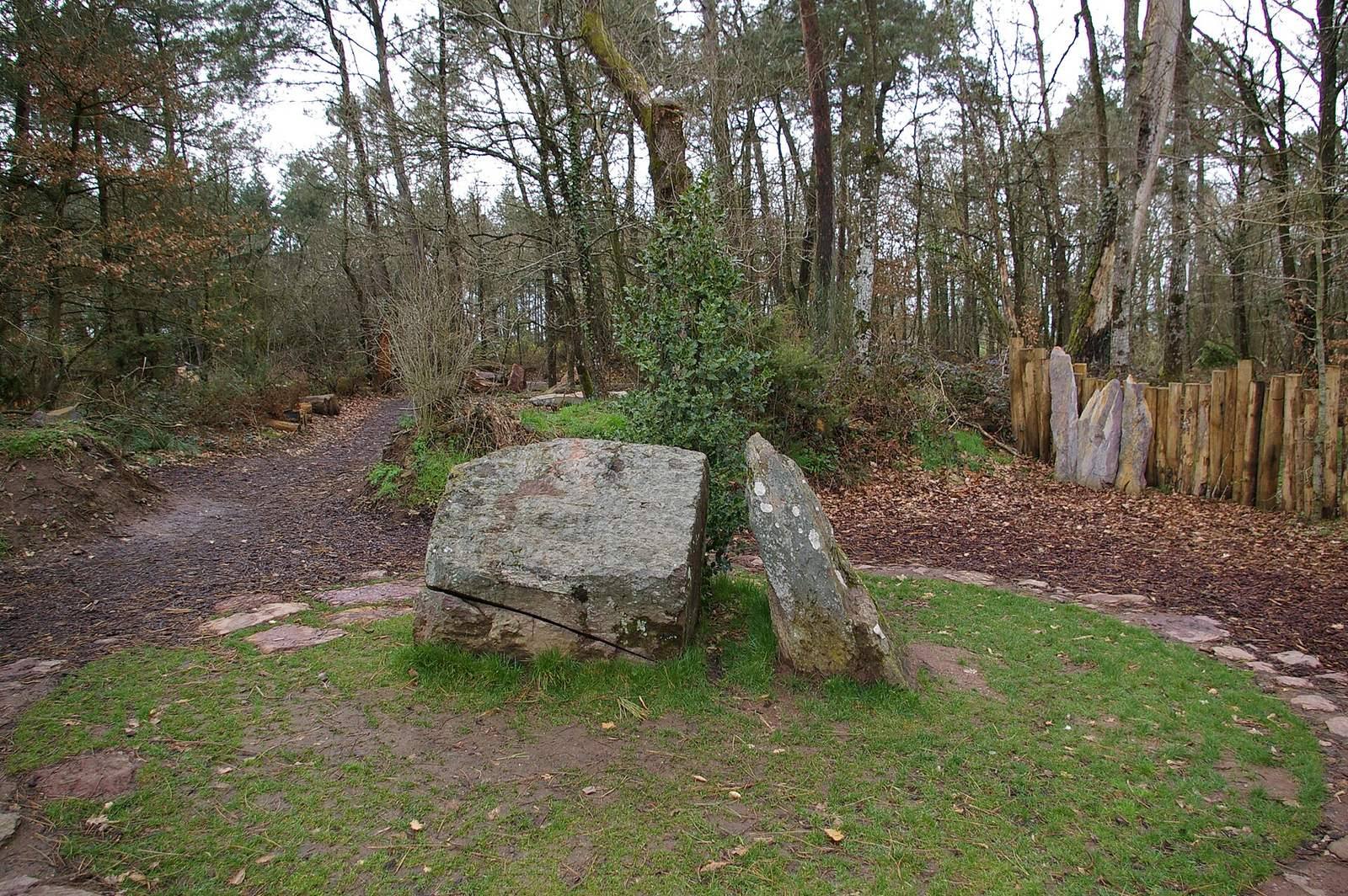
In the 1970s, Breton writer Yann Brekilien opposed proposed access roads, which he believed threatened the area’s legendary character. A visitor-oriented policy took shape in the 1990s, involving the mayor of Ploërmel and the Centre de l’Imaginaire Arthurien, an organization devoted to Arthurian legend. It enabled guided visits and established a protective perimeter around the tomb. The site’s presentation as a visitor destination dates no earlier than this period.
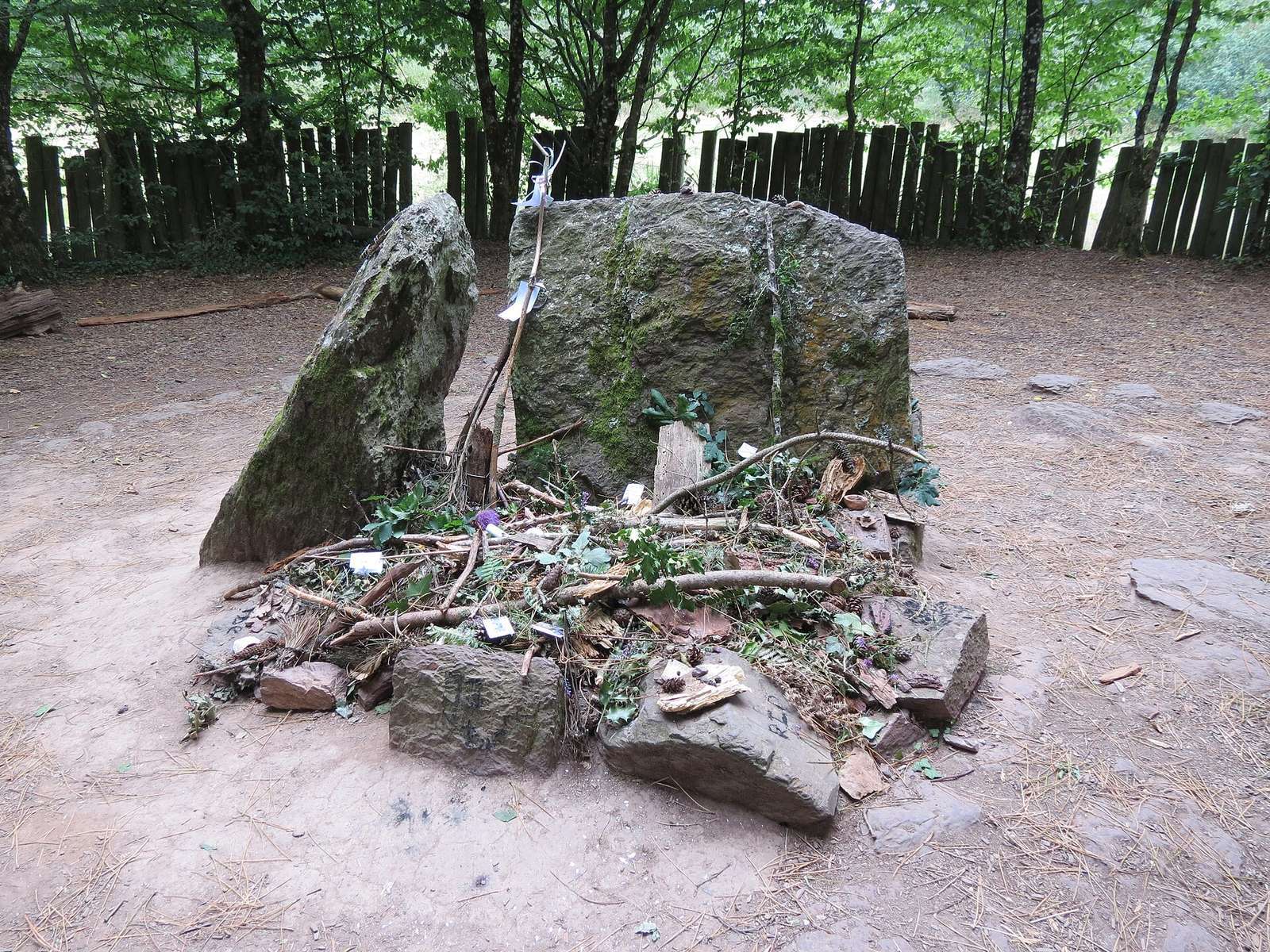
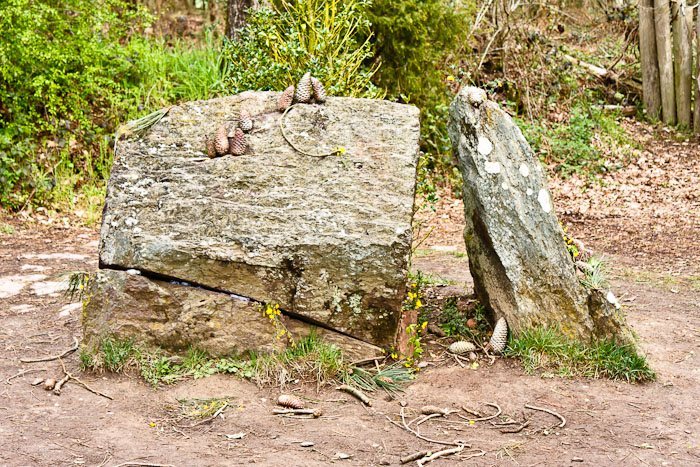
In 2008, the European LEADER rural-development programme supported restoration of the deteriorating site and creation of the Enchanter’s Loop, a walking route connecting the tomb with the Fountain of Youth. The monument is also a place of pilgrimage and offerings. Visitors leave flower wreaths and wish notes for Merlin, place offerings on holly branches at the center, and sometimes scatter the ashes of the dead there.
Remains
The gallery grave
The grave stood at La Marette in the Forest of Paimpont, near the hamlet of Landelles. It measured about 10.5 metres long and 1.5 metres wide. Four upright stones bounded one side of its chamber, with one stone on the opposite side and a sixth slab at the end. The supporting stones measured between 0.9 and 1.5 metres high, 1.25 and 1.6 metres wide, and 0.25 and 0.4 metres thick. All the stones were purple schist, and the covering slabs had fallen over. Bellamy also described a second gallery grave in the area, designated the Tomb of Viviane.
By 1894, only three stones of the Merlin monument remained. Its former complete form is represented in two nineteenth-century engravings and a photograph dating to around 1899–1900.