Lübbensteine: Neolithic Megalithic Tombs in Germany
Site at a Glance
- Popularity
- Medium
- Country
- Germany
- Primary era
- Stone Age
- Eras represented
- Stone Age
- Civilizations
- Unclassified
- Site type
- Burial
- Remains
- Tomb
On this page7 sections
History
The Lübbensteine are two megalithic tombs on St. Annenberg, west of Helmstedt in Germany, built around 3500 BC by farming communities of the Neolithic, the later Stone Age period when settled communities became established in Europe. They are the southernmost Neolithic megalithic tombs in northern Germany.
Early study and protection
The scholar Hermann Conring gave the first description of the tombs in 1665. An early excavation took place around 1700, before archaeological investigation became more systematic.
Professors at the University of Helmstedt, which closed in 1810, helped protect one tomb from dismantling. Fritz Grabowsky and other scholars encouraged investigation and helped prevent the stones from being taken for building material.
Scientific investigation and restoration
The first scientific investigation took place in 1935–36. The site was restored again in 2001.
Remains
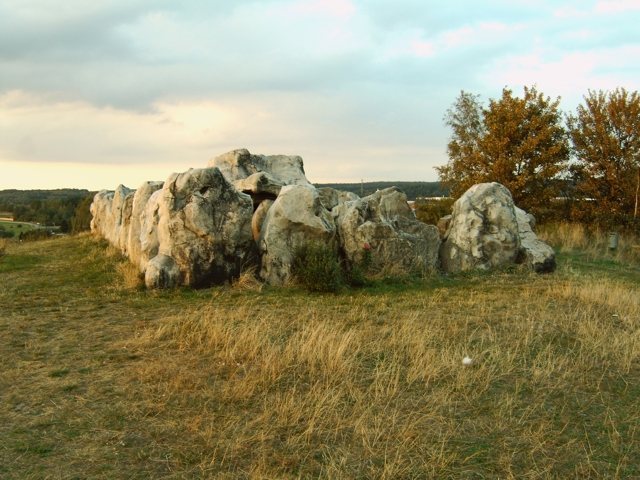
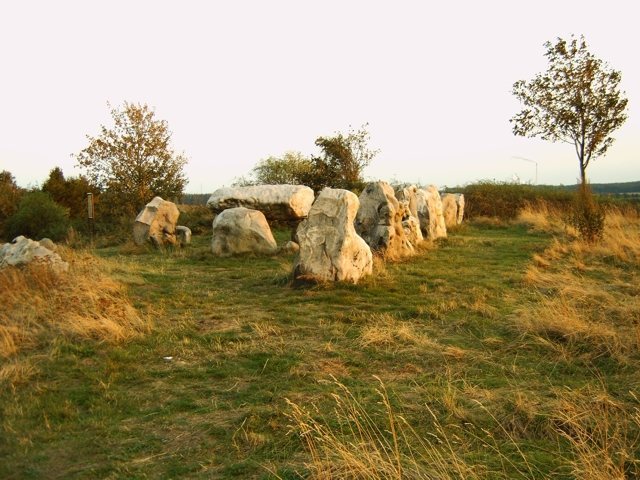
The tombs stand on an elevated plateau on St. Annenberg. Northern Grave B and southern Grave A are about 130 m apart. Their megalithic construction used local lignite quartzite, a silica-rich rock associated with lignite deposits.
Northern tomb, Grave B
Grave B is a passage grave, a megalithic tomb whose burial chamber connects to the exterior through a distinct passage. The chamber measures 7 m long and 1.8 m wide. Twelve supporting stones carry five capstones, and the structure sits within a rectangular enclosure originally formed by 26 boundary stones, measuring 14 m by 5 m. A pair of passage stones connects the chamber to an opening in the enclosure; the passage has no capstone. Forty of the tomb’s original 45 stones survived, making full reconstruction possible.
Southern tomb, Grave A
More than half of Grave A’s stones were missing at the time of investigation. Of the 20 stones found, no more than seven could be assigned to the chamber. The tomb appears to have had the same overall dimensions as Grave B.
Nearby archaeological setting
A possible associated settlement lies about 700 m away beside a silted-up lake. Whether a third tomb once stood at the site remains uncertain.