Church of St. Francis Xavier in Rožňava: A Baroque Jesuit Church
Site at a Glance
- Popularity
- Very Low
- Country
- Slovakia
- Primary era
- Early Modern
- Eras represented
- Early Modern
- Civilizations
- Habsburg, Hungarian
- Site type
- Religious
- Remains
- Church
On this page15 sections
History
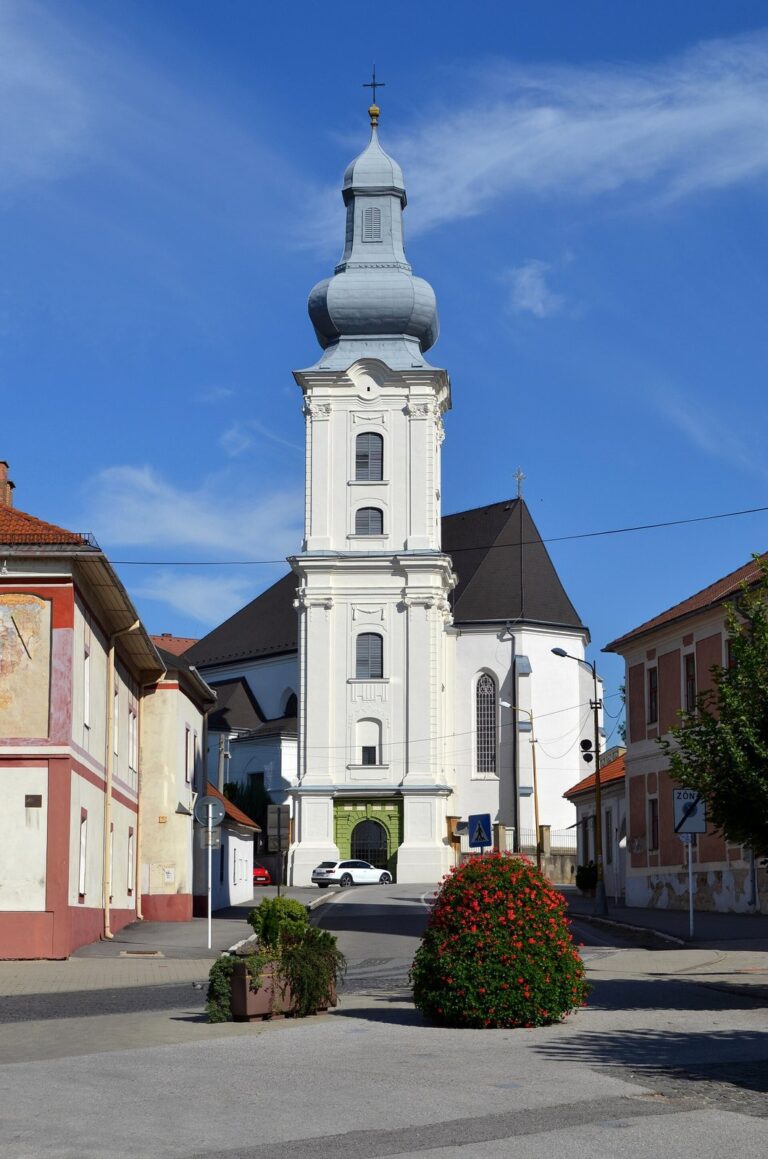
The Church of St. Francis Xavier in Rožňava is a Baroque Roman Catholic church in Slovakia, begun by the Jesuits in the seventeenth century. Juraj Lippay, Archbishop of Esztergom, funded its construction on the site of a burned town hall and a Protestant school. The church is dedicated to St. Francis Xavier, a sixteenth-century Jesuit missionary and one of the order’s founders. Its main body was completed in 1666.
Jesuit construction, 1658-1687
The Jesuits, members of the Society of Jesus, started work in 1658. Construction was interrupted in 1682, when the Jesuits were expelled from Rožňava during the Thököly uprising, a revolt in the Kingdom of Hungary led by Imre Thököly. They returned in 1687, and the façade was completed afterward.
Religious orders and the school church
After the Jesuit order was suppressed in 1773, its members left Rožňava and Franciscans briefly took charge of the church. Premonstratensians, a community of canons regular, assumed control in 1778 and remained until the school was nationalized in 1920. They established a gymnasium in Rožňava, and the church became known as a school church: Catholic secondary-school pupils attended services as part of their instruction.
Later changes and present use
In the early 1990s, almost all of the church’s Baroque interior decoration was removed and has not been reinstated. The church is now served by the Salesians, a congregation founded by John Bosco, and is recognized as a Slovak cultural monument.
Remains
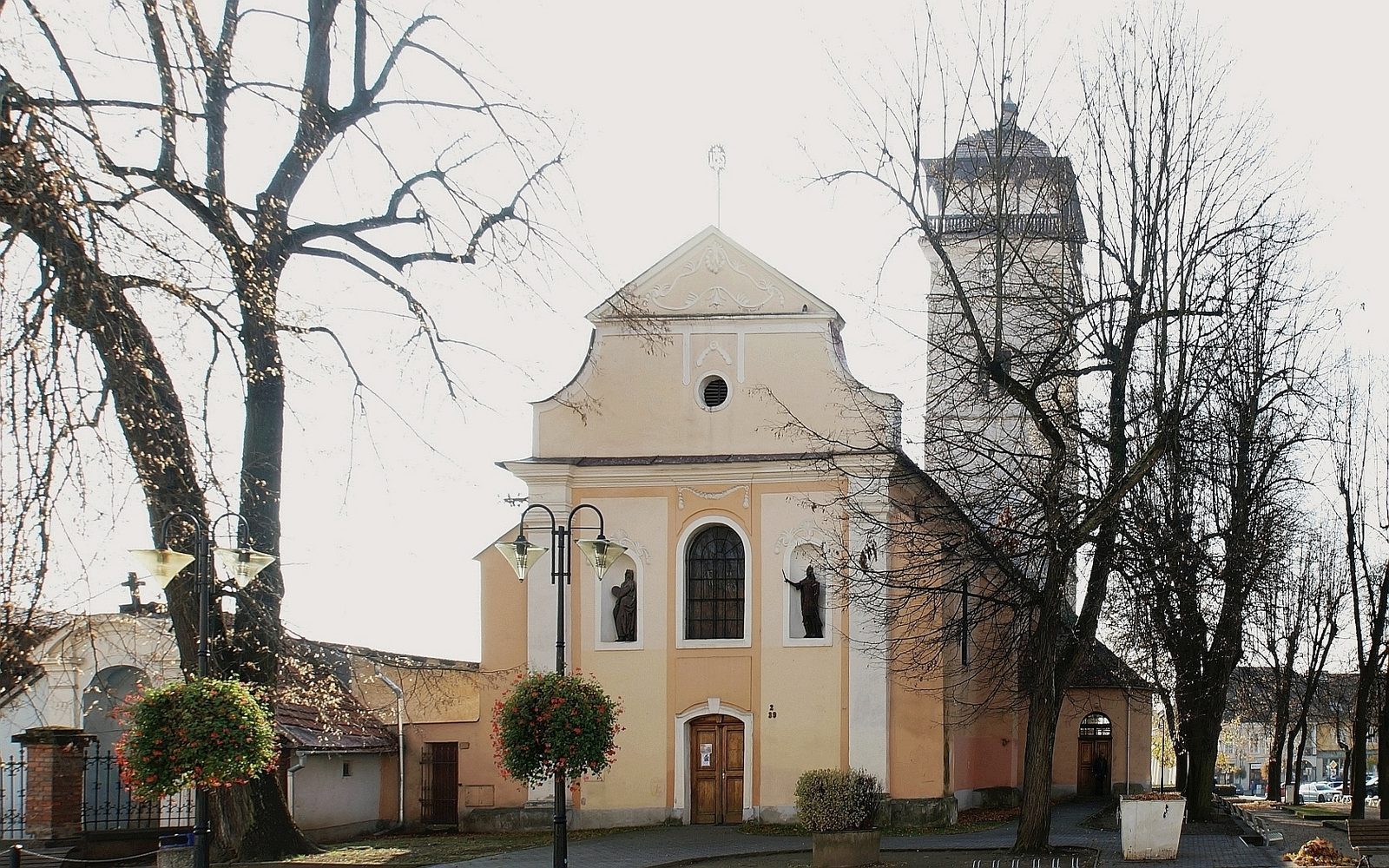
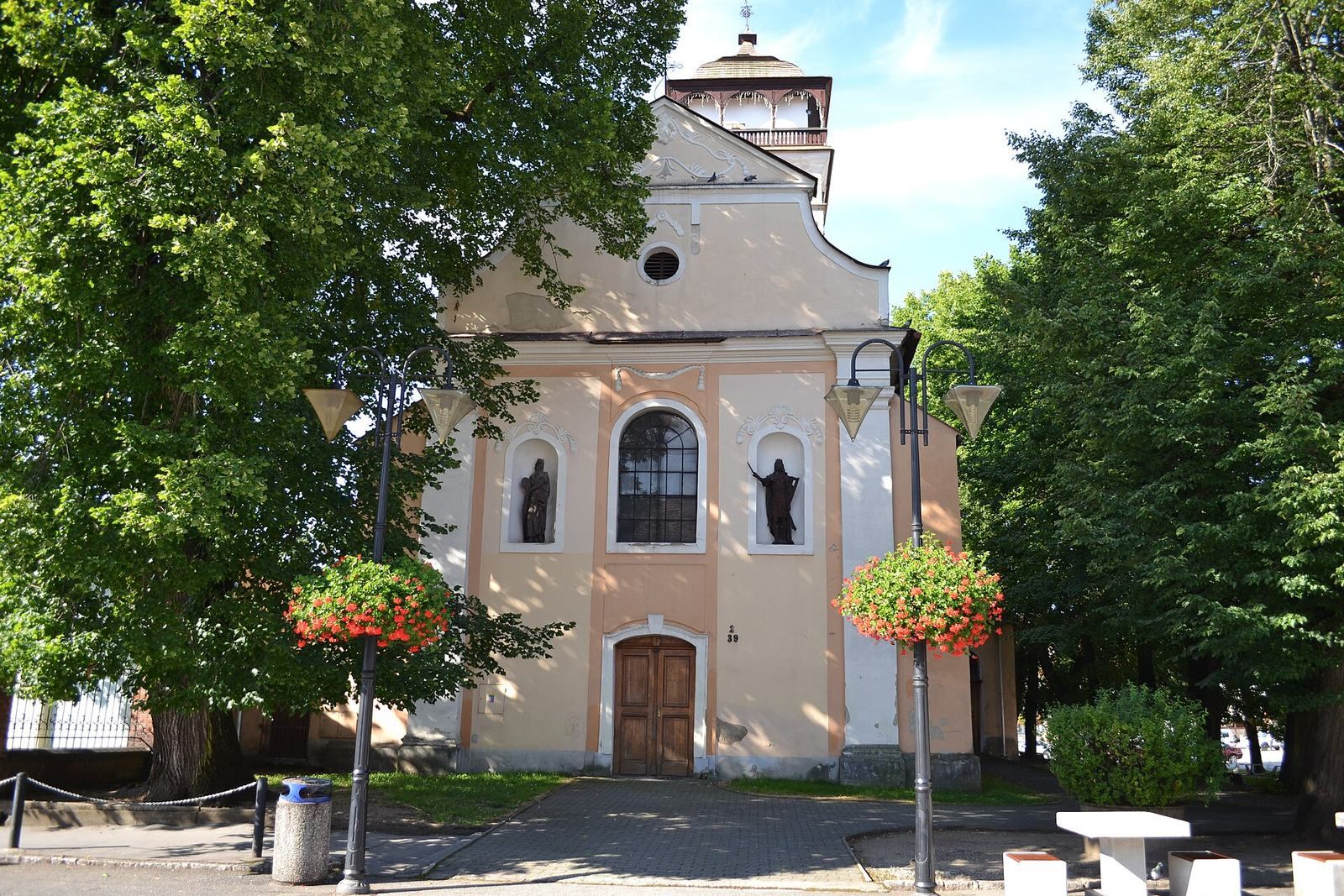
The masonry church stands in the center of Miners’ Square. Its Baroque plan has a single nave and a sanctuary with a rectangular end.
Church exterior
Façade
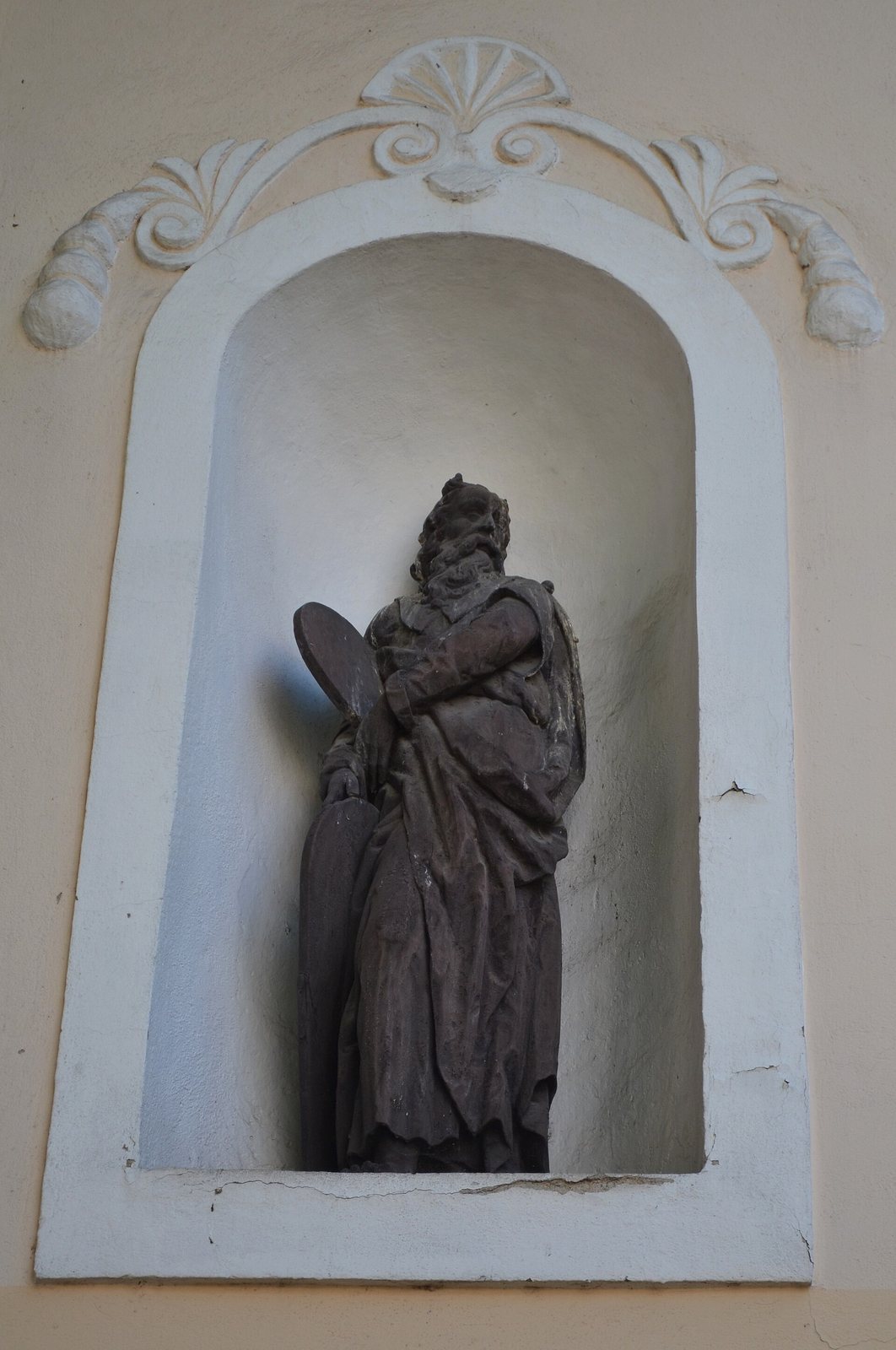
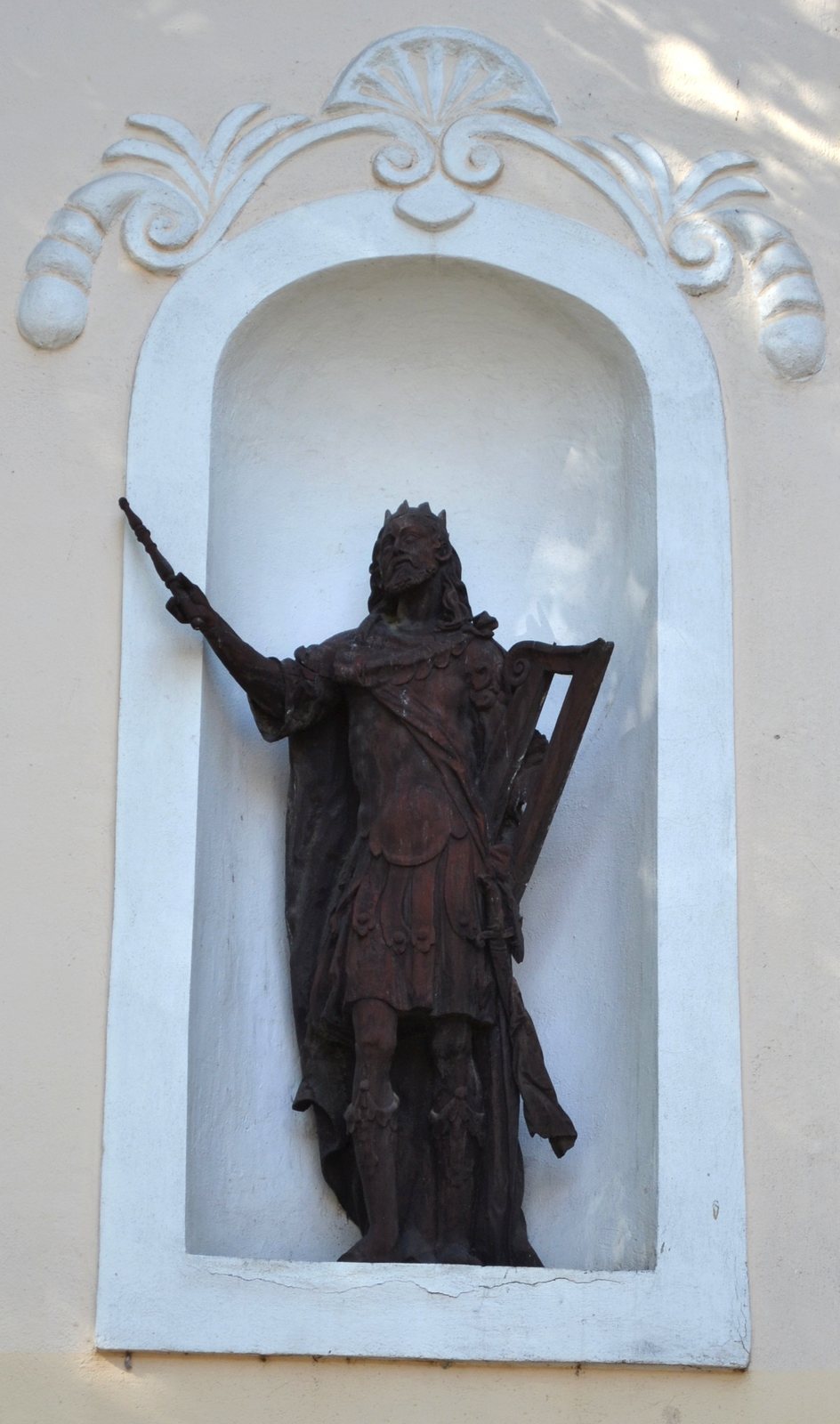
Two pilasters, shallow wall-attached columns with smooth shafts, frame the front façade. A curved gable above them is topped by a Jesuit cross. A large window sits over the entrance, while niches to either side hold wooden statues of Moses and David, figures from the Hebrew Bible. The statues are thought to have been brought from Rome by the Jesuits, and their style resembles work by Donatello, an influential early Renaissance sculptor.
Side chapel
A small chapel beside the left side of the façade dates to the second half of the eighteenth century. It contains a sculpture of St. John of Nepomuk, a Bohemian priest venerated as a saint.
Structures beside the church
Watchtower
A separate local watchtower adjoins the church on its southwest side. From the early modern period, it served as a lookout over the surroundings and helped defend the town.
Former workshops and stalls
Low masonry buildings along the church’s southeast side once housed craft workshops and stalls.
Interior and burial space
Altars and paintings
Fragments survive from the original side altar dedicated to St. John of Nepomuk, whose veneration was widespread in the region and who is the patron of the Rožňava diocese. The main altar carries a 1904 painting of St. Francis Xavier by local painter Anton Lammel. Other interior works include an altarpiece showing the Assumption of St. John of Nepomuk, a painting of the Polish Jesuit saint Stanislaus Kostka, and a later image of John Bosco. A painting of the Annunciation in the ornate Rococo style was moved from a southern side altar and now hangs on a church wall.
Rear-room sculpture
A statue of St. Rosalia, a Christian saint associated with Palermo, stands in a cave in a rear room on the side facing the watchtower, outside the altar area.
Crypt
A crypt beneath the church served as a burial place for members of religious orders. The space was probably the cellar of the town hall that stood on the site before the church.