Tal-Qadi Temple: A Prehistoric Megalithic Temple in Malta
Site at a Glance
- Popularity
- Medium
- Country
- Malta
- Primary era
- Stone Age
- Eras represented
- Stone Age
- Civilizations
- Maltese Temple Culture
- Site type
- Religious
- Remains
- Temple
On this page6 sections
History
Prehistoric use
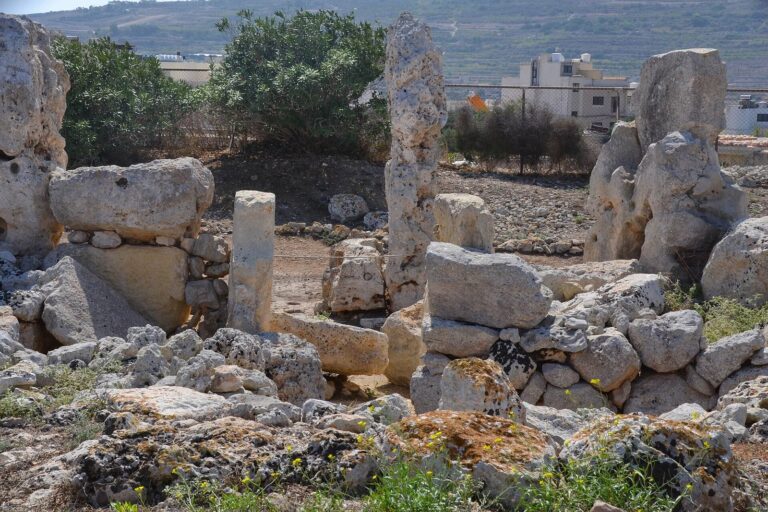
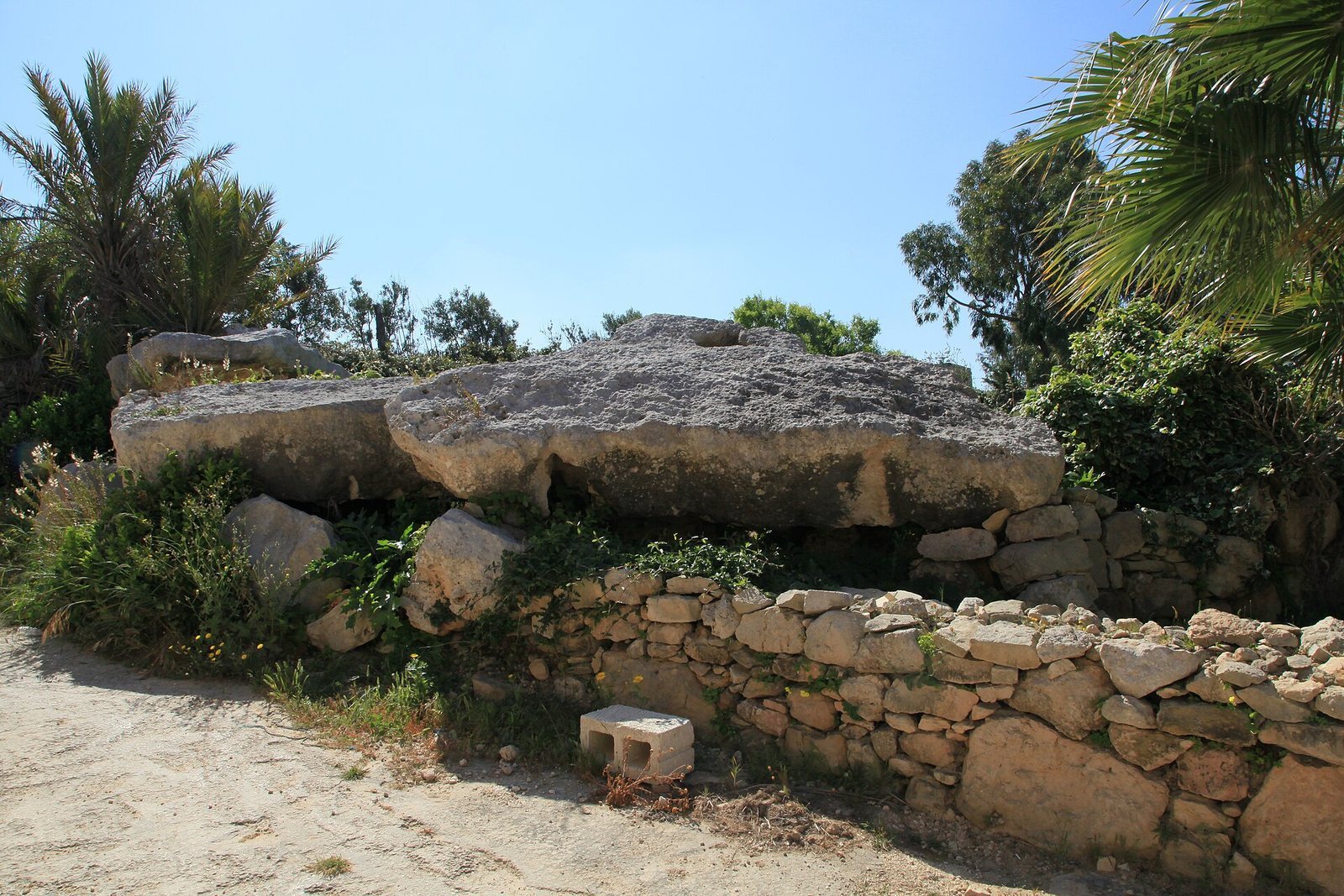
Tal-Qadi Temple is a prehistoric limestone temple built with large stones at Salina, near St Paul’s Bay, Malta. It dates to the Tarxien phase, an archaeological period in Maltese prehistory, and was built between 3300 and 3000 BC, approximately 3150 BC. The site may have been used as early as around 4000 BC, during the earlier Ġgantija phase. Pottery sherds indicate that the temple continued in use during the Tarxien Cemetery phase. Its purpose remains unknown.
Discovery and investigation
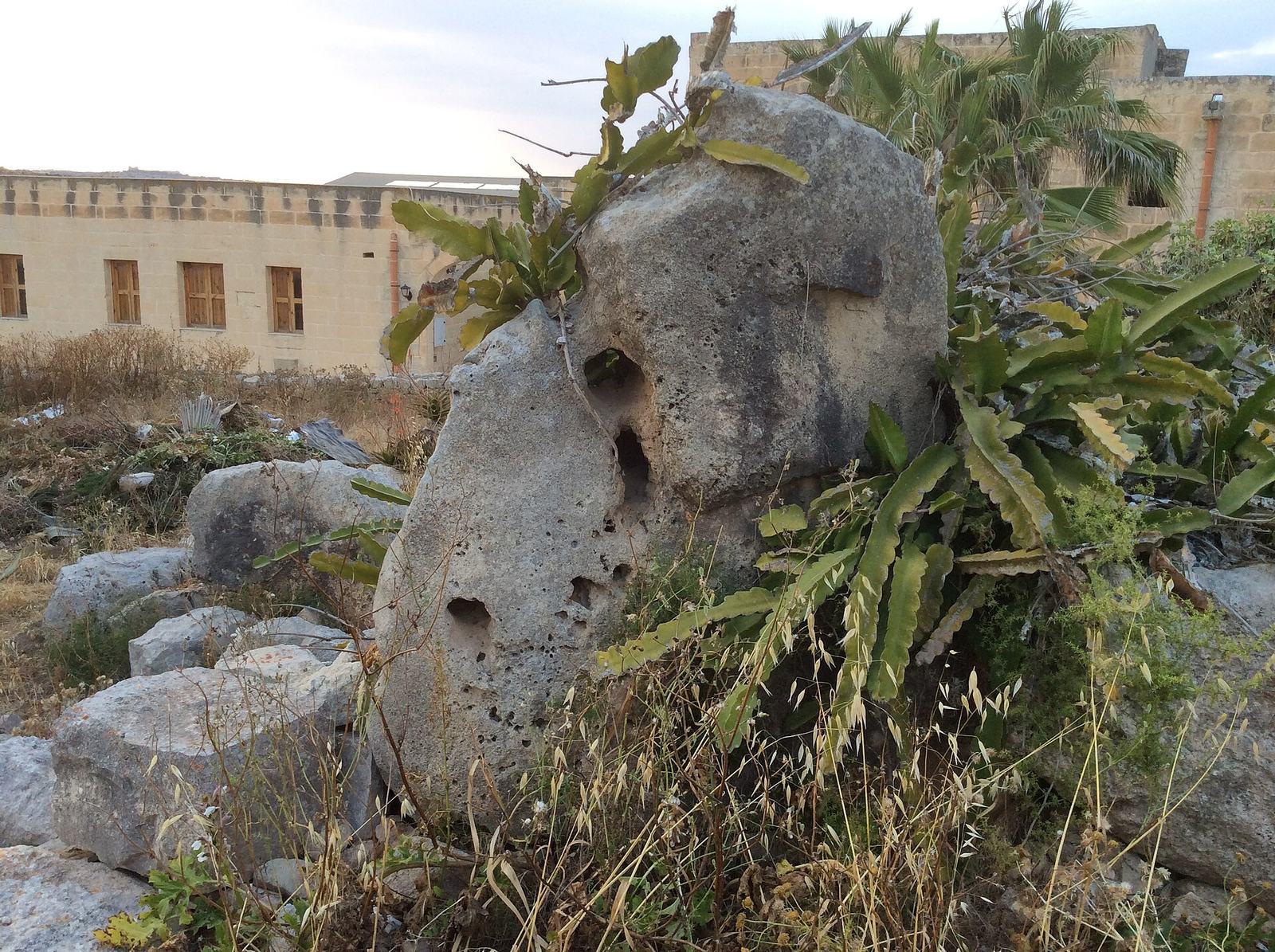
Government civil engineer Henry Sant discovered the scattered remains in 1916. Archaeologists Themistocles Zammit and L. Upton Way excavated the area in 1927, and the remains were surveyed and mapped in 1952. Zammit also noted that, years before the temple was identified, its tenant had destroyed a group of upright stones. These may have belonged to the temple’s facade or outer casing.
Remains
Temple plan and setting
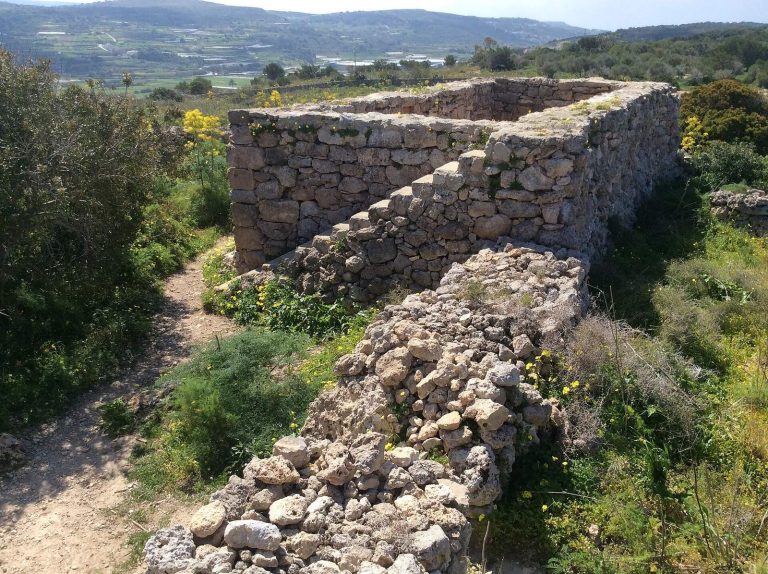
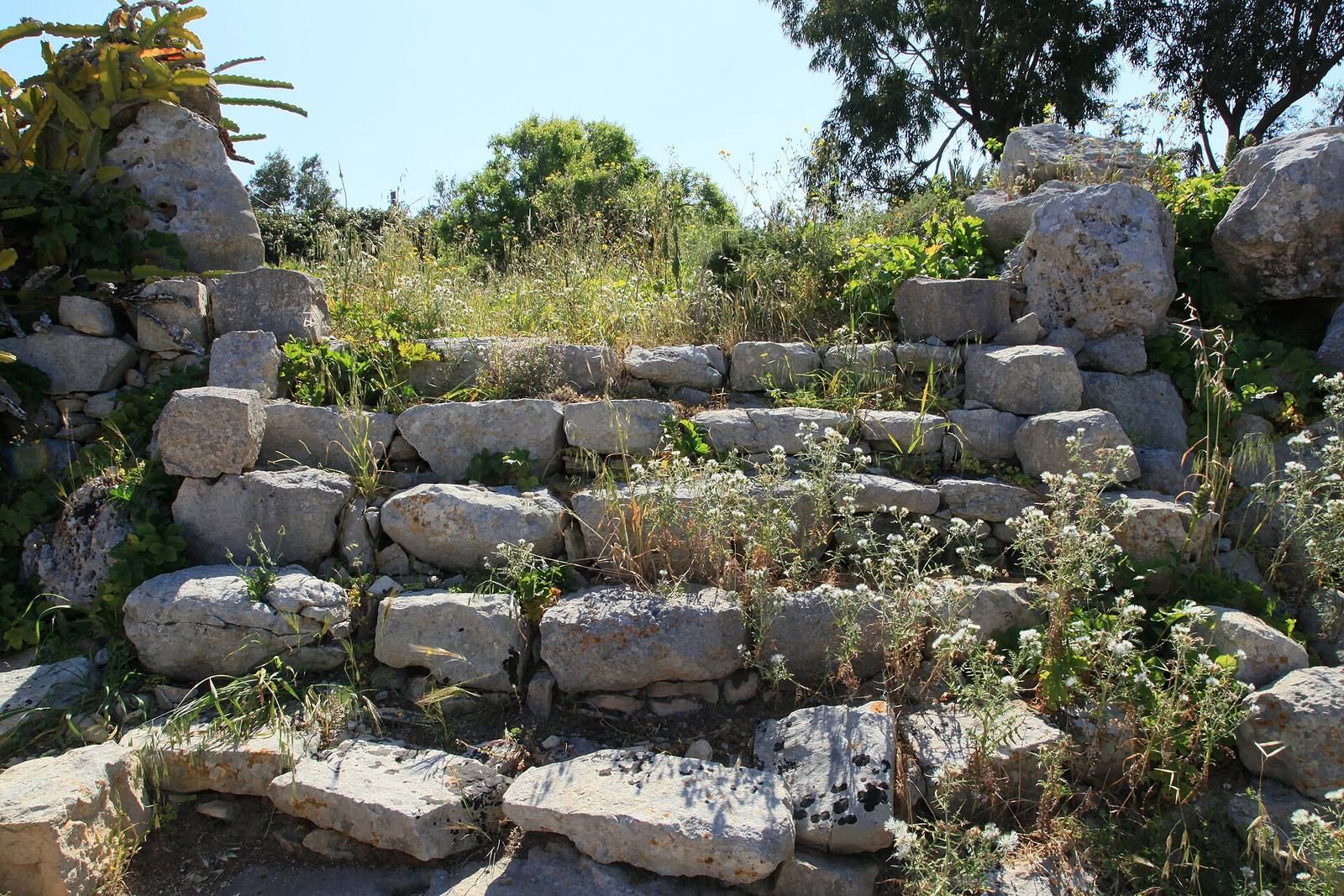
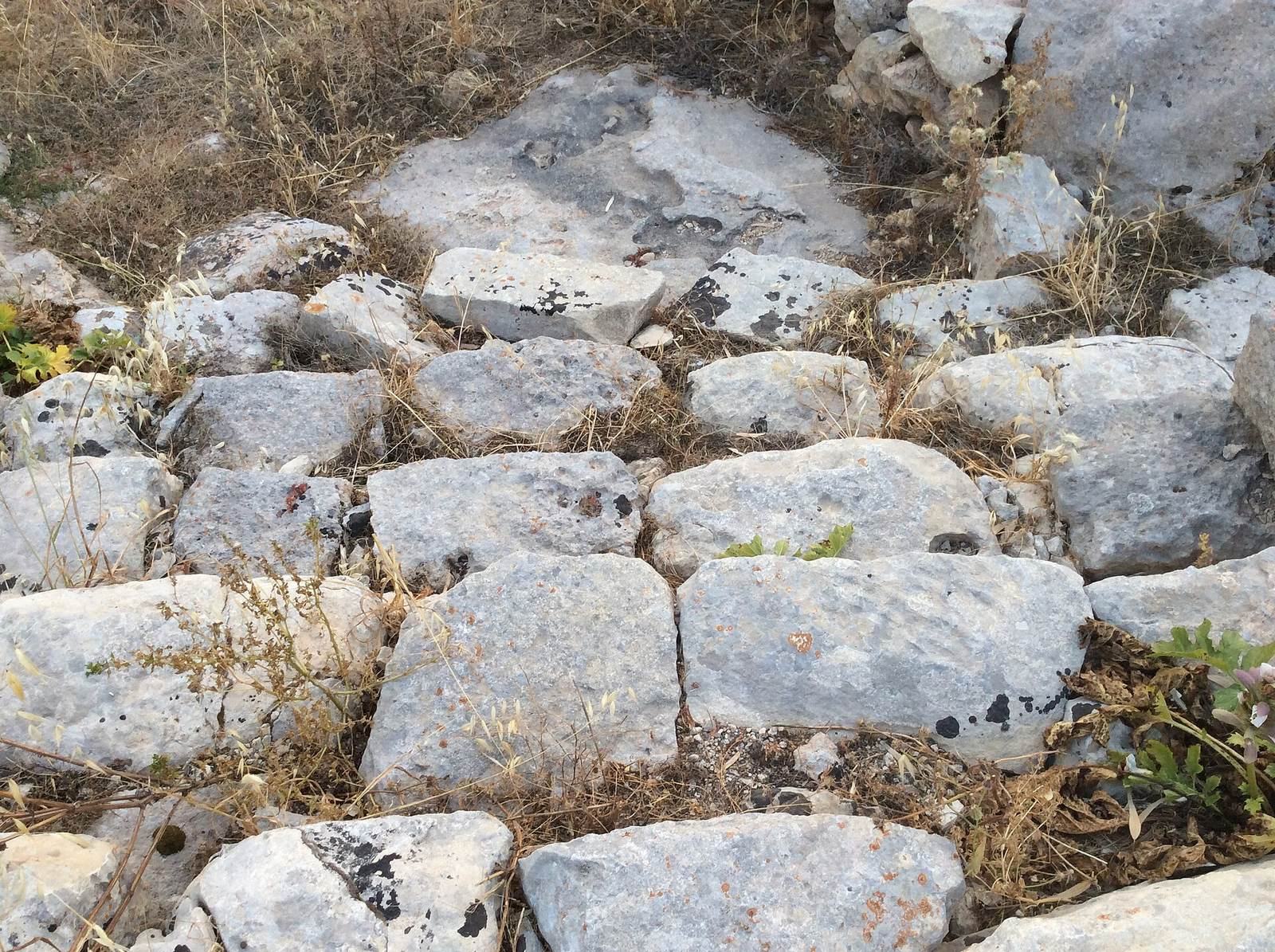
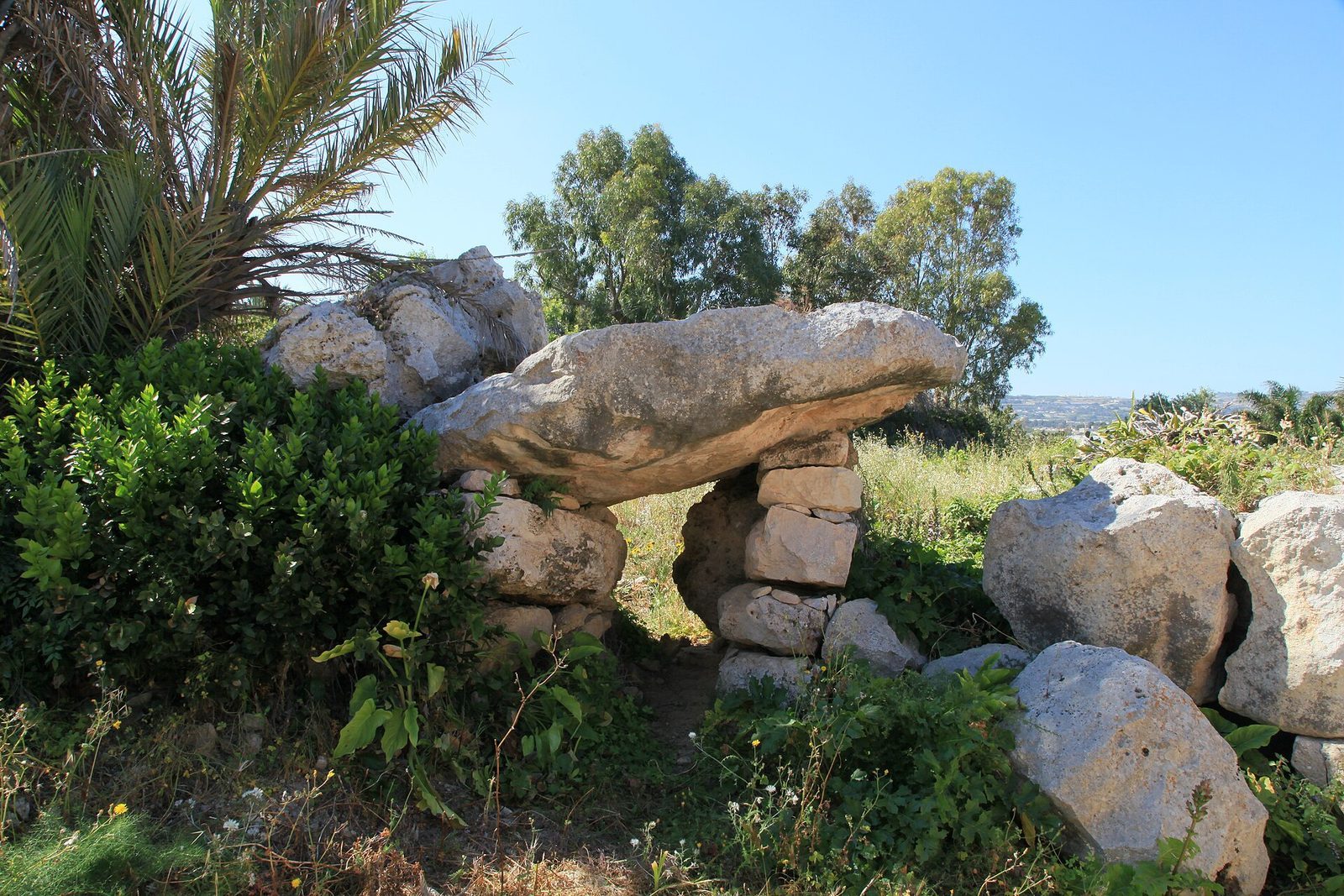
Built of limestone, the temple’s remains are spread across an upper and a lower field, at an elevation of 13 metres. Its general outline and parts of the central area are still visible, although the site is in poor condition. The building faces northeast, an unusual orientation among Maltese temples; a steep slope to the south made a south- or southeast-facing plan impracticable. The central section was probably flanked by rounded chambers, or apses, to the north and south. Two apses are visible, and two more may have completed a four-apse plan typical of Malta’s later prehistoric temple-building phase.
Carved limestone slab
A broken slab of globigerina limestone, a local stone formed largely from microscopic marine fossils, was found during early excavations and is now held at the National Museum of Archaeology in Valletta. Four lines extend from one point across the surviving fragment, dividing it into five sections. Three contain incised figures thought to represent stars, while the middle section bears a crescent-like shape. The complete slab may have been circular, with perhaps 14 to 18 sections. Interpretations include a star map or lunar calendar, with proposed readings linking figures to Sirius, Rigel or Betelgeuse, the constellations Taurus and Perseus, and the Pleiades star cluster. Another proposal uses the slab’s long straight edge and fixed stars to estimate the ecliptic latitude of the Moon or planets. Ecliptic latitude is an object’s angular distance from the Sun’s apparent yearly path across the sky; an illustrative calculation for Venus gives 3.0 degrees.