Willy Howe: A Round Barrow in East Yorkshire

Site at a Glance
- Popularity
- Low
- Country
- United Kingdom
- Primary era
- Modern
- Eras represented
- Modern
- Civilizations
- Unclassified
- Site type
- Burial
- Remains
- Burial Mound
On this page4 sections
History
Excavations and proposed use
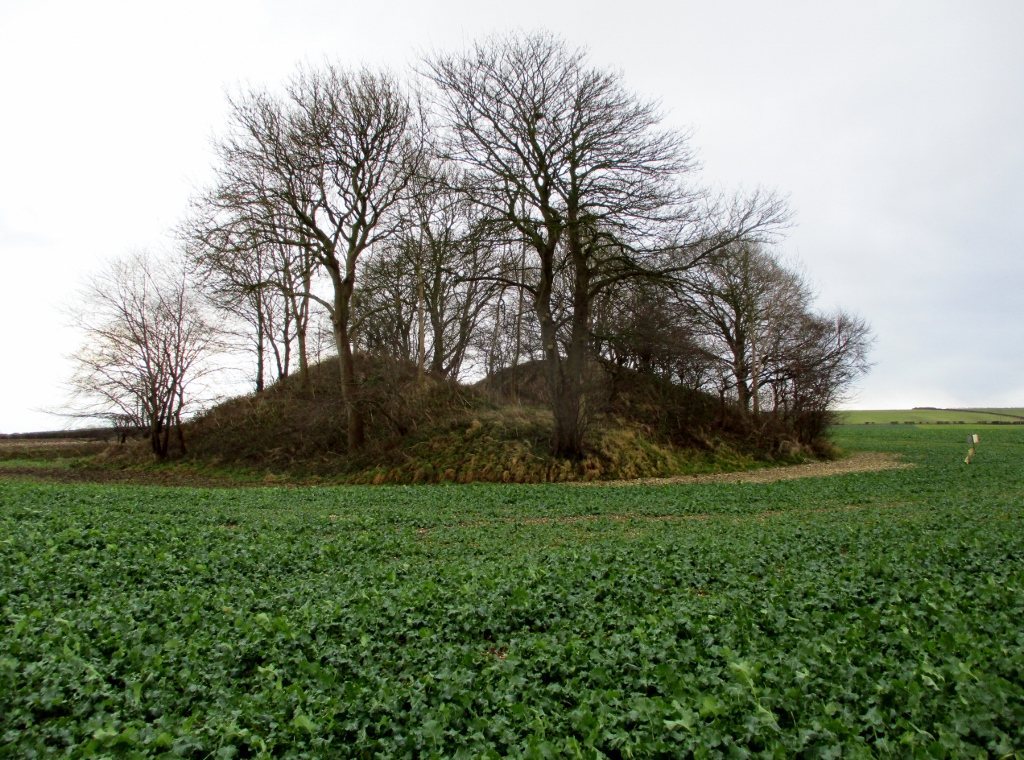
Willy Howe is a large round barrow in Thwing, East Riding of Yorkshire, England. Lord Londesborough excavated it in 1857, and Canon William Greenwell examined it in 1887. Greenwell described a feature resembling a shallow grave. The mound has also been proposed as a medieval Thingstead, a place associated with assemblies, though this identification is uncertain. It is listed as a Scheduled Monument on the National Heritage List for England.
Folklore
The English antiquary and writer Thomas Wright identified Willy Howe as the setting of a tale recorded by William of Newburgh, a twelfth-century English chronicler. In the story, a man riding home at night hears feasting, laughter, and singing from the mound. Its fairy inhabitants offer him a drink. Wary, he empties the cup, carries it away, and is pursued. The tale says the unusual vessel later came into the possession of Henry I, king of England from 1100 to 1135, and subsequent kings.
Two other fairy stories are associated with the mound. One tells of a treasure chest that could not be moved; another concerns a fairy bride who leaves gold for her human lover.
Remains
The mound stands in the Yorkshire Wolds between Wold Newton and Burton Fleming. It is round and rises 7.5 metres (25 feet). Nineteenth-century excavation altered its form, leaving a central space, while Greenwell’s work also created an earthwork ramp.