Tomb of Kato Phournos: An Early Mycenaean Burial Tomb at Mycenae
Site at a Glance
- Popularity
- Very Low
- Country
- Greece
- Primary era
- Bronze Age
- Eras represented
- Bronze Age
- Civilizations
- Mycenaean
- Site type
- Burial
- Remains
- Tomb
On this page11 sections
History
The Tomb of Kato Phournos is a Mycenaean tholos tomb, a circular burial chamber with a domed roof, at Mycenae in Greece. It dates to Late Helladic II, a phase of Mycenaean Greece in the Late Bronze Age, and is among the earliest tombs of this type at Mycenae. Nine tholos tombs were built at the site during the Late Bronze Age.
Ancient use and name
The tomb had been looted in antiquity. Its name, Kato Phournos, means “Lower Oven.” It came from a place name derived from the term local farmers used for the tomb: “Oven.”
Recognition and excavation
William Gell noted the tomb after visiting Mycenae in 1805, but mistook it and the nearby Epano Phournos tomb for gates. The French Morea Expedition, a scientific mission to the Peloponnese, also noted the tomb in 1829. Its existence was known before the large-scale excavations at Mycenae in 1876, led by Heinrich Schliemann and Panagiotis Stamatakis.
Christos Tsountas excavated the tomb in 1893. In 1922, Alan Wace re-examined its approach passage and chamber, and inspected the heaps of soil and debris from Tsountas’s excavation. He did not excavate the burial pit because time was limited. The tomb forms part of the Archaeological Sites of Mycenae and Tiryns, which became a UNESCO World Heritage Site in 1999.
Remains
The tomb stands on the western slope of the Panagia Ridge, about 600 metres west of Mycenae’s Upper City. Its partly underground plan links a circular chamber to the exterior through an approach passage and an entrance passage. Earth once covered the dome, which rose about five metres above the surrounding ground.
Passages
Approach passage
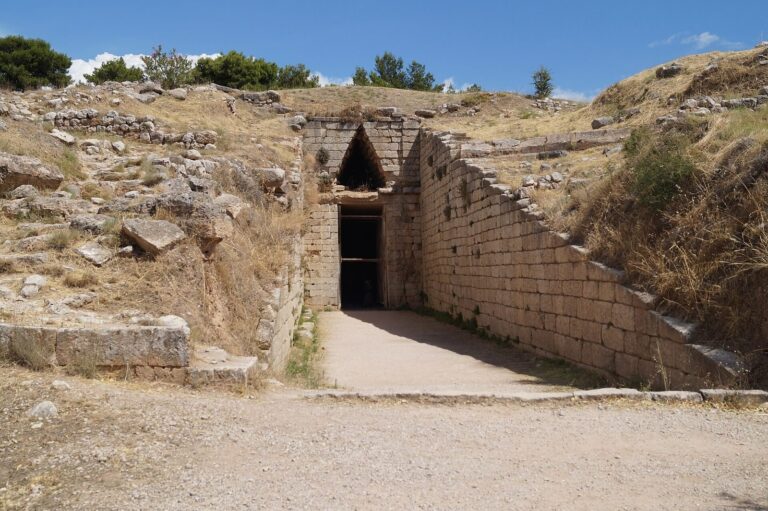
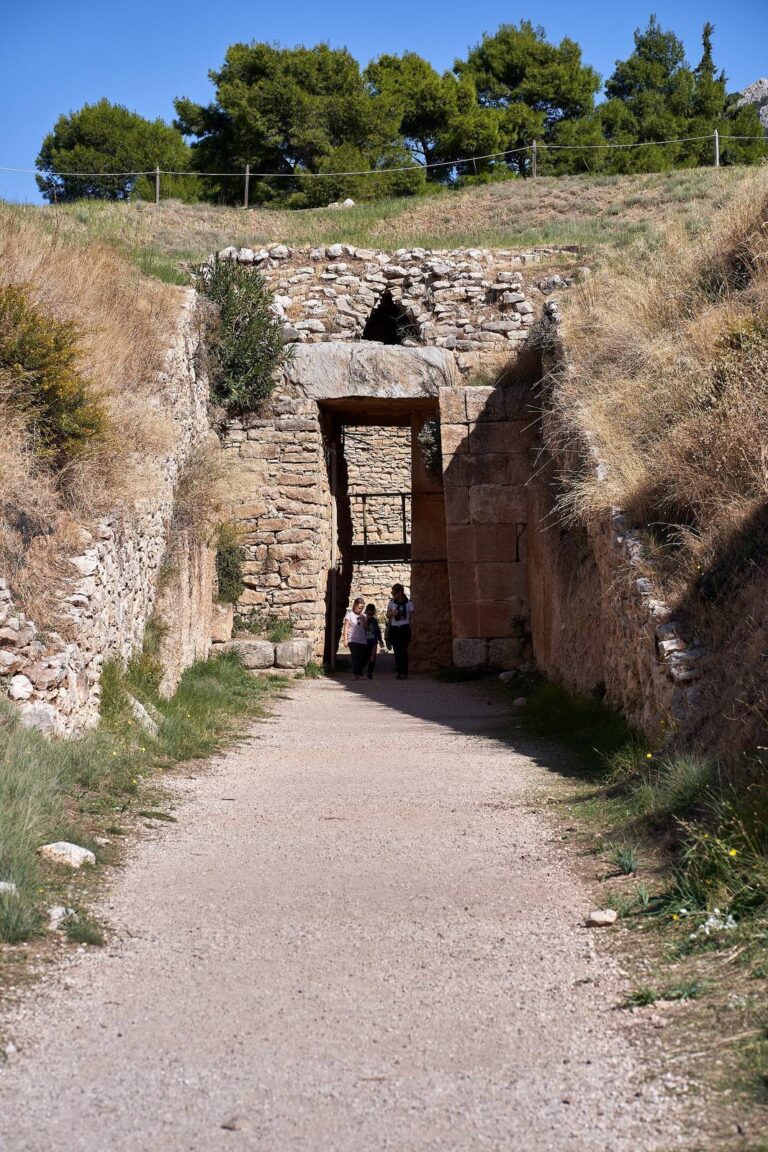
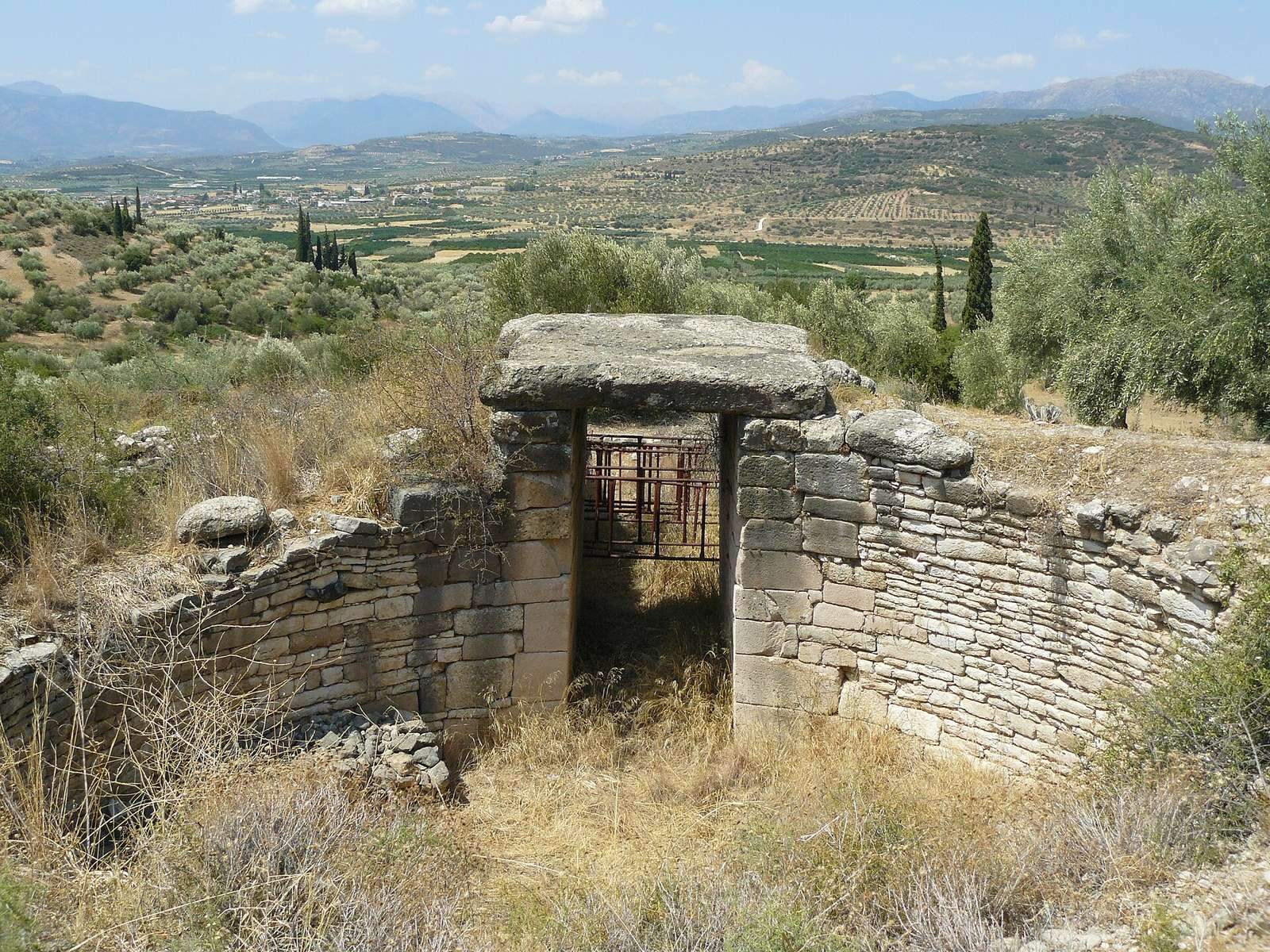
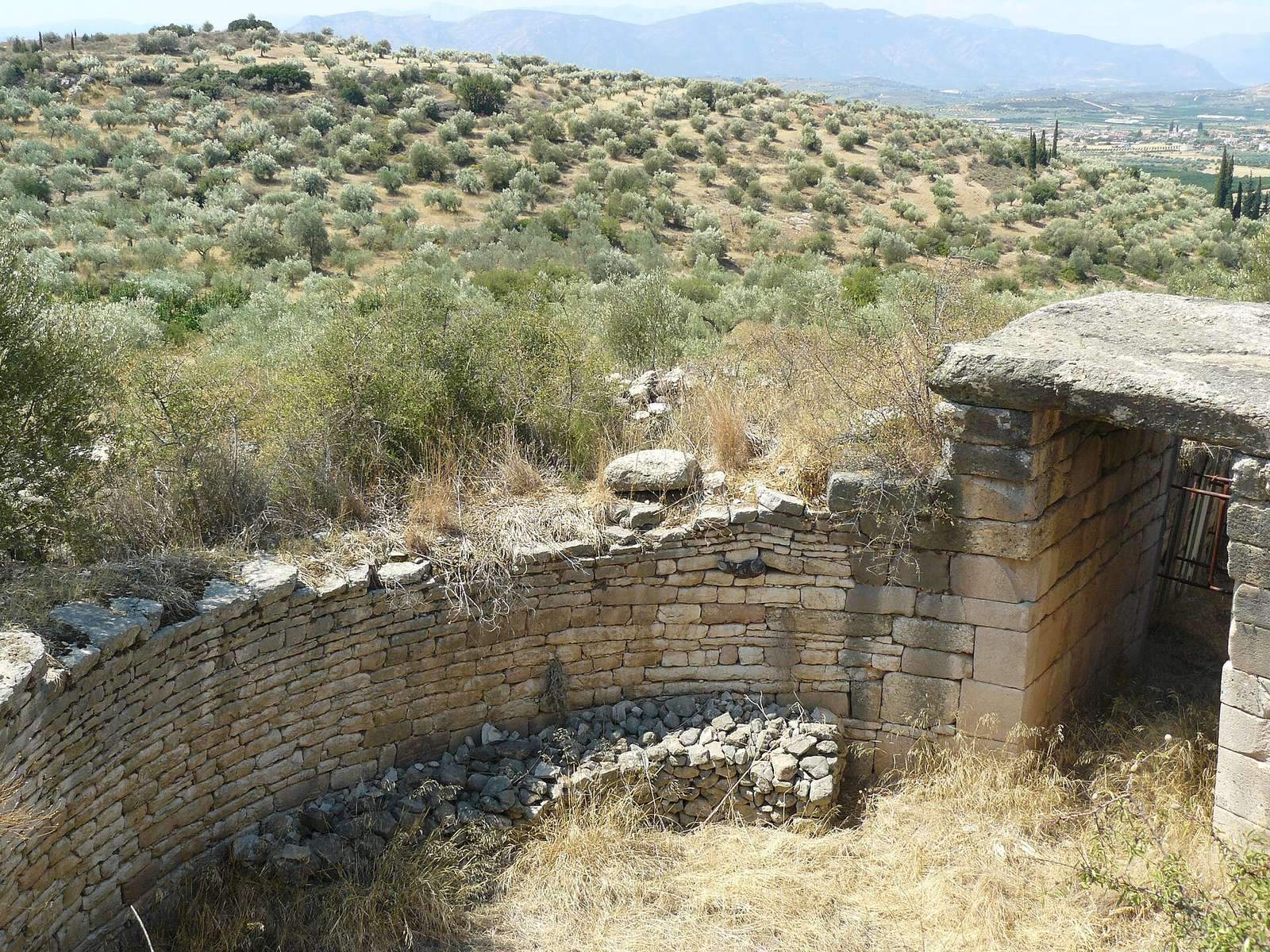
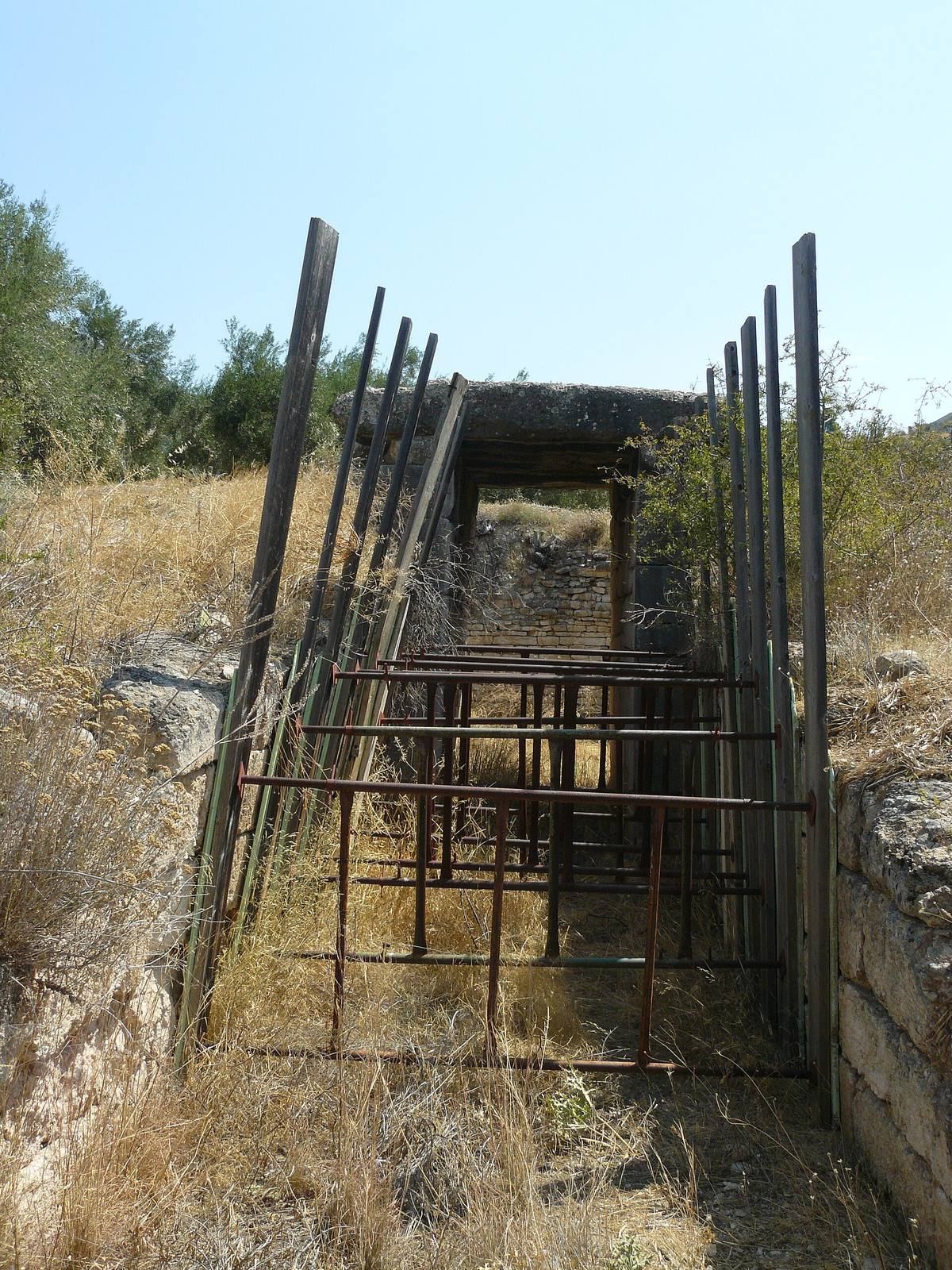
The approach passage, called the dromos, originally measured 12 metres long and 3 metres wide. Its slightly inward-leaning walls were built from dressed poros, a porous building stone. A low barrier of the same stone stood at its western end. The passage survives in part and is supported by cross-bracing because it is considered at risk of collapse.
Entrance passage
The stomion, the entrance passage between the dromos and the chamber, is about 4 metres long, 4 metres high and 2 metres wide, tapering slightly toward the top. Its façade and side walls use fine-grained conglomerate, a rock made of fragments cemented together. Three large conglomerate slabs form the top; their projecting ends spread the load across a wider area. The resemblance to the Panagia tholos has prompted the suggestion that a relieving triangle, an opening above a lintel to reduce pressure on it, may once have stood above the entrance lintel.
Burial chamber
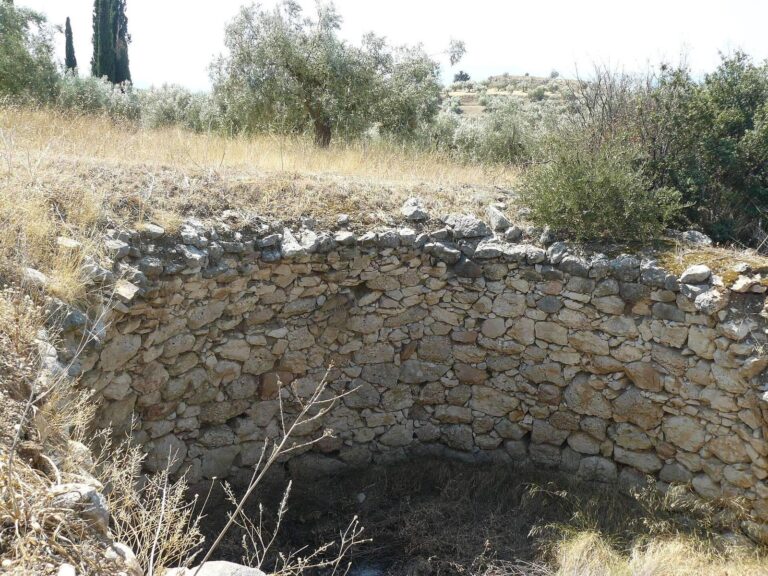
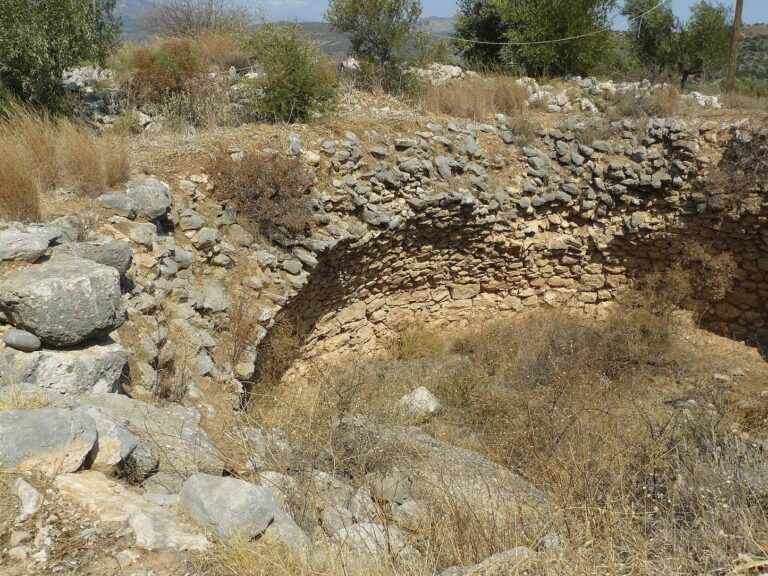
The circular chamber is about 10 metres across. Wace estimated that its original height was roughly 9 metres; the dome has since collapsed, leaving walls about 4 metres high. The lowest course consists of conglomerate blocks. Above it, smaller, flat limestone blocks and some conglomerate formed a dome in successive layers that projected inward. The masonry resembles that of the older Tomb of Aegisthus, though the stones here were more carefully shaped. A burial pit, about 5 metres long, 2 metres wide and 1 metre deep, was cut into the bedrock beside the southern part of the chamber wall. The floor was cut from bedrock, with cement covering the floors of the chamber and stomion; the dromos floor is bedrock.
Finds
Pottery
The dromos yielded 17 fragments of Palace Style amphorae, two-handled jars in a decorated style associated with Minoan Crete. Made on Crete, the jars were approximately contemporary with the tomb’s construction. Other finds from the passage included two Late Helladic II fragments described as pieces of small cups, along with more Late Helladic pottery, mostly Late Helladic III. The chamber produced two further Palace Style amphora fragments, including one from the same vessel as material found in the dromos, and a small fragment of a Late Helladic II vase.
Tsountas’s excavation heaps contained another 16 Palace Style amphora fragments, 28 pieces from small Late Helladic II vessels, six coarse pottery fragments he considered Late Helladic II, and 61 more Late Helladic sherds, most of them Late Helladic III. Wace also noted three sherds he classified as post-Mycenaean. Archaeologist Carla Antonaccio has suggested they may date to the Protocorinthian period, an early Corinthian pottery style, around 720–630 BCE, or to the Classical period, around 480–323 BCE.
Terracotta figurines
Female terracotta figurines from the Archaic period of Greek history, about 700–479 BCE, were recovered from the tomb. Tsountas found many, and one figurine from his excavation is now in the National Archaeological Museum in Athens. Wace found another in the dromos.