Austre Moland Church: A Norwegian Parish Church Rebuilt over Centuries
Site at a Glance
- Popularity
- Very Low
- Country
- Norway
- Primary era
- Early Modern
- Eras represented
- Medieval, Early Modern
- Civilizations
- Denmark–Norway, Norwegian
- Site type
- Religious
- Remains
- Church
On this page15 sections
History
Medieval church and parish
Austre Moland Church is a timber church in Arendal, Norway, probably founded in the thirteenth century. A medieval stave church, built around a framework of upright posts, stood on the site. The earliest surviving written records date to 1450. The church had its own priest until about 1400, when it became a chapel of ease, a subsidiary place of worship serving part of a parish, for Holt.
Rebuilding and expansion
A new church replaced the stave building in 1633. Ole Ormsen later built a long church, with its principal spaces arranged along a lengthwise axis, which was consecrated in 1673. A tower followed in 1750 under builder Ole Nielsen Weierholt. In 1775, Weierholt altered its spire.
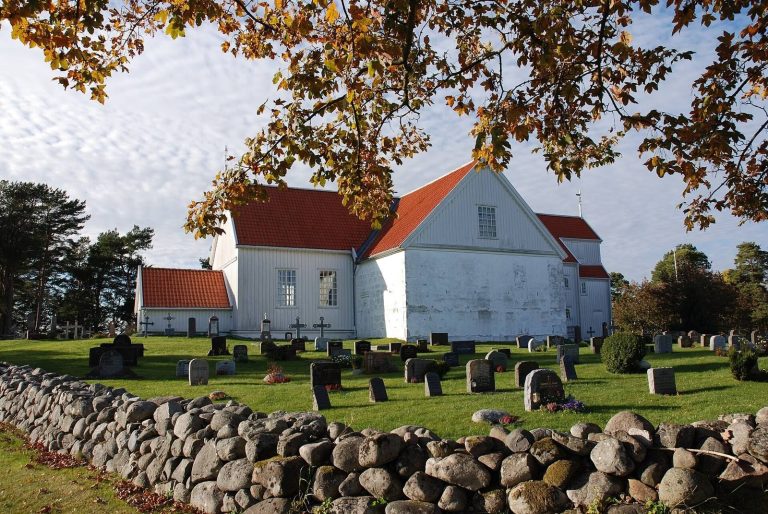
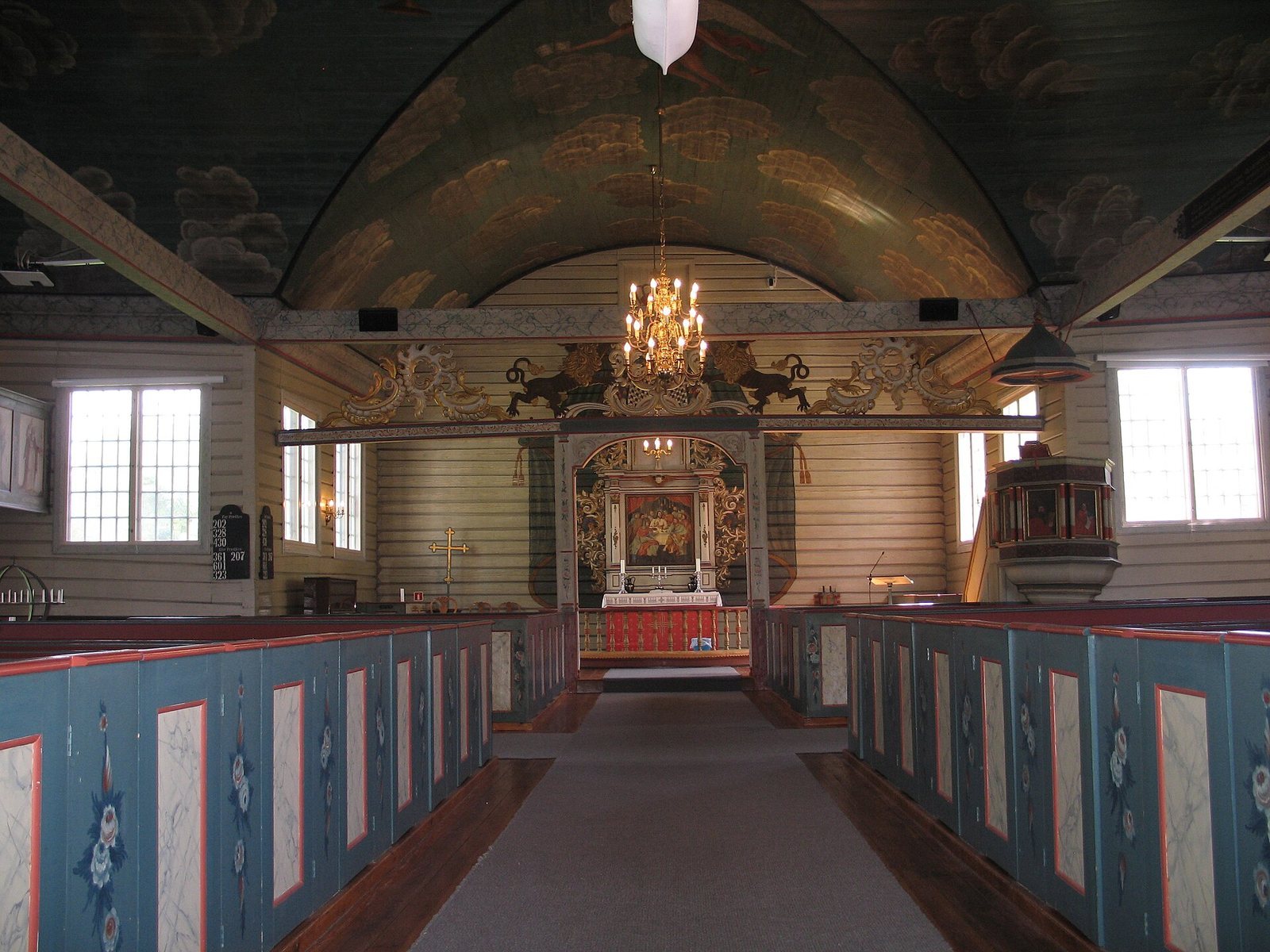
In 1779, builder Beint Gundersen Skjævestad led an expansion that gave the church its cross-shaped plan. The interior was first painted in 1797. Anders Grundesøn Løwe of Risør carried out the painting and decoration for 300 riksdaler, a historical Scandinavian currency; Nils Christensen painted images of angels and apostles.
Changing use and restoration
The church served as an election church in 1814, when churches were used for polling connected with the formation of Norway’s constituent assembly. In the 1870s, much of its eighteenth-century inventory was overpainted or replaced. Restoration began in the 1920s and continued toward 1961, when a major restoration took place.
Known formerly as Østre Moland Church, it was renamed Austre Moland Church in 1919 following Norwegian spelling reforms; the older spelling remained in use for the church and locality until 1948. It is an active parish church of the Church of Norway, an Evangelical Lutheran church, and belongs to Moland parish in the Arendal deanery and Diocese of Agder og Telemark. Its earlier denomination was Catholic. The church is automatically protected under Norway’s heritage rules.
Remains
Plan and exterior
Church layout
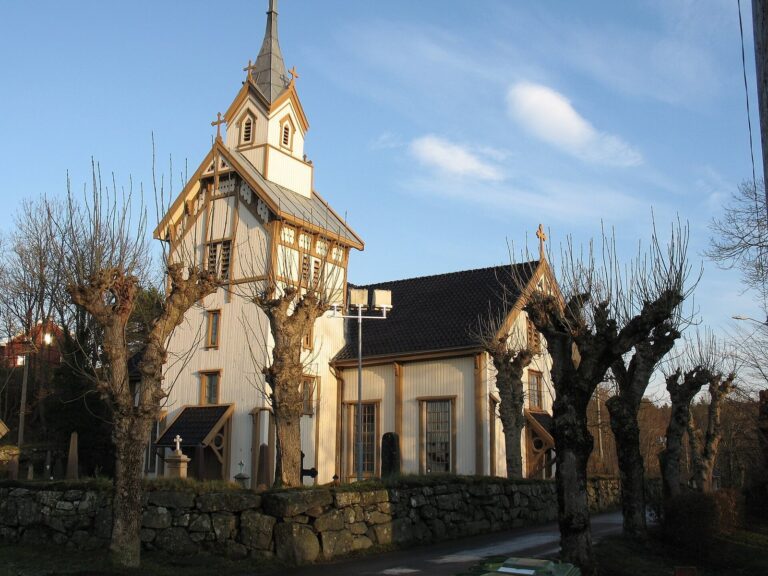
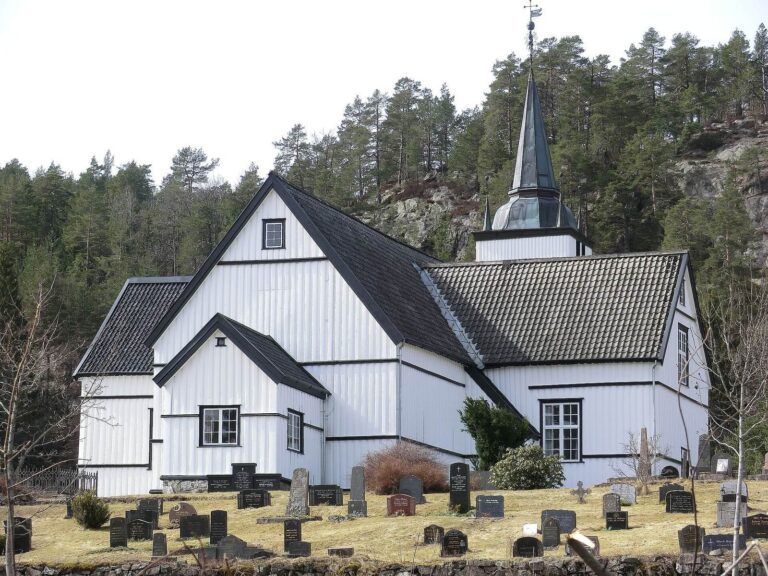
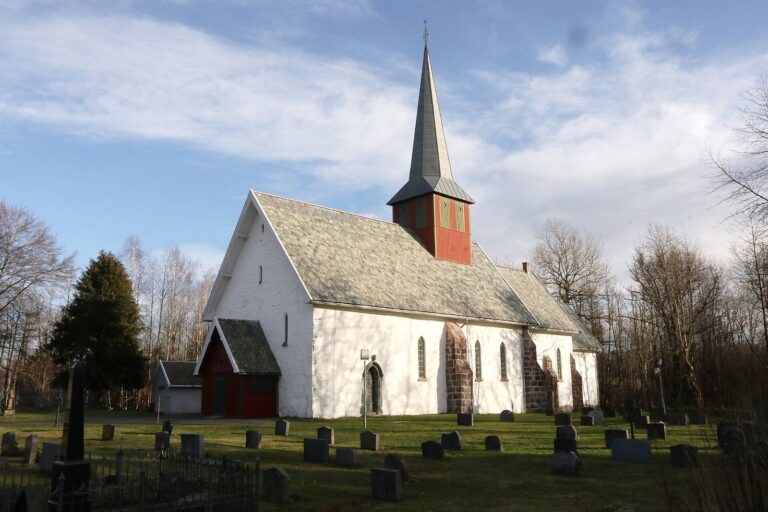
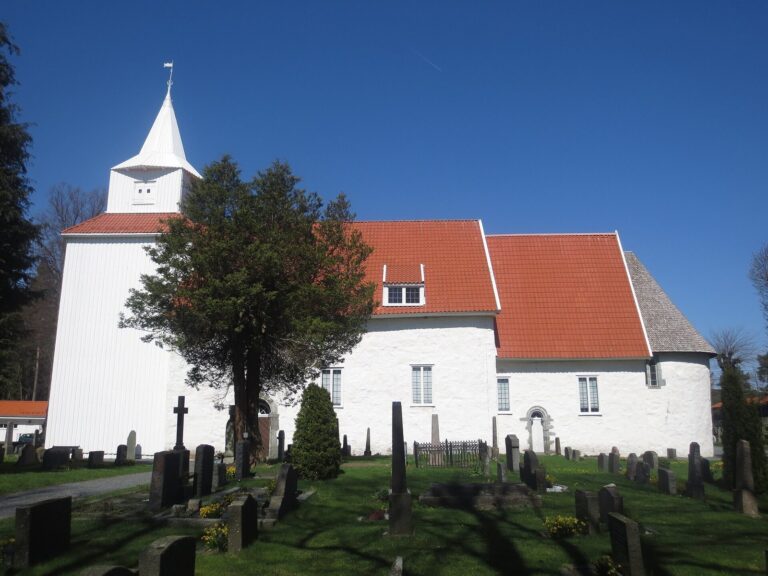
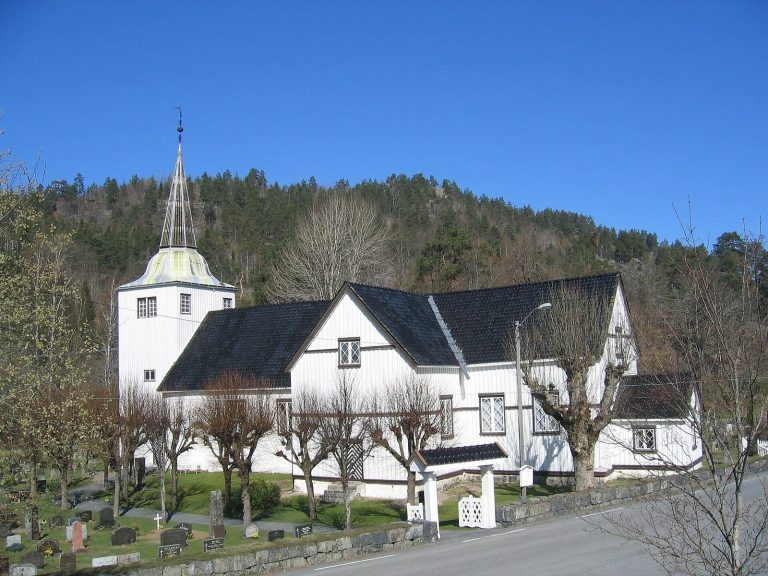
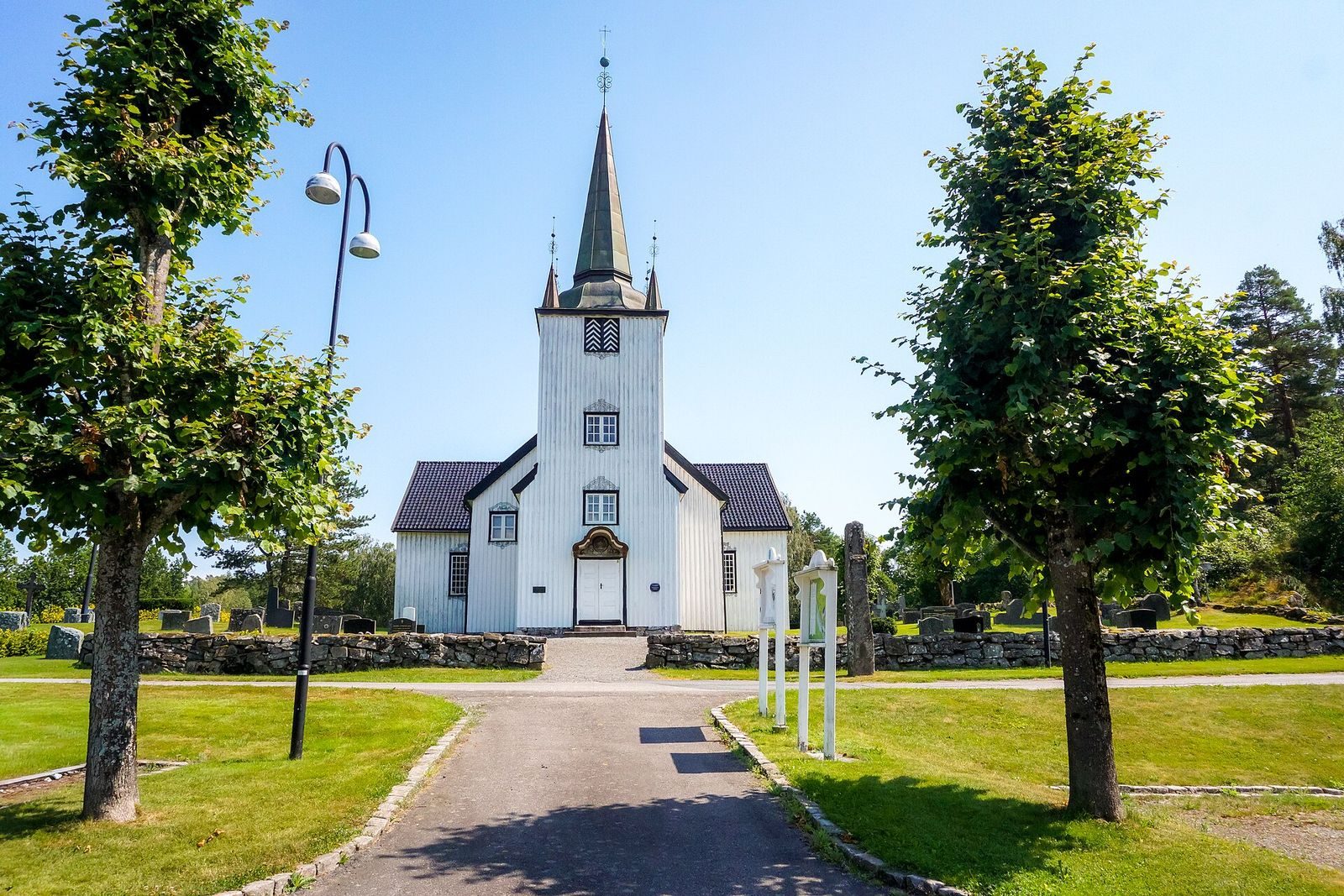
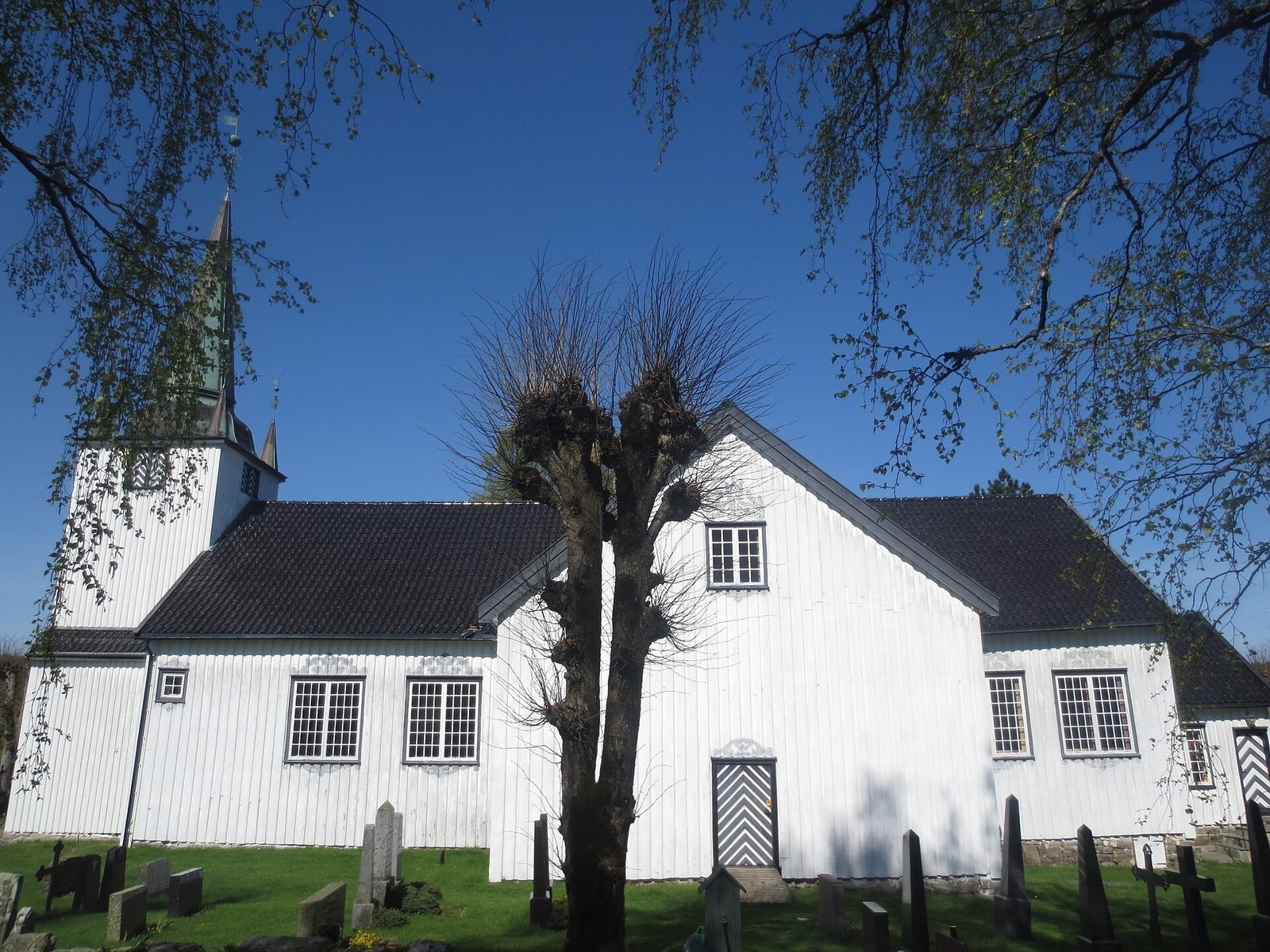
The white timber church stands at Brekka beside Lake Molandsvann, with a cemetery alongside it, and has seating for about 496. Its original long-church nave forms the western arm of the present plan, while the choir lies at the east end. Later wings extend to the north and south.
Tower and exterior details
The spire has four small pinnacles. Painted decoration surrounds the exterior windows.
Furnishings and bells
Bells
The two church bells date from the 1750s. One bears the date 1754, and both were cast by Jakob Jørgen Rendler, then a bellfounder in Kristiansand.
Pulpit and baptismal font
The pulpit dates from the 1730s and carries images of the evangelists by painter Mogens Fogh. The baptismal font was made in 1754 and painted in several colors in 1797.
Altarpiece and west portal
Ole Nielsen Weierholt made the altarpiece in 1784 and the canopy at the west portal in 1780.
Confessional
Jens Christensen Stær painted the confessional, an enclosure used for private confession, in 1784.
Cemetery feature
Medieval gravestone
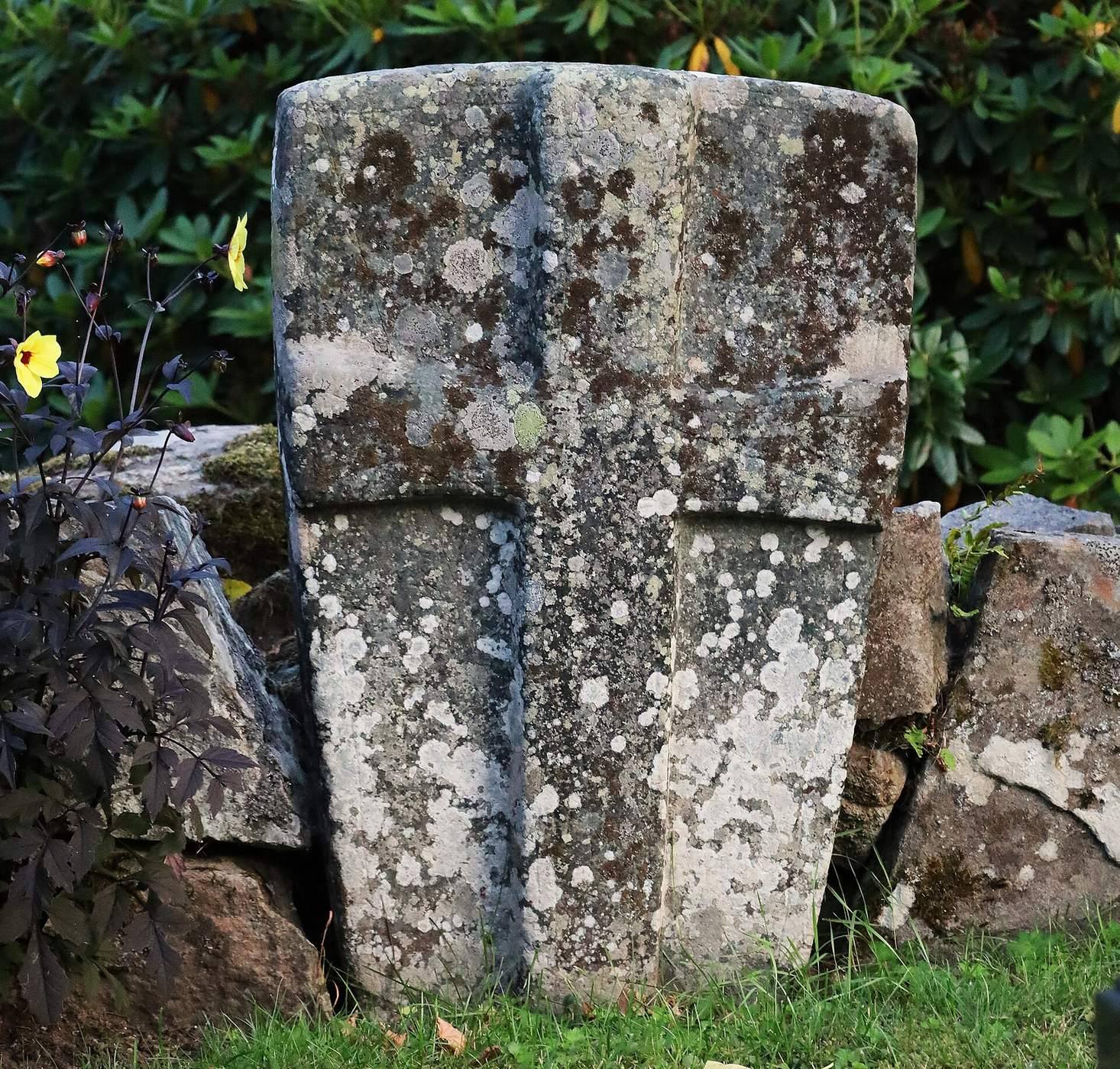
A medieval gravestone bearing a cross in relief is set into the cemetery wall south of the church. It had previously lain in the churchyard. Local tradition places its discovery in Brekkaskogen.