Poppostein: A Neolithic Megalithic Tomb in Germany
Site at a Glance
- Popularity
- Medium
- Country
- Germany
- Primary era
- Stone Age
- Eras represented
- Stone Age, Bronze Age, Modern
- Civilizations
- Danish
- Site type
- Burial
- Remains
- Tomb
On this page7 sections
History
Poppostein is a Neolithic megalithic tomb near Sieverstedt in Germany, built by communities of the Funnel Beaker culture, an archaeological culture of Neolithic northern and central Europe known in part for megalithic tombs. Construction is generally placed around 3500 BC, with the structure also dated within a broader span of 3500–2800 BC. The tomb was used for burials during both the Stone Age and the Bronze Age.
Assemblies and pre-Christian traditions
In a later period, Poppostein may have served as a Thing, an assembly for law and governance, for Isted Syssel, an administrative district comprising nine local districts. A nearby inn at Helligbek and the customary use of prehistoric burial mounds and stone settings for assemblies may help explain this role. The site’s possible connection with gatherings has also been linked to its later suitability for Christianization.
A pre-Christian tradition associated stones with permanence and treated them as places for legal judgments and marriages. Such stones were understood as both law stones and marriage stones, joining public decisions with important events in household life.
Christianization traditions and the name
Poppostein is also called the Baptism Stone. One legend says that Bishop Poppo of Schleswig baptized pagans at the monument in the tenth century. Other versions place the baptism of Danish king Harald Bluetooth, also known as Harald Gormsson, near Helligbek around 960. In these tellings, Poppo persuaded Harald to accept Christianity by carrying red-hot iron in his bare hands, and the stream was subsequently said to have taken its name, meaning “holy stream.”
Traditions place Poppo’s preaching on a nearby knoll called the Pulpit, now in the front garden of Poppholz farm. Another version describes the ordeal as a wax-soaked shirt being burned on the missionary’s body, after which the enraged devil hurled the stone at him.
A different historical interpretation dates Harald’s baptism to 974 or 975, following a Danish defeat. In this account, Archbishop Adaldag of Hamburg compelled Harald to undergo a baptism appropriate for a king. The story of Poppo’s miracle is understood in this interpretation as a later embellishment that presented the baptism as voluntary and concealed both the defeat and Christianization imposed by the Germans.
The name Poppostein is often connected with the Poppo legends, though that derivation has been questioned. Freerk Haye Hamkens, a researcher of Germanic antiquity, instead proposed Poppensteen, linking Poppe to a Low German word for “doll” or “child.” This proposal has been challenged because Danish was spoken locally until the nineteenth century and regional place-names are predominantly Danish in origin.
Protection
In 1858, Frederick VII, king of Denmark, bought the monument from its owner and arranged for its protection. The purchase contract guaranteed public access. Poppostein is now state-owned and protected as a monument.
Remains
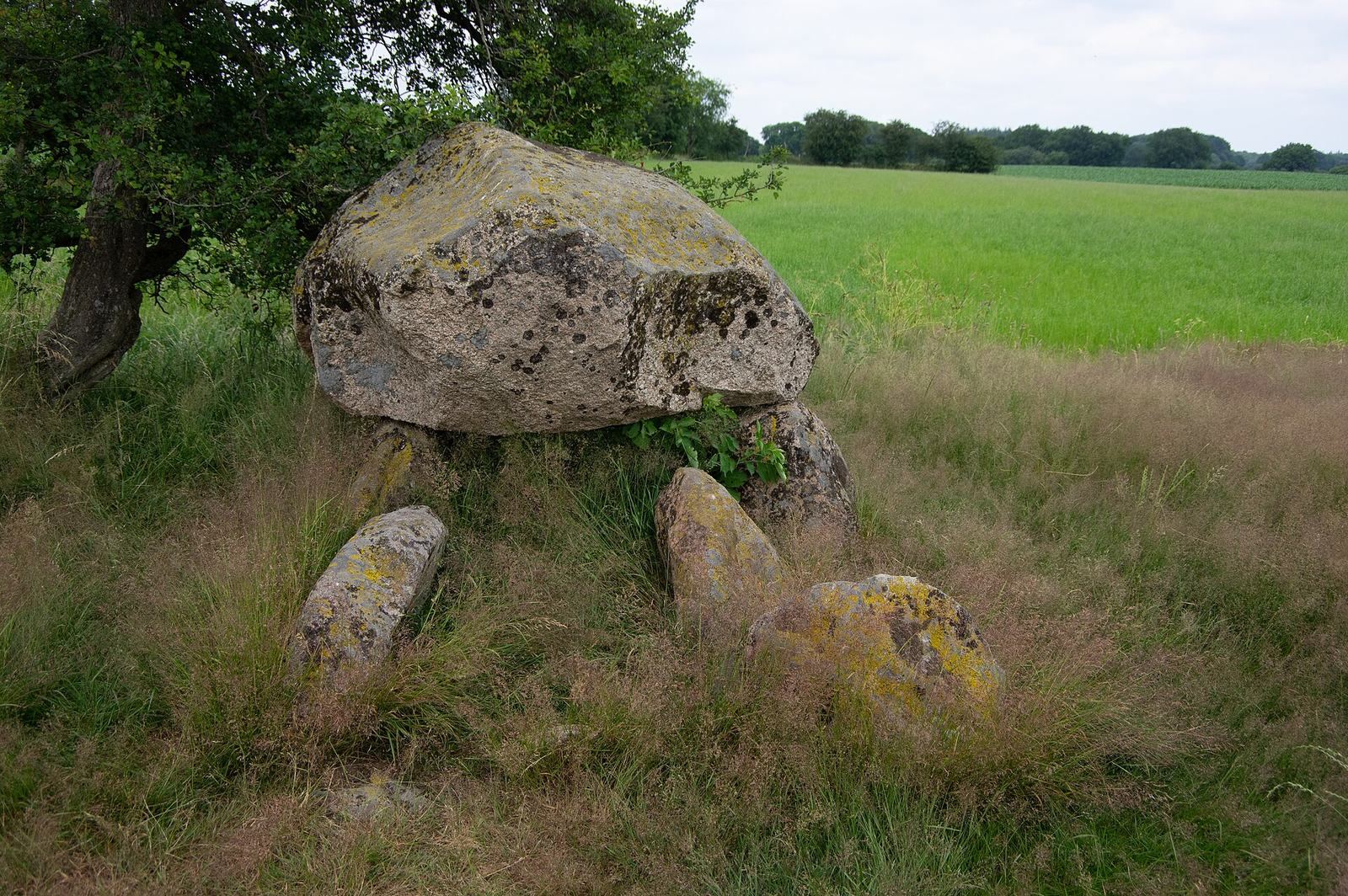
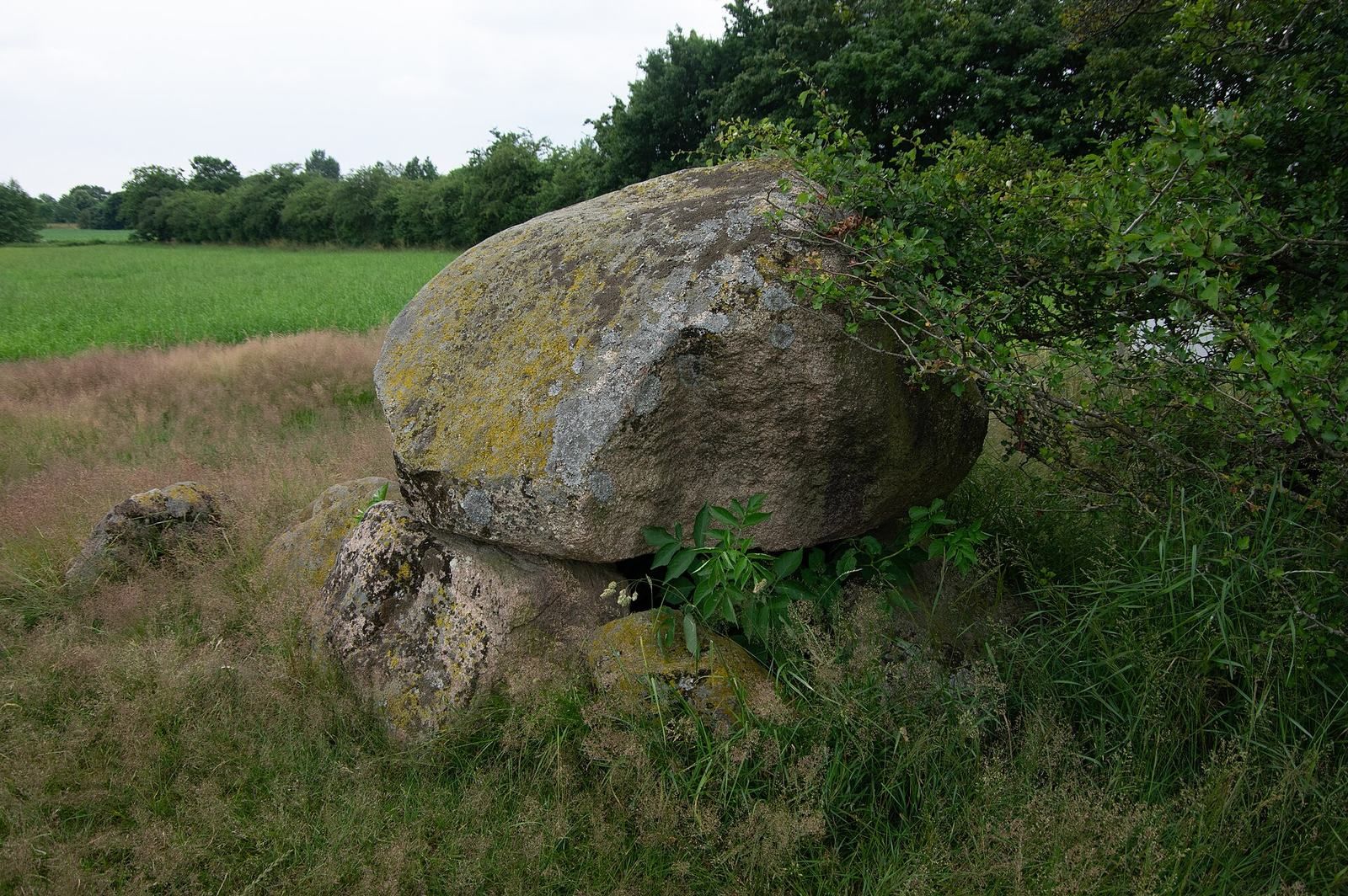
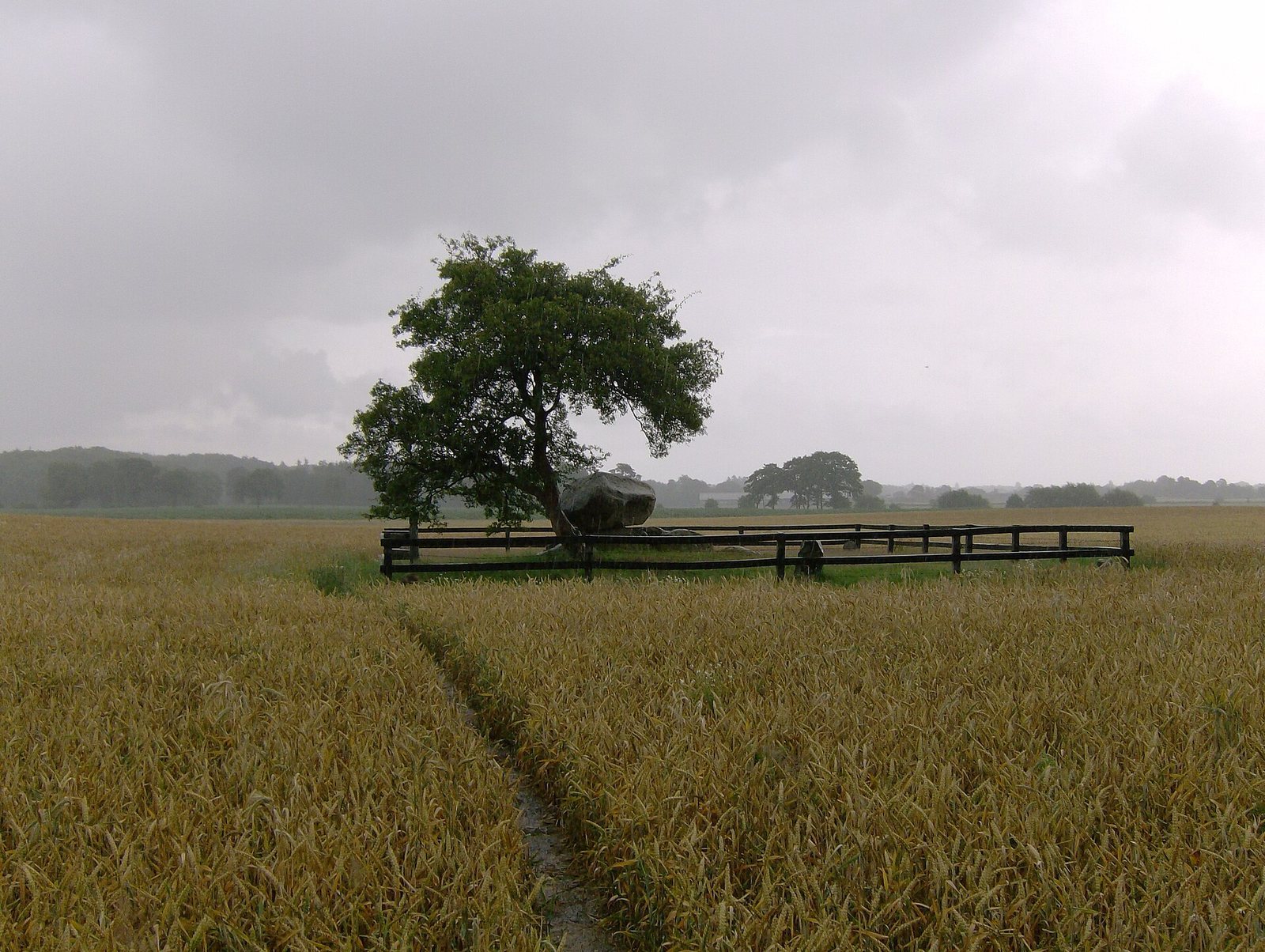
The surviving tomb is a north–south rectangular stone chamber beside the Hærvejen, or Ox Road, near Helligbek and west of Elmskoven in Sieverstedt. Its stones now stand exposed in a cultivated field. An earth mound once covered the chamber and was probably raised around 3000–2700 BC.
Chamber and boundary stones
The chamber measures about 2.4 metres long and 1 metre wide, with an interior measuring 2.2 by 1 metre. Six side stones form its structure, with two along each long side, a large stone at the northern end and a smaller threshold stone at the southern end. The south side is open, and a wooden door may once have stood above the threshold. Six boundary stones stand around the monument; they bear the Danish coat of arms, a carved date and Frederick VII’s monogram.
Capstone hollows
The granite capstone has 17 small, carved hollows on its upper surface. Some interpretations connect them with prehistoric ritual, including ceremonies in the Bronze Age. Another proposal links them to a wedding custom in which a sword struck sparks for a household fire; fire and water were regarded as household necessities associated with fertility. A separate explanation connects the hollows with the belief that granite dust had healing qualities, a belief associated with the stone’s chemical composition and the medicinal value attributed to its naturally occurring elements.