Villanova Castle: A Fourteenth-Century Rural Fortification in Italy
Site at a Glance
- Popularity
- Low
- Country
- Italy
- Primary era
- Medieval
- Eras represented
- Medieval
- Civilizations
- Duchy of Milan, Holy Roman Empire
- Site type
- Military
- Remains
- Castle
On this page6 sections
History
Fourteenth- and fifteenth-century development
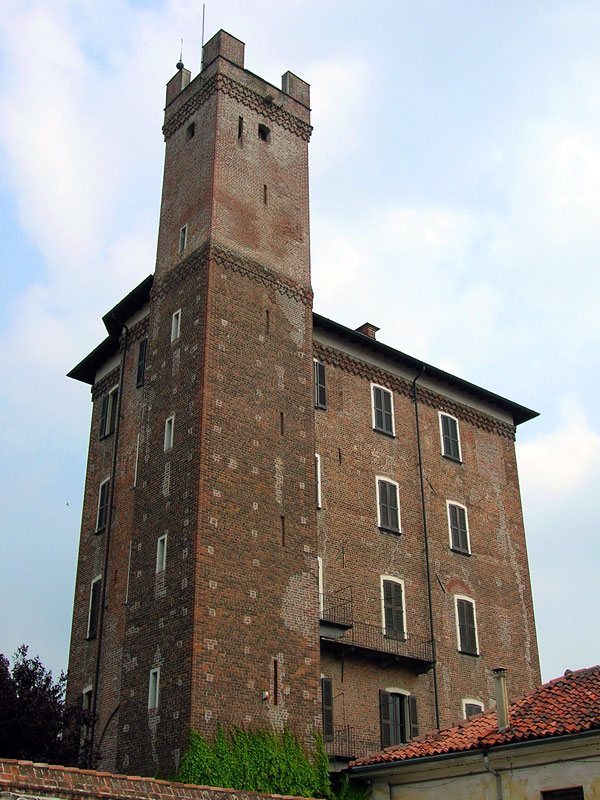
Villanova Castle is a fourteenth-century rural fortification in Villanova, a hamlet of Cassolnovo in the province of Pavia, Italy. It was built during the Visconti-Sforza period, when the Visconti and Sforza were successive ruling dynasties of Milan.
The Sanseverino, an Italian noble family, restored the castle in 1455. Ludovico il Moro, a Sforza ruler and duke of Milan, completed the building. In the sixteenth century, the Gonzaga, the ruling house of Mantua, renovated it.
Sixteenth-century use
Saint Aloysius Gonzaga, a sixteenth-century Italian Jesuit and Catholic saint, stayed several times in a room within the castle.
Remains
Plan and courtyard
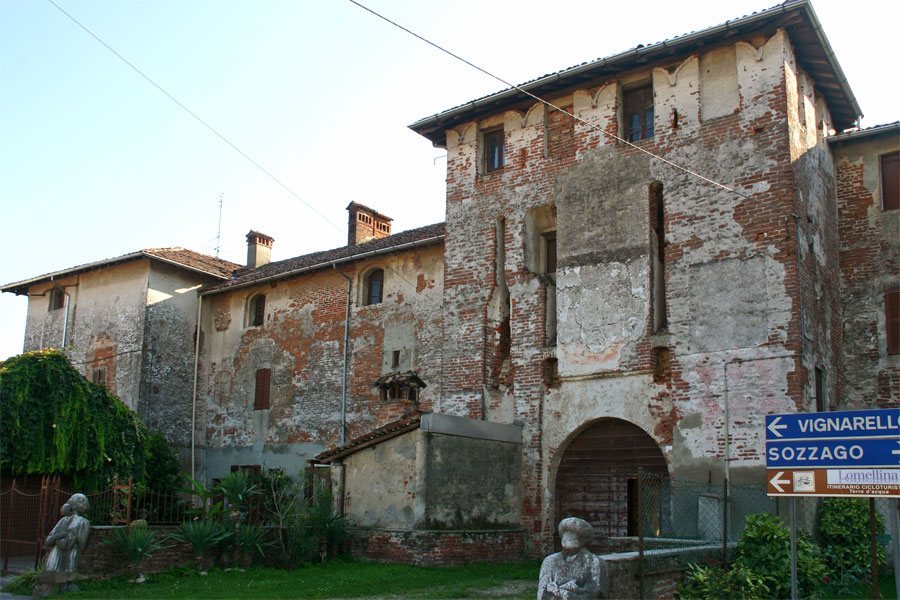
The castle has a quadrangular plan enclosing a central courtyard, with a tower at each corner. An entrance tower is fitted with a drawbridge. Wooden galleries line the courtyard, and a water pump at its center once supplied the residents.
Facades and entrance sculptures
White and red diamond patterns decorate the exterior facades. They remained clearly visible toward the end of the twentieth century but have since worn with age. Two large marble busts stand before the entrance. Dating to the Late Roman period, the later centuries of Roman imperial history, they are locally known as “DuCamoru.”