Church of Saint Mary Magdalene: Parish Church and Megalithic Chapel in Alcobertas
Site at a Glance
- Popularity
- Very Low
- Country
- Portugal
- Primary era
- Early Modern
- Eras represented
- Stone Age, Medieval, Early Modern
- Civilizations
- Portuguese
- Site type
- Religious
- Remains
- Church
On this page8 sections
History
Prehistoric tomb and later chapel
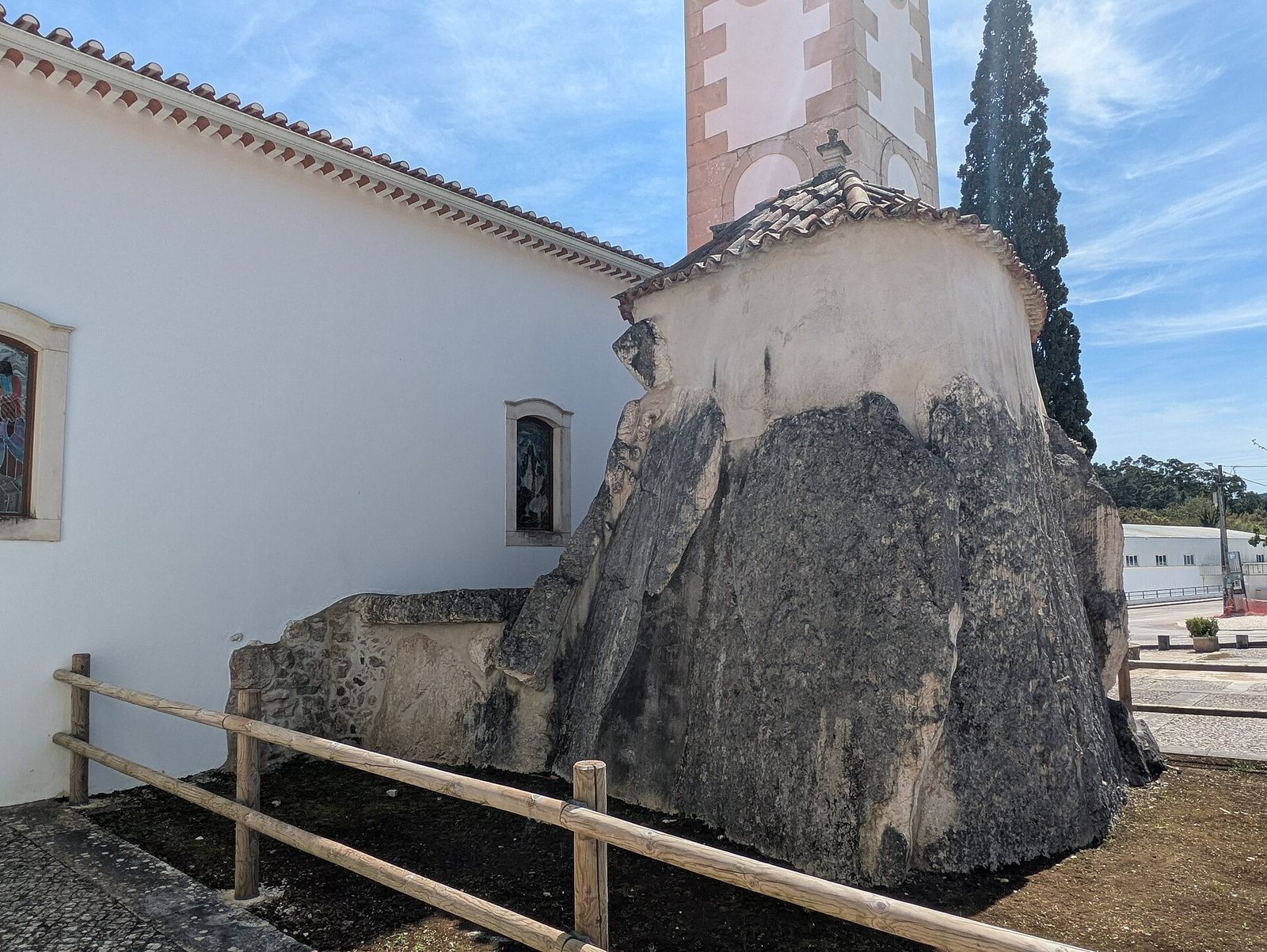
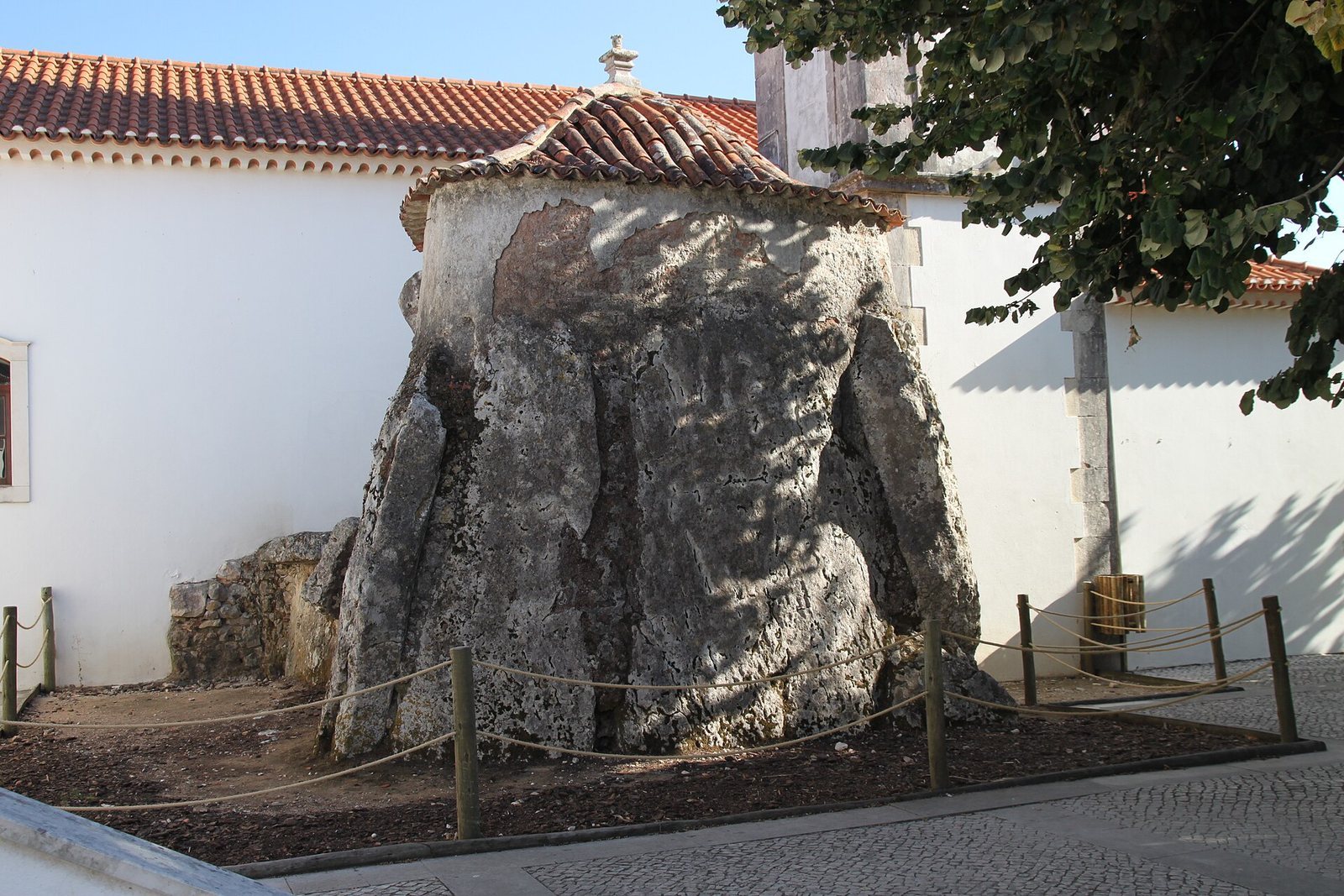
The Church of Saint Mary Magdalene, dedicated to Mary Magdalene, a New Testament figure venerated as a Christian saint, is a parish church in Alcobertas, Portugal. Its adjoining dolmen, a prehistoric stone tomb, dates to about 3000 BCE and belongs to the Late Neolithic or Neo-Chalcolithic, the transition between Neolithic and Copper Age traditions. It is among the ten largest megalithic monuments on the Iberian Peninsula. Before it became part of the church, the tomb stood separately as a small chapel and had served as the principal chapel.
Hermitage and parish church
The church is thought to have originated as a hermitage in the final years of the fifteenth century. On 4 July 1536, the Archbishop of Lisbon made it the village’s main church. During the seventeenth century, the tomb was incorporated into the Baroque church. Baroque is an architectural and artistic style that developed in Europe from the late sixteenth century. The former chapel continued to serve for worship as a side chapel. Near the end of the seventeenth century, the church was turned to face its present direction.
Archaeological work and protection
Portugal’s Geological Services explored and surveyed the tomb around 1889, without carrying out a systematic excavation. Archaeologist Manuel Heleno led excavations in 1936. After earthmoving put the chapel at risk of collapse, the Department of Archaeology requested further work in 1982; excavation followed in 1987. The site has been designated a Building of Public Interest since 18 July 1957.
Remains
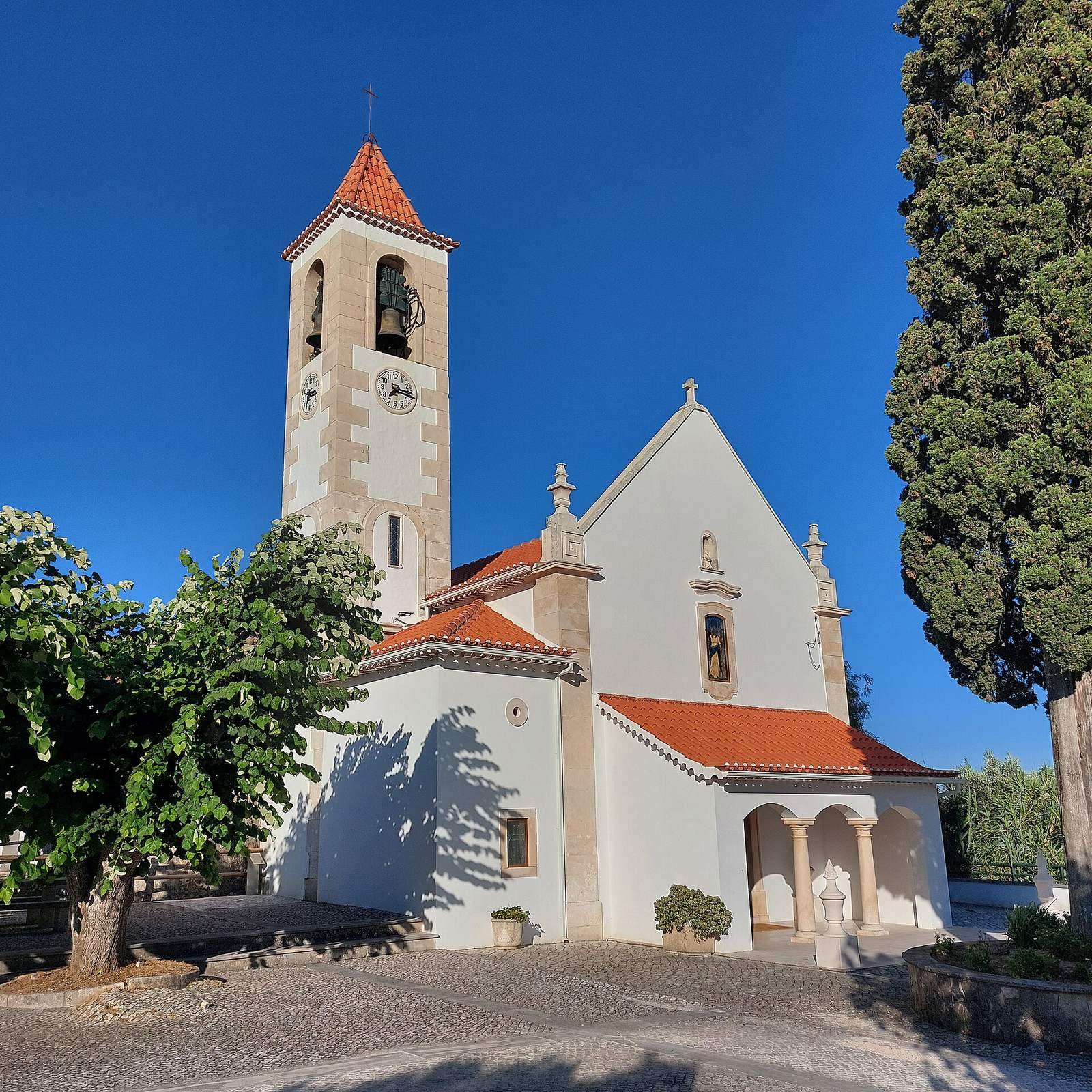
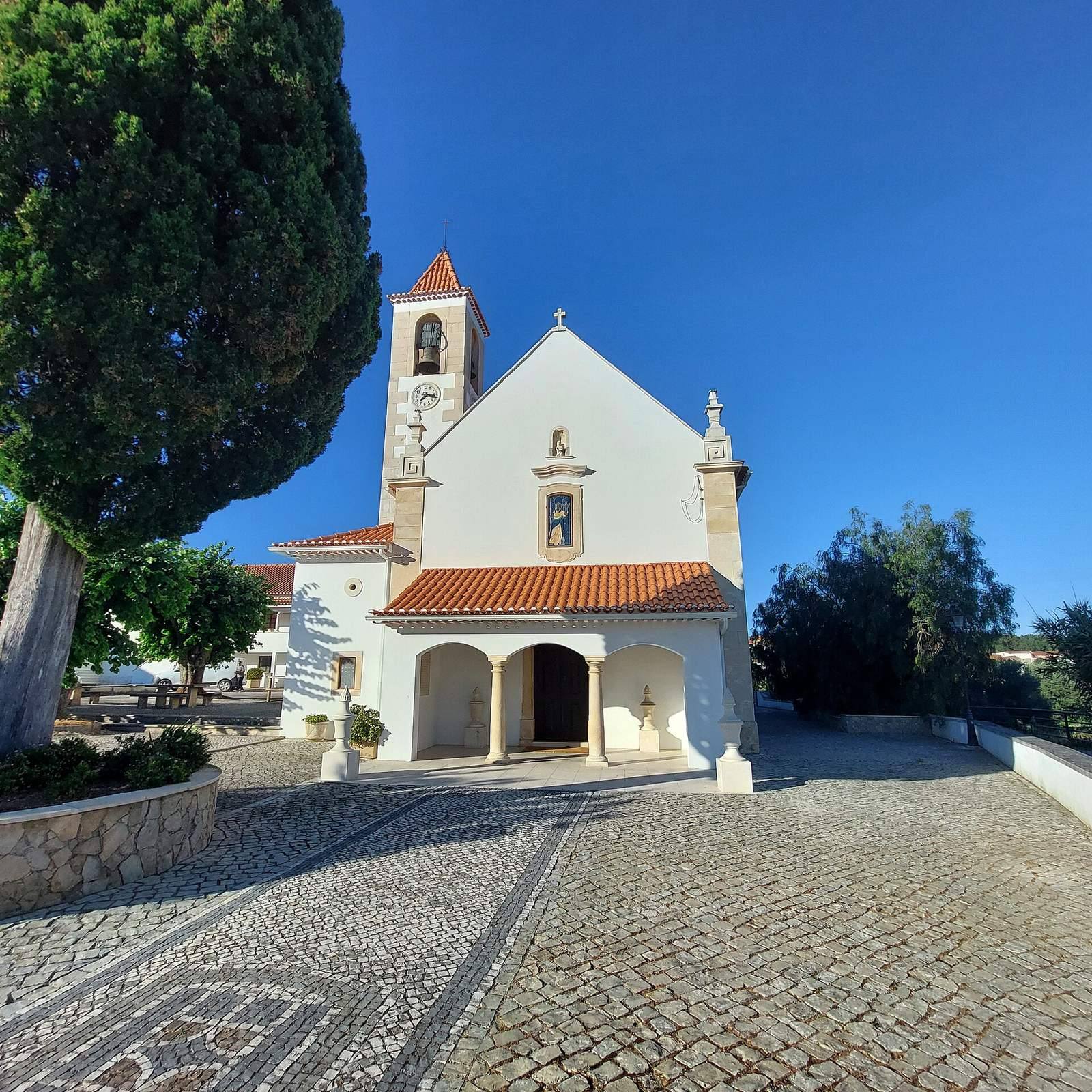
The complex combines a white Baroque church decorated with blue glazed ceramic tiles and a prehistoric stone tomb enclosed as a chapel.
Church and megalithic chapel
Church
The church is a white building in the Baroque style, with blue glazed ceramic tiles across its exterior.
Dolmen chapel
The tomb’s polygonal burial chamber is formed from seven upright limestone stones. A single large capstone once covered it; after that stone fractured, a vaulted roof had replaced it by the eighteenth century. The upper part of the structure is walled up, and red roof tiles matching the church cover the semicircular masonry around the chapel.
Two upright stones form the entrance corridor, once part of a covered passage into the burial chamber. A vaulted arch decorated with seventeenth-century tiles leads from this entrance to the altar. The altar rests against one of the supporting stones and faces east, in the direction of the tomb’s former entrance passage. A praying image of Mary Magdalene faces that passage, while painted tiles show episodes from her life. Another supporting stone bears a terracotta figure of Saint Anne, traditionally regarded in Christian belief as Mary’s mother; beside it stands a seventeenth-century altar with an image of Saint Mary Magdalene.