King Kothi Palace: The Last Nizam’s Official Residence
Site at a Glance
- Popularity
- Very High
- Country
- India
- Primary era
- Modern
- Eras represented
- Modern
- Civilizations
- Indian
- Site type
- Domestic
- Remains
- Palace
On this page9 sections
History
King Kothi Palace is a palace complex in India, built by the nobleman Kamal Khan as his private residence before he sold it to the Nizam’s family, the household of Hyderabad State’s hereditary ruler. The name is explained as a reinterpretation of Kamal Khan’s initials, engraved on the fittings. “King Kothi” means “King’s mansion,” and kothi is an Urdu word for a large house or mansion.
From private residence to royal home
Mir Osman Ali Khan moved into the palace when he was 13. He became the seventh and last Nizam in 1911, but chose to remain at King Kothi rather than move to Chowmahalla Palace, where his father had lived. King Kothi served as his official residence until his death there on 24 February 1967.
The complex included a large library used by Osman Ali Khan. Jewels and other valuable possessions were kept in locked metal chests, secured with English-made padlocks.
Royal functions and later changes
The complex’s eastern section hosted official and ceremonial functions. Its western section contained the main residential buildings, known as Nazri Bagh or Mubarak Mansion, and remained part of the Nizam’s private estate. Offices for Sarf-e-Khas, the Nizam’s private estate, were also located in the complex.
Purdah, the seclusion of women from public view, gave its name to the Purdah Gate. A curtain there was raised when the Nizam departed, signaling that he was away. Guards included the Maisaram Regiment, police, and the Sarf-e-Khas Army, the estate’s associated military force, whose members carried lances.
After Hyderabad State joined India, buildings in the eastern section came to be used as a state government hospital. Usman Mansion, the complex’s third principal building, was demolished in the early 1980s, and the state government built a new hospital on its site. Kamal Khan expressed a wish to be buried in the Judi Mosque within the complex. The Kothi locality takes its name from the palace.
Remains
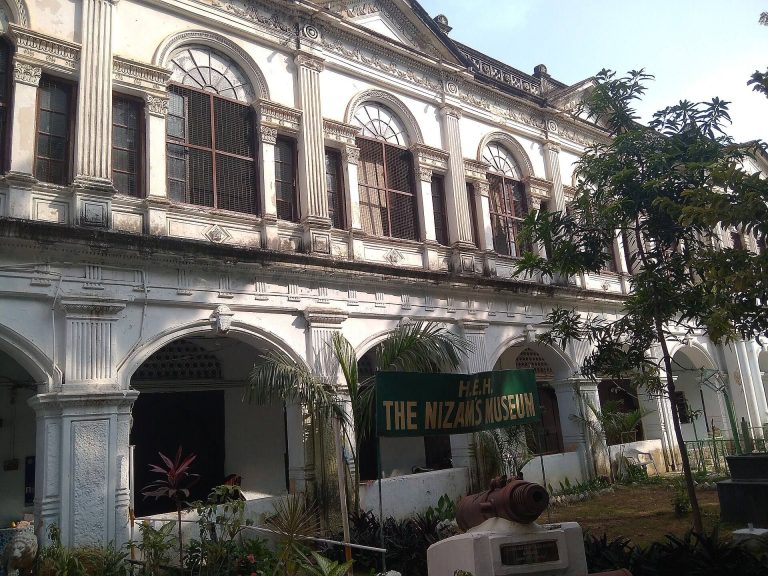
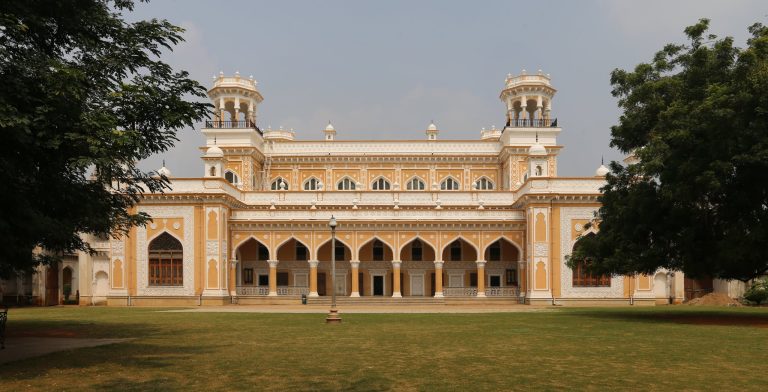
The palace complex was organized into eastern and western groups of principal buildings and enclosed by a high wall. The western section also has its own wall. Of the three principal buildings, the eastern main building and western Mubarak Mansion remain. Both are in European styles.
Principal buildings and architectural details
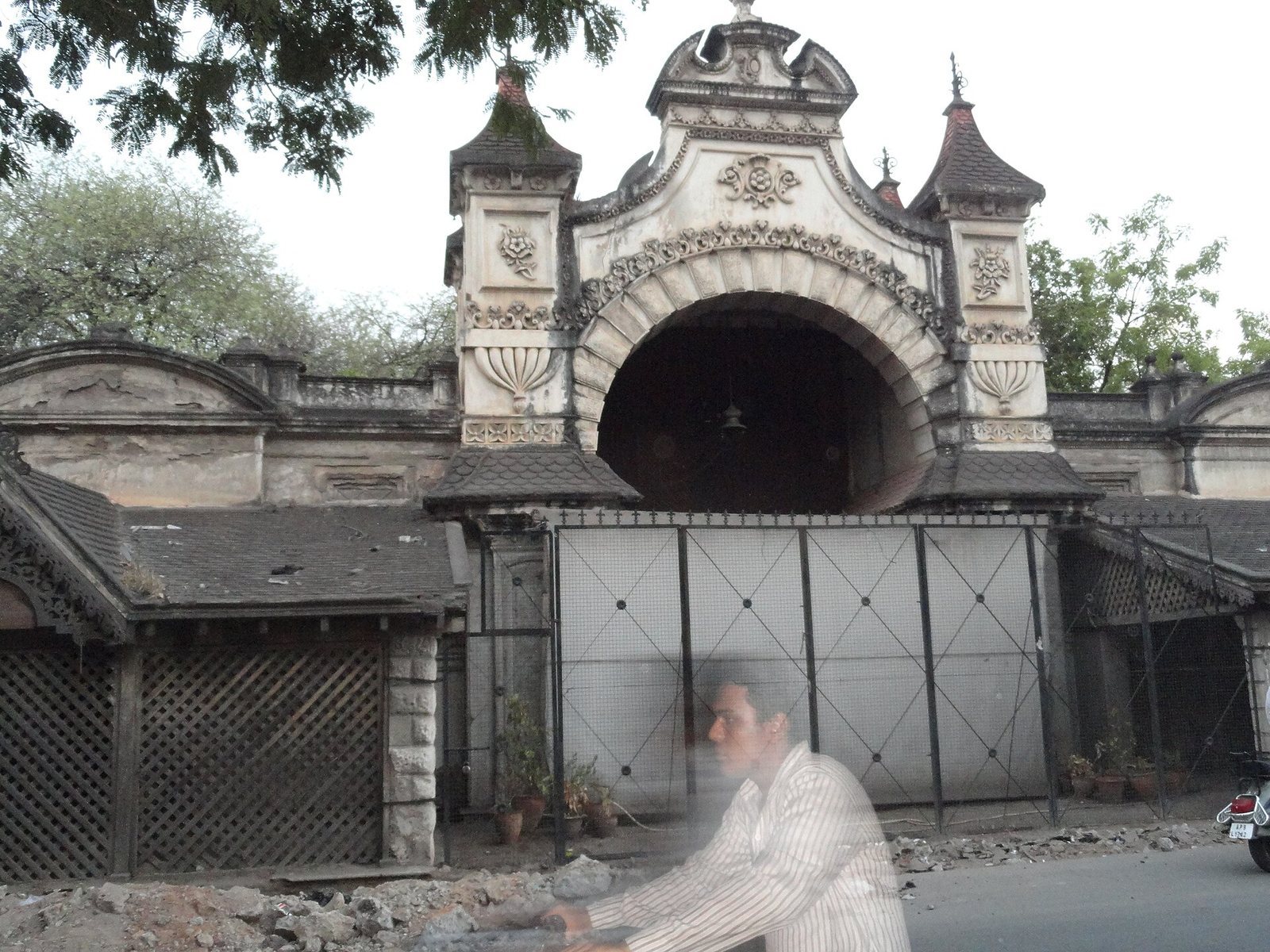
The main building occupies the eastern part of the complex, while Mubarak Mansion stands in the western part. Large arched entrances, columns, a large entrance portico, and canopied windows with intricate woodwork contribute to the palace’s architectural character.
Gates and entrances
Purdah Gate
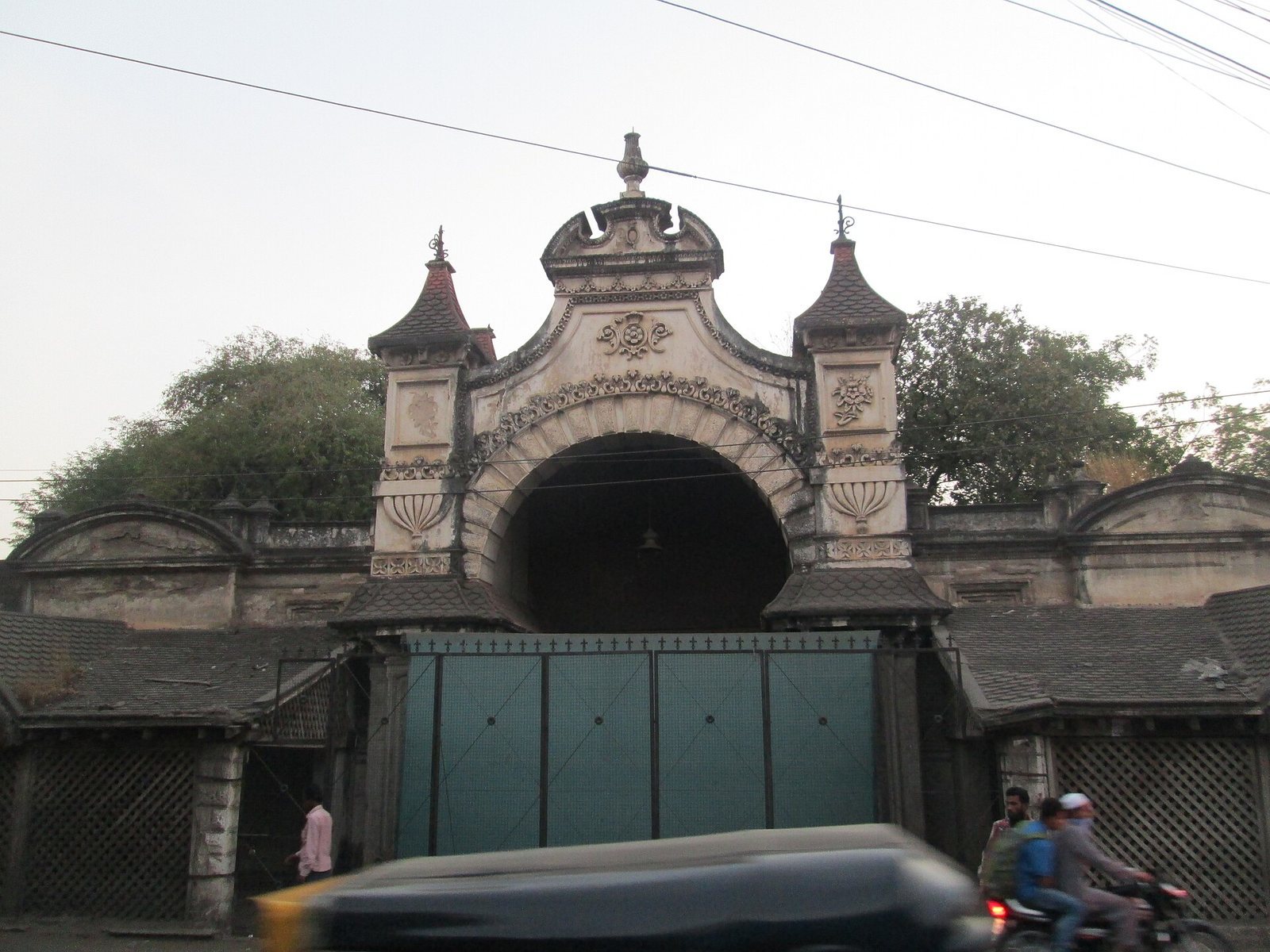
The Purdah Gate is the main entrance to Nazri Bagh. Its curtain is kept lowered.
Ghadial Gate
The clock-bearing Ghadial Gate stands east of Mubarak Mansion. Its complex includes sloping tiled roofs shaped like octagonal pyramids and semicircular arches.
Judi Mosque
The Judi Mosque stands within the palace complex and faces the former residence.