Convent of Santa Clara, Estella: A Poor Clare Convent in Navarra, Spain
Site at a Glance
- Popularity
- Low
- Country
- Spain
- Primary era
- Early Modern
- Eras represented
- Early Modern, Modern
- Civilizations
- Kingdom of Navarre, Spanish
- Site type
- Religious
- Remains
- Monastery
On this page10 sections
History
The Convent of Santa Clara, Estella, is a Catholic community of the Poor Clares, a Franciscan women’s order associated with Clare of Assisi, in Navarra, Spain. It belongs to the Diocese of Pamplona and Tudela and is dedicated to Clare. Founded in the second half of the thirteenth century, it later took on a restrained Baroque character through a complete rebuilding.
Foundation and medieval development
The convent’s precise foundation date is uncertain. A decree attributed to Pope Urban IV points to a community existing by about 1255 to 1263, whose nuns followed the Urbanist Rule, a form of the Poor Clare rule associated with the pope. A later proposed date, around 1289 to 1290, is linked to indulgences granted to people who gave alms toward construction of the church and convent.
Tradition credits the foundation to Isabel, wife of Theobald II of Navarre and daughter of Louis IX, king of France. The attribution is doubtful because the convent is not mentioned in Theobald’s 1270 will. Inglesa de Áibar was the first abbess, in 1294. Bernardo de Montaner, a freeman of the borough of San Martín, was probably the convent’s principal benefactor; his will is dated 21 July 1295. He may also have financed rebuilding in 1333. In 1332, his granddaughter Franca Montaner requested burial in the church her grandfather had commissioned.
During the fourteenth century, the abbess helped educate Navarre’s royal daughters and received donations from Charles II and Charles III of Navarre. In 1430, Blanca I of Navarre and her husband, John II of Aragon, ceded a nearby palace to the nuns.
Rebuilding and later history
The convent was completely rebuilt between 1635 and 1654, giving it its restrained Baroque character. In 2015, it became an associated element of the UNESCO World Heritage property Routes of Santiago de Compostela: Camino Francés and Routes of Northern Spain. The routes are pilgrimage paths connected with the shrine of Saint James at Santiago de Compostela.
Remains
Convent complex
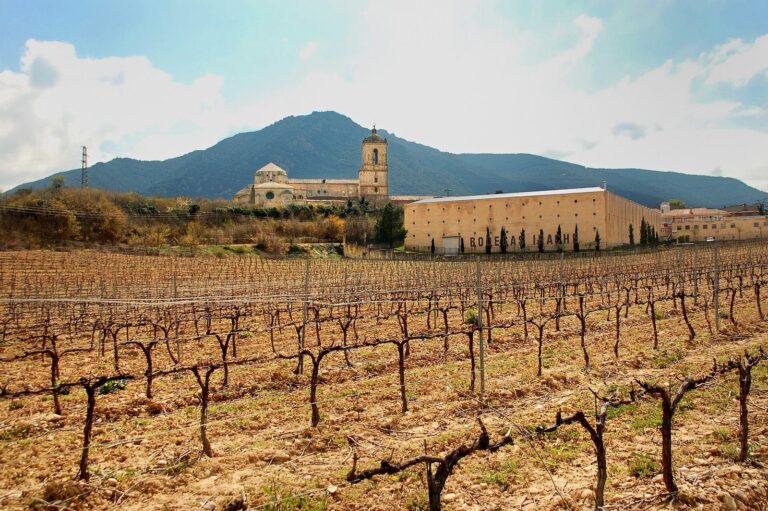
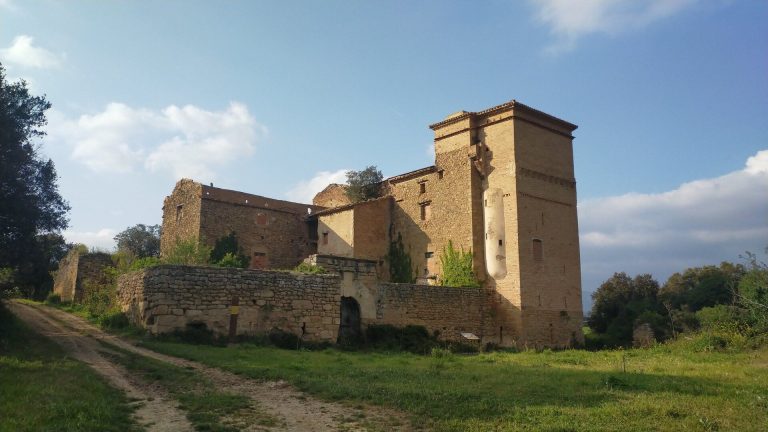
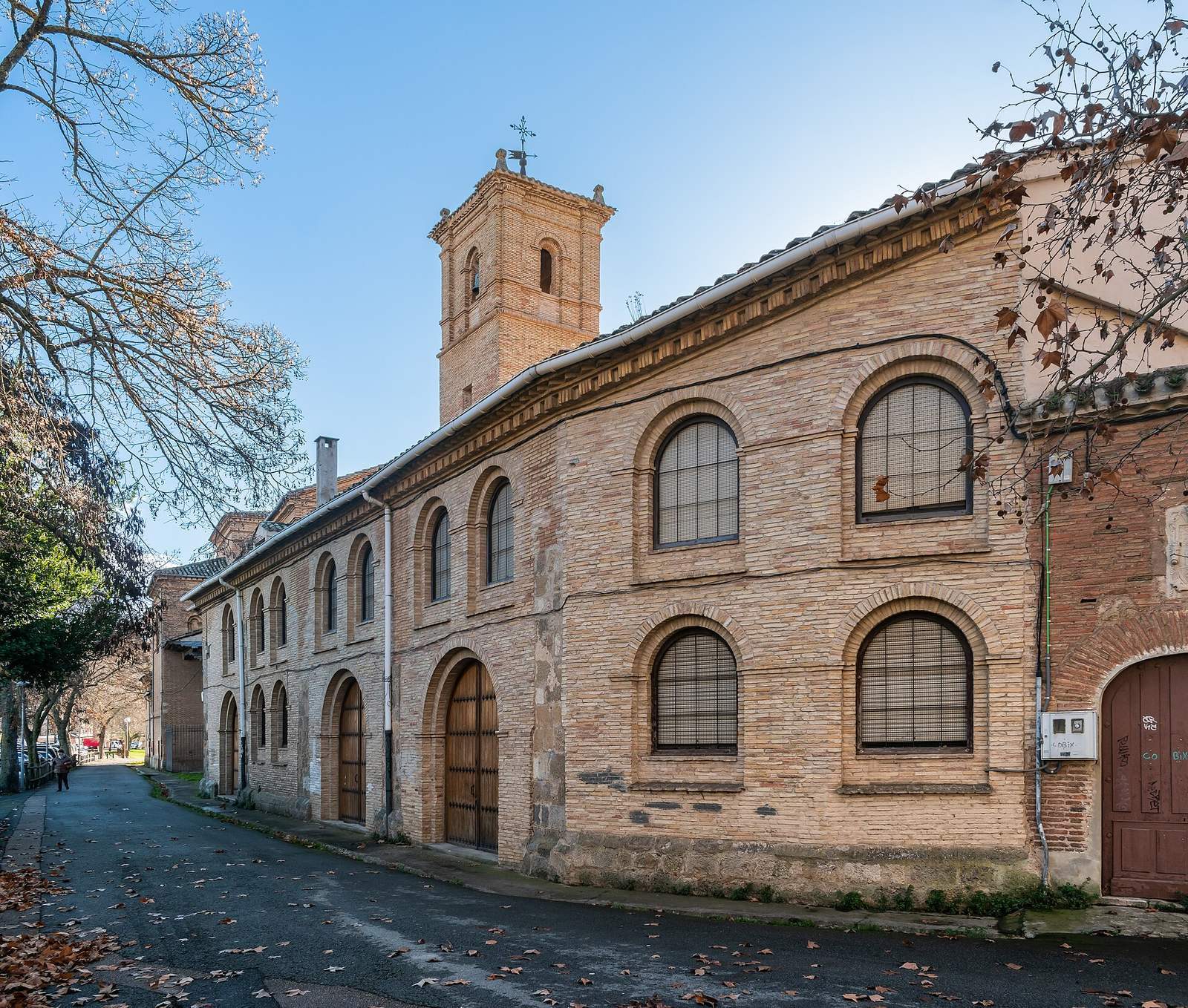
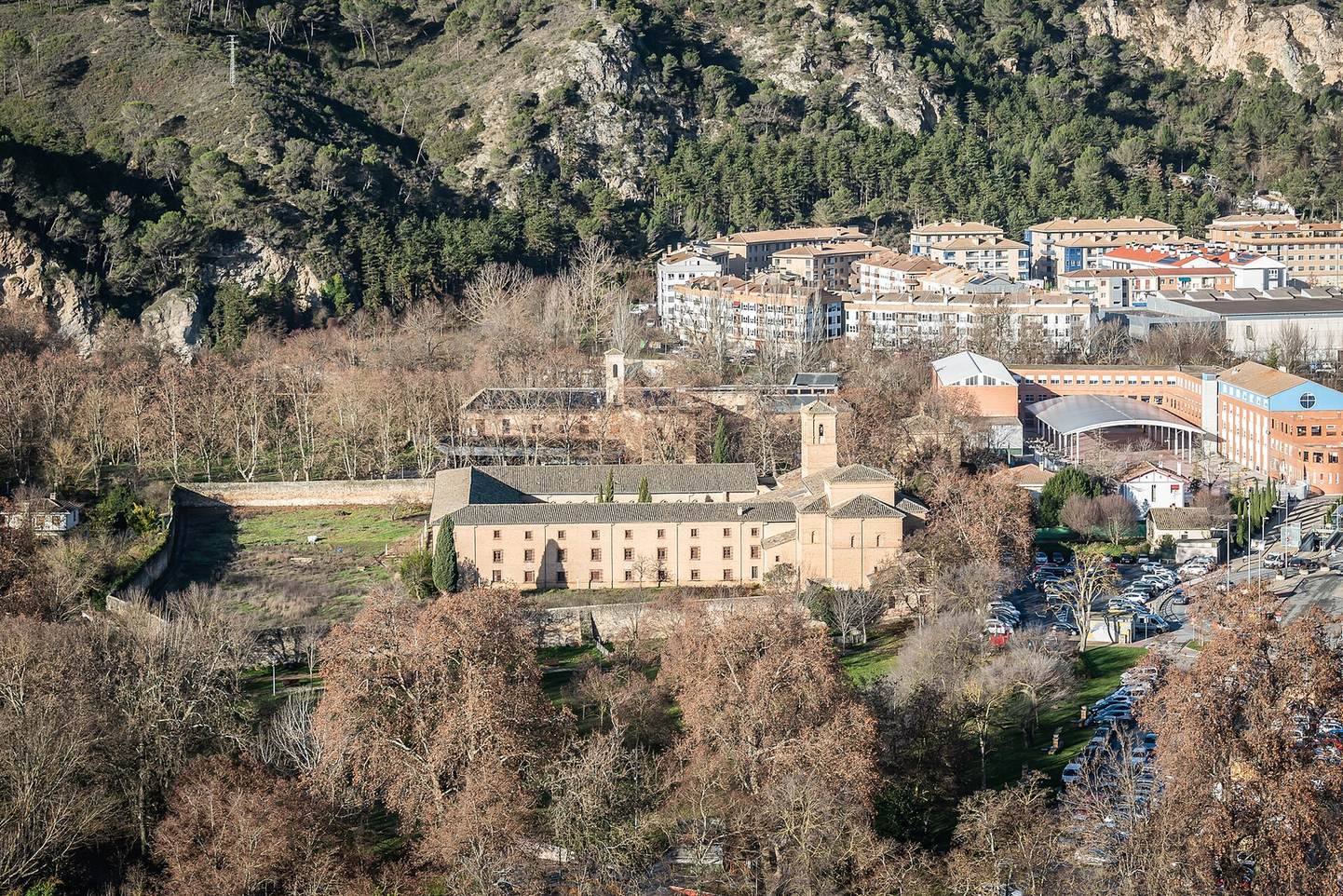
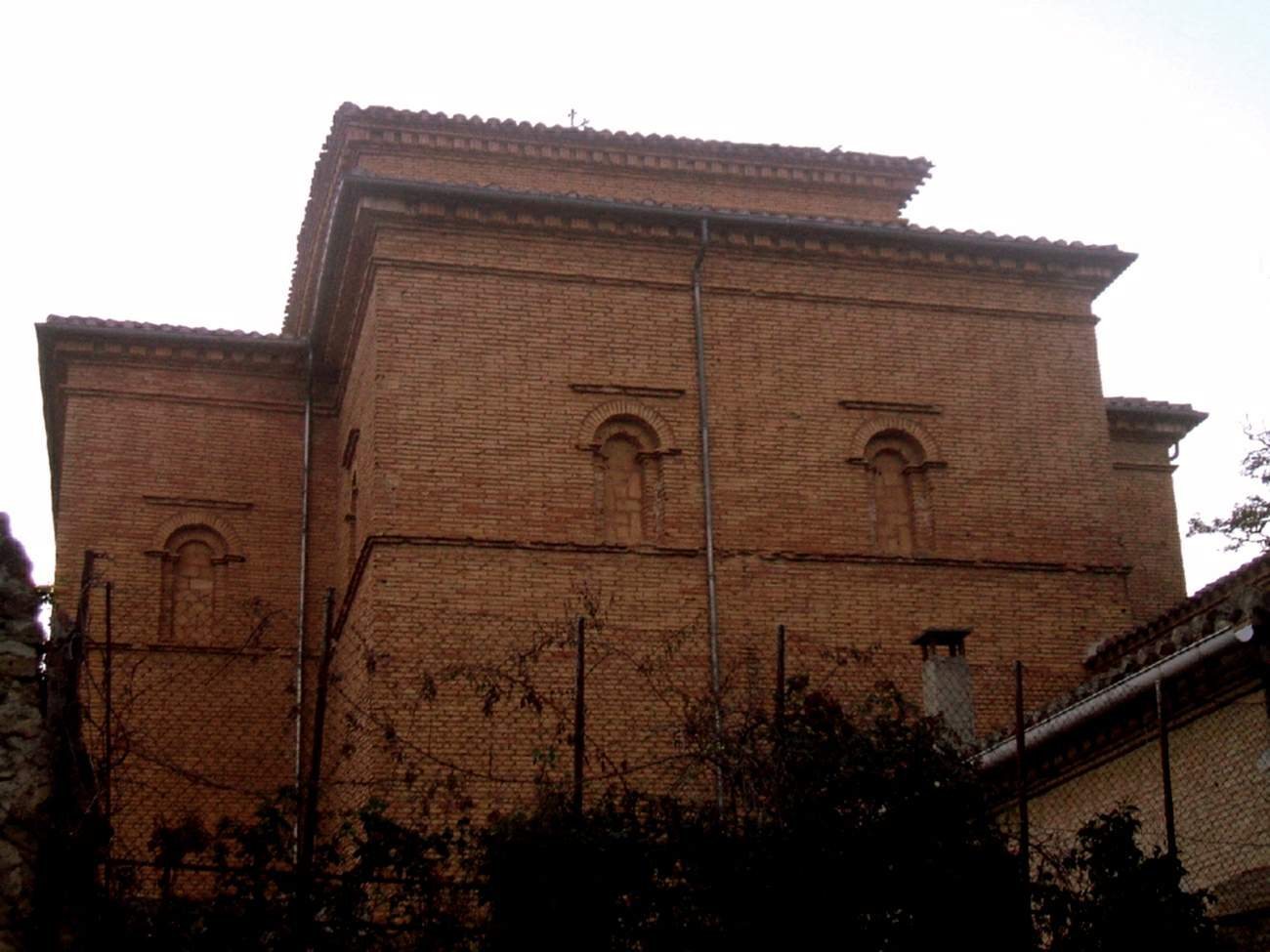
The convent stands in Los Llanos, beyond the medieval town and now within Los Llanos Park. Its buildings are arranged around a large rectangular courtyard oriented south, reconstructed in modern times. The complex is built entirely of brick.
Church
Plan and interior
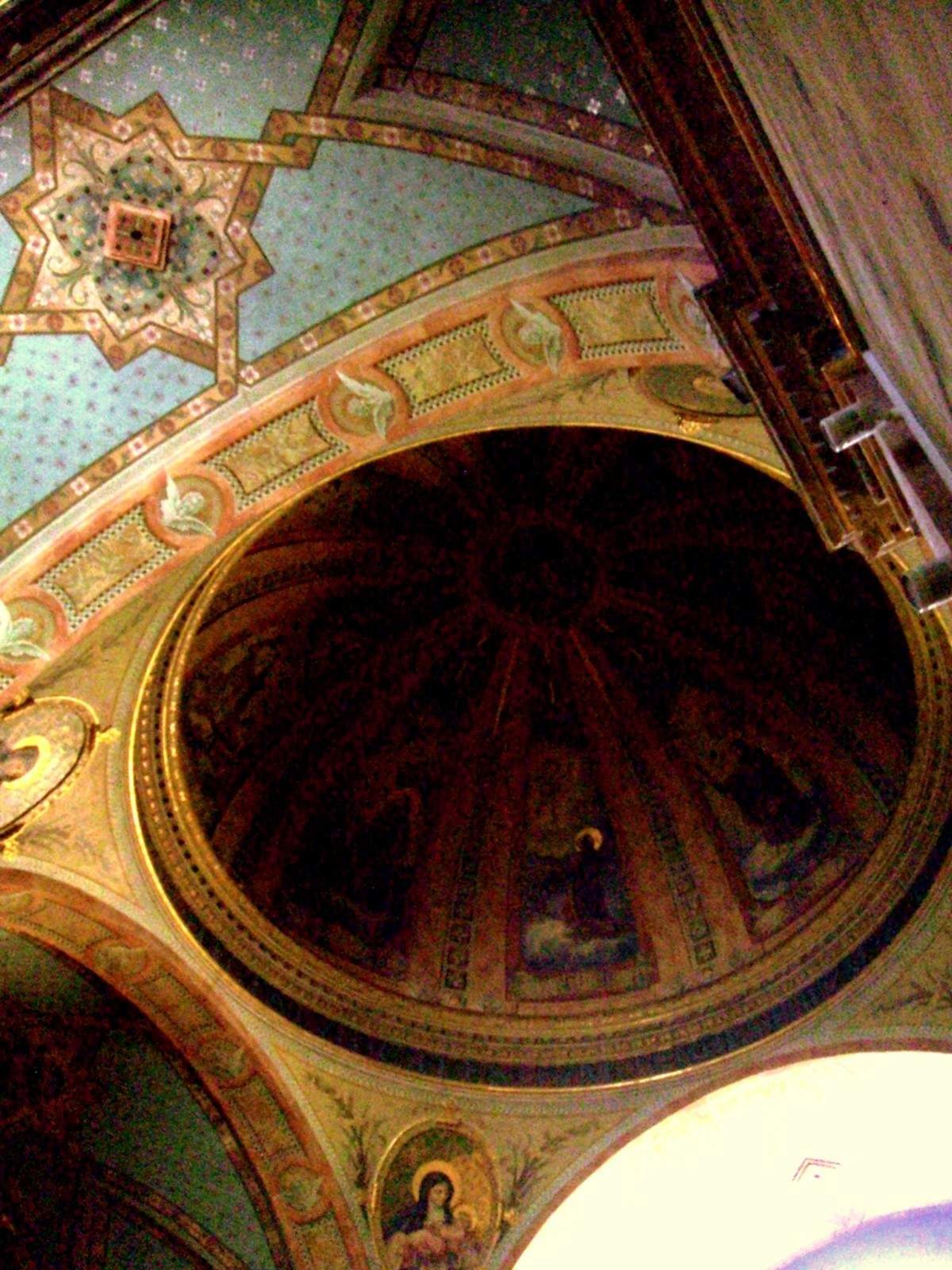
The church has a cross-shaped plan, a pronounced transept (the crosswise arm) and a straight-ended apse (the sanctuary end). A barrel vault, or curved ceiling, covers the interior and includes lunettes, crescent-shaped areas where the vault meets another surface. At the crossing, a segmented dome rests on pendentives, supports that allow a dome to rise above a square space. Simple pilasters, shallow wall-mounted supports, carry a cornice, a projecting horizontal band, around the walls. The vaults above the apse and crossing bear richly colored geometric designs and religious imagery.
Wall paintings
Paintings added in 1905 by Juan Ros de San Miguel cover the walls with patterns imitating veined marble and images of saints of the Franciscan order.
Altarpieces
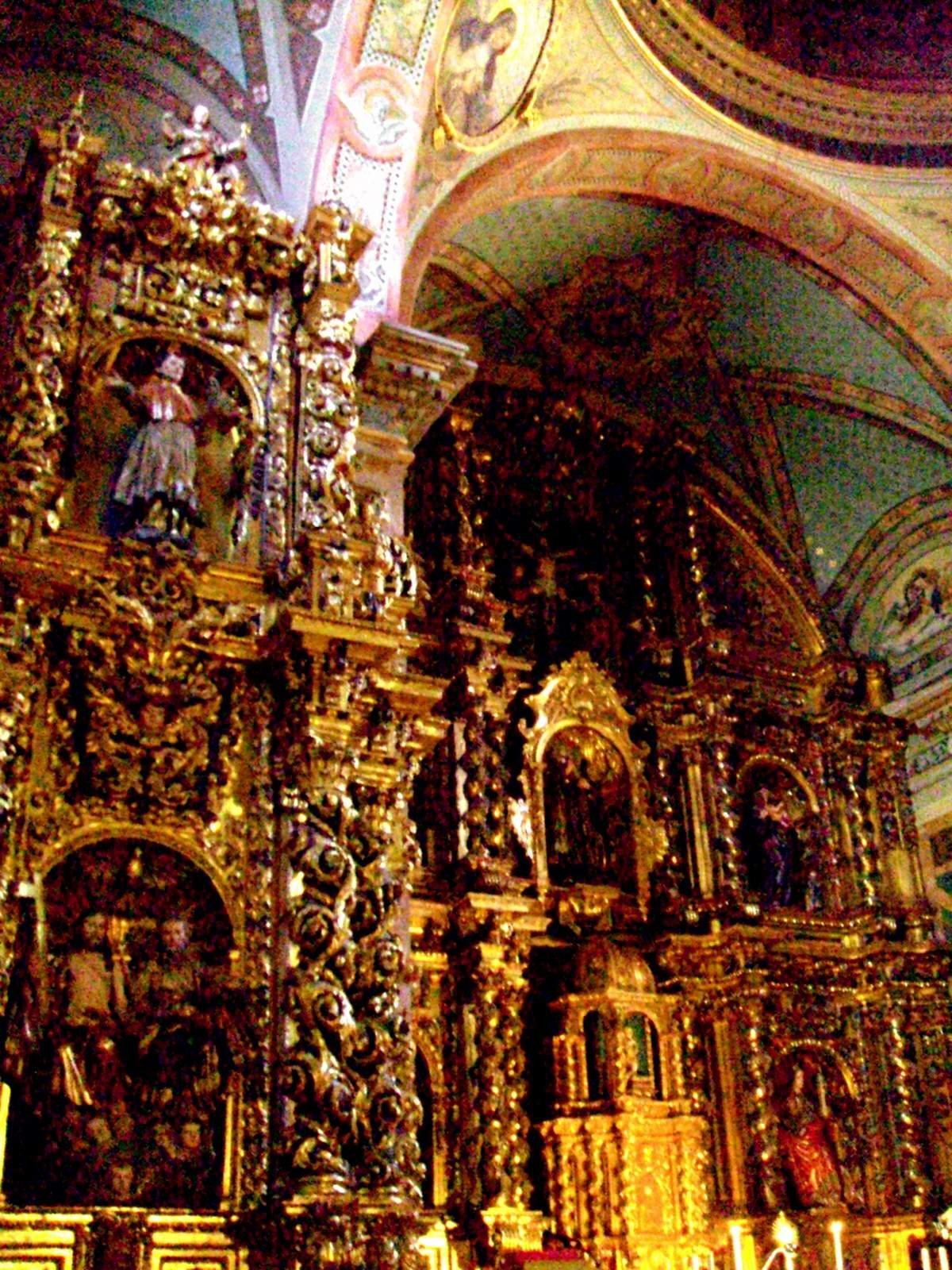
The main altarpiece dates to 1679. Its lower base, called a predella, supports two tiers, each divided into three sections by Solomonic columns with spiral shafts. A quarter-spherical attic, the crowning upper section, completes the structure. Sculptures show Saints Catherine, Barbara, Francis of Assisi, Clare of Assisi and Anthony. Francis and Clare founded the Franciscan and Poor Clare orders. A depiction of Christ’s crucifixion crowns the altarpiece.
Two smaller Baroque altarpieces stand in the arms of the transept and date to the early eighteenth century. One is dedicated to the Holy Trinity, the Christian belief in one God in three persons; the other to the Immaculate Conception, the Catholic belief that Mary was preserved from original sin.
Sacristy
The nuns preserve a collection of liturgical vestments in the sacristy, including pieces originating in Latin America. Among them is an eighteenth-century Mexican ciborium, a covered vessel for holding consecrated hosts.