Rathcoffey Castle: A Norman-Style Frontier Castle in County Kildare
Site at a Glance
- Rating
- 2.8
- Popularity
- Very Low
- Country
- Ireland
- Primary era
- Medieval
- Eras represented
- Medieval
- Civilizations
- Norman
- Site type
- Military
- Remains
- Castle
On this page7 sections
History
Rathcoffey Castle is a fifteenth-century lowland castle in the Norman style, in Rathcoffey Demesne, County Kildare, Ireland. The Wogans built it on the frontier between the Pale, the area of English rule centered on Dublin, and lands held by Irish clans. The castle helped protect the English crown’s holdings in the region.
Wogan lordship and medieval conflict
In 1317, the English crown granted the manor of Rathcoffey to John Wogan, then justiciar, a senior royal officer with governing and judicial duties. The judge Hugh Canoun, who was born in England, had also sought the manor but did not obtain it. Wogan’s descendants built the castle. The family were Cambro-Normans, descendants of Anglo-Norman settlers associated with Wales and Ireland.
The castle appears in a Wogan dower from 1417, a provision of property or income for a widow. In 1453, Richard Wogan led an army against the castle and took it from his cousin Anne Eustace, née Wogan. Anne belonged to the senior family line, while Richard was the senior male heir. Richard gained control of Rathcoffey, and Anne and her Eustace successors retained the Wogan lands at Clongowes Wood.
Rebellion and siege
In 1580, William Wogan joined the Second Desmond Rebellion, a revolt associated with the Earl of Desmond and opposition to English authority, in which Roman Catholic interests were also central. He was executed the following year and lost his lands through forfeiture. The family regained Rathcoffey soon afterward.
During the Wars of the Three Kingdoms, conflicts involving England, Scotland, and Ireland in the 1640s, the Wogans supported Parliament. Colonel Monck’s army besieged Rathcoffey Castle, which fell in 1642. Many civilians were massacred, and their bones were found in a forest in the nineteenth century. The castle’s garrison was executed in Dublin.
From castle to estate
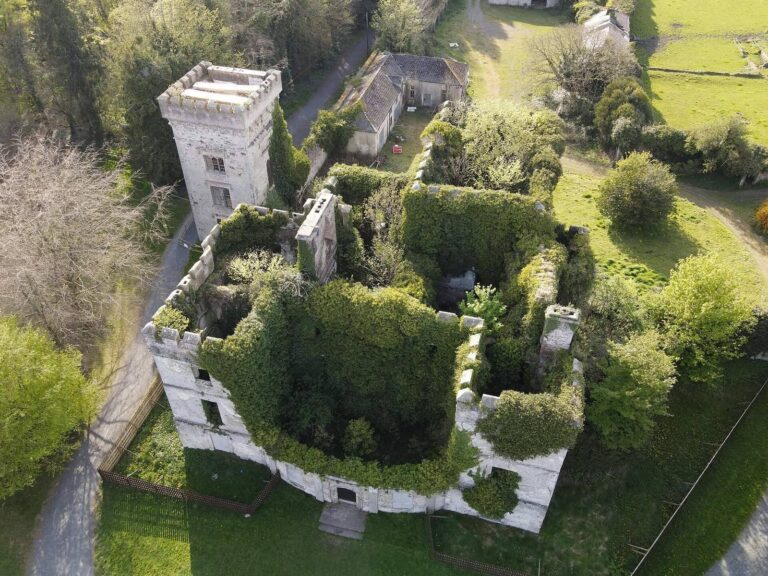
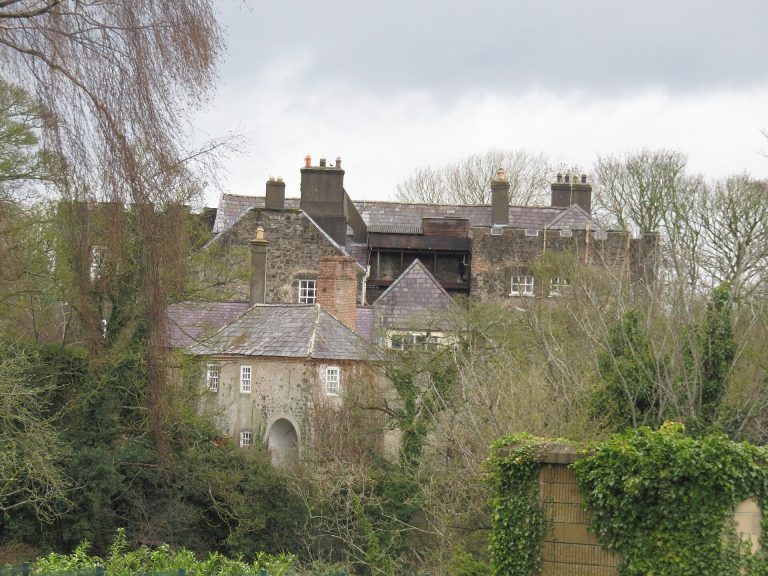
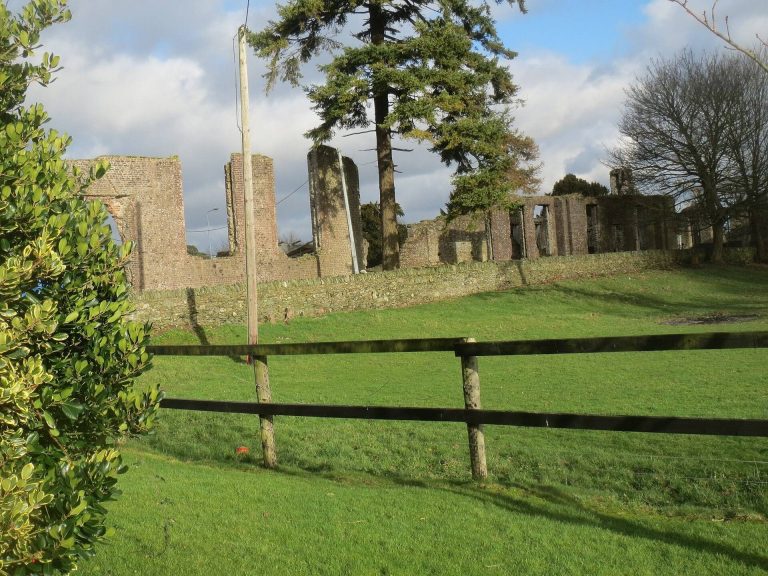
In the eighteenth century, the castle belonged to Richard Wogan Talbot. Archibald Hamilton Rowan, an Irish political reformer, bought it in 1785 and built a mansion on the site. The estate later passed through several owners and came into the possession of the Society of Jesus, a Catholic religious order. It was sold to a local farmer in the 1970s. Rathcoffey Castle is a National Monument of Ireland.
Remains
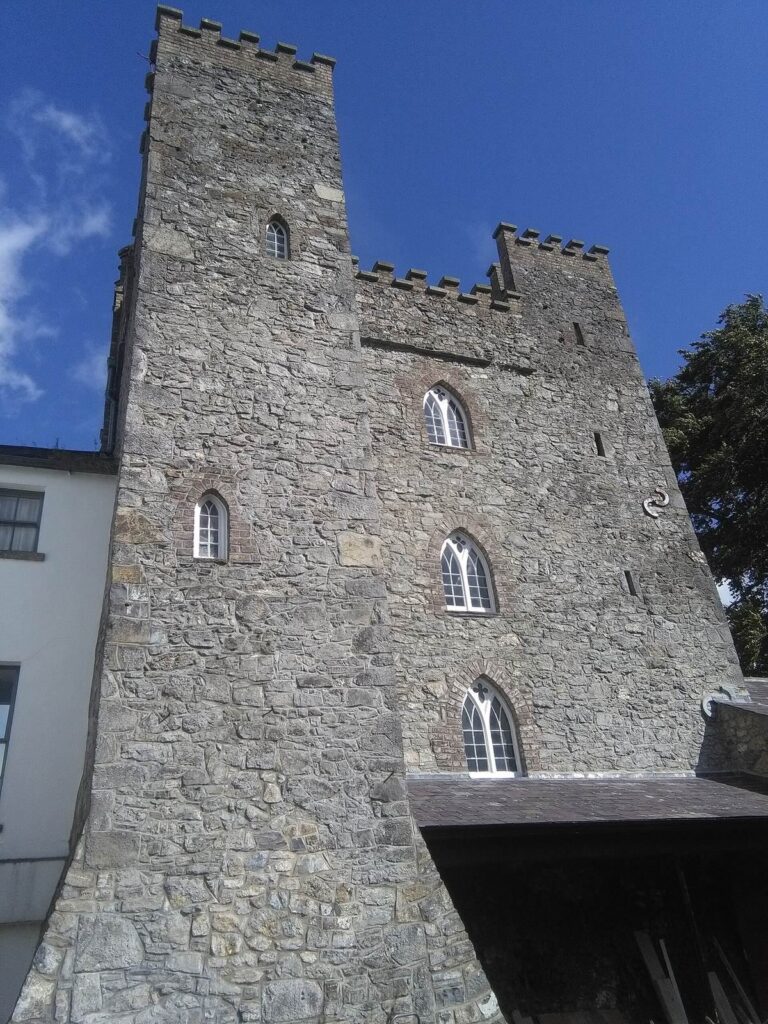
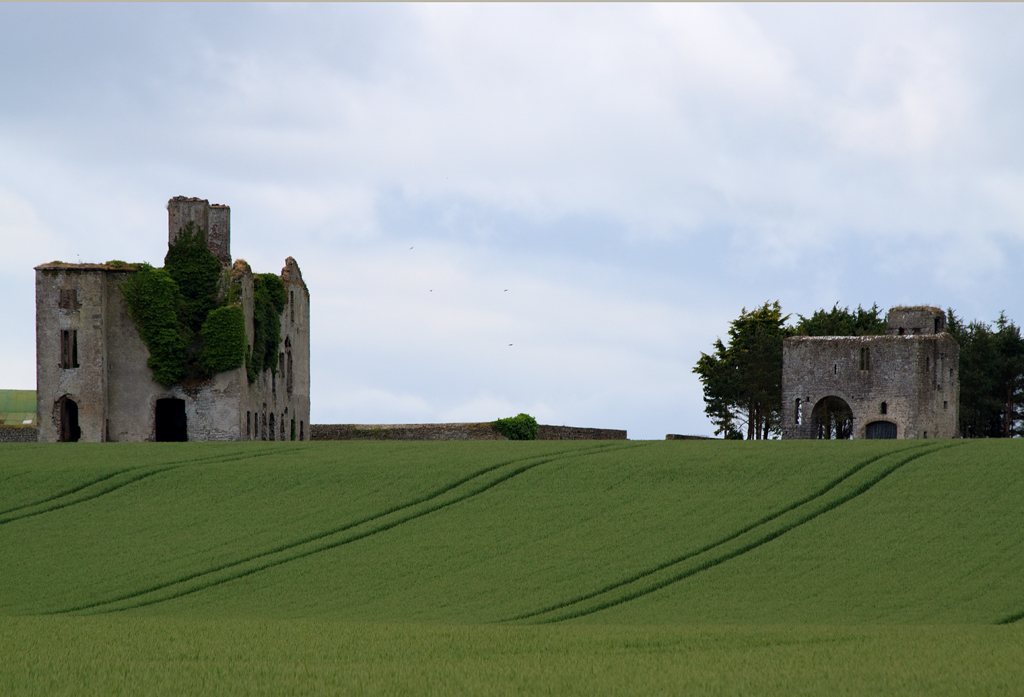
The castle stands in a field east of Rathcoffey village, about 4.3 kilometres north-northwest of Straffan. Its stonework is built of rubble, using irregular or roughly dressed stones. The surviving structure is a two-storey gatehouse that once gave access to an enclosure containing the main castle, which was later demolished.
The gatehouse
The gatehouse is now in ruins. Its eastern wall contains a mullioned window, divided into sections by vertical stone supports, dated to about the fifteenth century.
The mansion site
The mansion Rowan built on the castle site incorporated the earlier Wogan dwelling.