Tash-Koy: A Taurian Cemetery in Crimea
Site at a Glance
- Popularity
- Very Low
- Country
- Ukraine
- Primary era
- Iron Age
- Eras represented
- Iron Age, Medieval
- Civilizations
- Unclassified
- Site type
- Burial
- Remains
- Necropolis
On this page7 sections
History
Taurian burials
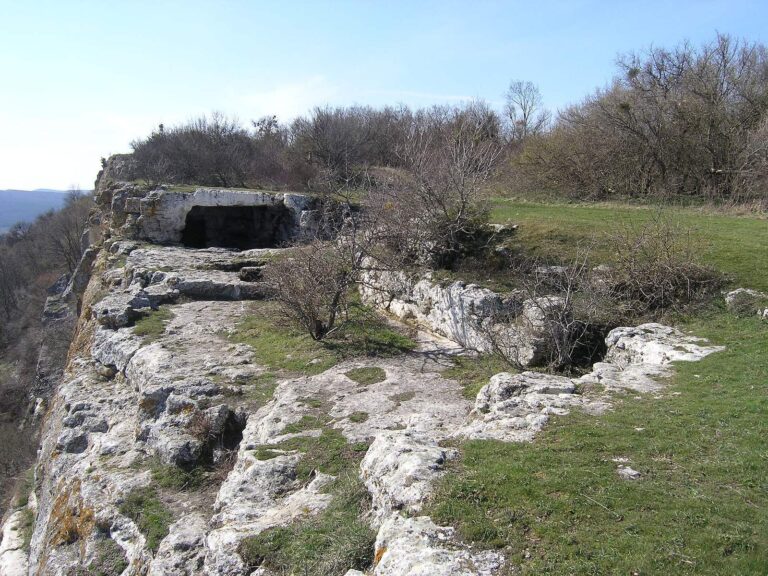
Tash-Koy is a cemetery associated with the ancient Tauri, a people connected with Crimea, in the Baydar Valley of Ukraine. Its stone-lined graves date to the sixth and fifth centuries BCE. The term Taurian culture describes archaeological remains attributed to the Tauri and spans the sixth century BCE to the first century CE.
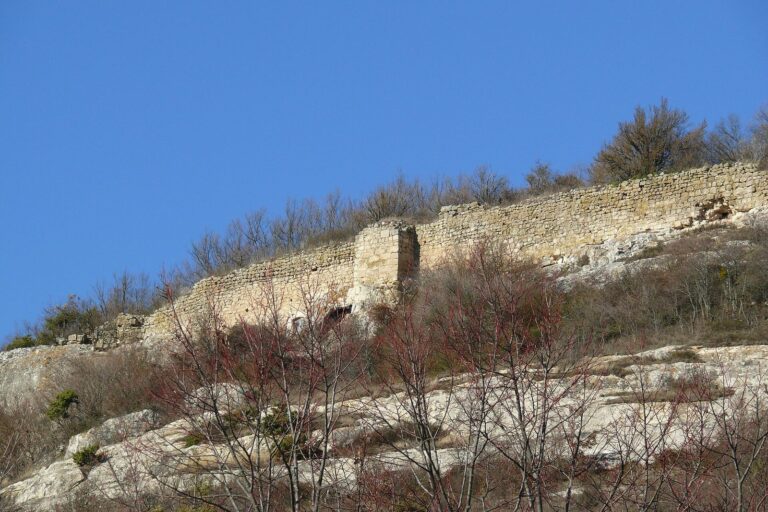
The cemetery was plundered in antiquity. In later periods, inhabitants dismantled many graves and reused their stone surrounds and covers as building materials. A settlement from the medieval period also occupied part of the cemetery. The name Tash-Koy means “Stone Village” in Crimean Tatar. It may refer to the appearance of covered stone graves before they sank into the ground, when they could resemble a settlement.
Investigation
Crimean antiquarian V. H. Kondaraki first mentioned Tash-Koy in 1875, followed by historian Yu. A. Kulakovsky in 1896. Archaeologist N. I. Repnikov excavated at the cemetery in 1907. In 1947, a Bakhchisarai archaeological detachment of the Institute of Archaeology of the Academy of Sciences of the Ukrainian SSR investigated the site. O. Shchepinsky studied it during the 1960s, and excavations followed in 1984 and 1985 under O. Ya. Savelya, head of the Sevastopol archaeological expedition.
Remains
Cemetery layout
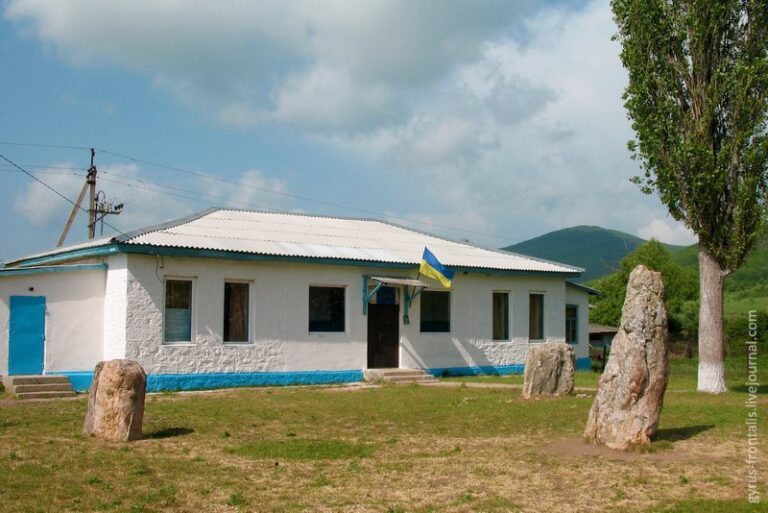
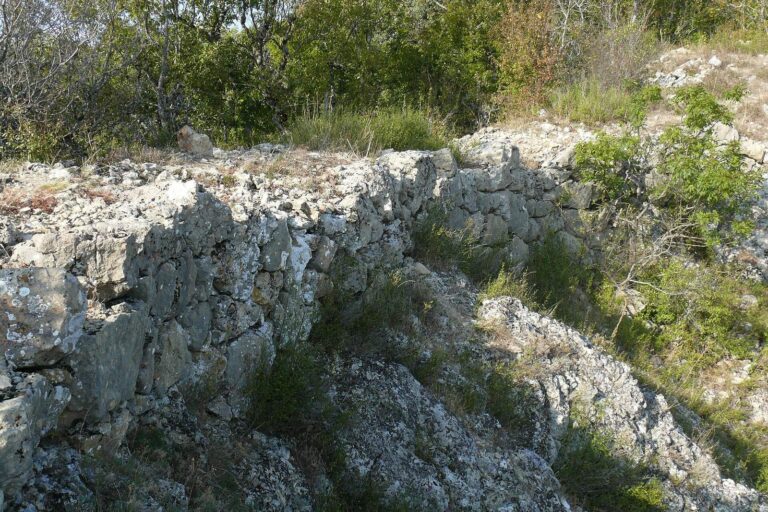
The cemetery lies north of Novobobrovskoye, on the western bank of the Eski-Baga stream. Its eastern group, Tash-Koy I, is at a forest edge, while Tash-Koy II lies farther west in sparse woodland. The graves are arranged in rows running roughly east to west. Large limestone blocks set upright mark a traceable boundary on the cemetery’s western side. More than a hundred graves once occupied the site, but only a few dozen are now visible.
Stone graves
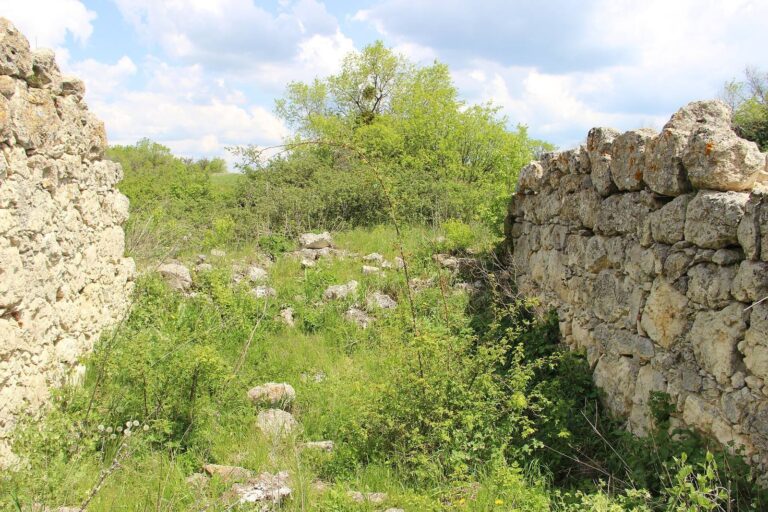
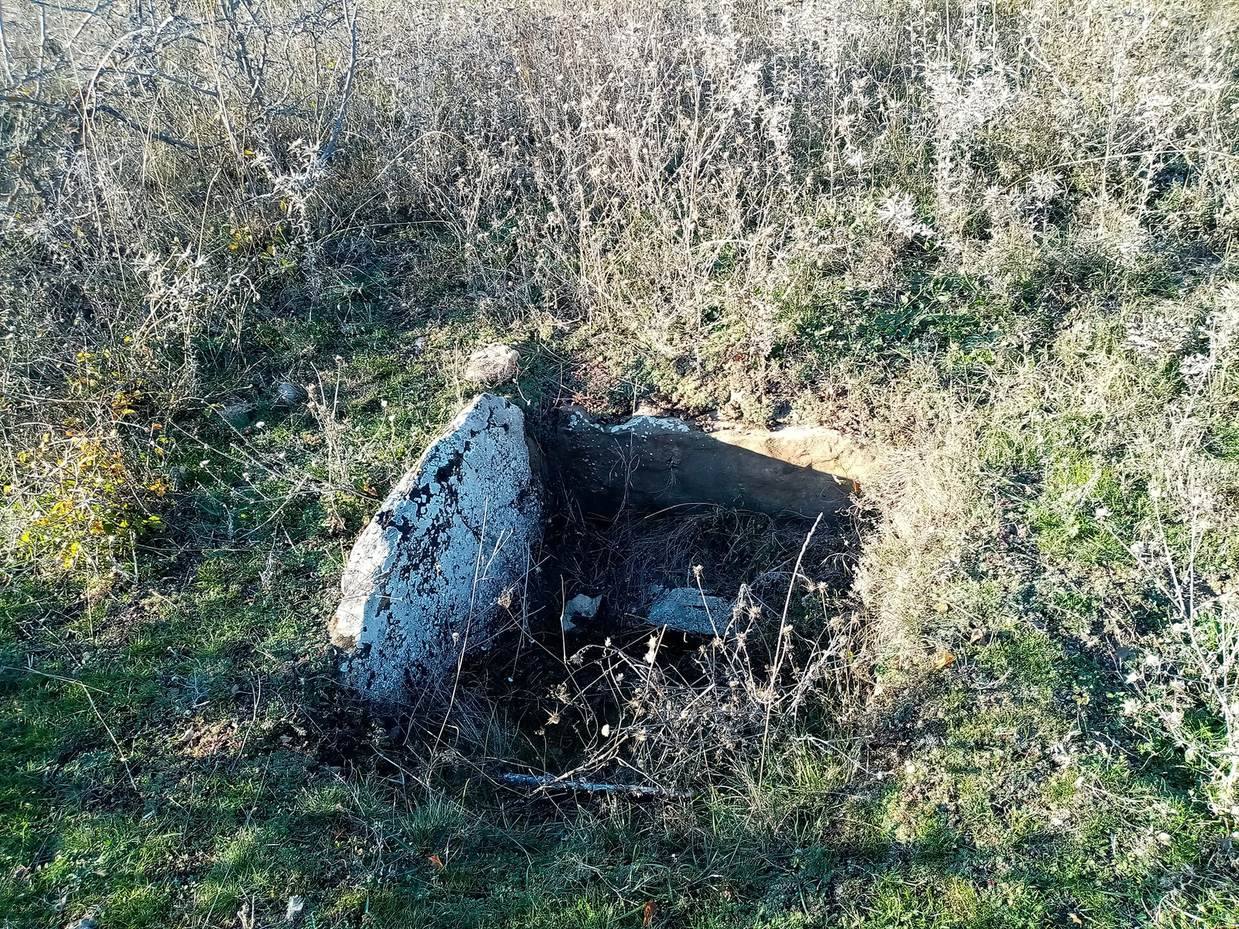
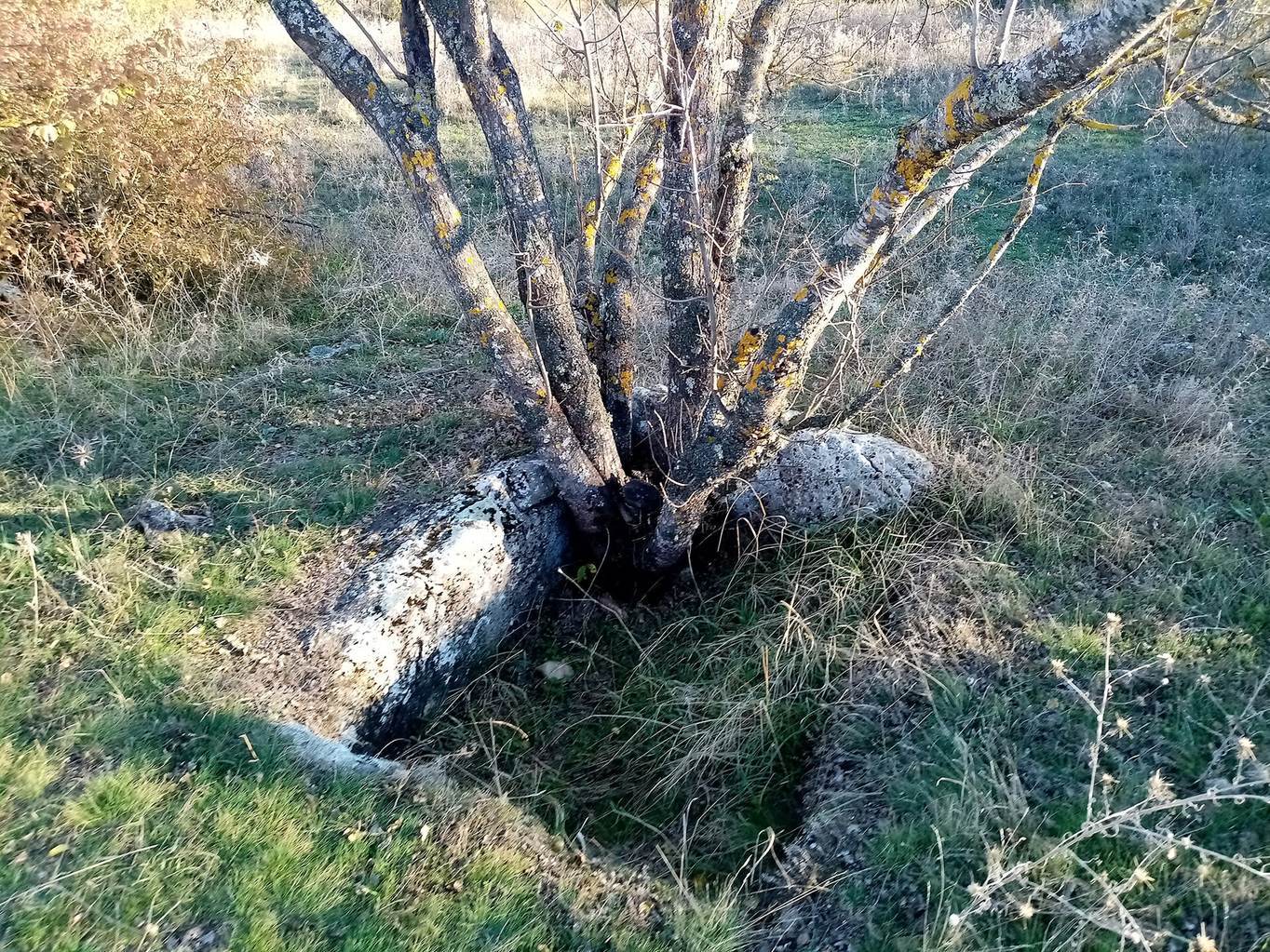
The graves are rectangular pits lined mainly with four solid limestone slabs. They measure about 1.1 to 2.5 metres long, 0.75 to 1.1 metres wide, and 0.55 to 1 metre deep; the slabs can be up to 30 centimetres thick. Some graves in the group examined in 1947 had stone enclosures. The surviving graves lie on a hillside, partly covered by grass and shrubs. Later reuse removed stonework and covers from many of them.
Finds
Investigations recovered pottery fragments, bones, flint, glass beads, and copper plaques. A grave completely cleared in 1947 contained fragments of handmade pottery, a triangular bronze arrowhead, and a dog’s canine tooth. Small surviving funerary objects include spiral-shaped and mushroom-shaped bronze pendants, plaques, beads and seed beads, cowrie shells, and remains of funerary offerings.