St. Matthias Protestant Church, Bad Sobernheim: A Late Gothic Church
Site at a Glance
- Popularity
- Low
- Country
- Germany
- Primary era
- Medieval
- Eras represented
- Medieval, Early Modern, Modern
- Civilizations
- Electoral Palatinate, German, Holy Roman Empire
- Site type
- Religious
- Remains
- Church
On this page10 sections
History
The medieval church
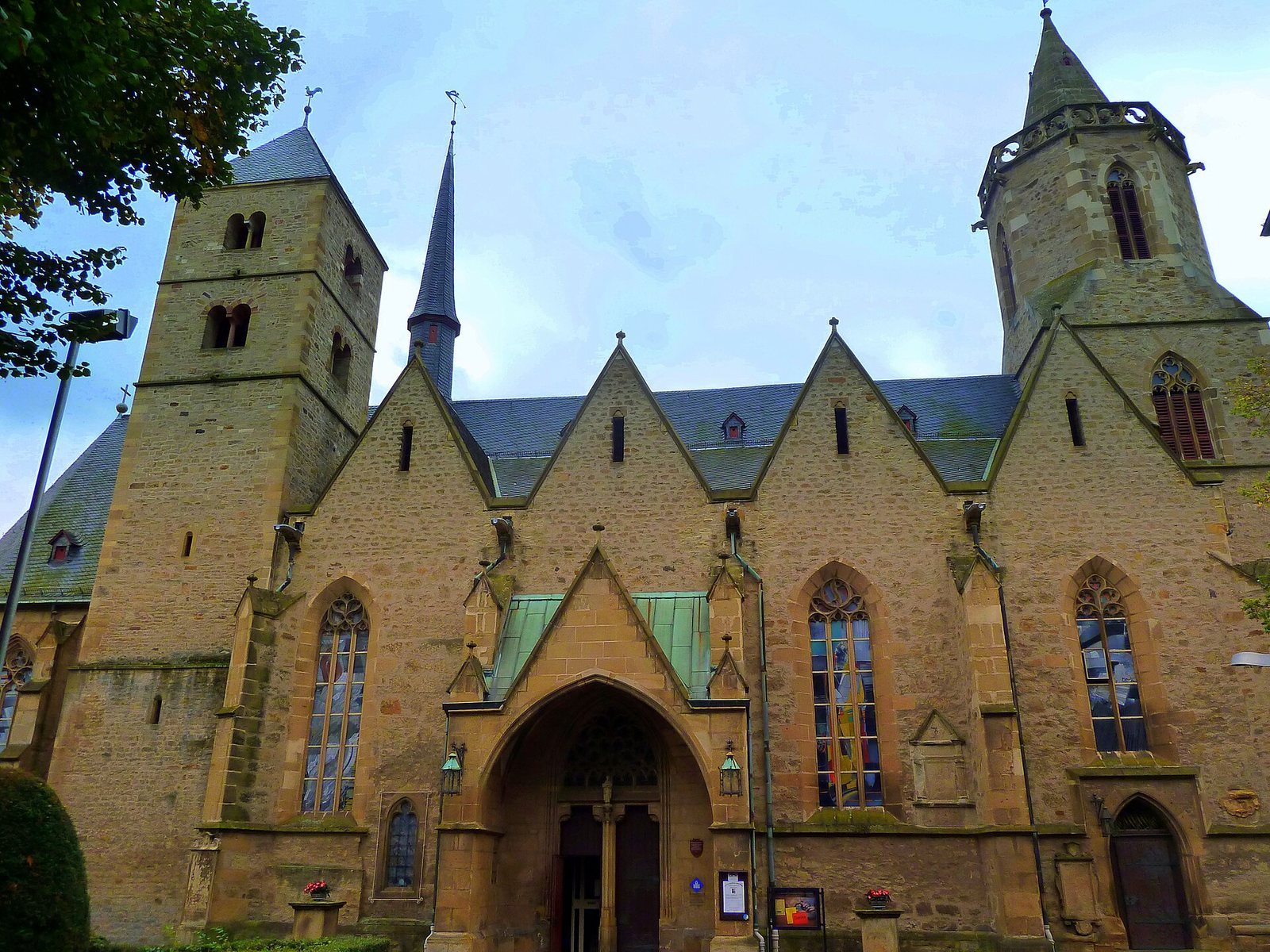
St. Matthias Protestant Church is a late Gothic church in Bad Sobernheim, Germany, with a nave built in 1482. Its predecessor was consecrated in 976 by Willigis, Archbishop of Mainz. The present church’s early Gothic choir was built before the nave, which was added in the fifteenth century.
Repairs and renovation
From 1897 to 1900, architect Ludwig Hofmann of Herborn undertook a thorough renovation and repaired the roof. Extensive renovation and structural securing followed between 1959 and 1969.
The organ
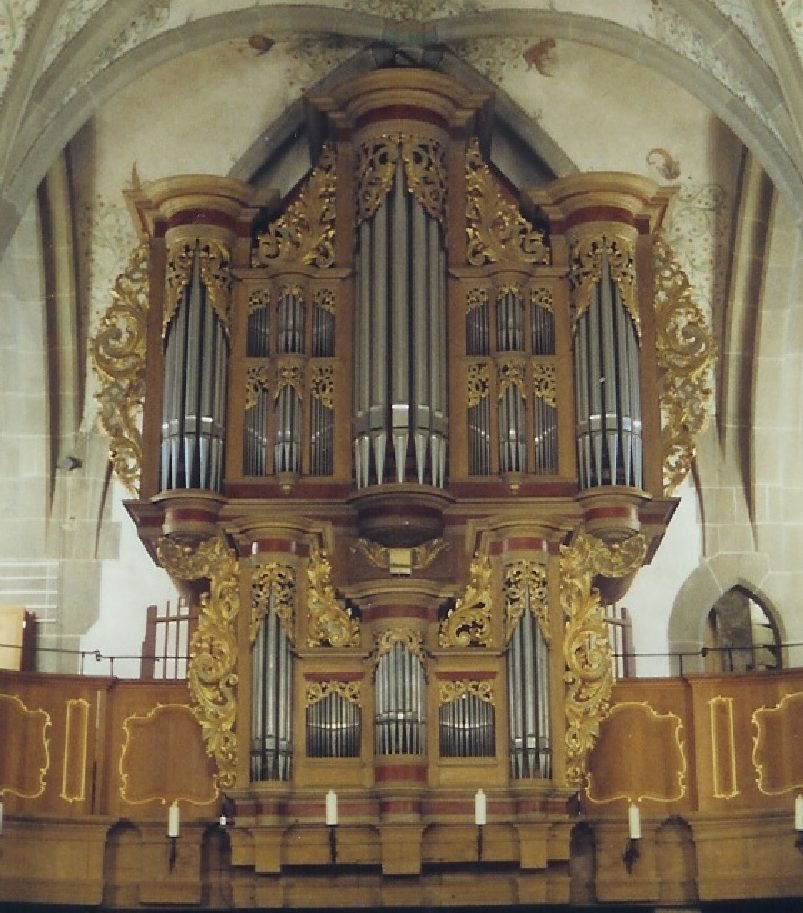
Johann Michael Stumm built the organ in 1739. In 1878, Johann Schlaad replaced its pedal wind chest and several stops. Steinmeyer renewed the pedal division in 1940, changed further stops, installed a new console, extended the manual range, and adjusted the instrument to standard pitch.
An early restoration by Paul Ott led to substantial changes, particularly to the pipes. Wind pressure was reduced, pipe-mouth cut-ups were lowered, the air gaps at the mouths were narrowed, and tuning slots were soldered shut. Short pipes were extended with tuning rings or blockboard additions. From 2003 to 2005, the Rainer Müller firm rebuilt the pedal wind chest, key action, console, three wedge-shaped air bellows, and parts of the pipework. The original arrangement of stops was reinstated.
Remains
Plan and fabric
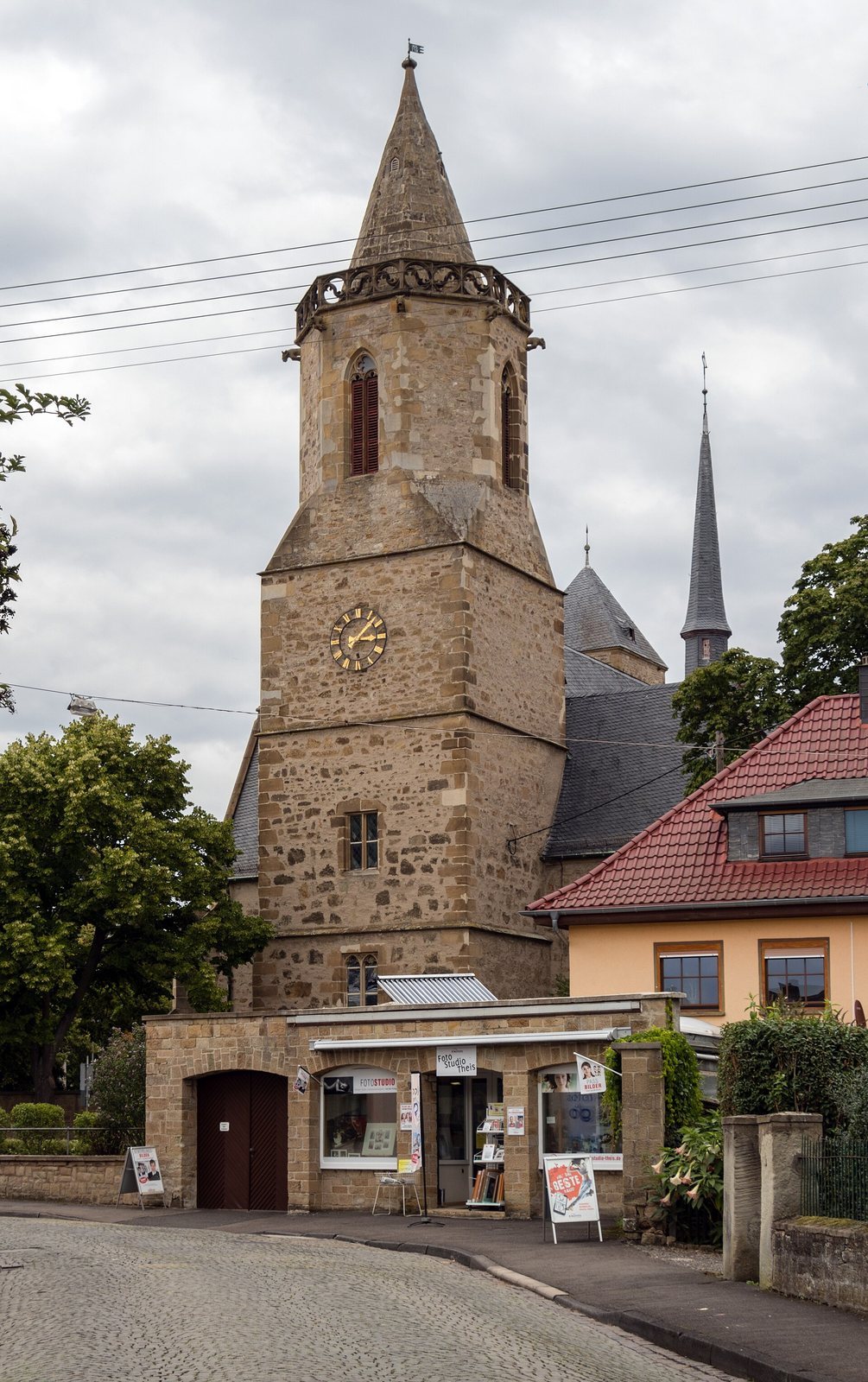
The church is a three-aisled late Gothic hall church, with a nave and side aisles of similar height. Its interior has four bays, or divisions, and a ceiling supported by intersecting ribs. The supports are octagonal pillars. The principal entrance has a hall-like form, and a sacristy, a room for clergy and church furnishings, is attached on the south side. A tower stands northwest of the choir. It derives from the predecessor church, although its upper storey and entrance are later additions.
Interior decoration and memorials
Windows, sculpture, and wall paintings
Tracery windows, with ornamental stone divisions, are by Georg Meistermann, a twentieth-century German painter and stained-glass artist. Capitals, the upper parts of pillars, on the altar canopy depict angels and retain painted decoration from the building period. Figures are attached to the supporting pillars, and fragments of wall paintings survive.
Tombstones
Tombstones dating from the fifteenth to seventeenth centuries are present in the church.
Organ
The organ has 25 stops, which select groups of pipes, across two hand-operated keyboards and a foot-operated pedal. It uses Valotti temperament, a historical tuning system, with an A pitch of about 466 Hz, roughly a semitone above the pitch commonly used today.