Artificial Caves of Alapraia: A Prehistoric Burial Complex in Portugal
Site at a Glance
- Popularity
- Low
- Country
- Portugal
- Primary era
- Stone Age
- Eras represented
- Stone Age
- Civilizations
- Unclassified
- Site type
- Burial
- Remains
- Necropolis
On this page11 sections
History
Burial and use
The Artificial Caves of Alapraia are four underground tombs in Estoril, Portugal, forming a burial ground also known as the Alapraia Eneolithic Necropolis. Eneolithic is another name for the Chalcolithic, or Copper Age. The tombs are thought to have been built in the final quarter of the fourth millennium BCE and served as a burial ground for more than a thousand years, from the Late Neolithic into the Chalcolithic.
Funerary rites took place outside the tombs. A procession moved along the entrance passage, while the dead were placed seated beside the chamber walls. Relatives deposited objects with them for use in the afterlife. Material from the Beaker culture and the Bronze Age also came from the site. Finds from Cave IV point to a Beaker-period attribution, although older objects may have been cleared from it.
Discovery and investigation
Geologist Francisco de Paula Oliveira first described Cave I in 1889. It was already badly deteriorated and had been used to shelter wood and animals; its burial objects were gone. In September 1932, archaeologists Eugénio Jalhay and Afonso do Paço identified Cave II. State-funded excavation campaigns followed in 1934, 1935, 1942, and 1943.
Cave III was identified in 1934–35 and excavated in 1942. It was largely filled with modern rubble and the excavation remained incomplete. Cave IV came to light during work to install a fountain and was excavated in 1943.
Recognition
The discoveries led to the opening of an archaeology room at the Condes de Castro Guimarães Museum-Library in 1942. The site has held Property of Public Interest status since 1945. The Portuguese state owns it, and its present function is cultural.
Remains
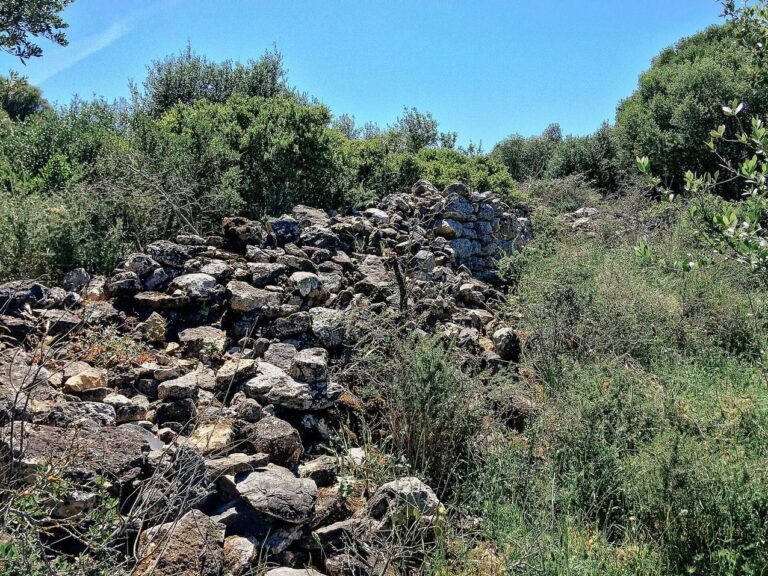
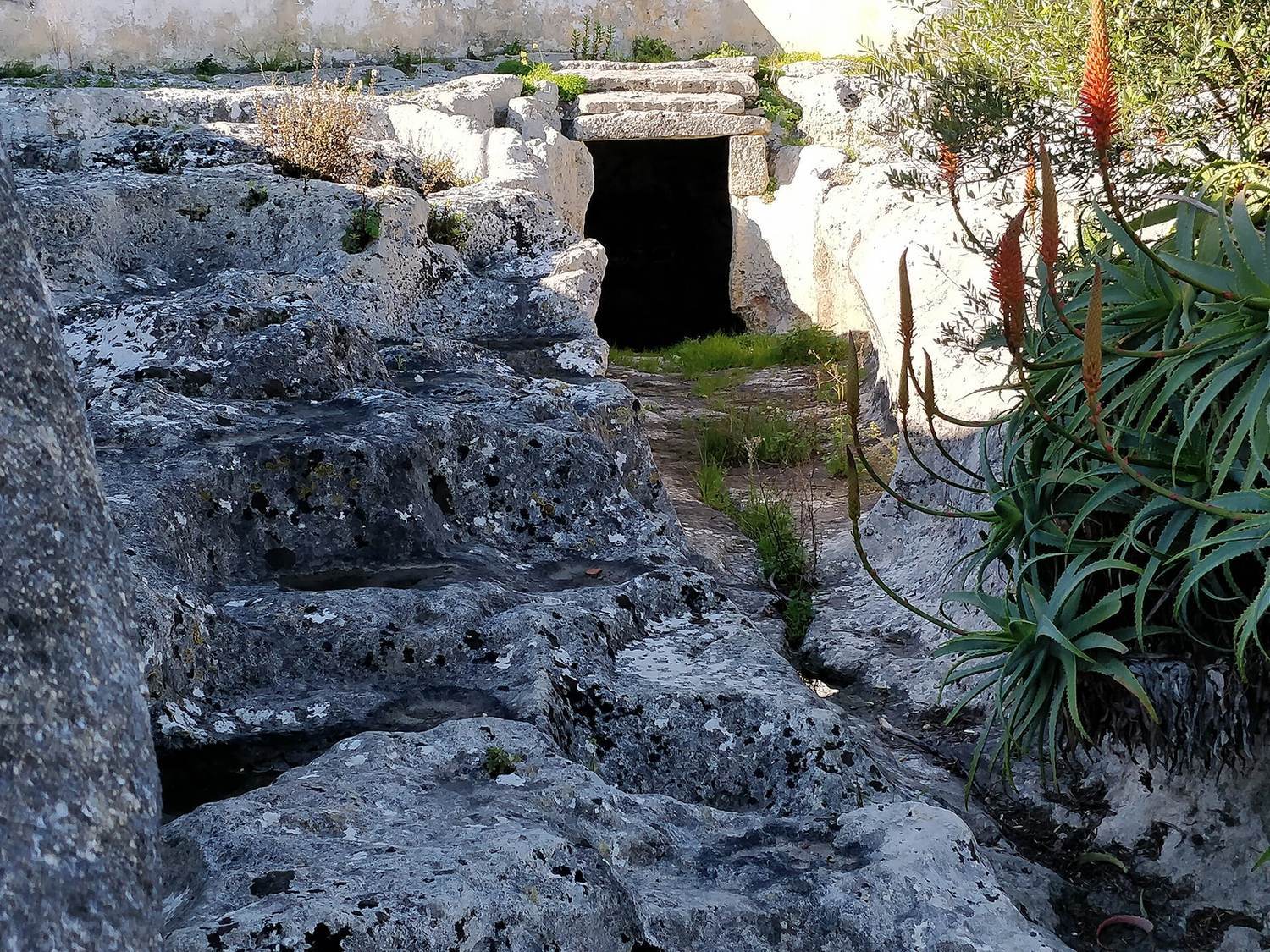
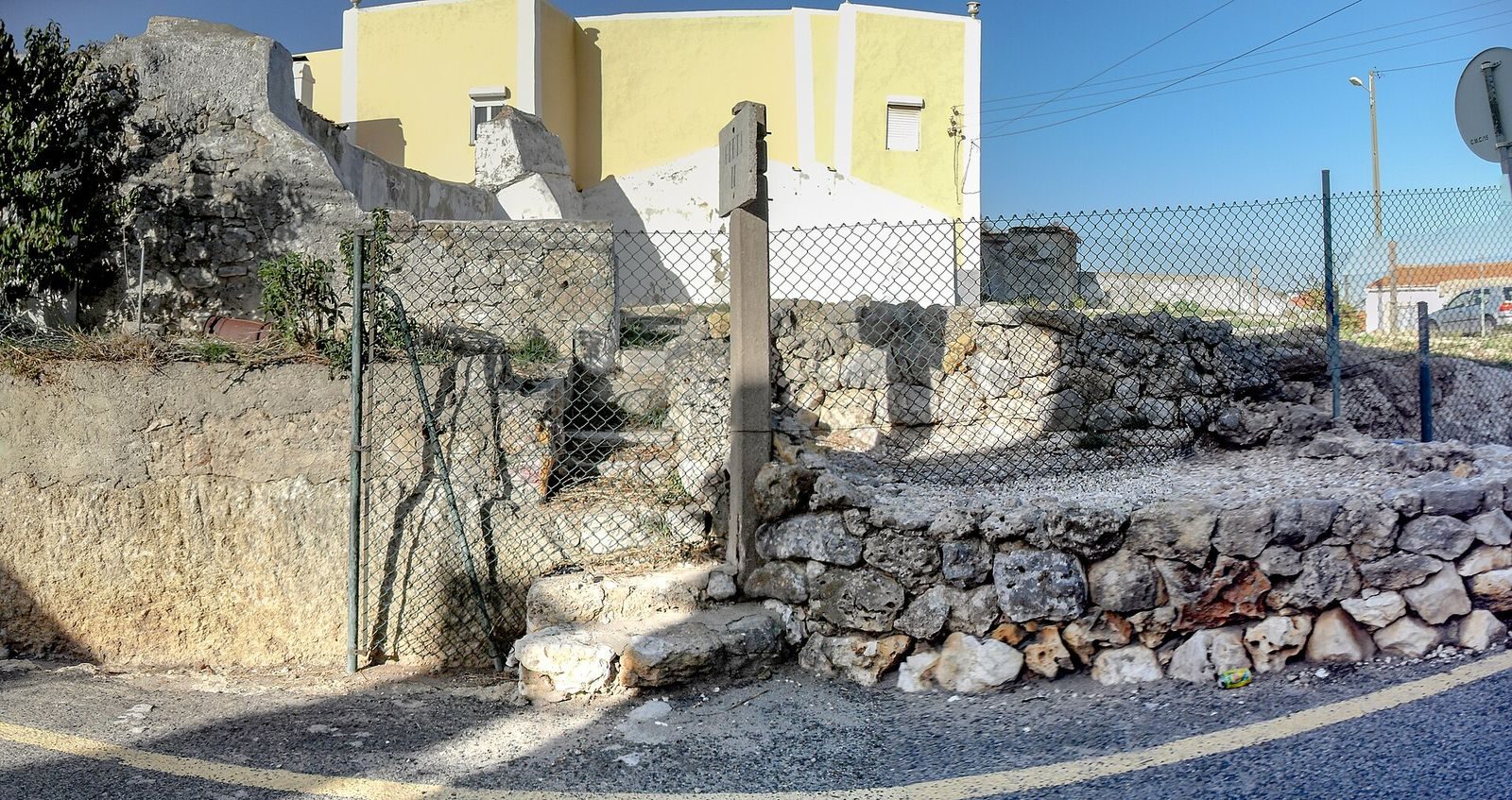
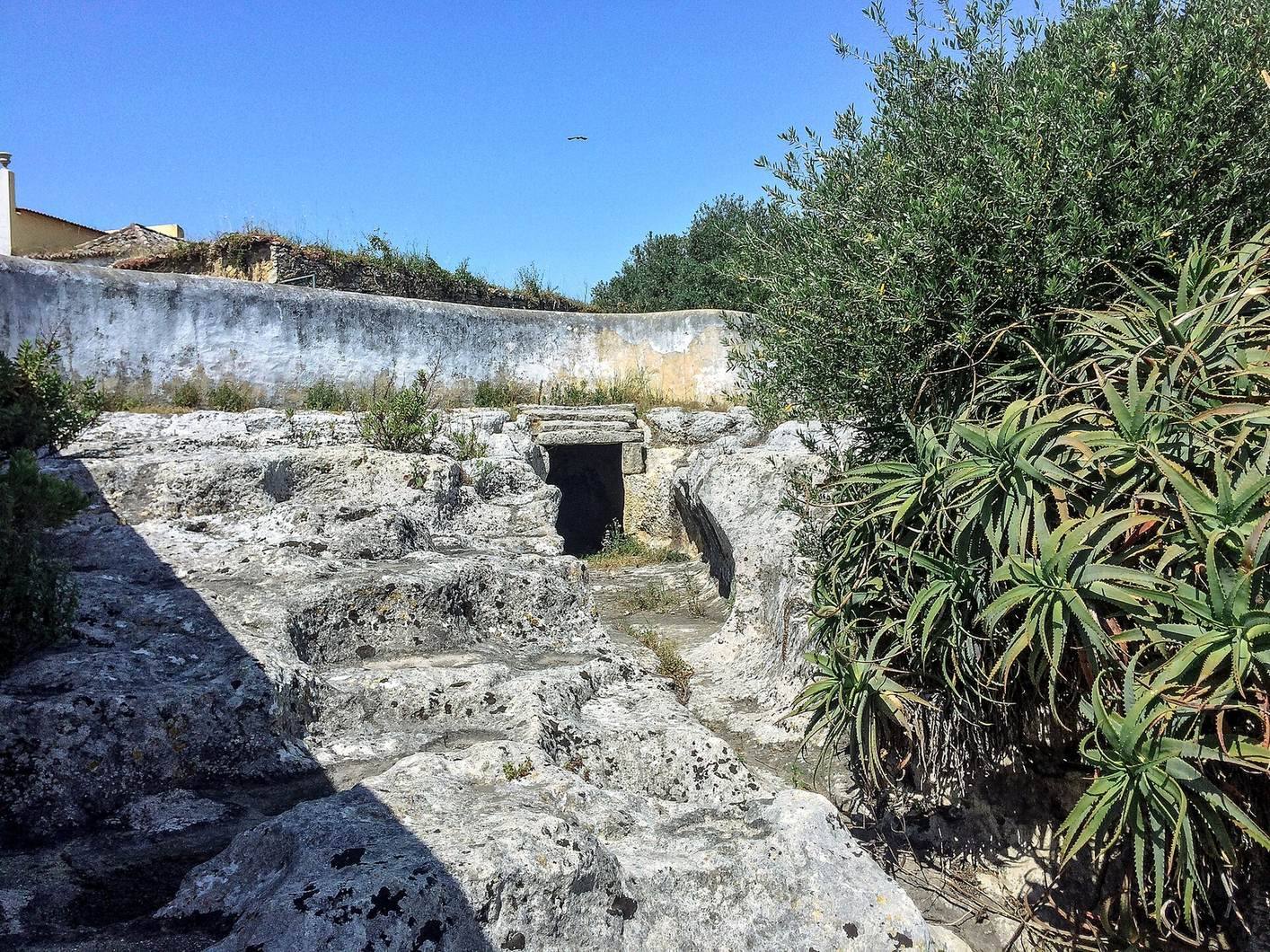
The four tombs lie in central Alapraia, with some surrounded by or partly beneath modern housing. People excavated them from natural limestone containing clay, using stone tools. Each has a long, low entrance passage that narrows toward a circular or slightly oval chamber with a curved ceiling. A central roof opening, protected by stone slabs, is thought to have allowed bodies to be placed in the chamber when crowding made entry through the passage impracticable.
The four tombs
Cave I
The largest tomb measures 19 metres in total. Its spherical chamber is 6.2 metres across and 2.8 metres high at the centre; the open entrance passage is 13.7 metres long. The cave stands apart and is enclosed by a high wall. Its slab roof and square entrance are later alterations; the original entrance was smaller and round.
Cave II
Cave II is 9 metres long. Its oval chamber measures about 4.2 to 4.4 metres across and reaches 2.2 metres in height at the centre. The long entrance passage has outward-bulging sides.
Cave III
The circular chamber is 6.2 metres in diameter and averages 2.4 metres in height. Its total length cannot be established because the passage area has been removed. A house stands above the cave.
Cave IV
Cave IV measures about 11 metres overall, including a 7.1-metre entrance passage. Its slightly oval chamber is approximately 4.35 metres across and 2.4 metres high at the centre.
Burial objects
Finds from the tombs include decorated ceramic bowls and cups, older Chalcolithic pottery such as cylindrical vessels with polished designs, and geometric plaques made from schist, a layered metamorphic rock. Other objects include polished bone pieces, axes, flint pieces, beads, and votive idols, figurines offered in ritual settings. Cave II yielded 18 idols, among them cylindrical limestone examples and one of a lunar type, as well as limestone copies of two sandal soles, regarded as unique.
Most of the finds are held at the Condes de Castro Guimarães Museum in Cascais. Some pieces are displayed at the Museum of the Town.