Vorstengraf Oss: An Early Iron Age Burial Mound in the Netherlands
Site at a Glance
- Popularity
- Medium
- Country
- Netherlands
- Primary era
- Iron Age
- Eras represented
- Bronze Age, Iron Age
- Civilizations
- Unclassified
- Site type
- Burial
- Remains
- Burial Mound
On this page16 sections
History
Vorstengraf Oss, whose name means “princely grave,” is an early Iron Age burial mound near Oss in the Netherlands, raised around 600 BC. The name is an archaeological label, not proof that the person buried there was a ruler. The grave goods point to long-distance connections with the Alpine region, and the tomb’s discovery was regarded as nationally important.
The prehistoric burial landscape
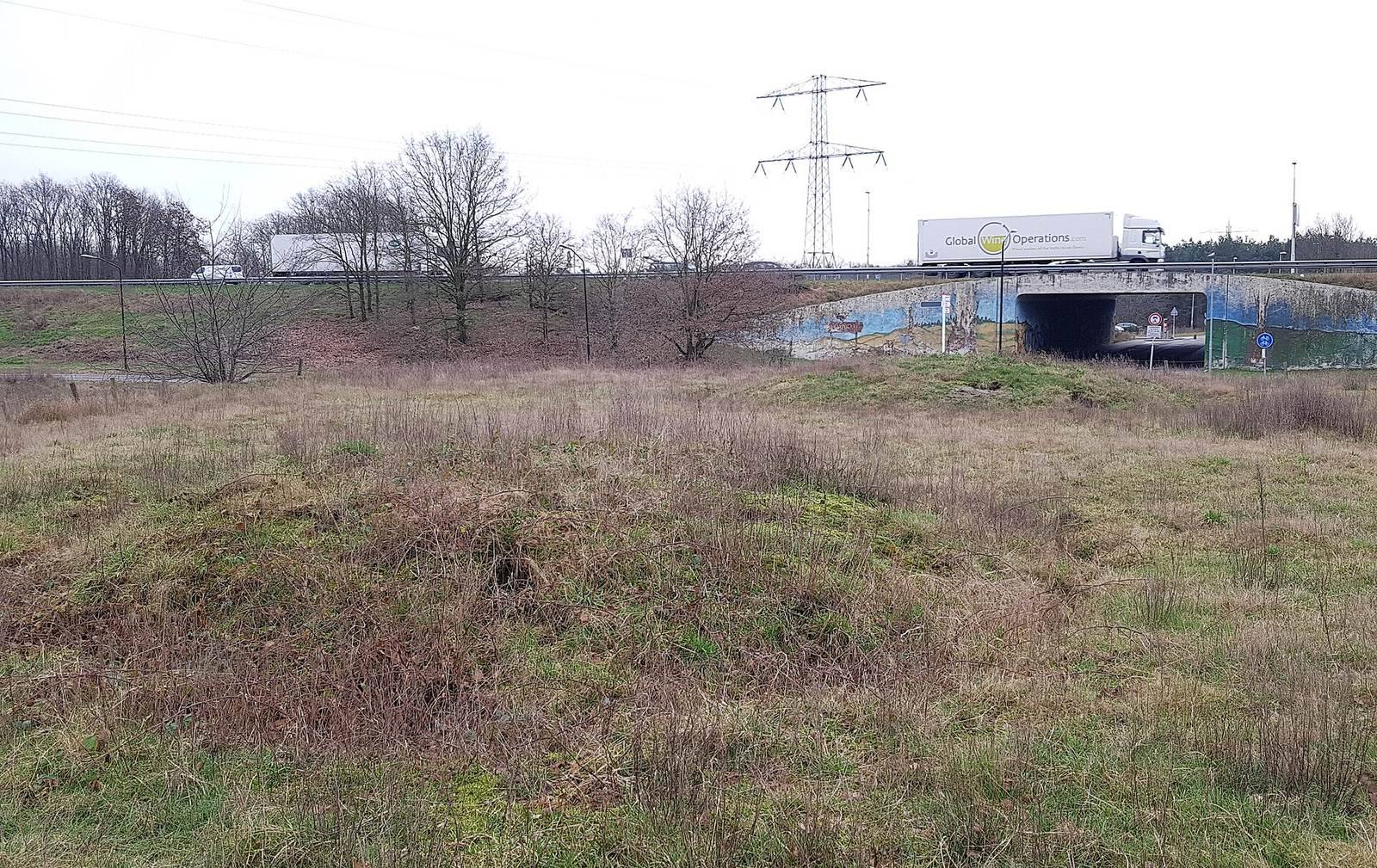
Vorstengraf Oss lies at the Paalgraven interchange, about 400 metres from the burial ground of De Zevenbergen. Both areas contain Bronze Age and early Iron Age burials, and they may once have formed a single, larger complex. Motorways now divide the areas, and road building has disrupted the land between them.
An urnfield, a cemetery for cremated burials often placed in urns, extended east and south of the mound. It was in use during the late Bronze Age and early Iron Age, then fell out of use soon after the princely grave was established. Local stories also attached a princely burial to the heath. The historian Jan Cunen recorded the tradition, while the mound became associated with the name Hansjoppenberg and tales of Hans Joppen, a folkloric gnome said to live on the heath and disappear beside a large mound.
Discovery and archaeological work
The mound was uncovered in 1933 during construction of a trailer park on the heath. Prehistoric pots had already been found, and much of the mound had been dug away. Jan Hendrik Holwerda was notified but did not attend. On 13 February, two men sent by F. Bloemen of a local-history institution found a gleaming object and alerted the Rijksmuseum van Oudheden in Leiden. Archaeologist F.C. Bursch arrived the next day and continued the excavation.
In the 1960s, objects Holwerda had described as lumps of rust were examined again, revealing further grave goods. The find later faded from public attention, and the site became a scrapyard. Contamination from the business eventually required remediation. The mound was rediscovered in 1997 at the former location of the trailer park’s school and investigated further. Between 1997 and 2005, archaeologists dug more than five kilometres of trial trenches in the surrounding area.
De Zevenbergen was surveyed in 1964–65 and investigated again from 2004, including after changes to the interchange prompted further work. Its protected burial area led to the motorway being routed around it, while Vorstengraf Oss was overlooked and road construction caused substantial losses there. Partial restoration of the mound began in July 2003. A separate burial at mound 7 of De Zevenbergen was investigated in 2007 and identified in 2009 as a second princely grave.
Remains
The burial landscape occupies elevated ground in the Maashorst, along the Peel Boundary Fault, where the land falls from 26 metres to 11 metres over several hundred metres. The main turf mound stood within a wider area of graves, post settings and an avenue. Some surrounding features have been reconstructed.
The main mound and grave
Successive burial mounds
The main mound measured about 54 metres across and 3 metres high, placing it among the largest burial mounds in the Netherlands and Belgium. Road construction removed much of it, leaving about one quarter. Beneath the Iron Age mound lay an earlier Bronze Age burial mound, about 14 metres in diameter and dating to around 1800 BC. The later cremation urn was set away from the centre, apparently avoiding the older burial despite the long interval between them.
The grave goods
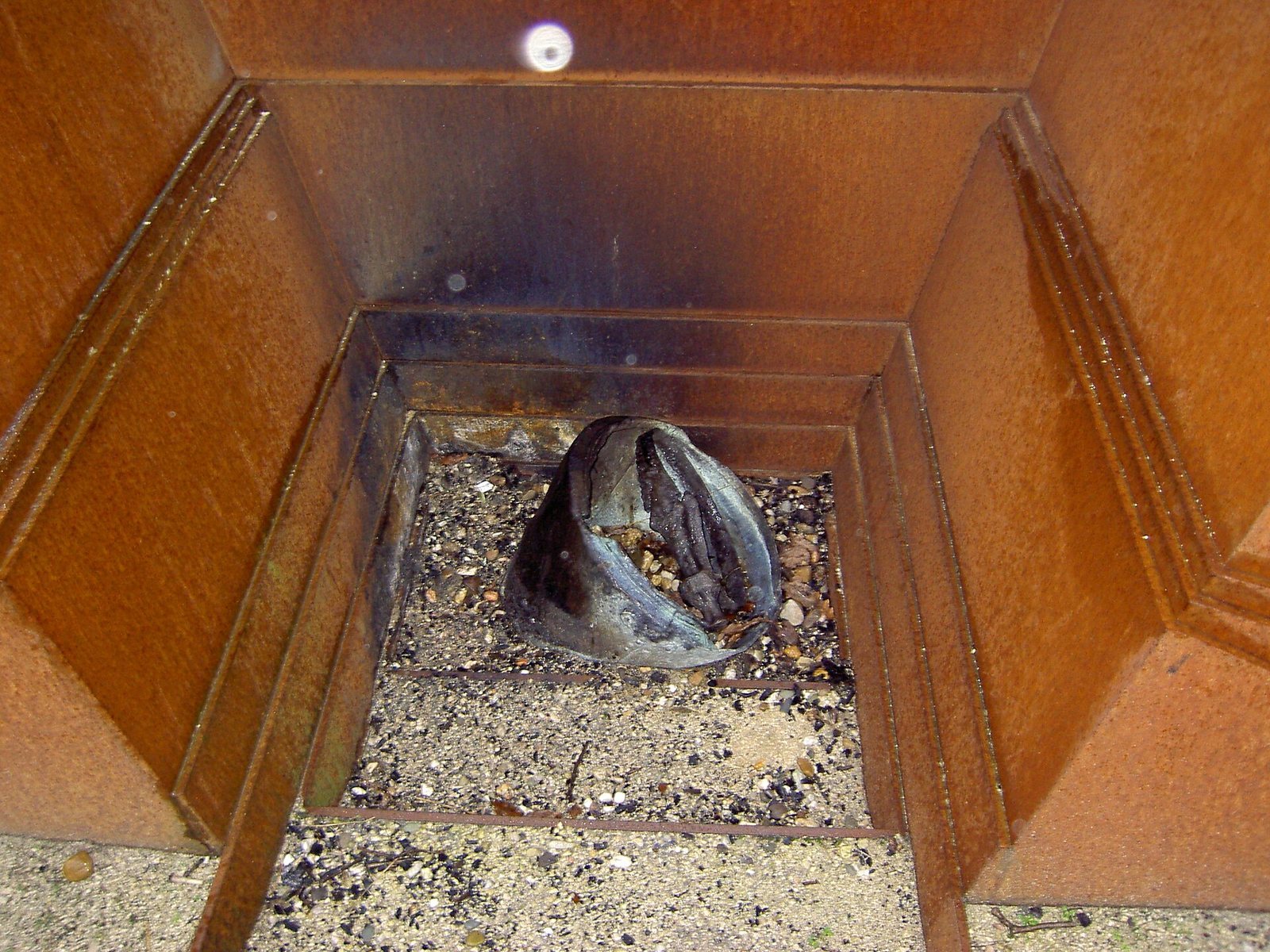
The main burial included a bronze situla, a bucket-shaped vessel used as an urn for the cremated human bones. It was probably made in the eastern Alpine region. The grave also held a bent iron Mindelheim-type sword, an early Iron Age sword form, dated to around 700 BC and decorated with gold. It is among the oldest iron objects found in the Netherlands. In the sword’s southern German region of origin, swords were left unbent or broken; bending may have been intended to prevent the dead from using the weapon. The sword was restored in 1993.
Other objects included a knife, a razor, two horse bits, an iron axe with a socket for its handle, three clothing pins, harness pieces, a whetstone, leather fittings, decorated bone, bronze rings, an oval plate, textile, and remains of a wooden object. The grave also contained iron pieces of uncertain function and a decorated bronze cap that may have belonged to horse gear. The two bits suggest that the deceased travelled in a vehicle drawn by two horses; a wagon was found in a princely grave at Wijchen.
The sex of the person represented by the cremated bones has not been determined, though a man has been presumed. The spinal column was ossified. The principal finds were transferred to the Rijksmuseum van Oudheden in Leiden.
Other prehistoric burials and earthworks
Urnfield and post-ring mounds
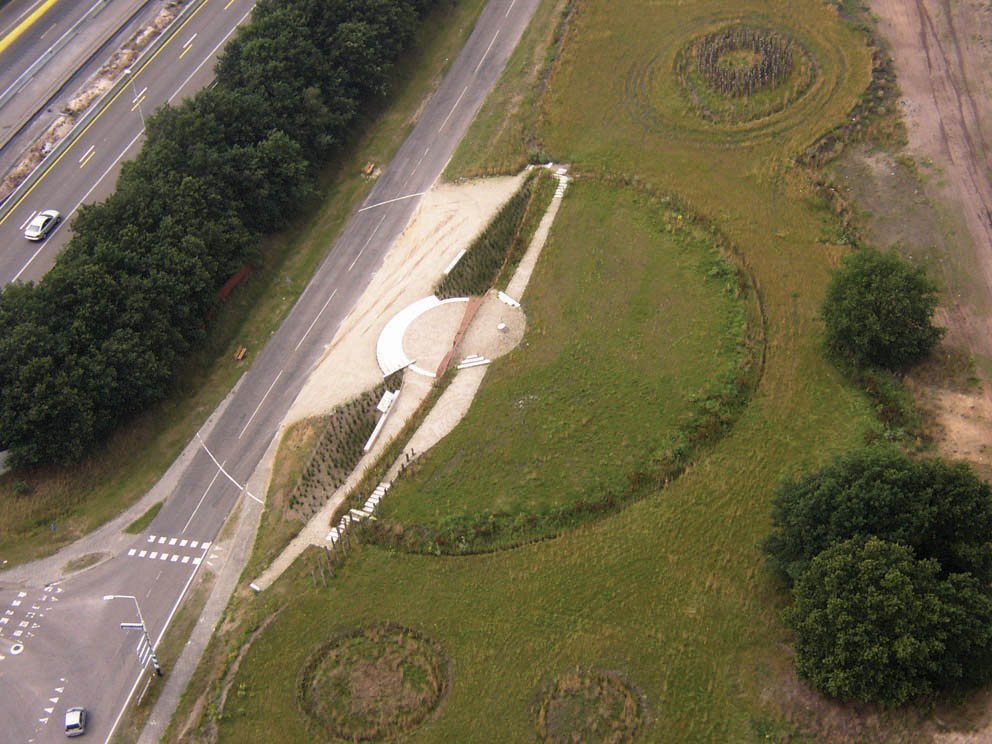
In the surrounding urnfield, cremated remains were placed in urns or in cloth. Some graves were flat burials without a mound. Two nearby burial mounds were encircled by rings of posts. Excavation revealed the remains of two young men, and the posts are considered likely to have served a ritual purpose. One of the mounds also had an oval ditch. Reconstructions of the post-ring mounds stand west of Vorstengraf Oss; their original locations lie farther south, beneath the motorway.
Post avenue and other features
A partial reconstruction of an avenue’s double row of substantial posts marks a line that led toward the main mound. Nearby, some graves with ring-shaped ditches and some flat graves have also been reconstructed. North of the mound, an axe made of bronze and dating to the sixteenth century BC was found in wet ground. It is thought to have been deliberately deposited. An earthwork found east of the burial ground may connect with another recorded south of Berghem in 1978.
The second princely grave at De Zevenbergen
Mound and pyre deposit
Mound 7 at De Zevenbergen is an early Iron Age burial mound about 40 metres across and 2 metres high. Fourteen badger-burrow entrances were recorded, and most of the tunnels ran beneath the mound. A pottery sherd from one tunnel came from a slant-necked urn, a funerary vessel with an angled neck, dated to about 800–600 BC.
Near the mound’s centre, large pieces of burnt wood lay with about 250 small bronze fragments from a pyre covered by the mound. Corrosion had concealed the metal from detectors. The deposit was lifted as a single block and took two years to excavate; X-ray examination revealed additional objects. The finds included 525 bronze clamps measuring 3–5 millimetres across and nine measuring 10 millimetres. Their outer surfaces were tin-coated, and they are thought to have been fittings for horse harness.
Urn and later burial
A layer of turf separated the pyre deposit from a slant-necked urn above it. The urn contained cremated bones from a man estimated to have been about 23–40 years old. The evidence from the burning suggests the bones belonged to one person. A separate grave pit in the mound held a collection of bones associated with the same thirteenth- or fourteenth-century burial horizon as graves at another mound in De Zevenbergen. The remains are thought to belong to a person who had been hanged. Finds from mound 7 were transferred to Museum Jan Cunen in Oss.
Restored mound and markers
Mound outline and reconstruction
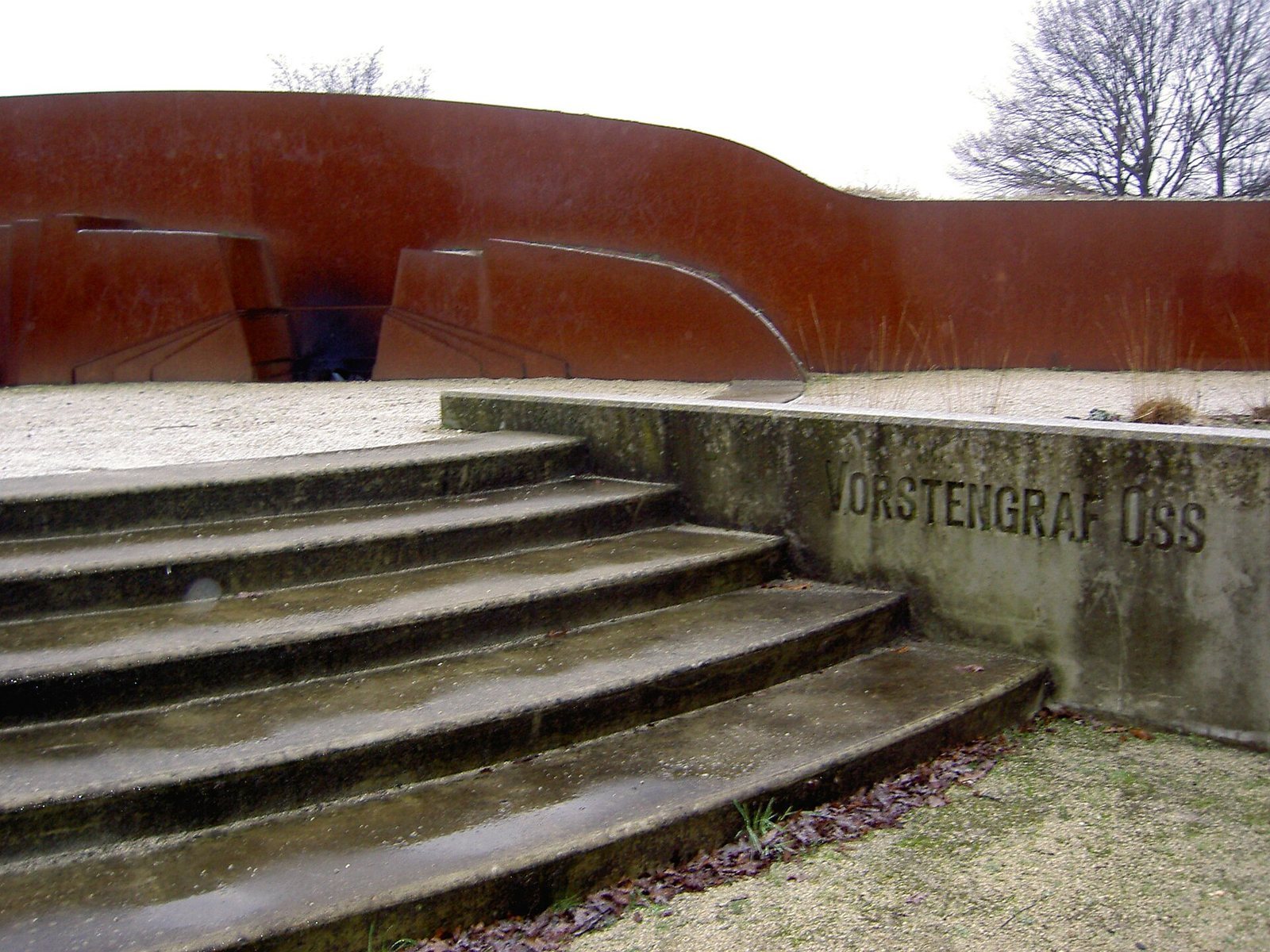
The restored burial ground is laid out at its original level and now stands about one metre above the modern landscape around it. Poles mark part of the main mound’s circumference, which Zwaardweg crosses. A steel plate on the other side of the road indicates the level of the original ground, while the upper step of a stair marks the circumference of the older mound. A cross-section of the mound incorporates replicas of a pottery vessel and the bronze situla with its bent sword.
Sword replica
A five-metre-high replica of the bent sword, set within an upright rim representing the situla, stands on a roundabout in front of Museum Jan Cunen in Oss.