Öresun Han: A Seljuk Caravanserai in Aksaray, Turkey
Site at a Glance
- Popularity
- Low
- Country
- Turkey
- Primary era
- Medieval
- Eras represented
- Medieval, Modern
- Civilizations
- Seljuk
- Site type
- Economic
- Remains
- Caravanserai
On this page7 sections
History
Öresun Han is a Seljuk caravanserai in the Bebek area of Aksaray Province, Turkey, generally dated to the reign of Kılıç Arslan II (1156–1192). The Seljuks were a dynasty whose rulers established states across parts of the Middle East and Anatolia. A caravanserai provided lodging and services for travelling caravans. Kılıç Arslan II ruled the Seljuk Sultanate of Rum, a medieval Turkic state in Anatolia. The han stood on the road between Konya and Kayseri, on the Aksaray–Nevşehir route, part of the Silk Road network linking East Asia with Central and western Asia and Europe.
Dating and names
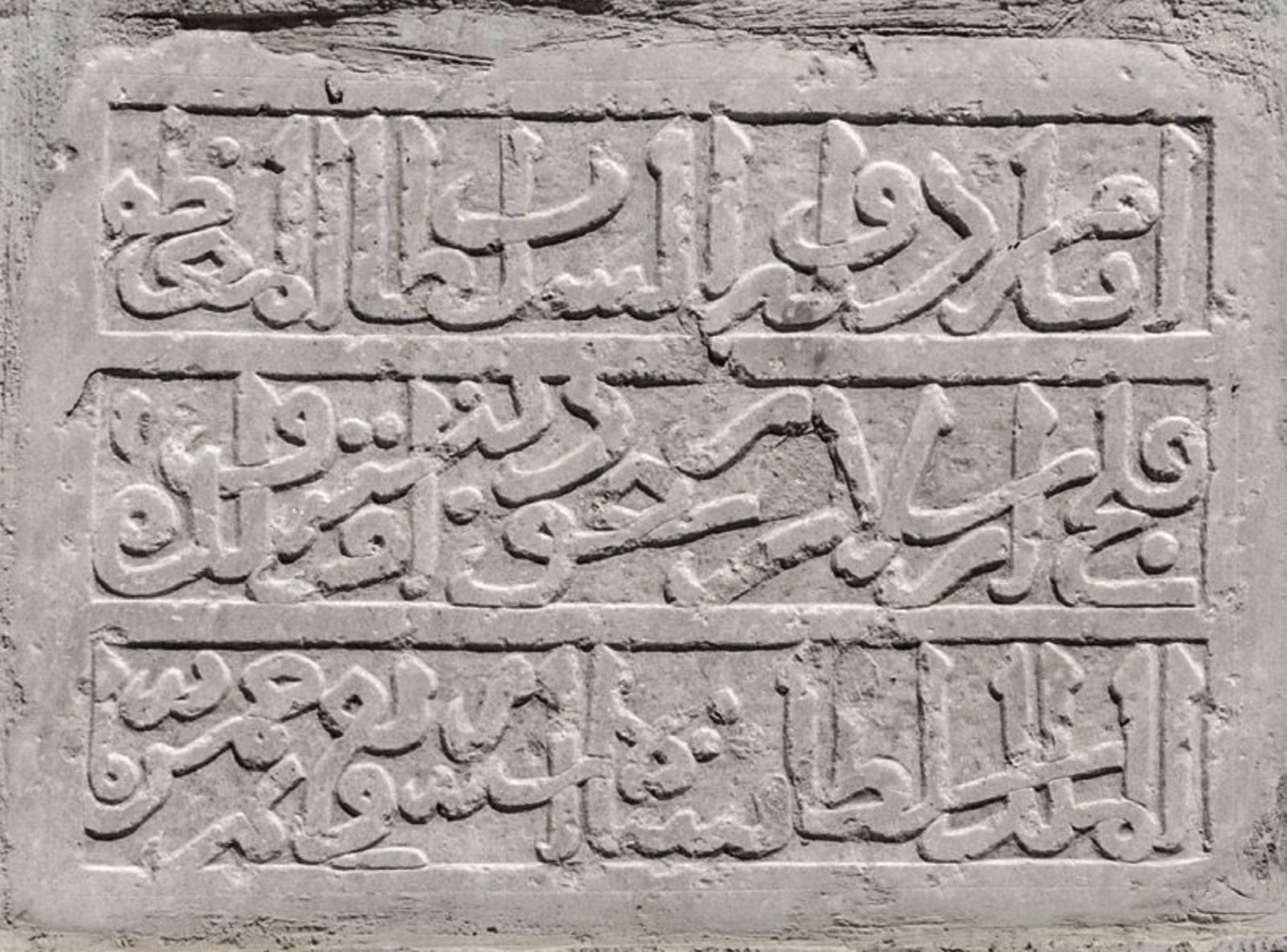
The building was long assigned to the late 13th century. A marble inscription uncovered beneath rubble during restoration in 2007 has been interpreted as dating its construction to 1188 and naming Malik Shah, a son of Kılıç Arslan II, as the patron who commissioned it. The inscription’s final numeral is unclear, however, and its lettering permits different readings. The han is generally dated to Kılıç Arslan II’s reign, while its builder and patron remain uncertain. It is also called Öresin Han and Tepesidelik Han. The latter means “han with a hole in its roof” and refers to the roof’s collapse. These names are thought to have come into use during the Ottoman period, the era of the empire that emerged in Anatolia.
Decline and restoration
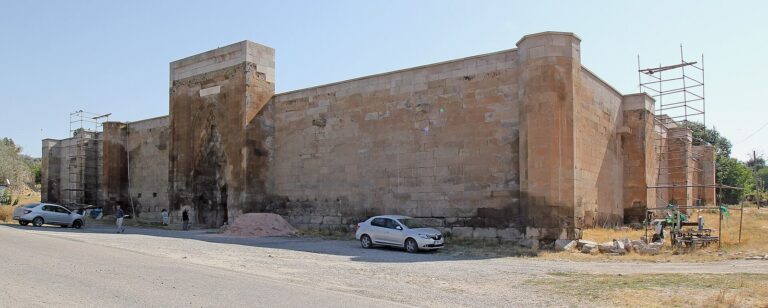
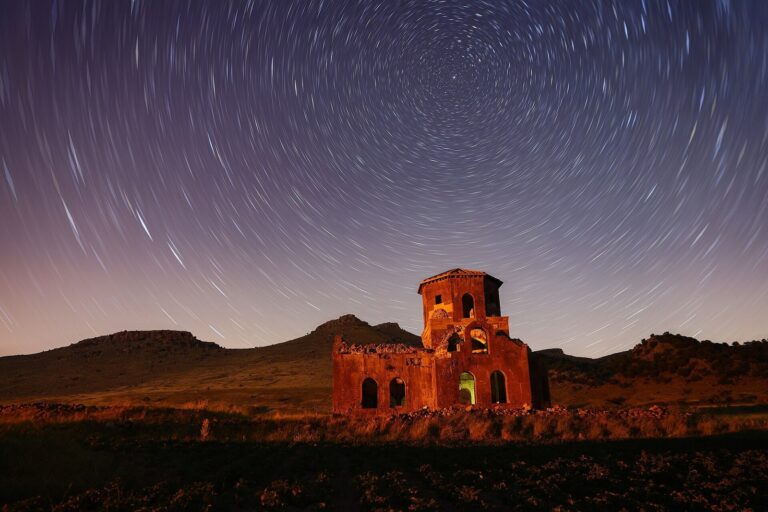
After Seljuk rule ended, the han lost importance and gradually fell into disrepair. By the 20th century, deterioration had left sections of exterior arches and walls, while the portal and dome had been destroyed. The Konya Regional Directorate undertook renovation between 2007 and 2010. The building now belongs to Turkey’s Directorate General of Foundations, a public institution responsible for foundation properties and endowments.
Remains
Plan and interior
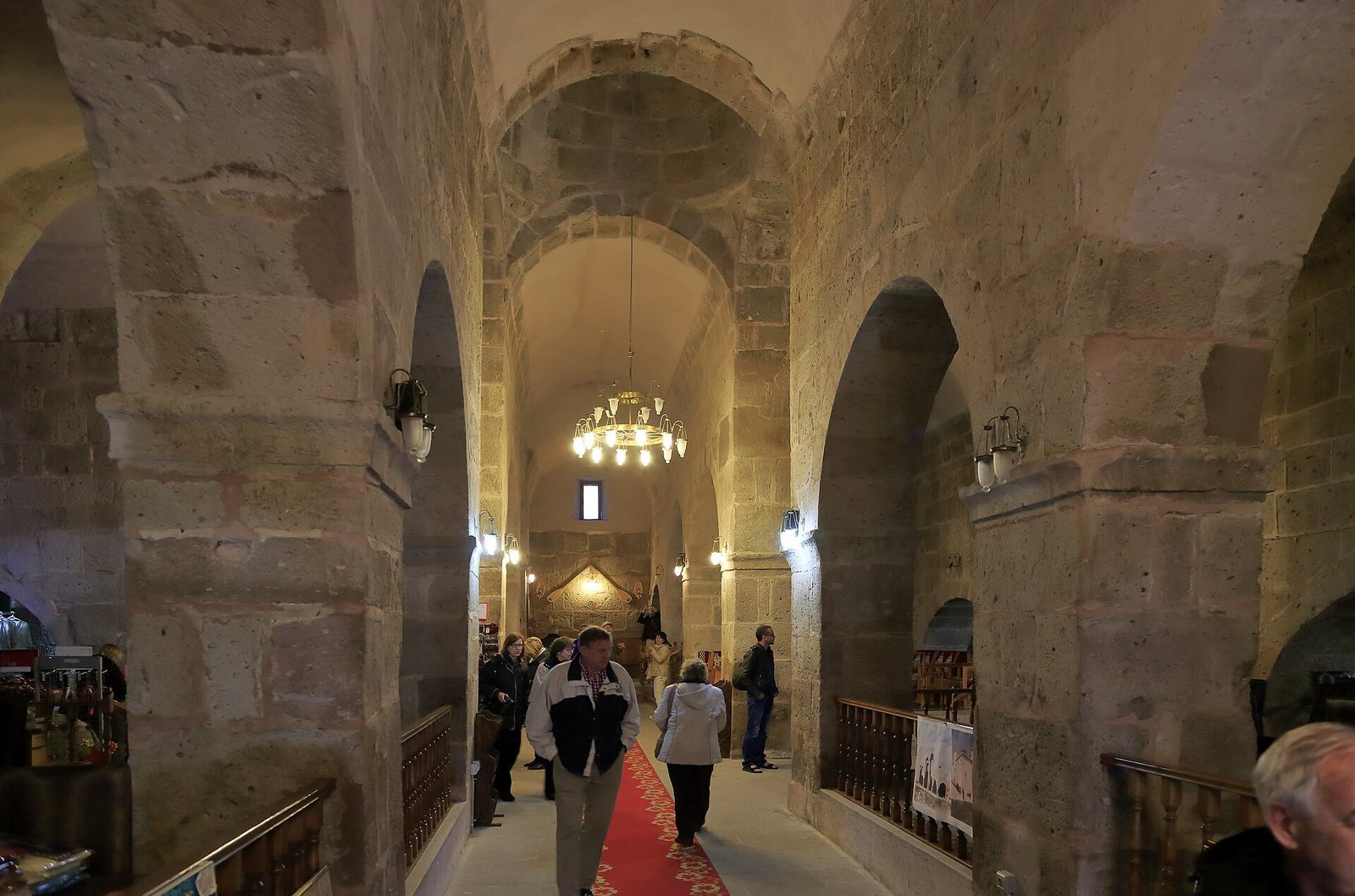
The han occupies a roofed rectangular plan about 25 metres wide and 34 metres long. Its main aisle runs from the entrance towards the far end of the northeast wall and rises about two metres above the side aisles. An east–west aisle crosses it at the centre, beneath a dome. The side aisles can be entered from all sides. In the five-part arrangement, some sections at the north and south ends stop short of the walls, while others run parallel to them. The two long crossing sections divide the central interior into four apparent areas. Groups of three supports separate the compartments, and 24 columns carry barrel vaults, continuous tunnel-shaped ceilings. A similar arrangement occurs at Çay Han in Çay.
Walls, arches, and openings
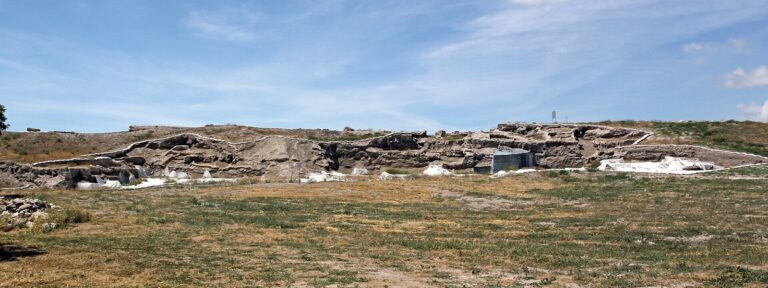
The walls have two outer layers around a core of mortar and rubble, and are thinner than those of other Seljuk caravanserais. Dressed stone and reused blocks were also used in the construction. The arches are rounded, rather than the slightly pointed form usual in Seljuk caravanserais; their shape has been linked to stone reused from a nearby Byzantine building. The Byzantine Empire was the eastern continuation of the Roman Empire, centred on Constantinople, and a Byzantine fortification stood at Kalebalta north of the han. Reused stones at the rear include incised rosette crosses from churches destroyed between the 5th and 7th centuries. Five narrow window slits in the middle of the north wall, and two each on the east and west sides, bring daylight inside. The original dome probably also had windows.
Entrance area and restoration
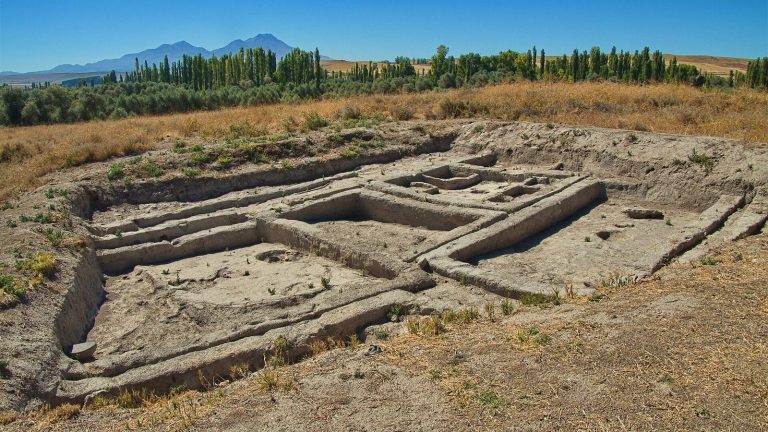
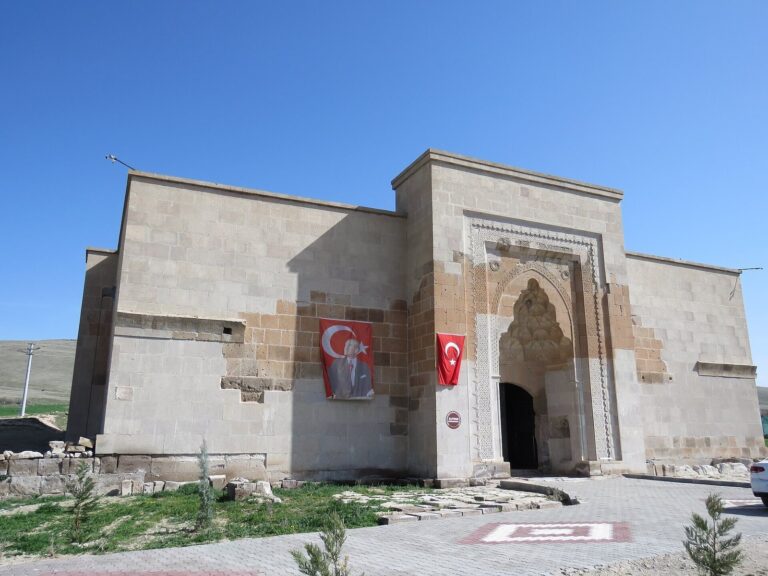
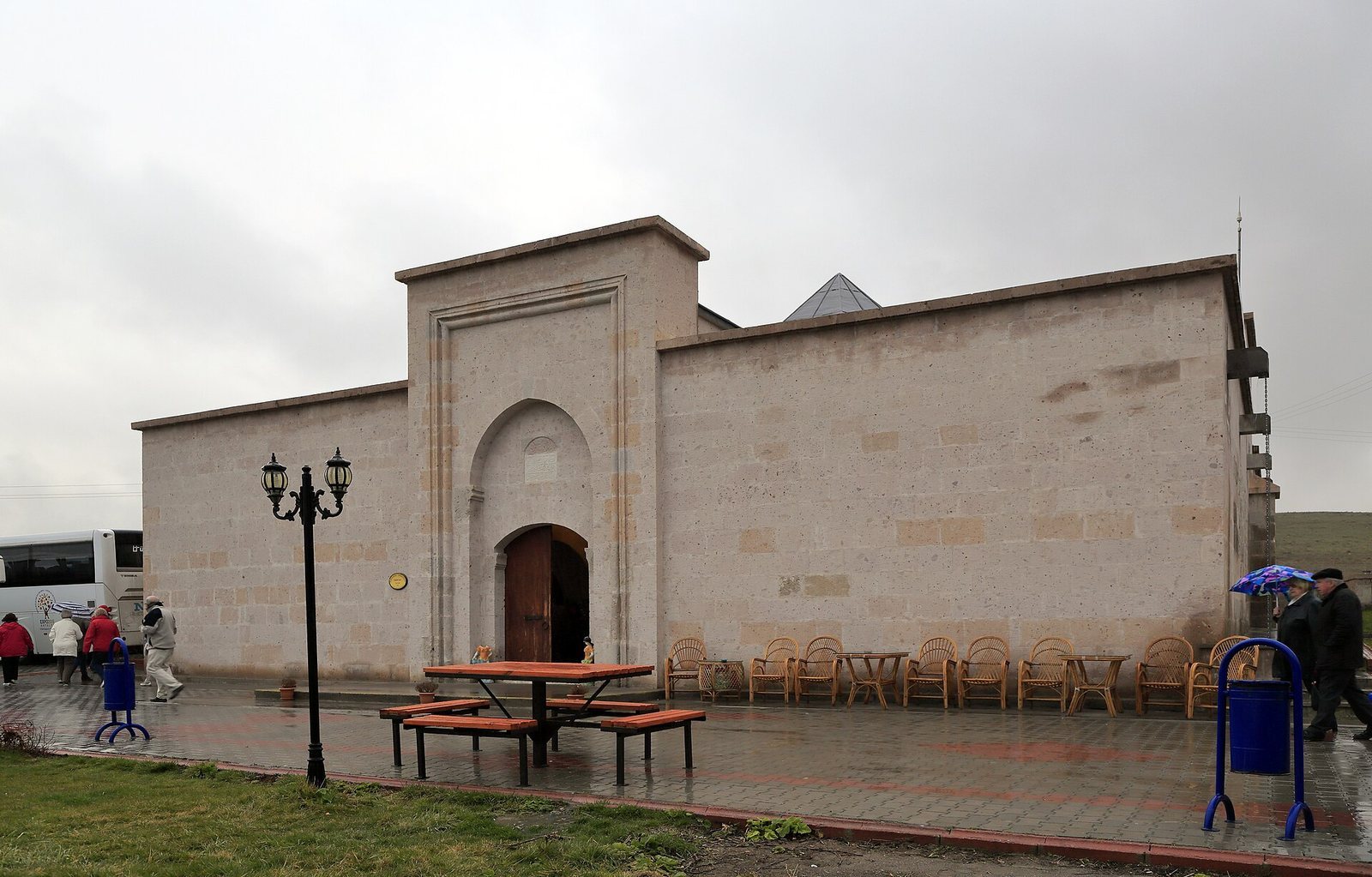
The original portal is a complete reconstruction, and the recovered marble inscription is now set above it. The restoration renewed and thickened the exterior walls and covered them with sand-lime stone. It also raised the façades, giving the building the outward appearance of having an entrance on every side. A pointed, pyramid-like octagonal dome replaced the round dome. In front of the entrance, remains of a well and traces of huts add to the evidence for activity around the han.