Bedsted Church: A Medieval Lutheran Parish Church in Denmark
Site at a Glance
- Popularity
- Very Low
- Country
- Denmark
- Primary era
- Medieval
- Eras represented
- Medieval, Early Modern, Modern
- Civilizations
- Danish
- Site type
- Religious
- Remains
- Church
On this page16 sections
History
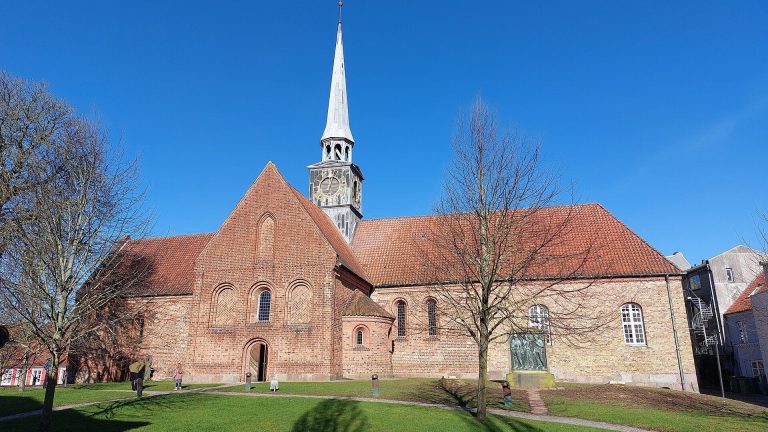
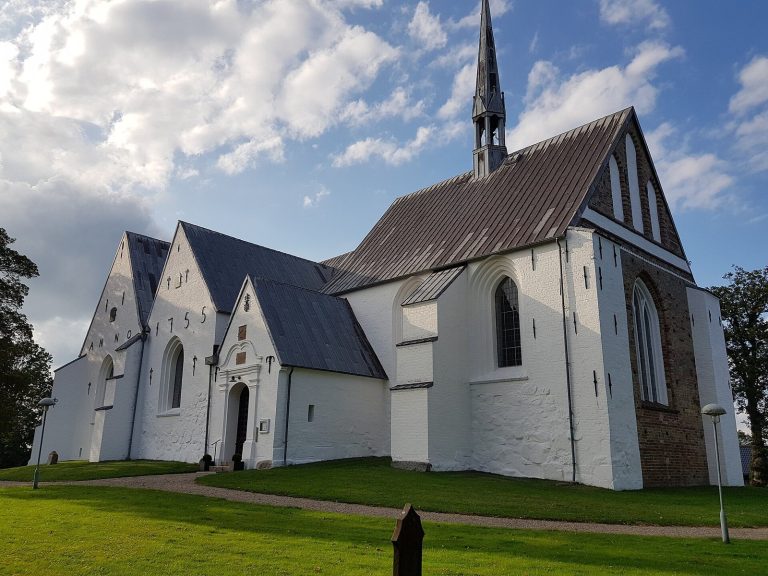
Bedsted Church is a Lutheran parish church on the southern edge of Bedsted, Denmark. Built around 1200, it has parts dating to the late 12th century and began as a Romanesque church, a style marked by substantial forms and rounded shapes. It serves Arndrup, Bedsted, Gravlund, Mårbæk, and Øster Terp. The church belongs to the Danish People’s Church, Denmark’s established Lutheran church, and is associated with Bedsted Parish, the Bedsted pastoral district, Tønder deanery, and Ribe Diocese. Its original dedication was to Mary, the mother of Jesus, and Saint Godehard, a medieval bishop.
Medieval construction and expansion
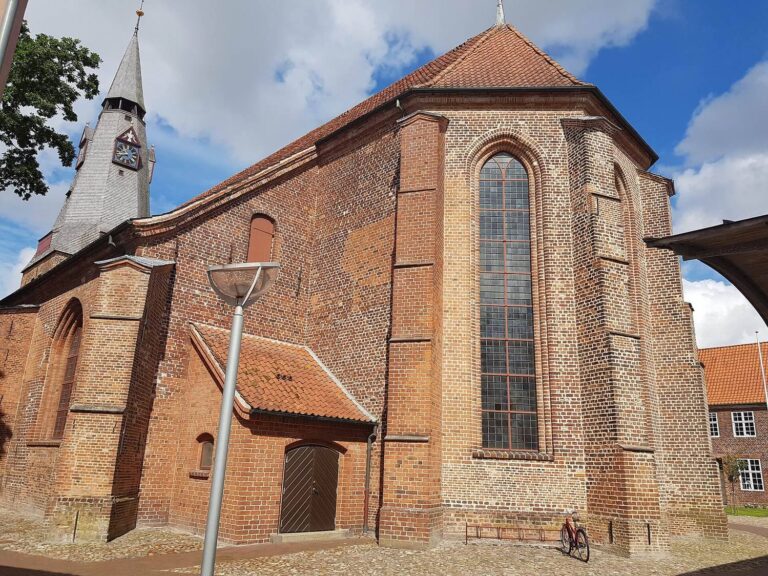
As the church became too small, its nave was extended westward around 1300 in a late Romanesque style. A tower and portal were added in the 15th century in the Gothic style, known for pointed forms and vertical emphasis. In the late 16th century, a final extension and a Renaissance stairwell on the tower’s north side added work in a style drawing on classical forms.
Renovation and continuity
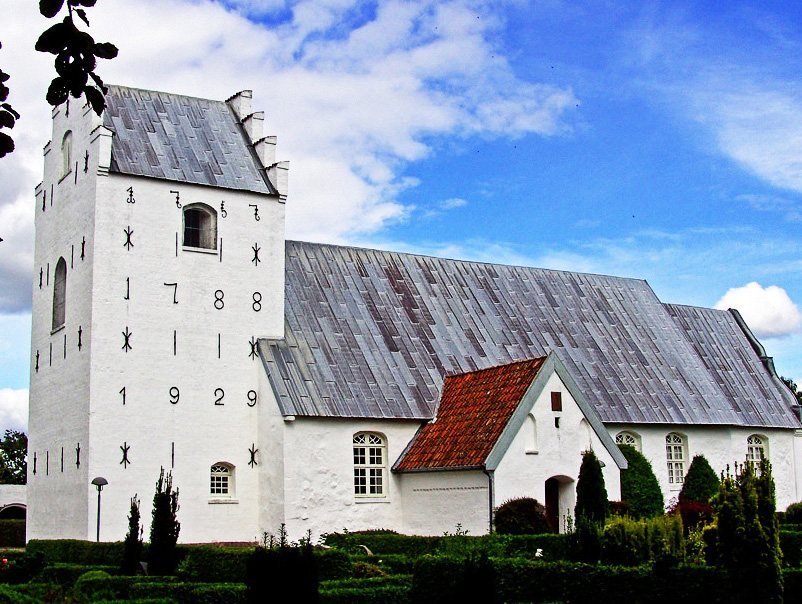
Renovations in 1757, 1788, and 1929 are marked by dates on the tower. The church escaped damage from warfare and fire over the centuries, helping its old interior survive in well-preserved condition. Restoration in 1941–1942 included efforts to recover the interior’s original colors, and further restoration took place in 1980.
Remains
Church fabric
The church’s surviving fabric brings together its Romanesque choir and eastern nave, the westward enlargement of the nave, and later additions. The choir and eastern part of the nave date to the late 12th century. The nave’s extension around 1300 enlarged the building; the 15th-century tower and portal and the north-side stairwell added in the late 16th century reflect later building phases.
Furnishings and fittings
Altar and altarpiece
Cavities in the medieval altar were found during restoration in 1941. They may once have held a container for relics of Mary and Saint Godehard during the church’s Catholic period, but this use is uncertain. The altarpiece, made around 1525, has a central carved wooden scene of the Crucifixion. Its two doors show the twelve apostles, the early followers of Jesus.
Side altar
A side altar in the northeastern part of the nave holds a late 15th-century statue of Mary crowned and carrying the infant Jesus.
Crucifixes
Three crucifixes remain in the church. A Crucifixion group dated to 1475 hangs on the north wall. Its corpus, the figure of Christ attached to the cross, is 135 cm high, while the figures of Mary and John the Apostle are each 84 cm high. A similar crucifix above the choir arch has a 59 cm-high corpus. An early 15th-century crucifix, with a 69 cm-high corpus, hangs above the blocked northern entrance. Claus Michelsen of Øster Terp donated this work.
Pulpit
The Renaissance pulpit dates to 1660 and carries reliefs of five events in Christ’s life: the Annunciation, when Mary was told she would bear Jesus; his baptism; the Crucifixion; the Resurrection; and the Ascension, his ascent to heaven after the Resurrection. Its sounding board, a canopy that helps direct the speaker’s voice, was made in 1737. It incorporates the four Evangelists, the traditional writers of the Gospels, and angel heads from an earlier sounding board.
Baptismal font
The Romanesque baptismal font is made of granite and is probably as old as the church.
Tower bell
The tower bell is 112 cm high and 110 cm in diameter. Cast in 1490, it is named Maria and has a double inscription in an older form of Dutch, interrupted by reliefs of saints. The inscription says that residents of Garyp had the bell cast, names Jettic as their priest and Rennert, Sibren, and Jouta as churchwardens, and identifies Herman as the caster. The bell formerly belonged to St Peter’s Church in Garyp, also rendered Garijp, but how it came to Bedsted is uncertain. It is among the oldest bells in South Jutland.
Organ
An organ dating from 1877–1878 was replaced in 2000. The present instrument has 15 stops and was made by Marcussen & Søn of Aabenraa.
Churchyard
Lundbye graves
The painter Johan Thomas Lundbye, associated with Denmark’s 19th-century Golden Age of artistic and cultural activity, was buried in the northern part of the churchyard. His mother, Cathrine Lundbye, was buried there as well.
First World War memorial
A monument erected in 1921 in the southwestern part of the churchyard commemorates 22 young men from the municipality who died in the First World War.