Nostra Signora del Soccorso: A Catholic Sanctuary in Pietra Ligure
Site at a Glance
- Popularity
- Low
- Country
- Italy
- Primary era
- Early Modern
- Eras represented
- Medieval, Early Modern, Modern
- Civilizations
- Genoese, Italian
- Site type
- Religious
- Remains
- Sanctuary
On this page13 sections
History
Nostra Signora del Soccorso is a Catholic sanctuary in Pietra Ligure, Italy, whose present church was begun in the sixteenth century and completed in the eighteenth. Its architecture is late Renaissance, a European cultural and artistic period, with later Ligurian Baroque additions, a regional form of Baroque design. The site’s history of worship reaches back to a Roman temple.
Ancient worship and the Marian chapel
A temple dedicated to Diana, the Roman goddess associated with hunting, woodland, and nature, stood in this area in the second century BC. It was beside a busy road leading toward Gaul and linked with Rome by the Via Iulia Augusta, a Roman road. In the second century AD, Saint Calimero, bishop of Milan, helped convert the temple to Christian worship. In AD 390, Diogene, bishop of Genoa, dedicated the church to the Holy Spirit and the Assumption, the Christian belief that Mary was taken into heaven.
The church probably became Pietra Ligure’s first baptismal parish church, a local centre for baptism and parish worship. By the fourteenth century, a small chapel stood in the Maremola marshes, containing a fresco of the Virgin and Child. After visions and miracles associated with the place, the community decided in 1548 to build a larger church opposite the chapel. By 1550, local people and seafarers were praying there to Mary, and miracles were attributed to her intercession. The church took the dedication of Our Lady of Succour, a title for Mary as a source of aid and protection.
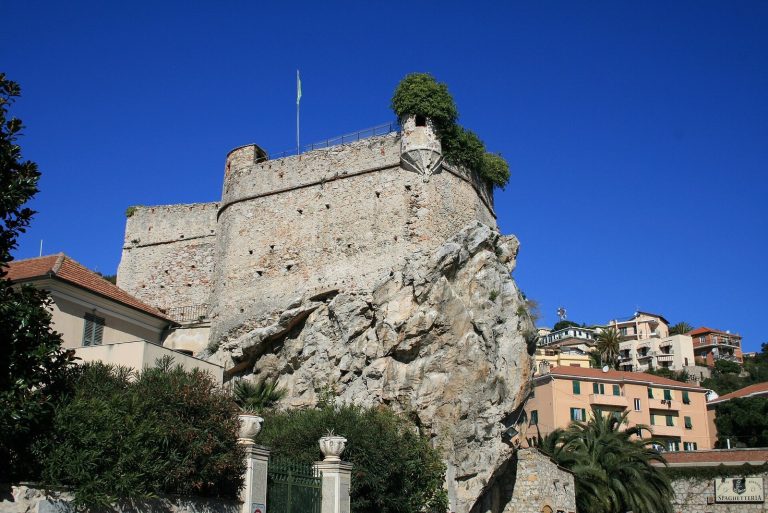
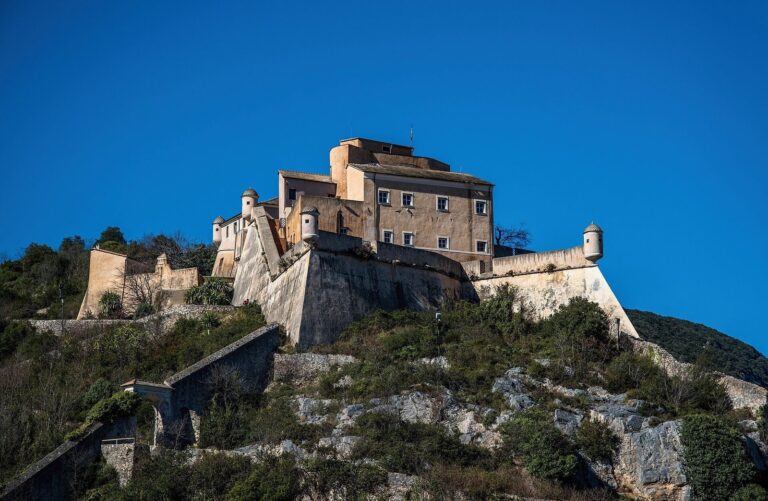
At around this time, the stronghold called Castrum Petræ, meaning “fortress of the rock,” was enlarged on a rocky site about 200 metres from the sea. It occupied the location of a Roman fortification that had given the town its name.
Building the sanctuary and convent
Work on the church began in the sixteenth century. A first-stone ceremony took place on 4 October 1606, and the sanctuary was consecrated that October. Construction continued into the eighteenth century. In 1607, notary Richiardo of Loano acted for Prince Gianandrea Doria and his wife, Giovanna Colonna, to purchase land for donation to the friars. The price was 200 ducatoni, silver coins used in Italy. The Accame brothers and their partner Barbena were commissioned to build a convent, and artists arrived to prepare frescoes.
Gianandrea Doria’s death in 1606 delayed the project. His heirs, Giovanni Doria, Carlo I del Carretto, and Andrea II Doria, did not provide the necessary payments, whether they could not or chose not to do so. Local devotion to Mary also extended to shipbuilding: at least 60 of the 500 ships built at Pietra Ligure through 1808 were dedicated to her.
Franciscan and parish history
In 1810, during the Napoleonic period, the friars were forced to leave the convent as church property was confiscated and the complex passed to the municipality. The Franciscans returned in 1818, after the death of a French military leader. In 1866, following the Savoy confiscation of ecclesiastical property, ownership passed to the municipality again.
The sanctuary is a Catholic place of worship following the Roman Rite, the principal liturgical tradition of the Catholic Church, and is administered by Franciscan friars, members of a Catholic religious order. It is the seat of the parish of the same name, within the Pietra Ligure pastoral area, a subdivision for parish organization, of the Diocese of Albenga-Imperia, a church jurisdiction overseen by a bishop. The square in front of the church honors Father Cristoforo Boccardo, appointed its first parish priest when it became the parish church for the surrounding district.
On 8 December 1969, the sanctuary’s name was changed to the Purification of Mary. On 8 October 1995, it returned to Nostra Signora del Soccorso, a name considered more closely tied to local history and to Mary’s role as helper of sailors, fishers, and boatbuilders. Later restoration returned the complex to its simple original style.
Remains
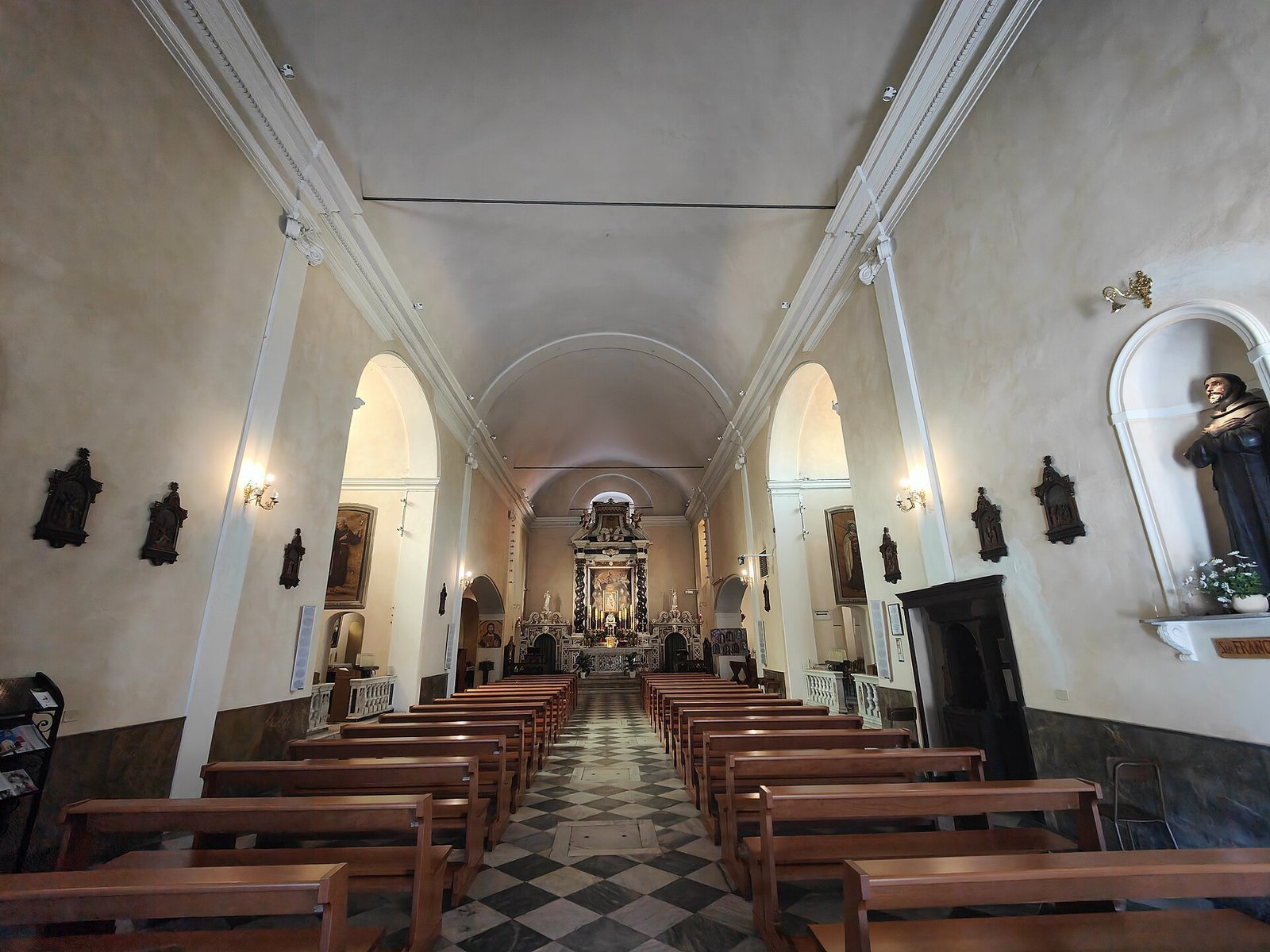
The complex centres on a single-nave church with a convent beside its entrance. Inside, the nave follows the Doric style, a classical architectural order marked by simple, sturdy forms; the sanctuary also includes an apse with a marble altar. The church and its adjoining structures preserve features added or altered over several centuries.
Church and interior
Nave, apse, and altar
The church has a single nave and an apse containing a marble altar. An altar made in 1614 was replaced by the present marble altar, which was ready in 1668.
Madonna fresco
The fresco of the Madonna and Child was painted on a wall in the earlier chapel. In 1608, that wall was detached and moved to the front of the new marble high altar.
Entrance plaque and façade
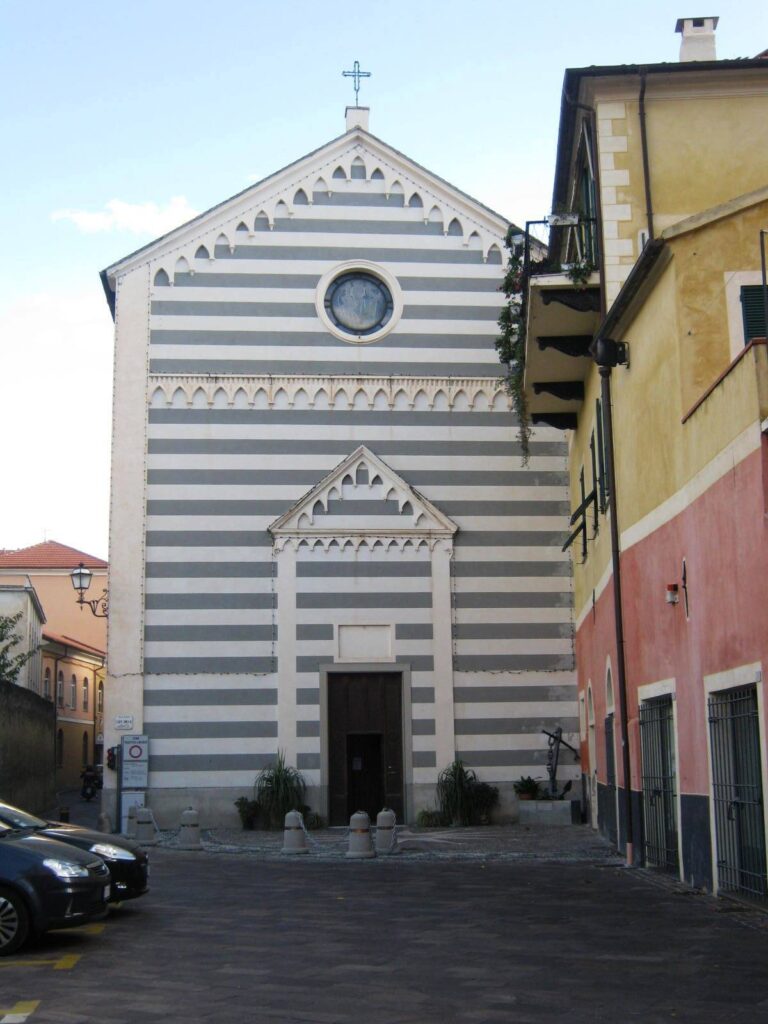
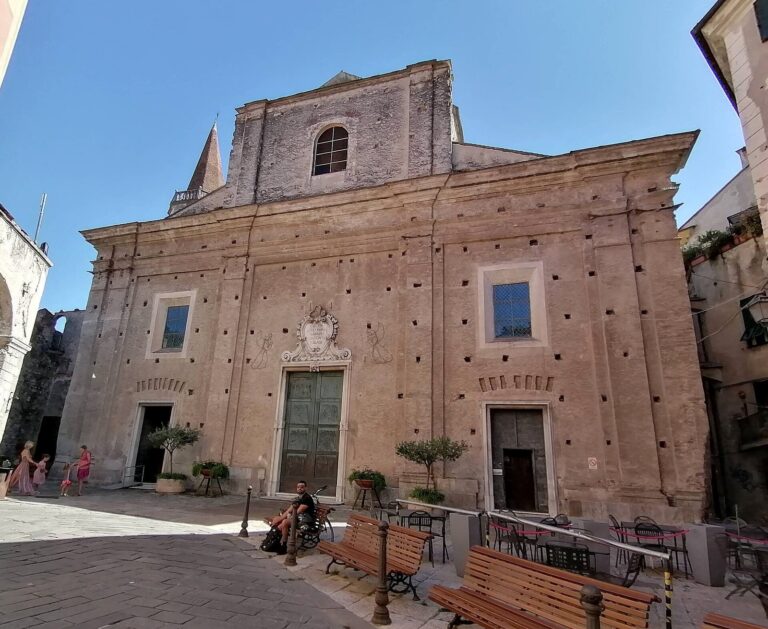
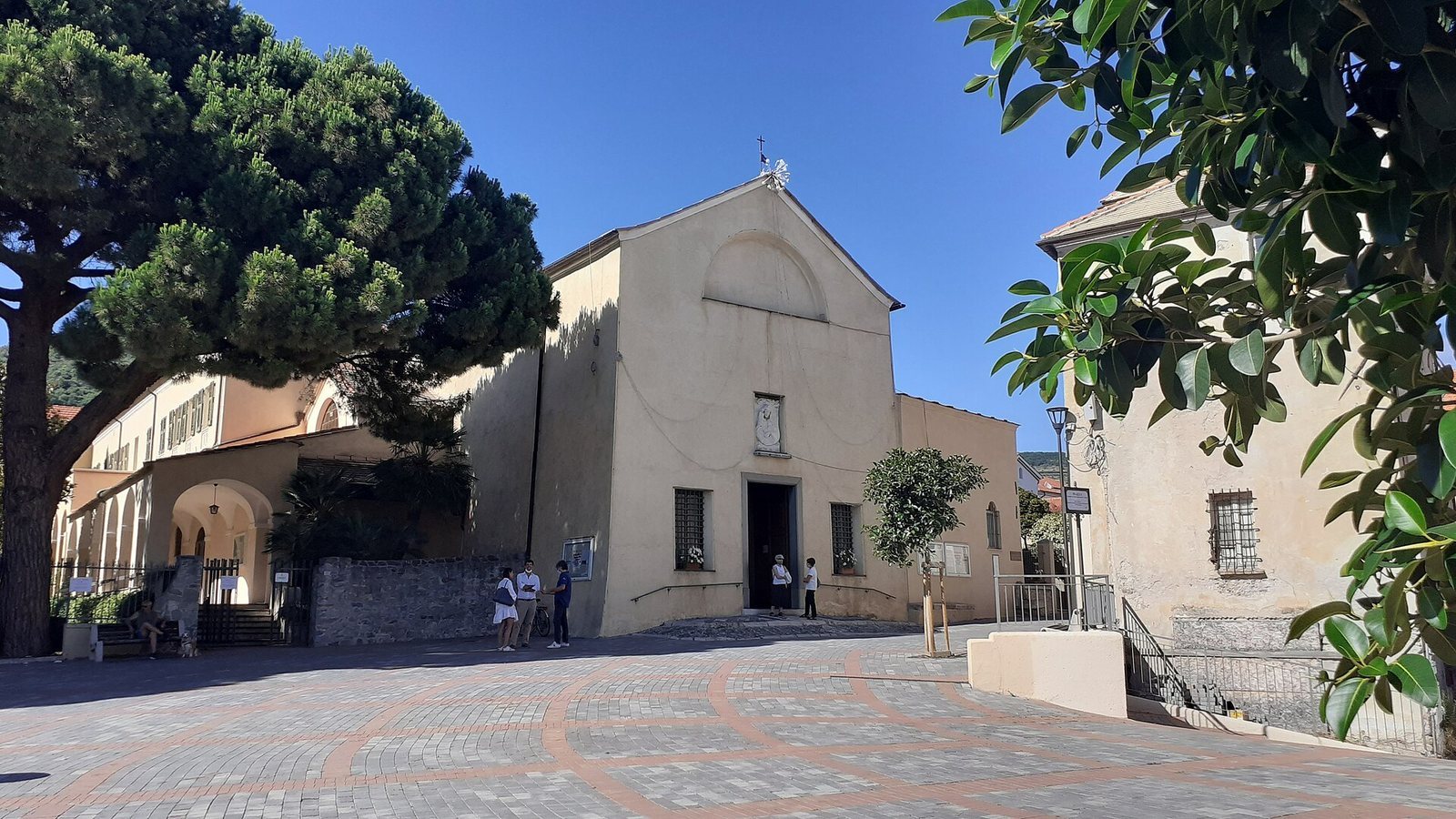
A marble plaque commemorating the Doria family stands at the entrance. It was moved from its original position and installed later. The church façade has undergone several alterations.
Chapel of Lourdes
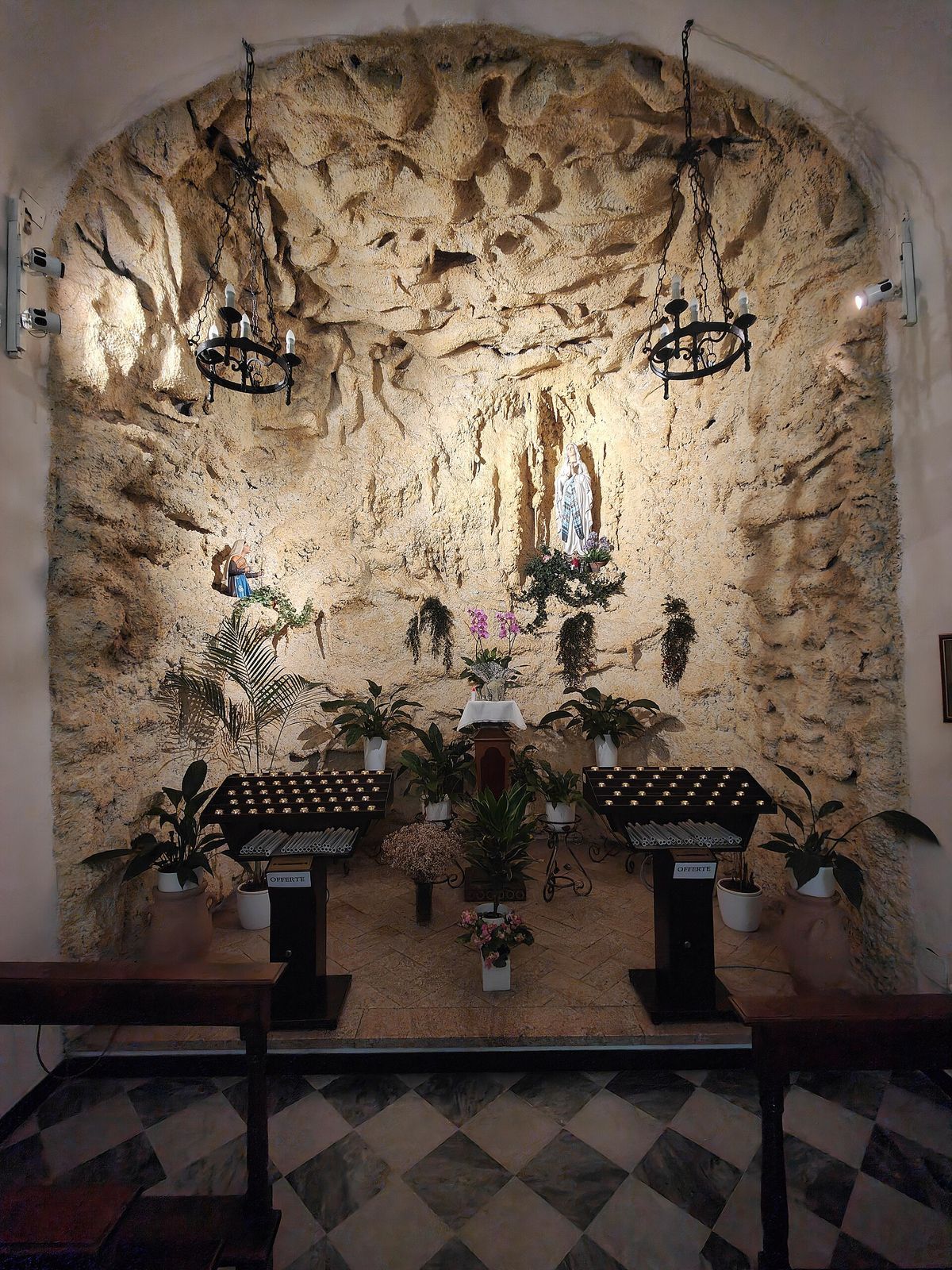
Formed inside the church in 1908, the Chapel of Lourdes is on a raised level to the right after the entrance. It contains a reproduction of the Lourdes grotto and a marble plaque naming its benefactors, Angelo Gaggero and Giuseppina Porro.
Bell tower and convent
Bell tower
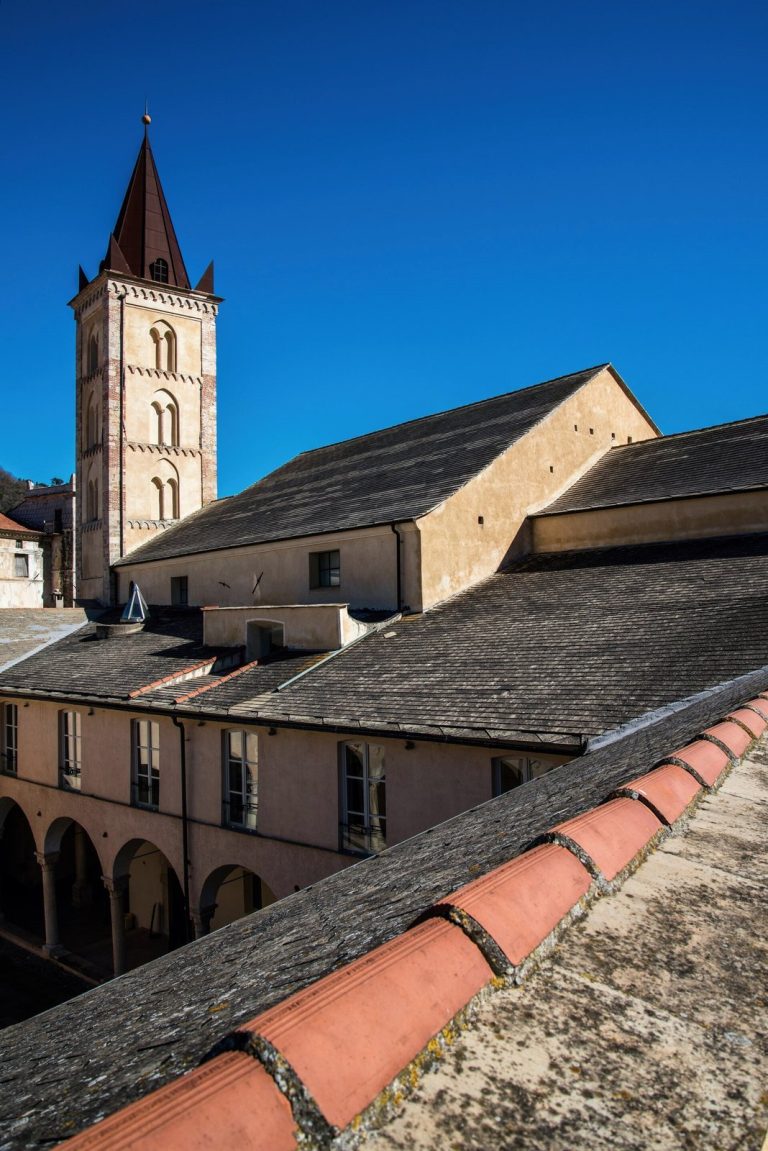
The Baroque bell tower was built in 1797. It contains a seven-bell peal specified as C4, the C note in the fourth octave, and described as markedly out of tune.
Convent
The three-storey convent, built in 1889, stands to the right of the church entrance. In 1963, its left wing, on the left when facing the façade, was transferred to municipal use as the Santo Spirito protected residence for older people, whether self-sufficient or not. The residence was run by the municipality with the collaboration of ASL2, a local public health authority.