Church of St. Martin in Sikenička: A Roman Catholic Parish Church
Site at a Glance
- Popularity
- Very Low
- Country
- Slovakia
- Primary era
- Medieval
- Eras represented
- Medieval, Early Modern, Modern
- Civilizations
- Austria-Hungary, Habsburg, Hungarian
- Site type
- Religious
- Remains
- Church
On this page10 sections
History
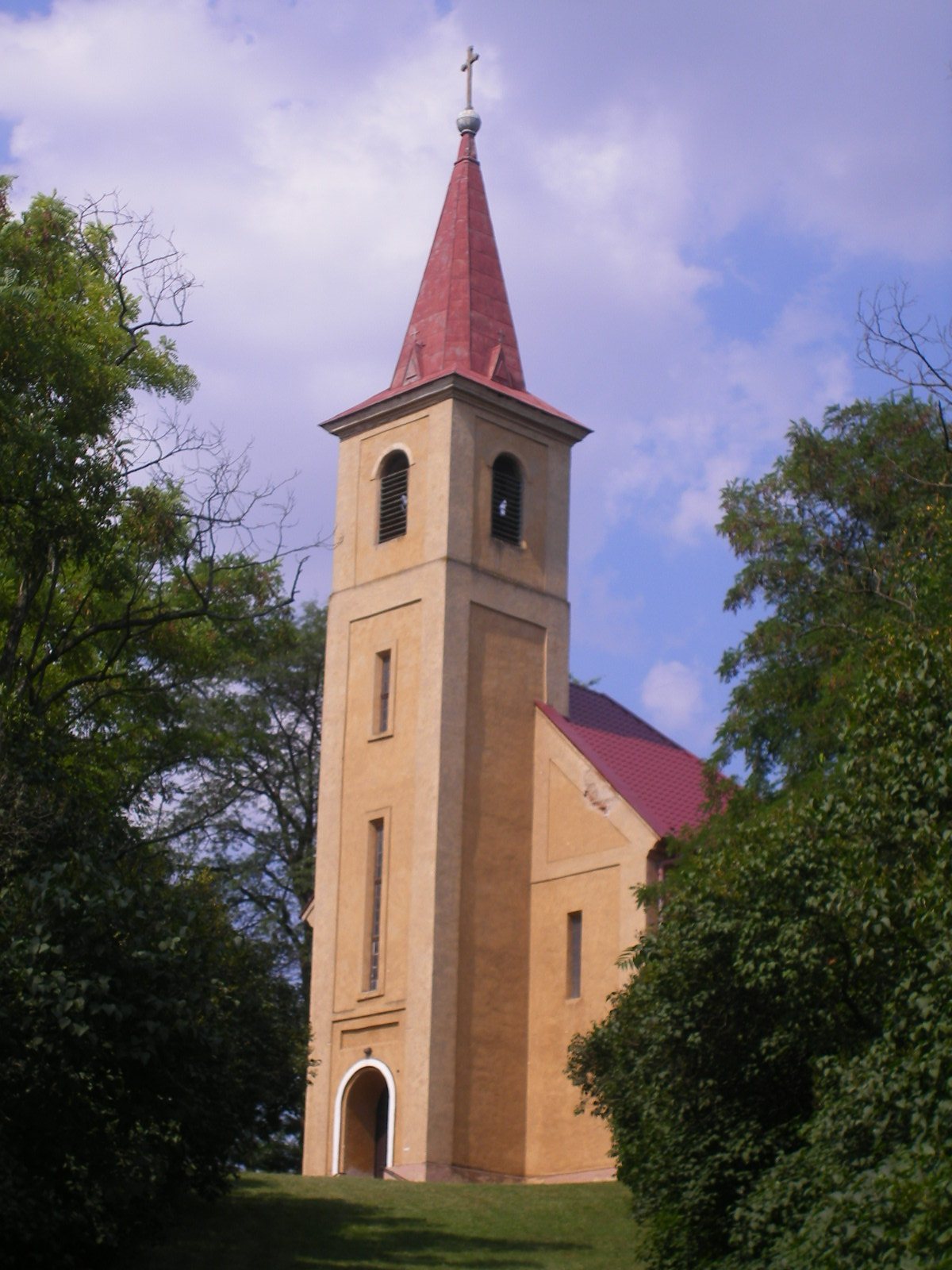
The Church of St. Martin in Sikenička is a Roman Catholic parish church in Slovakia, dedicated to St. Martin of Tours, a fourth-century bishop and Christian saint. Its origins lie in a 13th-century Romanesque rotunda, a circular church built in a medieval European architectural style. The parish belongs to the Štúrovo deanery, a grouping of parishes, within the Diocese of Nitra.
Medieval origins
A separate bell tower stood beside the rotunda. The church’s dedication to St. Martin is first mentioned in a written record from 1447.
Rebuilding and later changes
The church was rebuilt in the 18th century. In 1887, its nave, the main body of the church, was extended and a tower was added. In 1948, builder G. Kiss of Nitra modernized the building to his design. A further repair followed in 1993.
Remains
Architecture and furnishings
Plan and surviving masonry
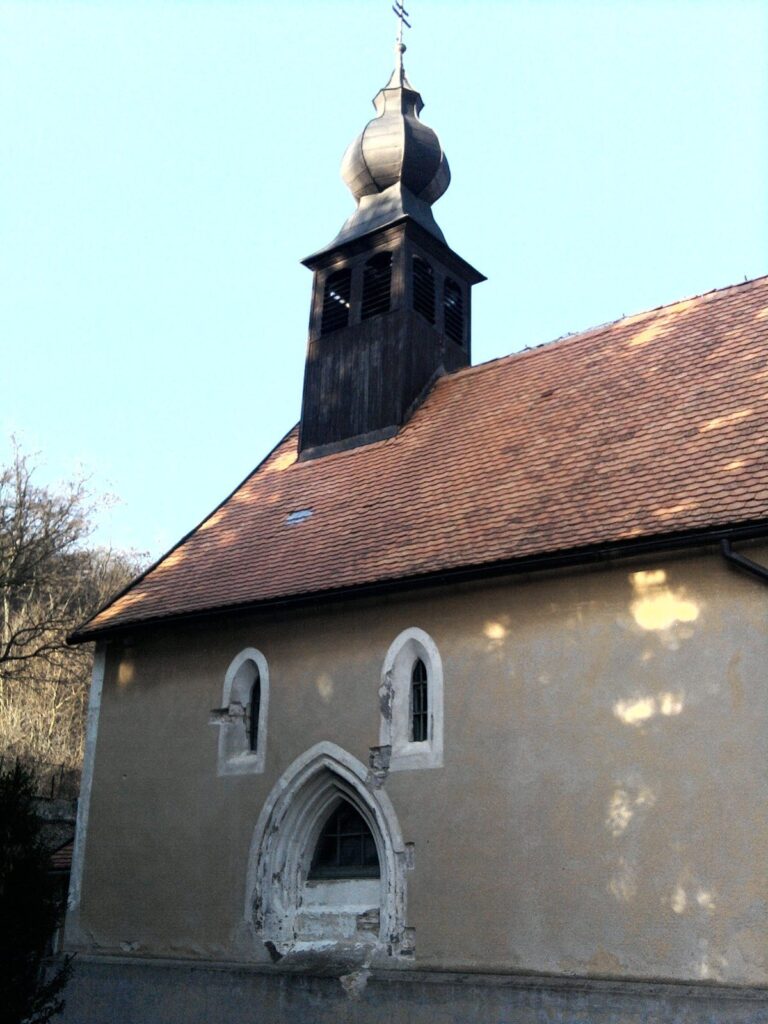
The church is a single-nave masonry building, with a semicircular end around the altar and a sacristy, a room for religious vessels and vestments, attached to it. The older part of the nave is narrower than the section added in 1887. Masonry from the Romanesque phase survives in the nave and apse, the projecting rounded end of a church, except on the west side.
Exterior and tower
The plain façades are marked by windows. Shallow vertical bands frame the west façade and the square tower, which has a pyramidal roof and projects from the west end. The tower’s bell level holds three bronze bells.
Chancel, nave, and gallery
The chancel, the area around the altar, is built from large stone blocks and ends in a semicircular conch, or half-dome. The nave has a flat ceiling, and a gallery stands above the entrance at the west end. Beneath the gallery is a Lourdes grotto, a devotional feature recalling the site at Lourdes in France and devotion to Mary, dating from the 1970s.
Altar and pulpit
The main altar bore a painting of St. Nicholas, an early Christian bishop and saint, dating to the mid-18th century. The Pálffy family, a prominent noble family in the historic Kingdom of Hungary, donated it. A pulpit from the second half of the 18th century has gilded reliefs of two evangelists, figures associated with the Gospels, on the low railing around its platform.
Bells
The oldest of the three bronze bells is a small bell cast in 1877 by Ferenc Walszer. Richard Herold of Chomutov cast a death bell dedicated to St. Anthony in 1924. The largest bell, dedicated to the Virgin Mary, was cast in 1939 by László Szlezák of Budapest.