Pech d’Arsou Dolmen: A Prehistoric Tomb in France
Site at a Glance
- Popularity
- Very Low
- Country
- France
- Primary era
- Stone Age
- Eras represented
- Stone Age
- Civilizations
- Unclassified
- Site type
- Burial
- Remains
- Tomb
On this page7 sections
History
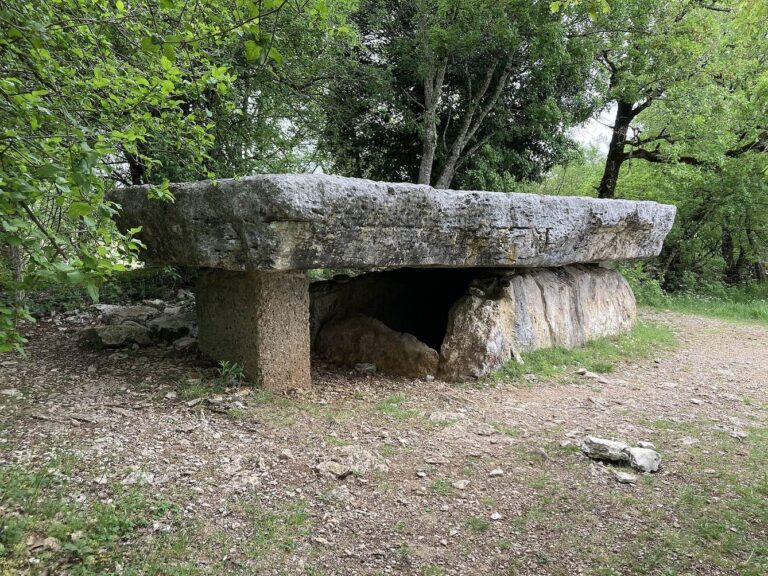
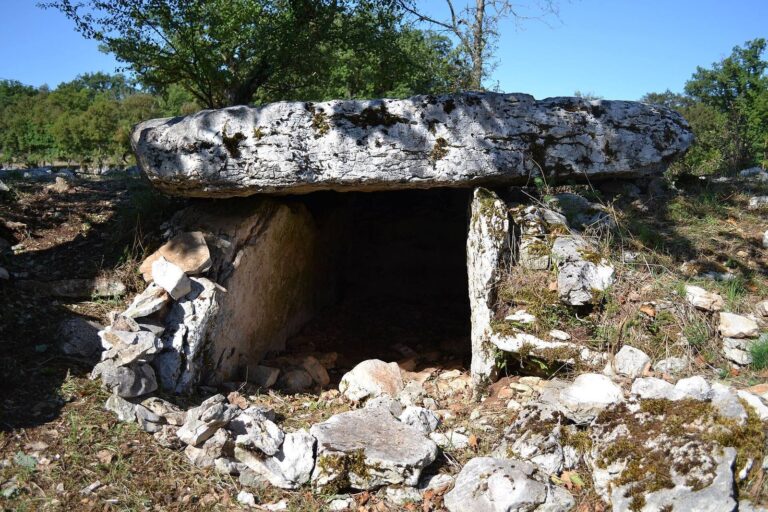
The Pech d’Arsou dolmen is a prehistoric megalithic tomb on a high point in the commune of Corn, France. It was probably erected no later than the Chalcolithic, or Copper Age, the period between the Neolithic and Bronze Age, and served as a burial place over an extended period.
Repeated burial
Human remains suggest that about 40 people were buried in the chamber, and more than 1,100 human teeth were recovered. At an undetermined time, bones were deliberately gathered roughly into one corner, apparently to make room for further burials. Their rearrangement points to intentional clearing of the chamber rather than accidental displacement.
Excavation
French archaeologist and prehistorian Jean Clottes led an excavation at the dolmen in 1963. The investigation also revealed an intact skeleton buried directly in the mound, apparently in a hurried burial made long after the tomb was built.
Remains
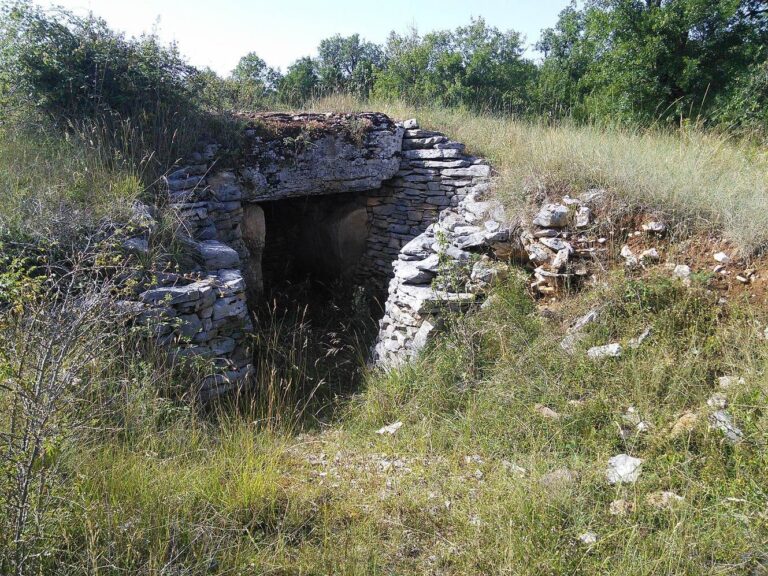
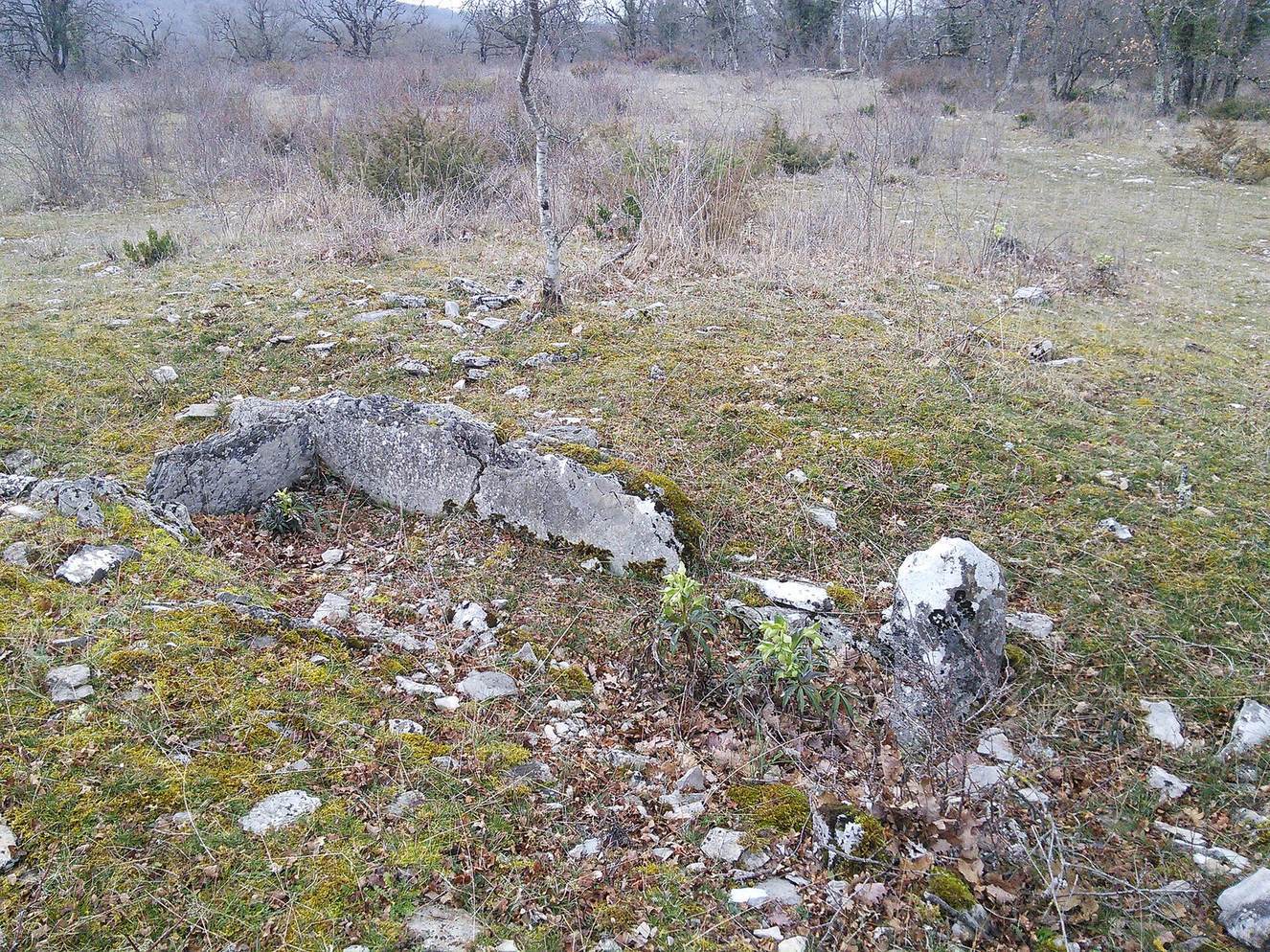
The small dolmen has a rectangular burial chamber and a vestibule, or entrance passage, within a circular mound. Its axis is oriented 57 degrees clockwise from north. The mound measures 14 metres across and reaches 0.90 metres in height. The capstone has been lost, and erosion on the upper surfaces of the standing stones indicates that this happened long ago.
Chamber
Two upright stones of similar size form the sides of the chamber, with an end slab still in place. Their bases sit in a shallow groove and are supported by flat stones. Before excavation, the south-side stone and end slab leaned slightly inward. Carefully laid paving evens the chamber floor. The long human bones that remained nearly intact, including thigh and shin bones, were piled in the northwest corner.
Entrance and standing stone
A passage 0.80 metres wide leads to the chamber. Its carefully fitted dry-stone side walls, built without mortar, measure 0.80 by 0.20 by 0.70 metres, and the passage runs at a slight angle to the chamber. A threshold made of flat-laid stones stands 0.30 metres high. Large blocks found in the passage before excavation may have fallen from a corbelled roof, formed by stones projecting inward, or from a blocking wall; their origin is uncertain. An oval standing stone without figurative decoration, measuring 1.05 by 0.12 by 0.25 metres, leaned against a passage wall. Though deeply set and braced at its base by a large flat stone, it projected above the mound. A nearly intact skull vault rested on the supporting stone. The passage floor was less carefully finished than the chamber paving.
Burials and objects
The intact skeleton found in the mound lay 0.25 metres below its surface, perpendicular to the dolmen’s axis. A cattle rib in the chamber’s centre was aligned with the tomb and may have been an offering. Other animal bones belonged to small creatures, including rodents and lizards, and were unrelated to the human burials; they may have come from animals sheltering inside. Grave goods included 324 ring-shaped jet beads, six calcite beads, bone beads, pendants made from a bovine molar and a pig’s canine tooth, a bone awl, and tiny pottery fragments that could not be identified.