Orkesta Church: A Medieval Parish Church in Vallentuna, Sweden
Site at a Glance
- Popularity
- Low
- Country
- Sweden
- Primary era
- Medieval
- Eras represented
- Medieval, Early Modern, Modern
- Civilizations
- Swedish
- Site type
- Religious
- Remains
- Church
On this page14 sections
History
Medieval foundation and expansion
Orkesta Church is a medieval parish church in Vallentuna, Sweden, within the Church of Sweden’s Diocese of Stockholm. It was consecrated in the twelfth century and underwent major enlargement and interior changes during the Middle Ages. In the fifteenth century, a sacristy, a room for preparing and storing items for worship, and a porch were added, and the nave was extended westward. Brick vaults replaced the earlier flat wooden ceiling, and wall paintings were added around 1460.
Eighteenth- and nineteenth-century alterations
A round window was opened in the apse in 1750. A major restoration and refurnishing followed in 1752–1753, when the altar, pulpit, and gallery were replaced. Several vault paintings were whitewashed. The altar-pulpit, a combined altar and pulpit, along with the pews and gallery, dates from this work. In 1817, the windows were enlarged to their present size. The shingle roof was replaced with sheet metal in 1880.
Twentieth-century restoration
Architect Otilius Österberg directed a restoration in 1910. Conservator Sven Dalén led an interior renovation in 1942, removing soot, repainting wooden furnishings, and replacing the stoves with electric heating. An exterior restoration took place in 1975–1977. A memorial grove was established in the cemetery west of the church in 1994.
Remains
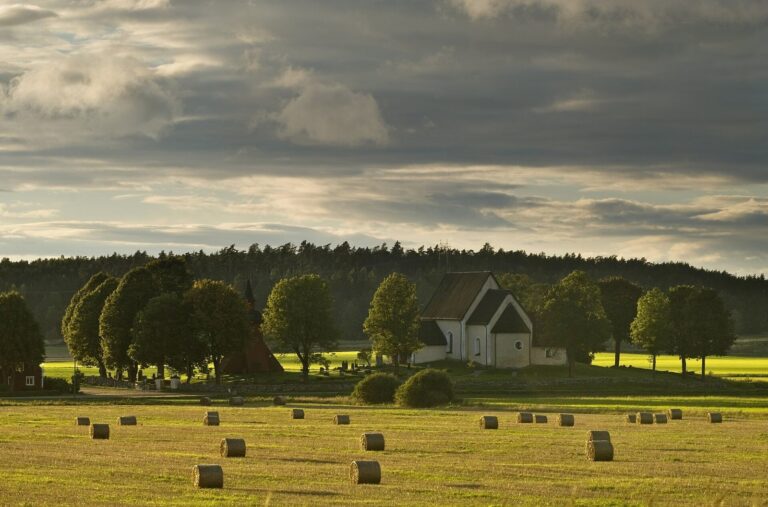
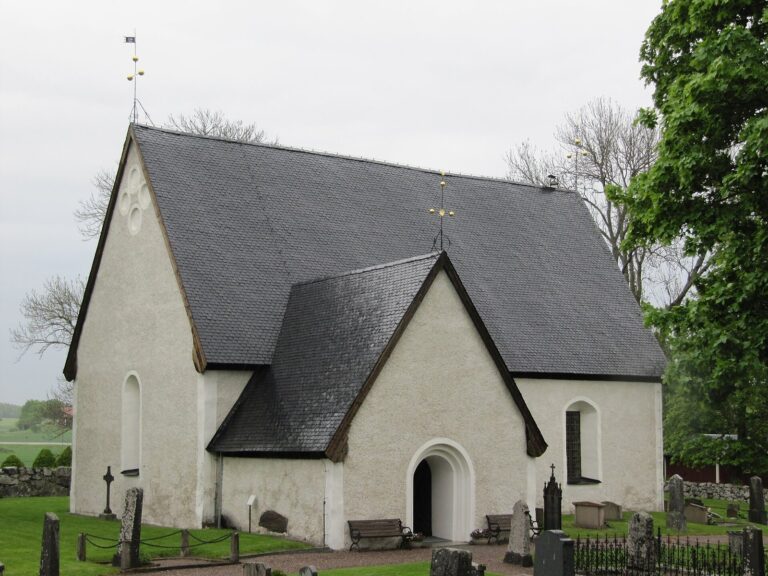
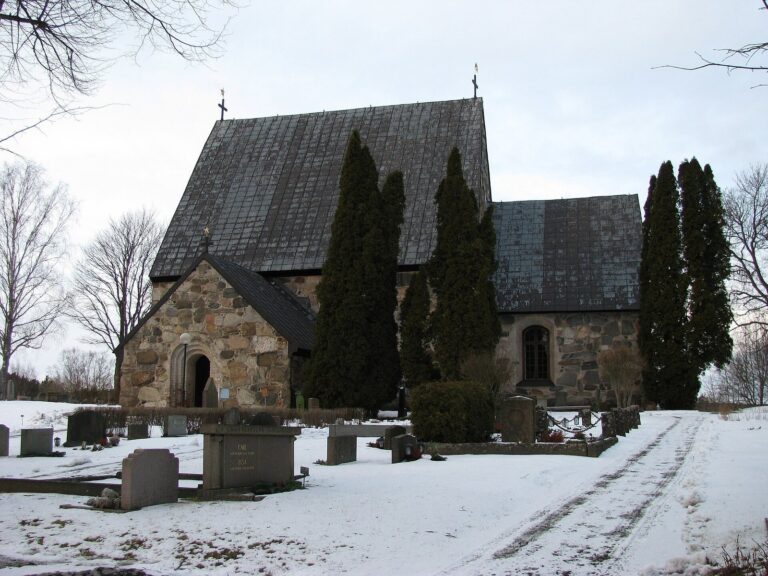
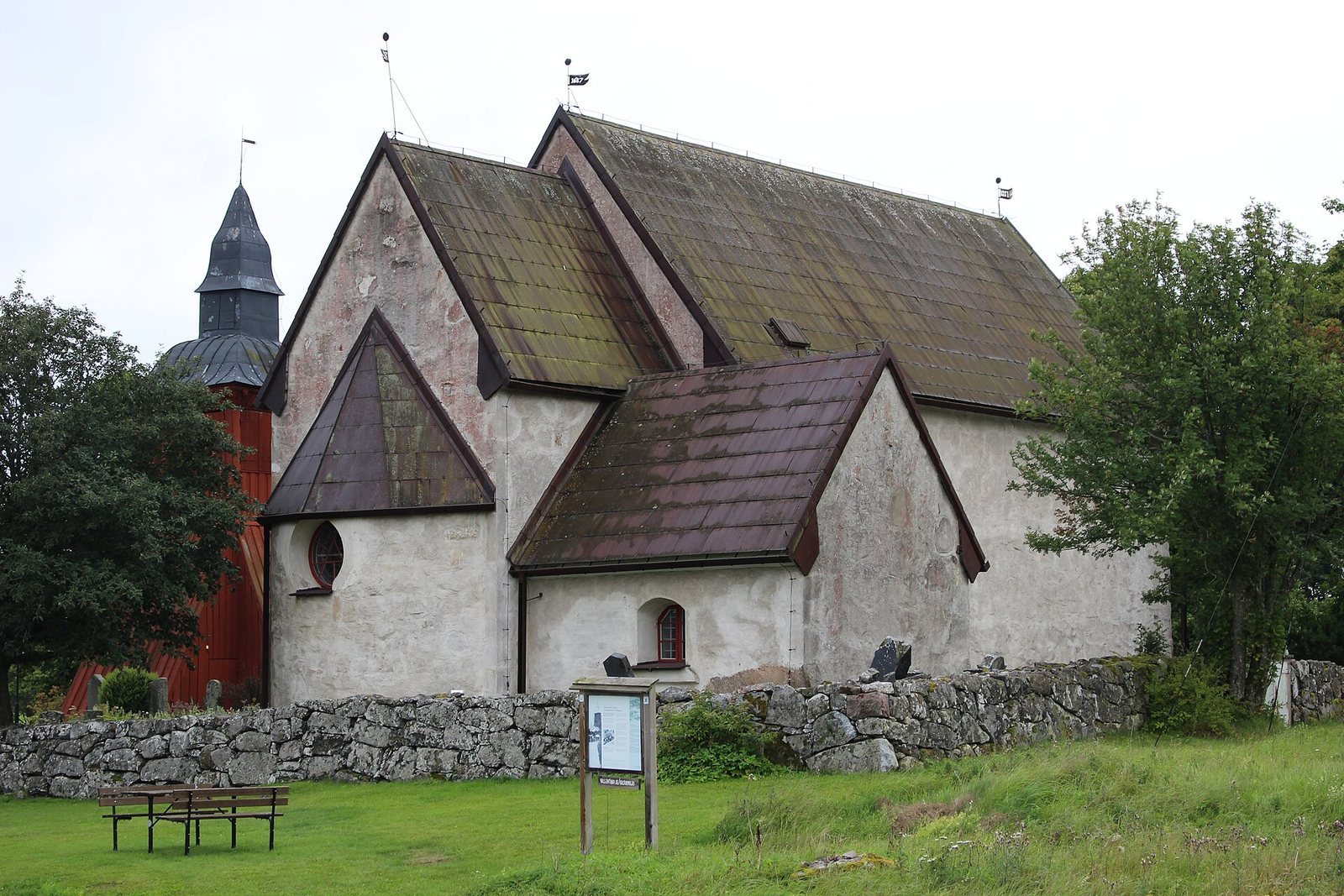
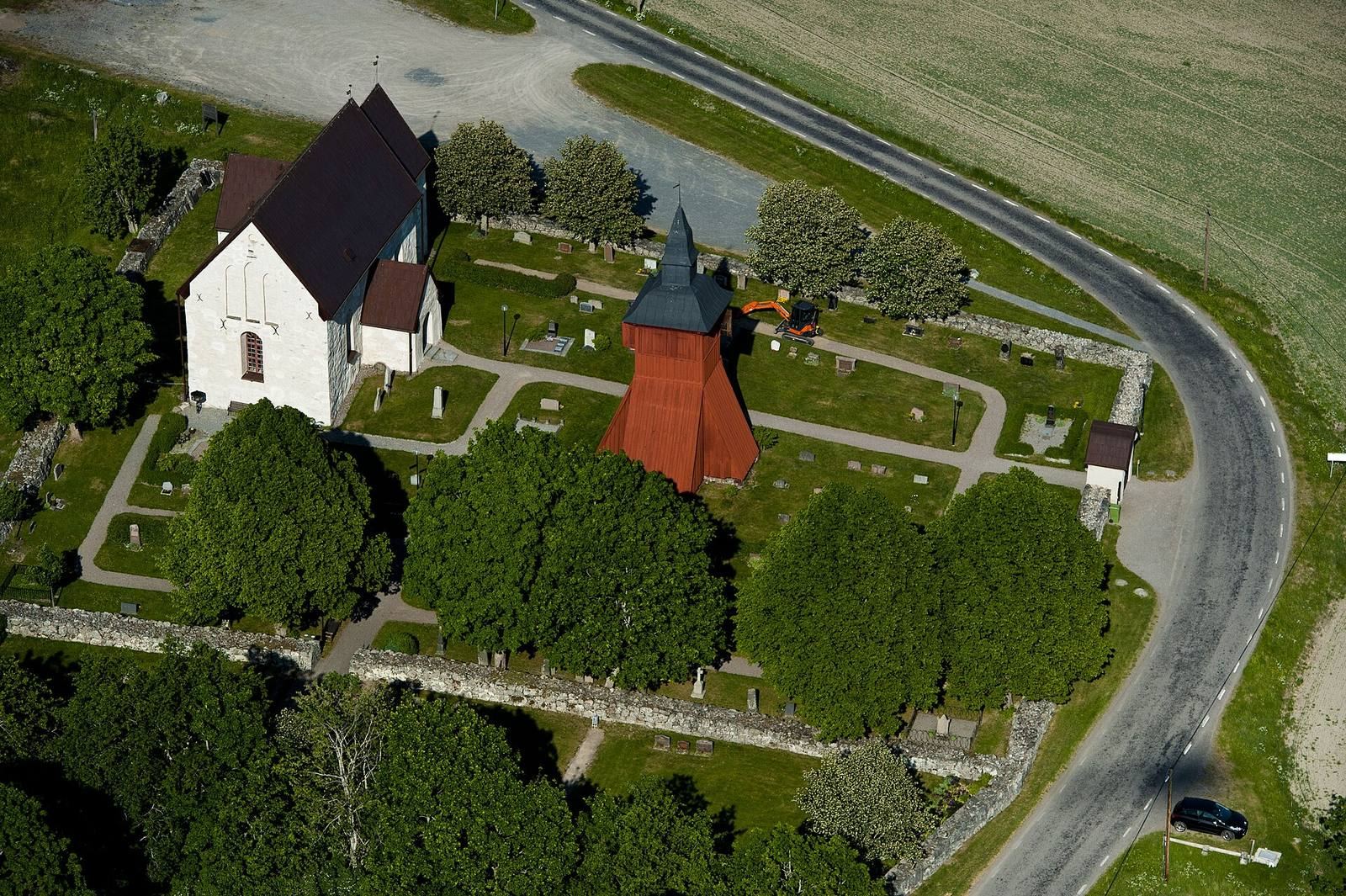
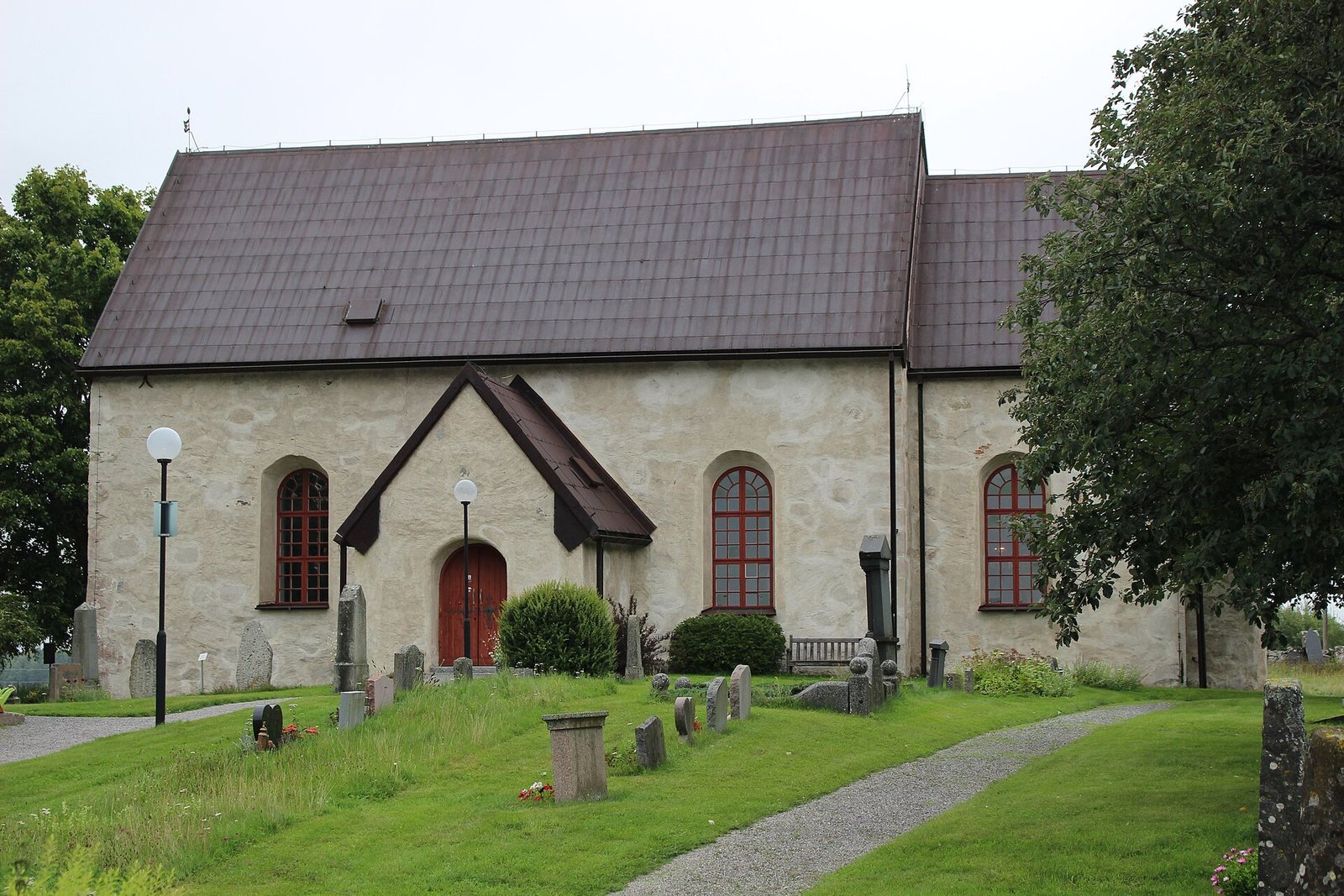
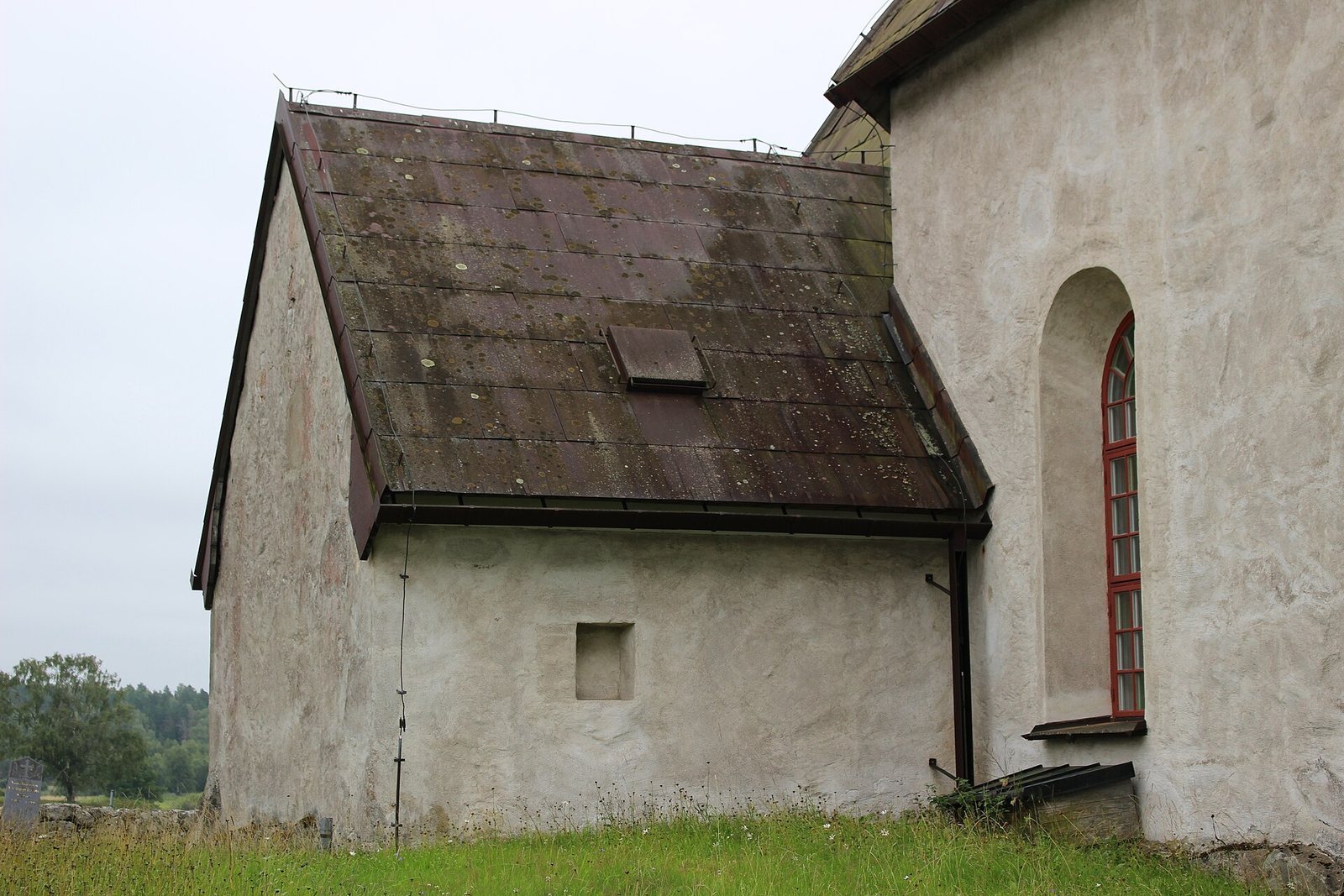
The church stands on a hilly plain surrounded by woodland and cultivated land. Its plan brings together a nave, the main body of the church, and a narrower chancel, the area around the altar, ending in an apse, a rounded termination, at the east. A sacristy lies to the north, and a small porch projects from the south.
Church building
Plan and masonry
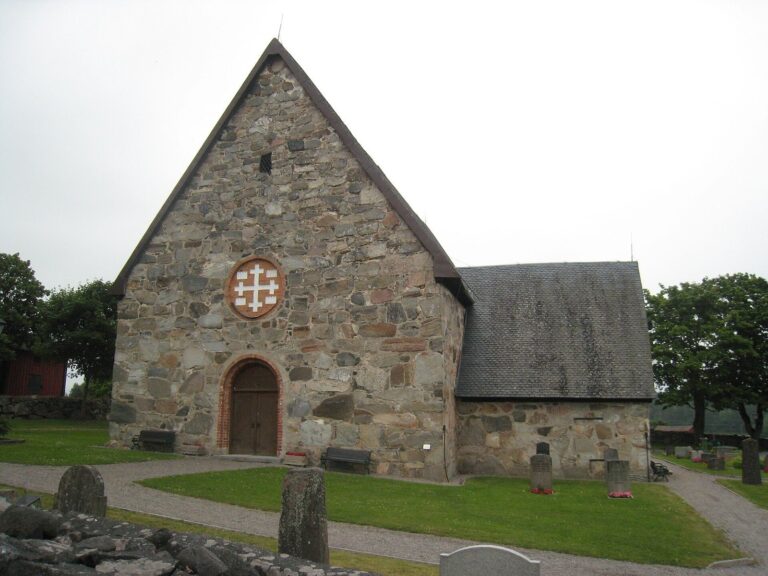
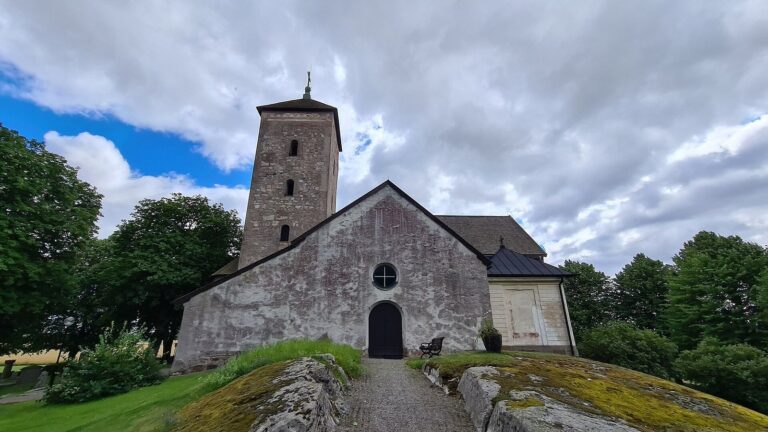
The eastern nave and apsidal chancel date to the late twelfth century; the western extension, porch, and sacristy reflect the fifteenth-century enlargement. The nave widens slightly toward the west, where its walls are thicker and were intended to support a tower. Fieldstone forms the main walls, with sandstone quoins, corner stones that strengthen the building’s angles. The sacristy and porch have brick cross-vaults, formed by intersecting vaulted sections.
Vaults and painted surfaces
Brick rib vaults, arched ceilings supported by projecting masonry ribs, cover the nave. The western section has an eight-part vault, while the older section has two six-part vaults. A stone barrel vault, shaped as a continuous semicircular arch, covers the chancel. The vault paintings were uncovered during the 1910 restoration. The apse’s round window contains stained glass depicting Christ’s head, installed during that restoration.
Interior furnishings
The Rococo altar-pulpit combines the altar and pulpit in an ornate eighteenth-century style. Oil paintings on its pulpit body show Christ in Gethsemane, Adam and Eve, and the outpouring of the Holy Spirit at Pentecost. A medieval triumphal crucifix, a crucifix traditionally placed near the arch between nave and chancel, dates to about 1325–1350. It now hangs on the chancel’s north wall, having originally stood in the arch. The polished limestone baptismal font was made in 1969 by architect Karl Hampus Bergman, and its baptismal bowl was made by silversmith Göran Eriksson. The organ, built in 1981 by Grönlunds Orgelbyggeri in Gammelstaden, has twelve stops, each controlling a set of pipes with a particular tone or pitch.
Altarpieces, chandeliers, and memorial
The church’s former altarpieces survive as remains at the Swedish History Museum, where the parish donated them in 1871. One brass chandelier, given in 1673, has eight arms and a central staff topped by a double eagle. Another, donated in 1736, has six arms, with six dolphins beside a double eagle on its staff. Both bear inscriptions on their globes. A stone memorial tablet dating to 1896 commemorates the four-hundredth anniversary of Gustav Vasa’s birth. Vasa was king of Sweden from 1523 to 1560.
The present roof is made of Corten steel, a weathering steel that forms a protective rust-like surface. During the 1975–1977 exterior restoration, the roof trusses were strengthened and a completely new truss was built over the chancel. The porch’s inner and outer door openings were enlarged to their present form during the 1910 restoration.
Cemetery buildings and grounds
Bell tower
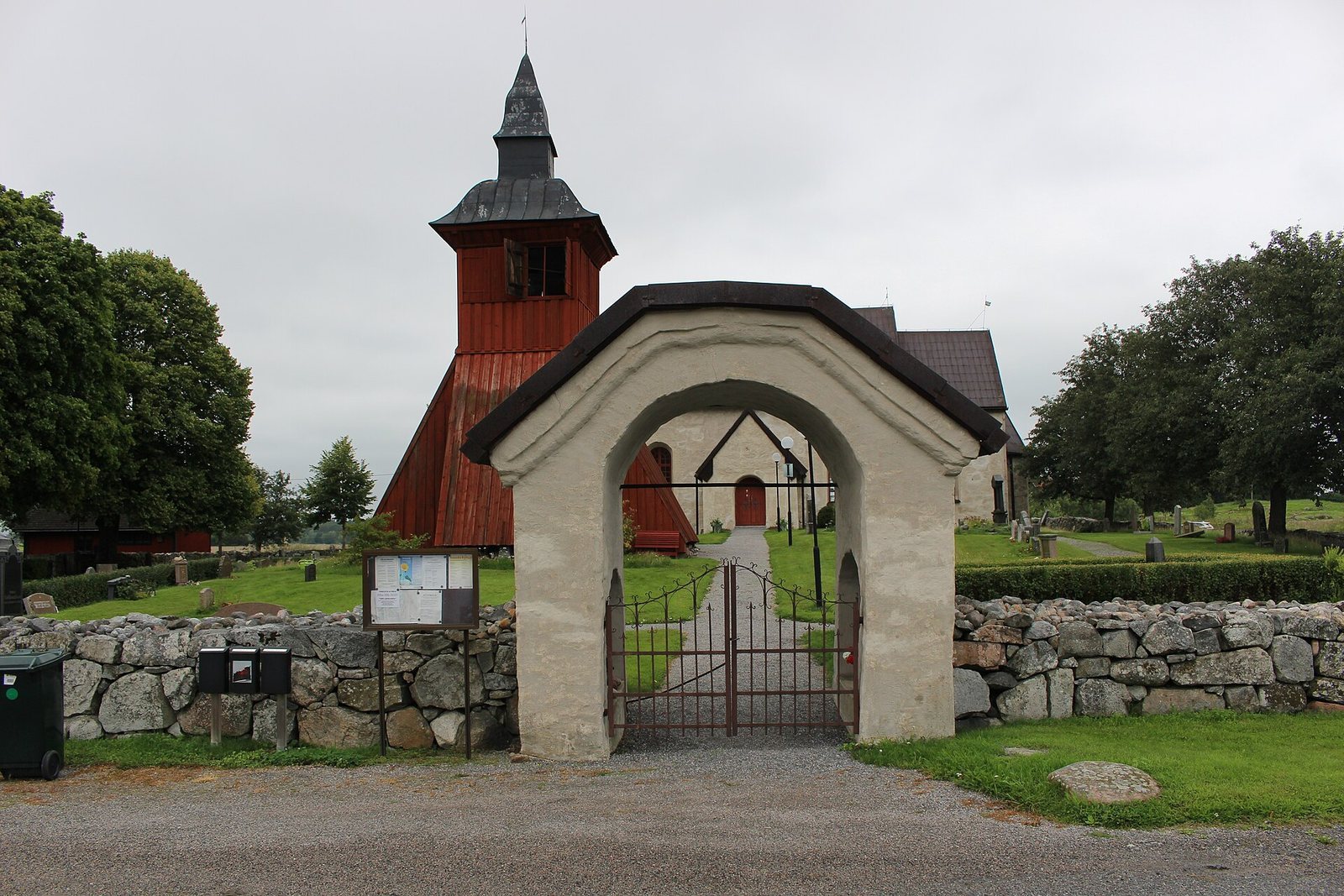
A bell tower stands in the cemetery’s southern part. Probably built in the seventeenth century, it was originally open and was boarded in at the end of the eighteenth century. The tower has a sheet-metal roof and hood topped by a weather vane. Its rooster-shaped vane was replaced by one made of Corten steel in 1977, and two bells hang inside. The great bell was donated in 1681 and recast by Gerhard Meyer the Younger in 1741; he also cast the small bell.
Southern entrance
The cemetery’s southern entrance passes through a brick gate, whitewashed and built in the 1790s to replace an earlier wooden gate. Its sheet-metal roof was replaced with Corten steel during the 1975–1977 restoration.
Memorial grove
The cemetery’s memorial grove lies west of the church.