Florival Abbey: A Cistercian Nunnery in Belgium
Site at a Glance
- Popularity
- Low
- Country
- Belgium
- Primary era
- Modern
- Eras represented
- Modern
- Civilizations
- Belgian
- Site type
- Domestic
- Remains
- Castle
On this page11 sections
History
Florival Abbey, a Cistercian nunnery near Archennes in Grez-Doiceau, Belgium, was probably founded by Bartholomé Lanio between 1210 and 1214. Its beginnings remain uncertain, and a Benedictine community may have occupied the site earlier, though its relationship to the later abbey is unclear. The Cistercians emerged as a reform movement within Benedictine monasticism, emphasizing separation from ordinary outside life and communal ownership of property.
Origins and Cistercian foundation
One tradition dates the abbey to 1096, when Count Werner of Grez supposedly established a Benedictine nunnery at Netenburg after returning from the Holy Land. The story says Werner died there, a detail that has cast doubt on the account. Another tradition credits Lanio with reviving an almost deserted monastery around 1192 under a charter attributed to Pope Celestine III. That charter has been lost and may never have existed. The more likely explanation is that Lanio founded Florival as a new community in 1210–1214.
The move to Cistercian observance was probably in progress around 1210 and received confirmation in Rome from Pope Honorius III in 1218. This took place during the leadership of Genta of Aarschot, the abbey’s first abbess. She may have travelled to Rome to present the community’s case. A proposal to move the nuns to Ottenburg was also considered in 1218, but was not carried out.
In its early years, the community acquired woodland and small fields for fuel and supplies, as well as several farms: Malaise at Bossut, Broeck at Nethen, Malève at Orbais, and Bierwart at Ottignies-Wavre. Bierwart was the most profitable. Despite these holdings, the nuns remained poor, and farm income generally went toward repairing the abbey’s buildings.
Reform, revolt, and exile
Fifteenth-century reform efforts aimed to restore enclosure and common ownership within the monastery. Elvide Shreven, who came from the reformed Cistercian abbey of Val-Duc, began this work at Florival but did not complete it during her short term as abbess. Marie de Wittem, also from Val-Duc, carried it through while leading the community from 1520 to 1537. Cistercian discipline was observed with particular intensity from 1516 to 1575.
Religious and political conflict spread through the Spanish-ruled Netherlands during the sixteenth century. Calvinism had reached the region by 1543. The 1566 destruction of religious images and the local revolts reflected opposition to declining local authority, clergy appointed by Philip II of Spain, and taxes that chiefly benefited Spain. The Duke of Alba led a violent campaign of repression through 1573, but it did not restore calm. In 1578, troops accompanying Juan of Austria plundered the abbey and set buildings alight while passing near Wavre, where rebels had been reported.
Under Abbess Amelberghe Kemels, whose term lasted from 1576 to 1585, the nuns fled and dispersed; most found refuge in Leuven, where the community had a house on Naamsestraat. Their exile continued into the early seventeenth century. The precise return date is unknown, but it fell after Martine de Bossut’s election at Leuven on 17 March 1595 and before her death at Florival in 1613. During later unrest in the sixteenth and seventeenth centuries, members of the community also fled temporarily to Brussels or Namur.
Financial strain and changing discipline
After 1613, religious observance and income both declined. Wars, famine, epidemics, and dangerous roads made formal inspections by the supervising abbots difficult. With those visits less regular, discipline weakened and the abbey’s reputation suffered. Income that had stood at about 10,000 florins before the sixteenth-century unrest was nearly 90 percent lower by 1629.
Abbess Catherine Ronsmans (1629–1658) oversaw a brief improvement, although soldiers passing through continued to demand food and drink and often ruined crops. Many nuns spoke only Flemish, while most confessors could not understand the language. From 1629, Abbot Van den Heyden arranged for statements to be made in Flemish as well.
Further trouble began around 1650, with theft and soldiers demanding provisions from the impoverished community. From 1672, tenants whose lands had been devastated by armies stopped paying rents. A further exile may have occurred: of four abbess elections in 1659, 1676, 1688, and 1690, only the 1688 election took place at Florival. Under Ida Bernaerts (1676–1688), income rose slightly, but the abbey still owed 2,913 florins in 1690.
Eighteenth-century management and repairs
When Jacques Hache, abbot of Villers-en-Brabant, made his first formal inspection in May 1717, Madeleine Van Hannewijck had led the abbey since 1690. The community then included about twenty choir nuns, who took part in the liturgical choir. Hache returned to oversee formal religious vows in 1724, 1726, and 1729, as well as to conduct further inspections.
After Madeleine died on 11 January 1733, Archduchess Marie-Elisabeth, the Habsburg ruler of the Austrian Netherlands, authorized Hache to preside over the election of Josèphe de la Croix on 7 April. Josèphe, abbess from 1733 to 1749, sought relief from the fee for official use of a seal because of the community’s poverty. During Hache’s inspections, complaints also arose over failures to follow the religious rules.
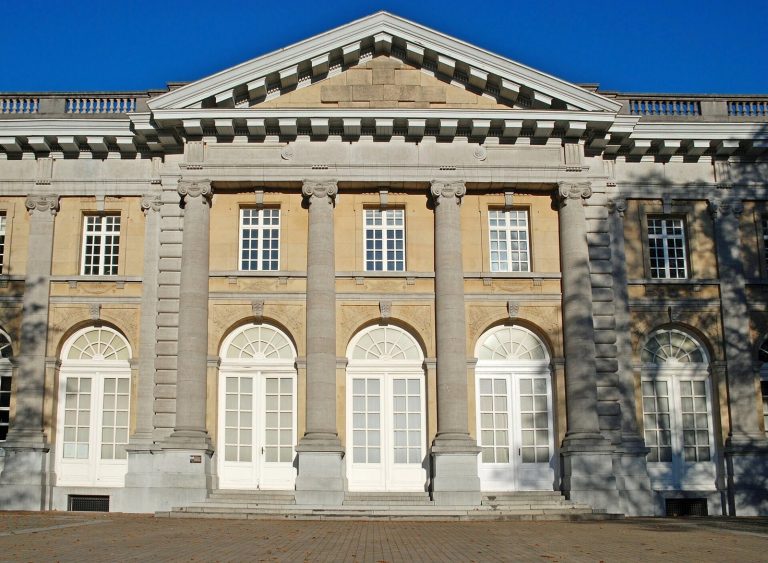
The abbey’s financial position improved briefly under Alexandrine de Culembourg (1755–1769). Rising farm income and an authorized levy of 40,000 florins enabled repairs to some buildings. The architect Laurent-Benoît Dewez also carried out alterations at the abbey during the eighteenth century. Ferdinande de Furlong (1769–1789) managed the community effectively, but conditions deteriorated again during the final decade of the century.
Closure and later uses
During the Brabant Revolution, an uprising against Habsburg rule in the late eighteenth century, the abbey lost its leader when the abbess died. After a year without one, the nuns elected Ursule de Bauloye, the last abbess, who served from 1791 to 1796. Following a major French victory at Fleurus in 1794, French revolutionary forces took control of the Austrian Netherlands, the Habsburg-ruled southern Netherlands, and confiscated church property. The community dispersed, the abbey closed around 1796, and its buildings were sold as national property.
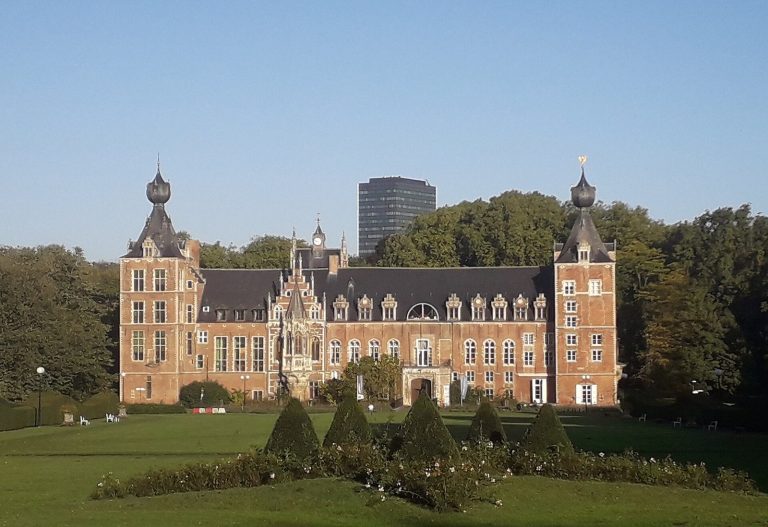
On 27 January 1798, the buildings were sold in three parcels for 1,375,000 livres. The castle and estate were classified by the French Community of Belgium, which represents French speakers in the country, on 30 June 1983. Belgium’s Civil Protection occupied the castle from the 1950s until leaving in 2016.
Remains
Abbey grounds and structures
The abbey grounds lay beside the Dyle at Archennes. Part of the property extended into Ottenburg, in the municipality of Huldenberg in Flemish Brabant, while most lay in Walloon Brabant. The complex included a church and monastic buildings, an abbey gate, and waterworks associated with the river.
Church, monastic buildings, and gate
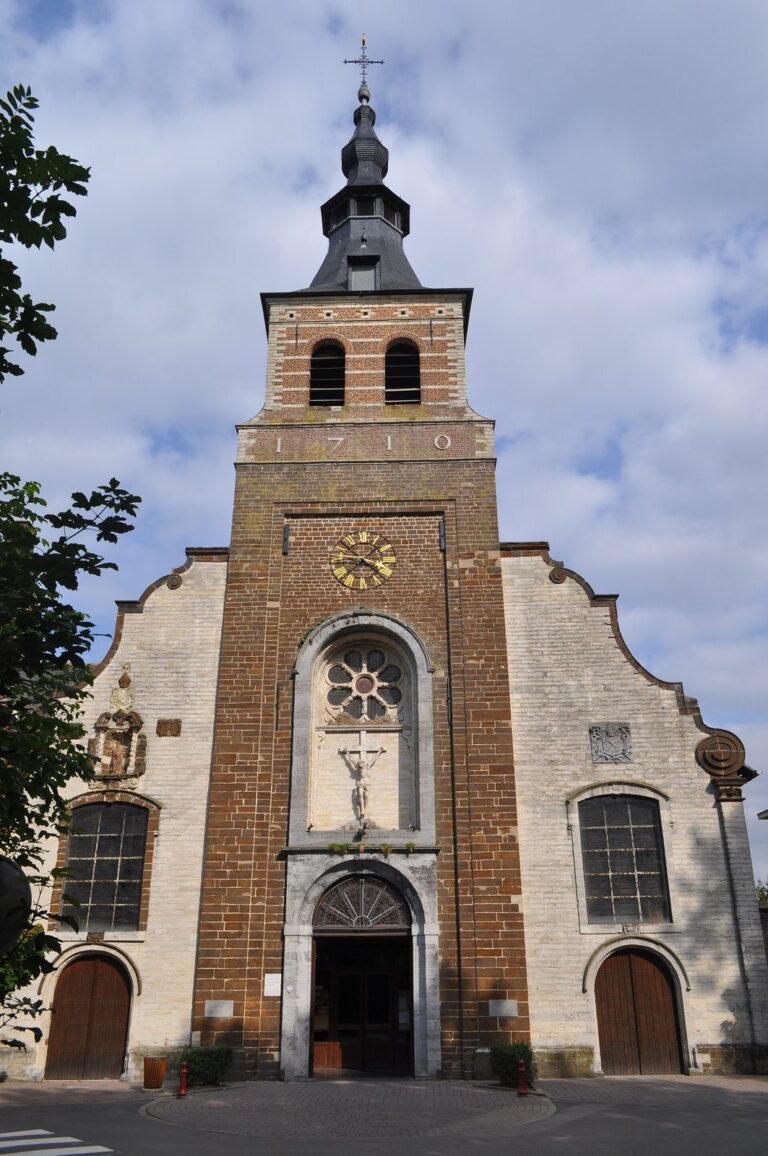
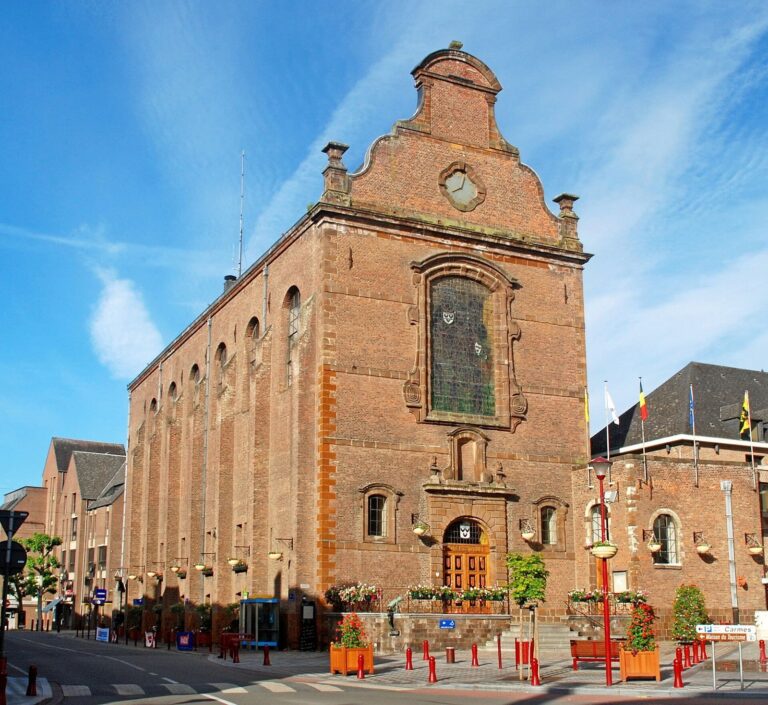
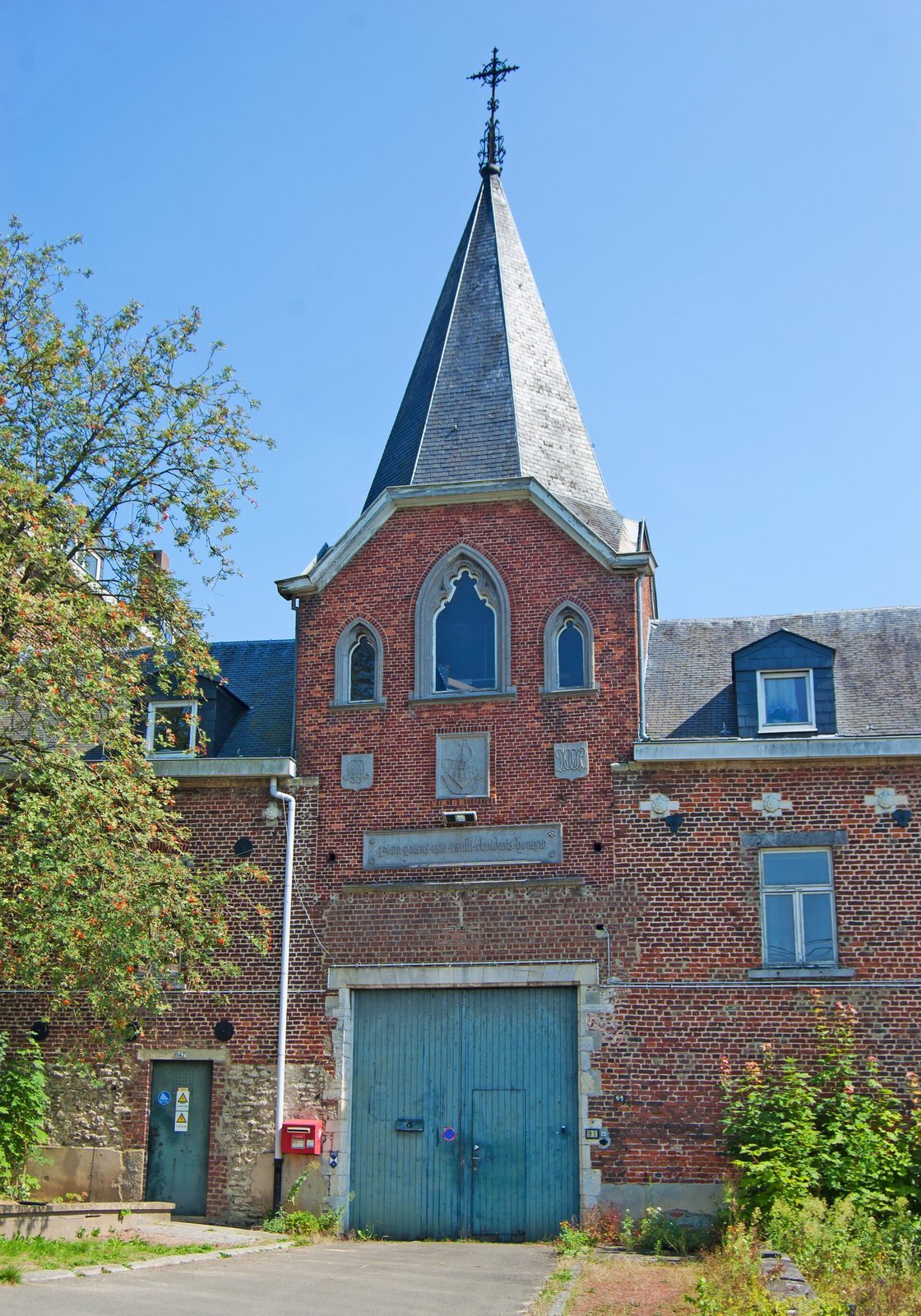
The abbey church and part of the monastic buildings were plundered and burned in 1578. An abbey gate is also part of the site.
Sluices and bridge
The estate included sluices, gates that regulate water flow, and a bridge over the Dyle. A storm in June 1732 damaged both the sluices and the bridge.
Florival Castle and industrial reuse
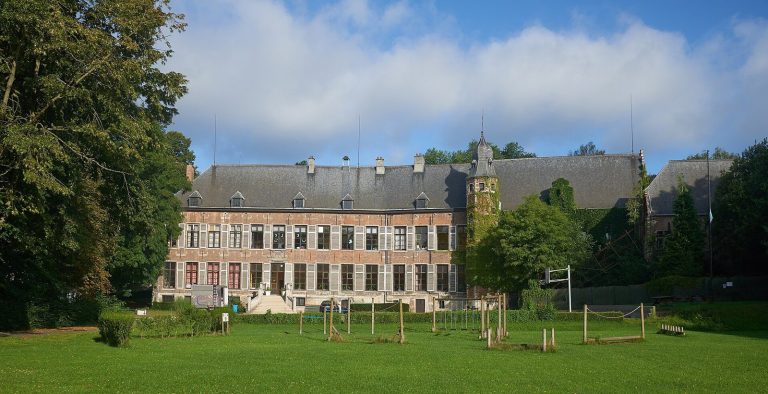
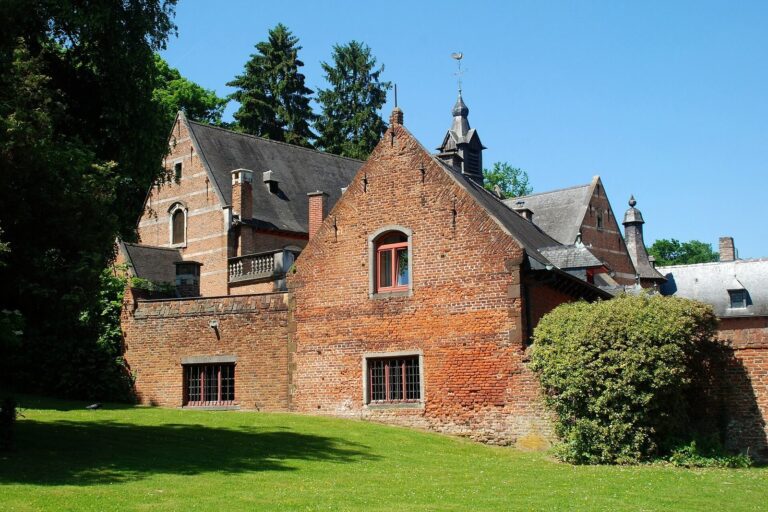
The principal property lot was converted by the Cumont family into a linen-bleaching and weaving works. Buildings on the property burned in 1854. The Oldenhoven family later acquired the site and added a residence, the nineteenth-century Florival Castle. Exide Technologies, also known as Exide Automatique and the successor to Accumulateurs Tudor, operated on part of the former abbey land beside the castle and estate; its activities there later ceased.