Sirwah: An Early Capital of the Kingdom of Saba
Site at a Glance
- Popularity
- Medium
- Country
- Yemen
- Primary era
- Iron Age
- Eras represented
- Iron Age
- Civilizations
- Sabaean
- Site type
- City
On this page12 sections
History
Sabaean capital and regional center
Sirwah is an ancient Sabaean city in Yemen, about 35–40 km west of Ma’rib, where construction began in the ninth century BCE. It served as an early capital of the Kingdom of Saba, also known in many contexts as Sheba.
Its mountain setting offered protection but restricted the city’s growth. By the beginning of the first century BCE, Ma’rib had taken over as the capital. Its position on the incense route, a network for transporting incense and related goods, helped it grow as an economic center. Sirwah remained an important political and economic center, second to Ma’rib. The city was abandoned around the fourth century CE.
Archaeology and preservation
The German Archaeological Institute began work at Sirwah in 1991, and investigations resumed in 2001 to clarify the early history of the Sabaean Kingdom. In 2005, archaeologists recovered a monumental inscription from the Almaqah sanctuary. Norbert Nebes, an epigrapher, or specialist in inscriptions, at the University of Jena, described it as the most important known inscription from the first century BCE. Political instability led to the suspension of investigations in 2009.
Yemen’s civil war began in 2015, and Sirwah became a frontline between Houthi forces and forces allied with then-president Abd Rabbuh Mansur Hadi. Fighting has made archaeological excavation almost impossible. In 2023, UNESCO added Sirwah to its World Heritage List, which recognizes places of outstanding cultural or natural value, as part of the Landmarks of the Ancient Kingdom of Saba under criteria (iii) and (iv). The site was also listed as endangered that year.
Remains
Setting and defenses
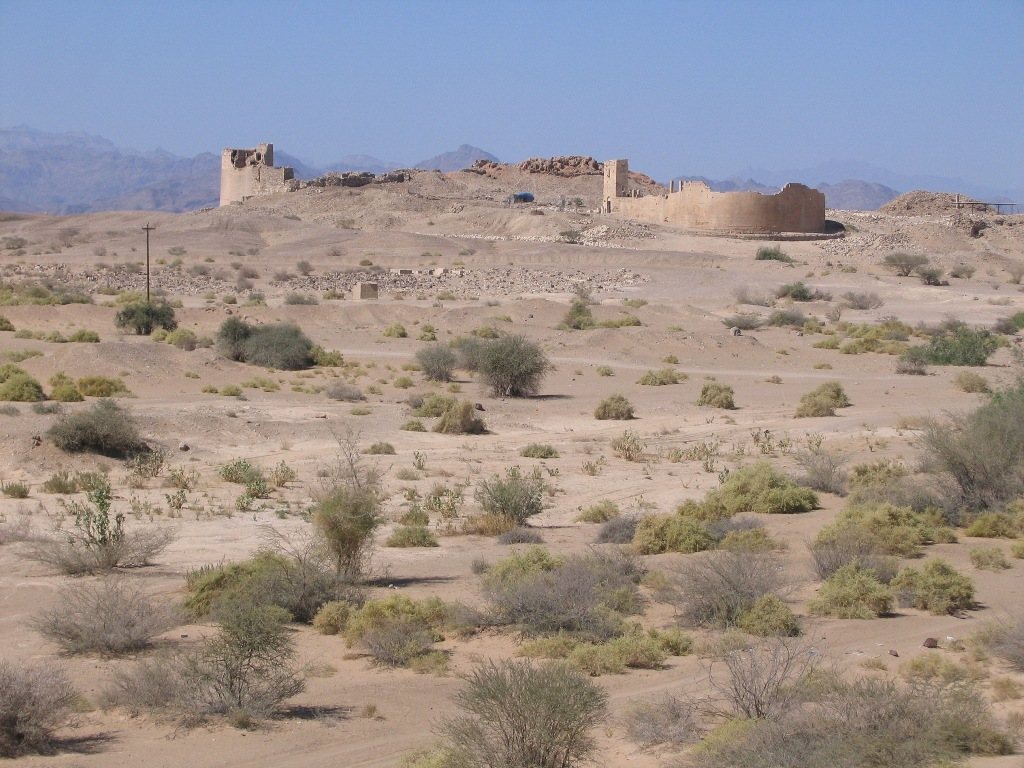
The ruins occupy a natural plateau in a mountain-surrounded valley, on a high rise above the western bank of Wadi Sirwah, a valley channel often dry except during seasonal rains. The site is roughly 1,500–1,600 m above sea level. The settlement lay within an oasis and covers about 3 hectares; the wider archaeological area is listed as 82.4 hectares.
A fortified wall enclosed the city. Its defenses included towers, projecting sections, and casemate chambers, enclosed spaces incorporated into the fortification.
Temples and civic buildings
Almaqah temple
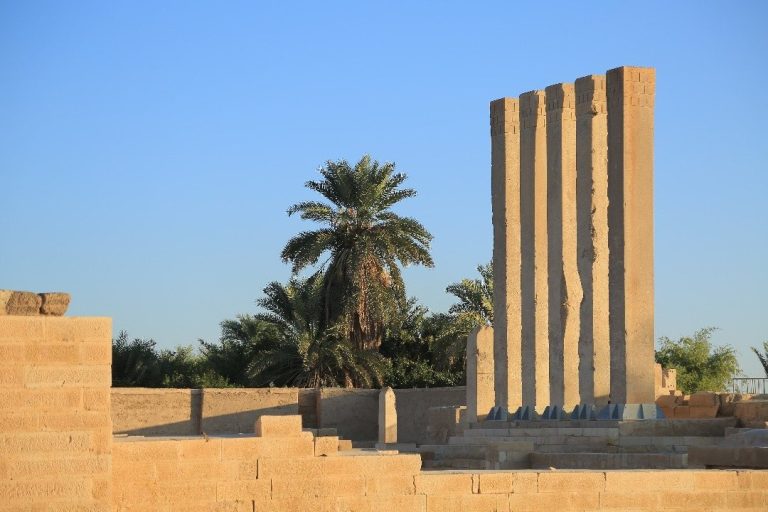
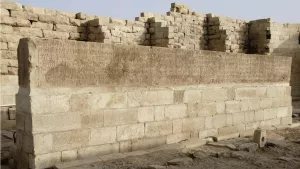
The city’s principal religious building, the Almaqah temple, stood in its southeastern part. Almaqah was a principal deity of the Sabaeans. Around 700 BCE, King Yada’il Dharih I chose Sirwah for an important temple to the god.
Seventh-century BCE temple
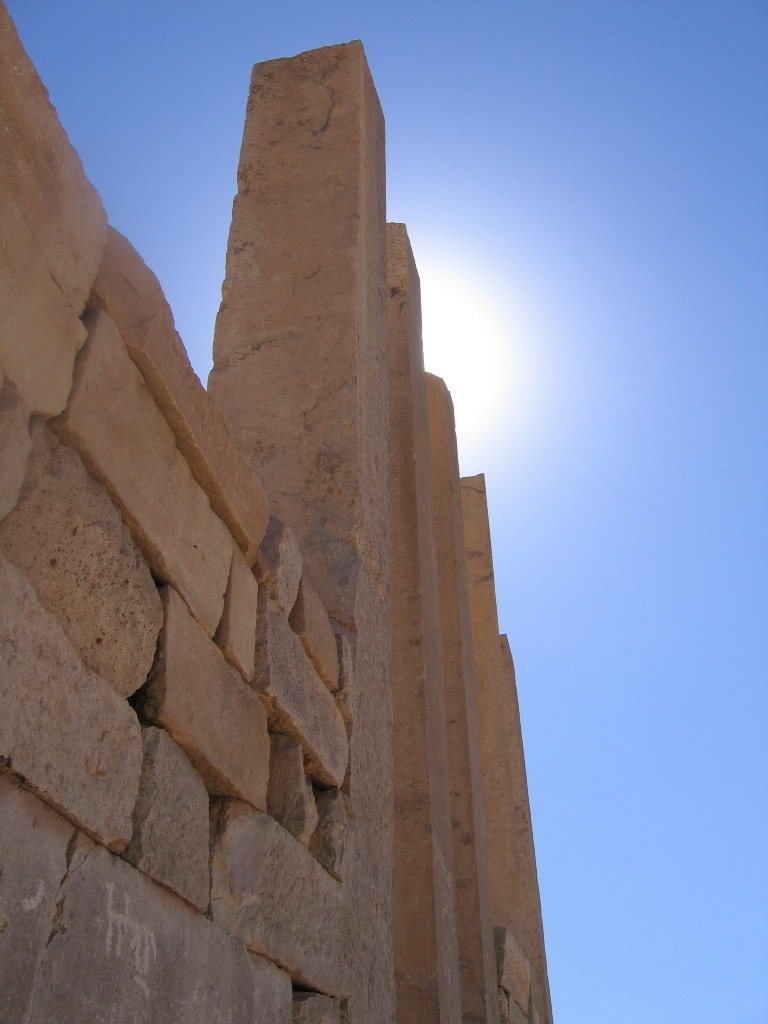
A separate temple, brought to light during restoration work before the Yemeni Civil War, dates to the seventh century BCE. Its monumental entrance was decorated with pillars, and several rooms were built of wood and stone. Its arrangement was distinctive for Yemen in that period.
Other identified buildings
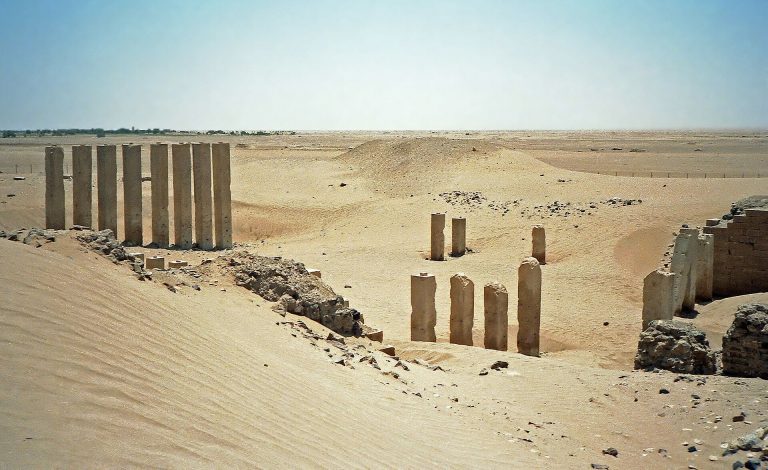
The Five Pillars Building stood in the northeastern part of the city. An administrative building was incorporated into the city wall.
Inscriptions
Almaqah sanctuary block
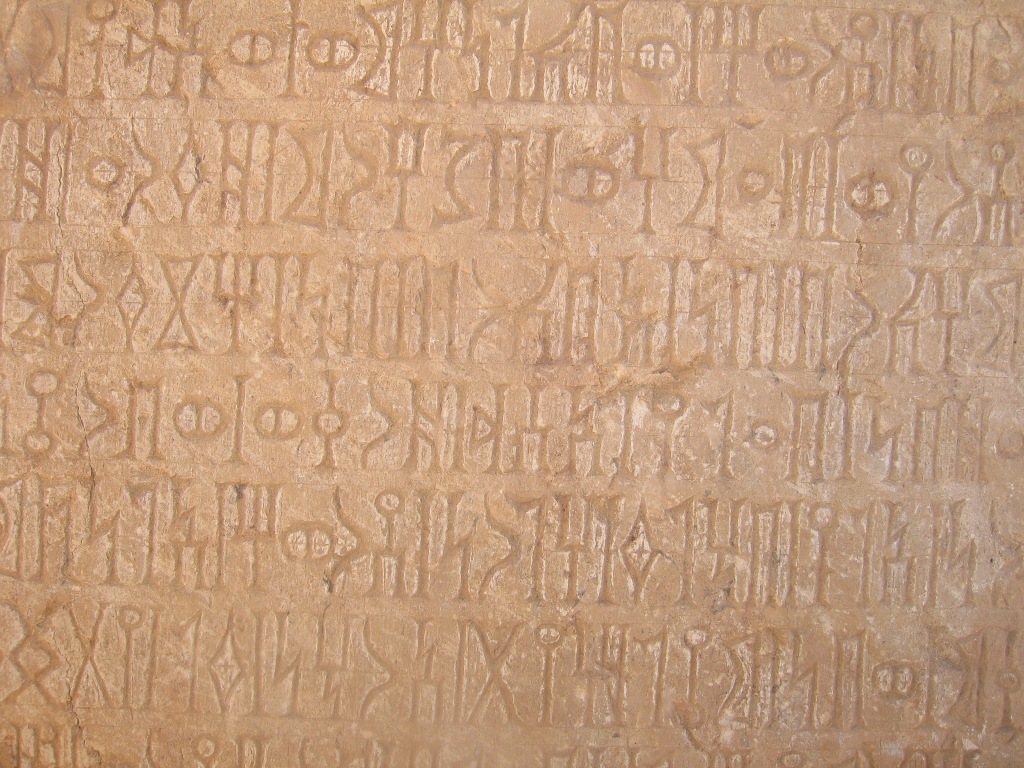
A stone block more than seven metres long and weighing about seven tonnes was a prominent feature of the Almaqah sanctuary. It fell from its supporting base during an earthquake. Its inscription recounts a Sabaean’s battles against neighboring peoples to the southeast and north of Yemen.
Karib’il Watar inscription
A separate inscription of 20 lines, among the longest known, describes the conquests and campaigns of King Karib’il Watar, a ruler of the Kingdom of Saba.