San Giovanni Battista, Ravenna: A Baroque Catholic Church
Site at a Glance
- Popularity
- Low
- Country
- Italy
- Primary era
- Early Modern
- Eras represented
- Medieval, Early Modern
- Civilizations
- Byzantine, Papal States
- Site type
- Religious
- Remains
- Church
On this page13 sections
History
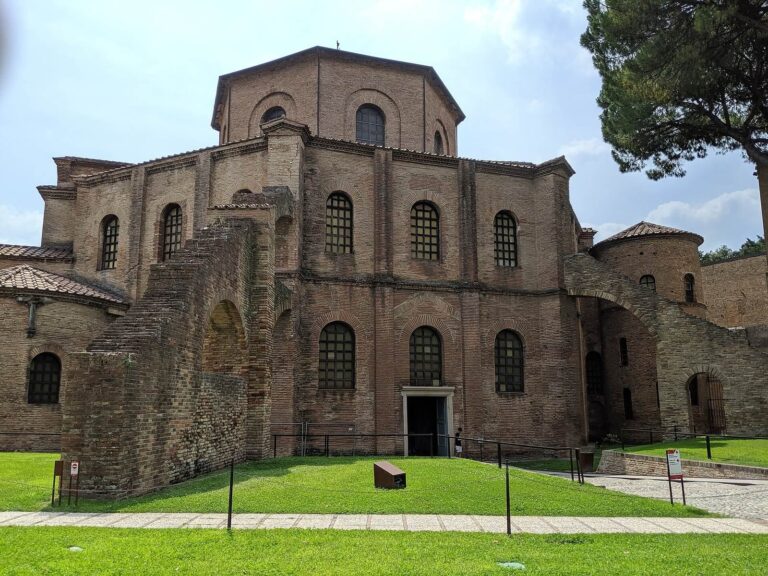
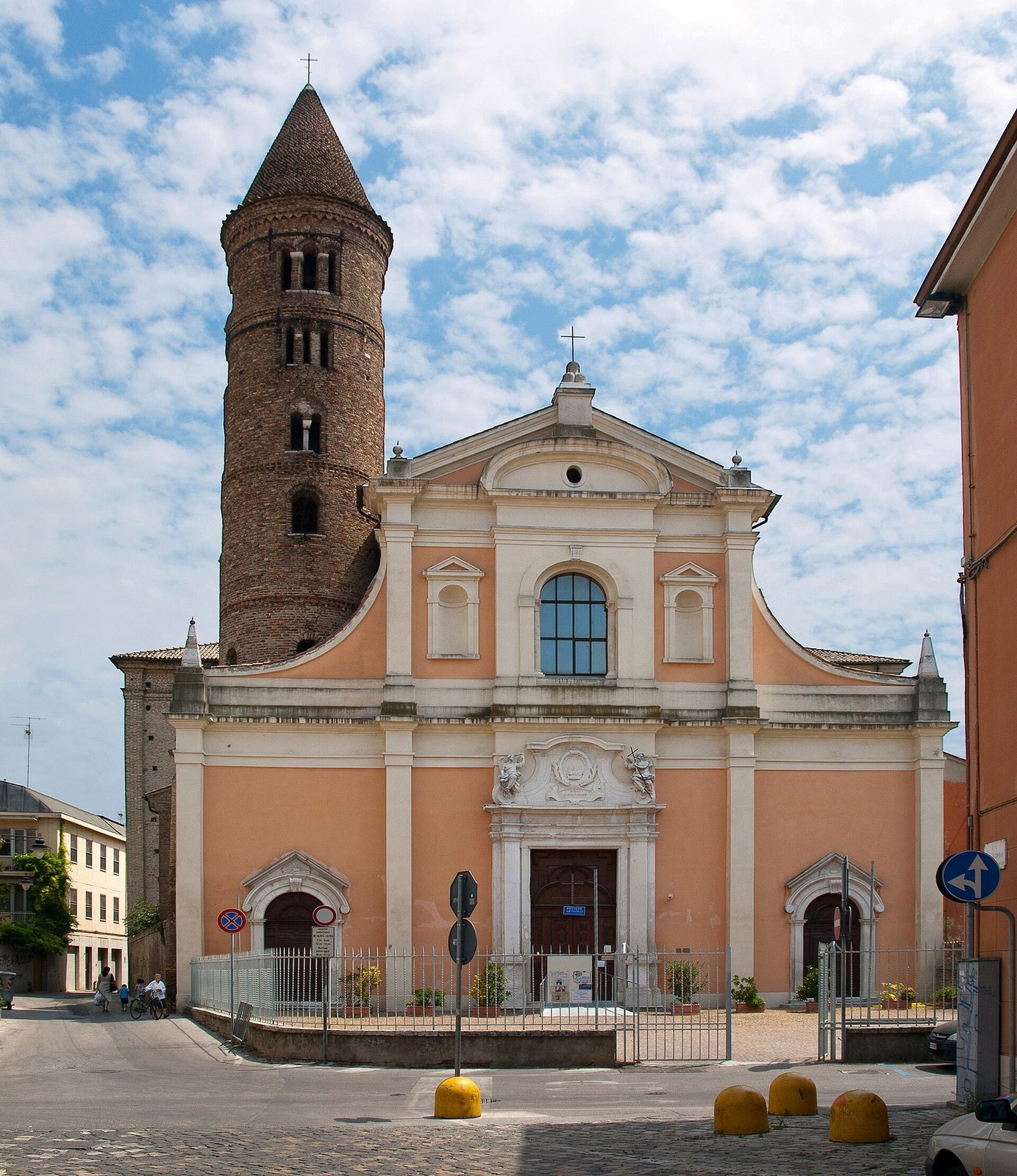
San Giovanni Battista is a Catholic church in Ravenna, Italy, rebuilt in 1689 in the late Baroque style, a European artistic and architectural style prominent in the seventeenth and eighteenth centuries. Dedicated to Saint John the Baptist, it was consecrated in the eighth century, although its foundation date is uncertain. The church may have originated when Ravenna was the capital of the Exarchate of Italy, a Byzantine-administered territory governed by an imperial representative called an exarch.
Early references and monastery
The earliest known written reference is a Byzantine papyrus, probably dating to around 700, which mentions a women’s monastery of Saint John called ad Naviculam. That name may refer to a ferry crossing the Padenna, a river that ran north to south through Ravenna when no bridge crossed it. An adjoining monastery is mentioned from at least the thirteenth century.
Carmelite ownership and rebuilding
In 1408, Archbishop Giovanni Migiorini granted the basilica to the Carmelites, a Catholic religious order. The friars later received generous donations as they established a hospital for people in need. Locals called the church Saint John of the Onion to distinguish it from San Giovanni Evangelista, a church associated with John the Evangelist. The nickname recalled a June market for farm produce held in the church’s courtyard, which was enclosed by porticoes on all four sides.
The courtyard’s porticoes were demolished in 1634. An earthquake severely damaged the church in April 1688; the old building was then demolished, and architect Pietro Grossi rebuilt the church on the same site in 1689. Much of its present fabric belongs to that rebuilding.
Changes in parish stewardship
In 1797, measures under Napoleonic rule that dissolved religious communities forced the Carmelites to leave their convent. The church and monastery became the property of the Ghiselli institute. Archbishop Antonio Lega returned the basilica to the Carmelites in 1928 and entrusted the parish to them. They remained until the end of the twentieth century, after which the Scalabrinians, a Catholic missionary congregation, served the parish until 2019. The diocesan clergy then assumed responsibility.
Remains
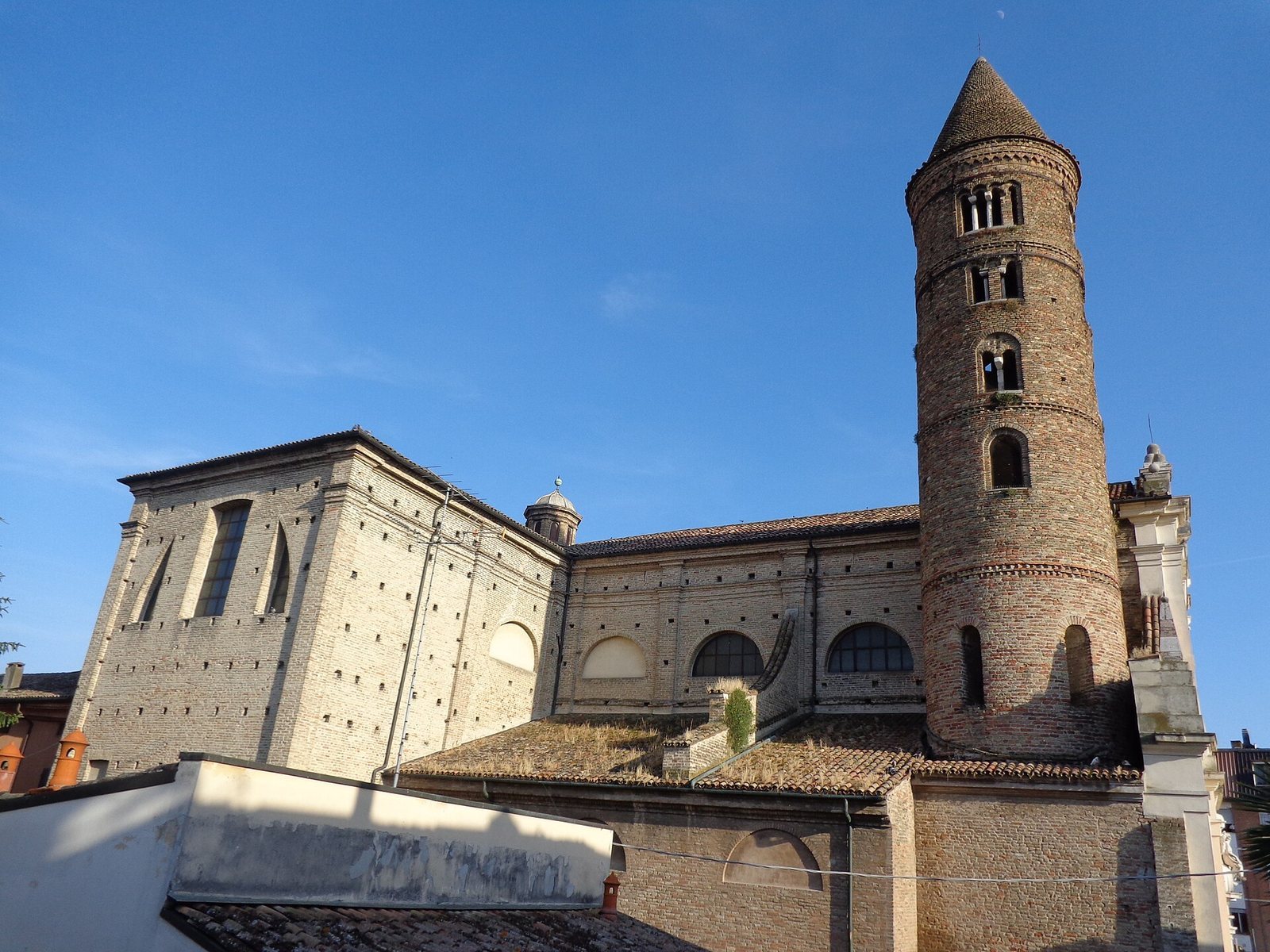
The present church combines its largely Baroque fabric with surviving elements of an earlier building. These include parts of the apse, the rounded end of the church, and a circular bell tower from the ninth century. Descriptions of the predecessor church also provide evidence for its earlier interior arrangement and entrance portico.
Exterior and earlier fabric
Ninth-century bell tower
The circular tower stands 42 metres high above the salmon-colored façade and ends in a conical element. Its windows are arranged in two levels of single openings, with paired and then triple openings above.
Earlier church
Sixteenth-century historian Girolamo Rossi and seventeenth-century writer Girolamo Fabri described an earlier church with three naves, the main lengthwise spaces of a church, divided by twenty columns, ten along each side. Fabri also described a long exterior portico carried by eighteen small marble columns. Columns from the earlier building were reused in the later reconstruction.
Facade and portals
The portals are made of Istrian stone, a limestone from Istria. The salmon-colored façade forms the backdrop to the older bell tower.
Interior decoration and artworks
Painted decoration
Paintings along the interior walls are by Giovanni Battista and Andrea Barbiani, Domenico Cignani, and Francesco Longhi, artists active in Ravenna from the late fifteenth through the eighteenth century. Francesco Ferrari painted the dome fresco, a work made on wet plaster, and the apse includes a scene of the Crucifixion.
Spreti family chapel
The chapel of the Spreti family retains frescoes, paintings made on wet plaster, from the second half of the fourteenth century.
Triptych and nativity scene
A three-panel triptych by Niccolò Rondinelli, depicting the Virgin and Child, was once kept in the church and is now displayed in the city museum’s art gallery. A Neapolitan nativity scene is permanently displayed inside the church.