Grotta Archaeological Site in Naxos: A Prehistoric Settlement and Its Cemeteries
Site at a Glance
- Popularity
- Low
- Country
- Greece
- Primary era
- Bronze Age
- Eras represented
- Bronze Age, Modern
- Civilizations
- Greek, Mycenaean
- Site type
- City
On this page9 sections
History
The Grotta Archaeological Site in Naxos is a prehistoric settlement site lying on and beneath the square of Chora’s principal Orthodox church, in Greece. Evidence reaches back to the Neolithic, while a settlement developed during the Bronze Age and flourished especially in the Late Bronze Age, within the Mycenaean period.
Neolithic and Bronze Age
Pottery dating to about 3200–3000 BCE points to early activity at Grotta. A settlement is established in the Early and Middle Bronze Age. During the Late Helladic sequence, the archaeological chronology of Mycenaean Greece, the area was inhabited in phase IIA and saw increased building in IIIA. It declined in IIIB1 and appears to have ended in IIIB2.
A settlement was established over the earlier remains in Late Helladic IIIC, then abandoned at the end of that phase. The prehistoric settlement extended toward nearby Palatia, described as a peninsula or island. An ancient temple dedicated to Apollo, a major Greek deity, stood there.
Burials and later pottery
During the Protogeometric period, the area occupied by the Late Helladic IIIC settlement was used for burials. The Protogeometric and Geometric periods are later phases of early Greek history, recognized in part through their pottery. Geometric-period pottery is abundant in the same area. The settlement’s cemeteries lay at Aplomata and Kamini, in the hills above Grotta.
Excavation and museum
Twentieth-century excavations at Grotta and its cemeteries were carried out by the Archaeological Society of Athens, a Greek institution devoted to archaeological research. Nikolaos Kondoleon led the work first, followed after his death by Vassilis Lambrinoudakis. A museum for the archaeological remains was constructed in 1999.
Remains
Settlement remains
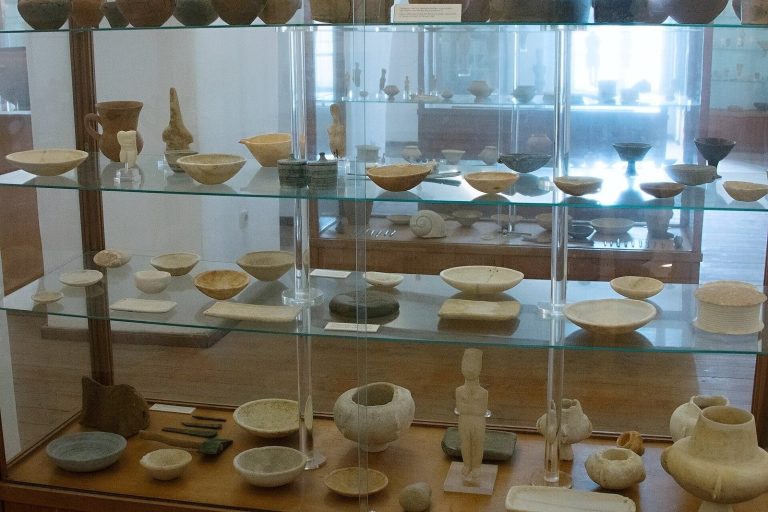
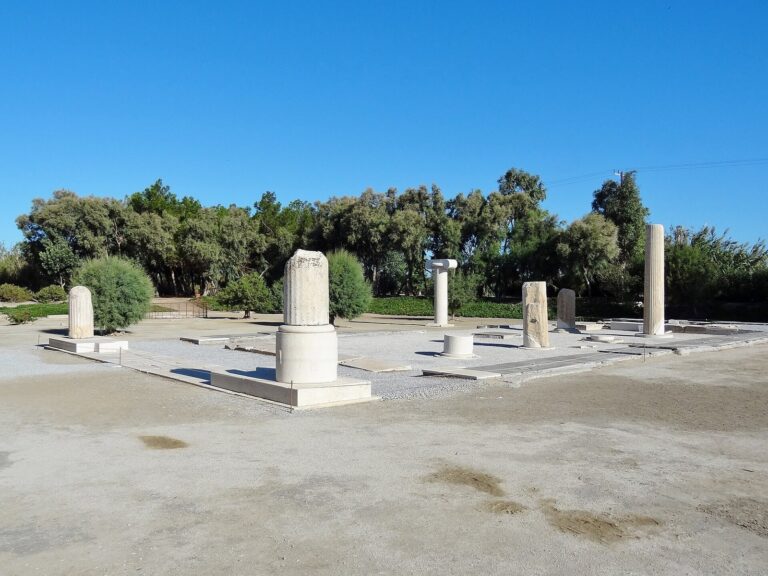
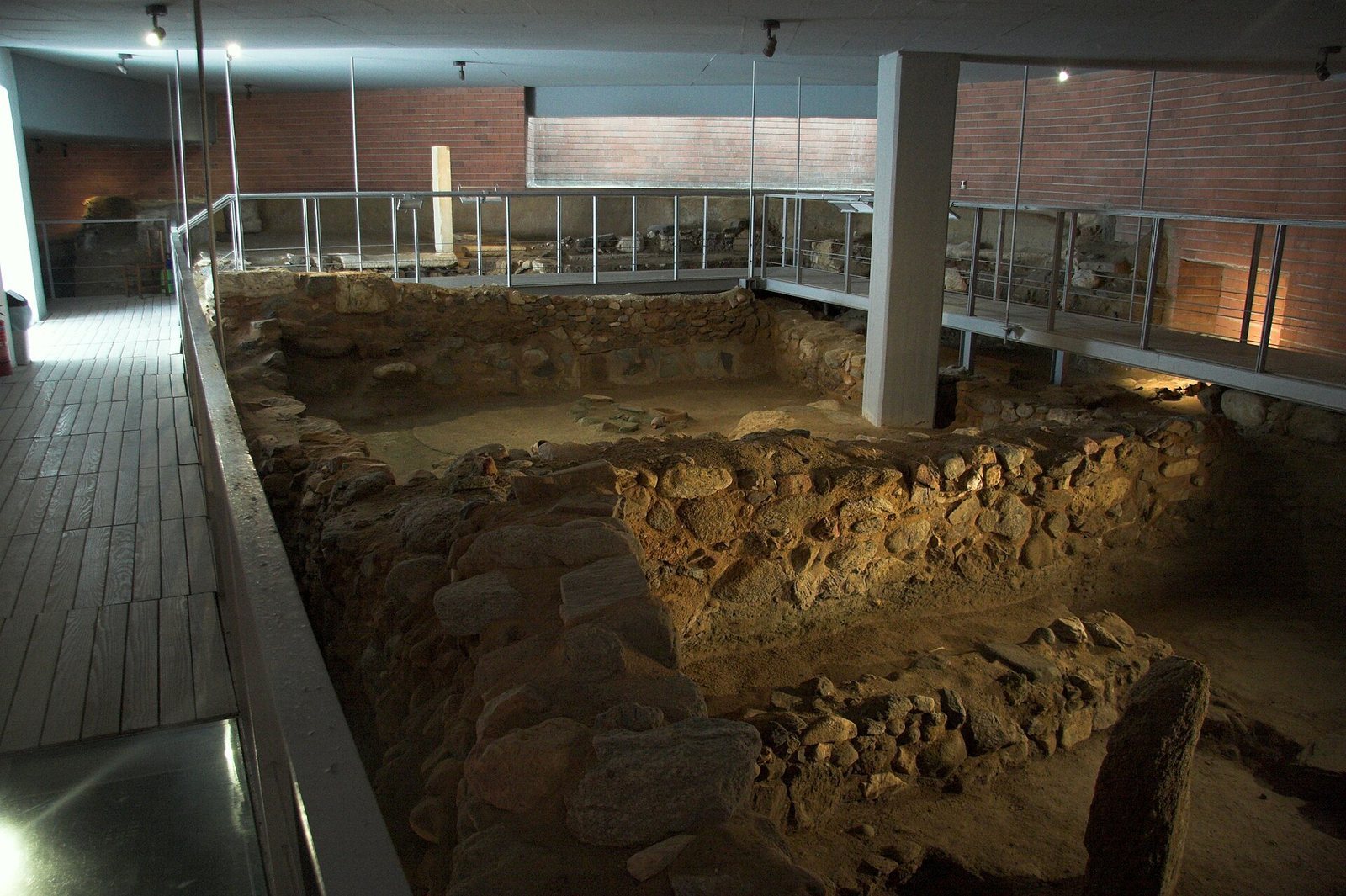
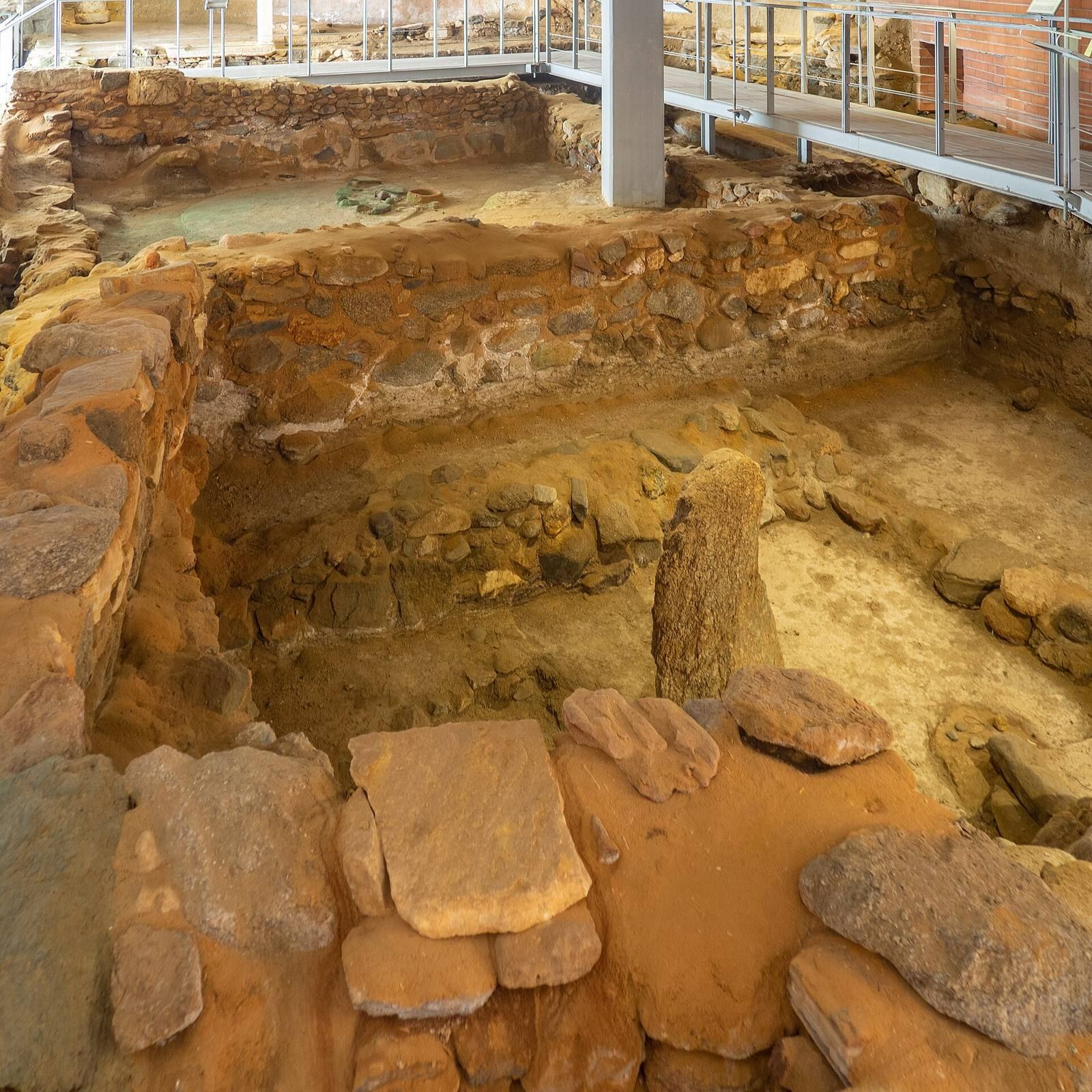
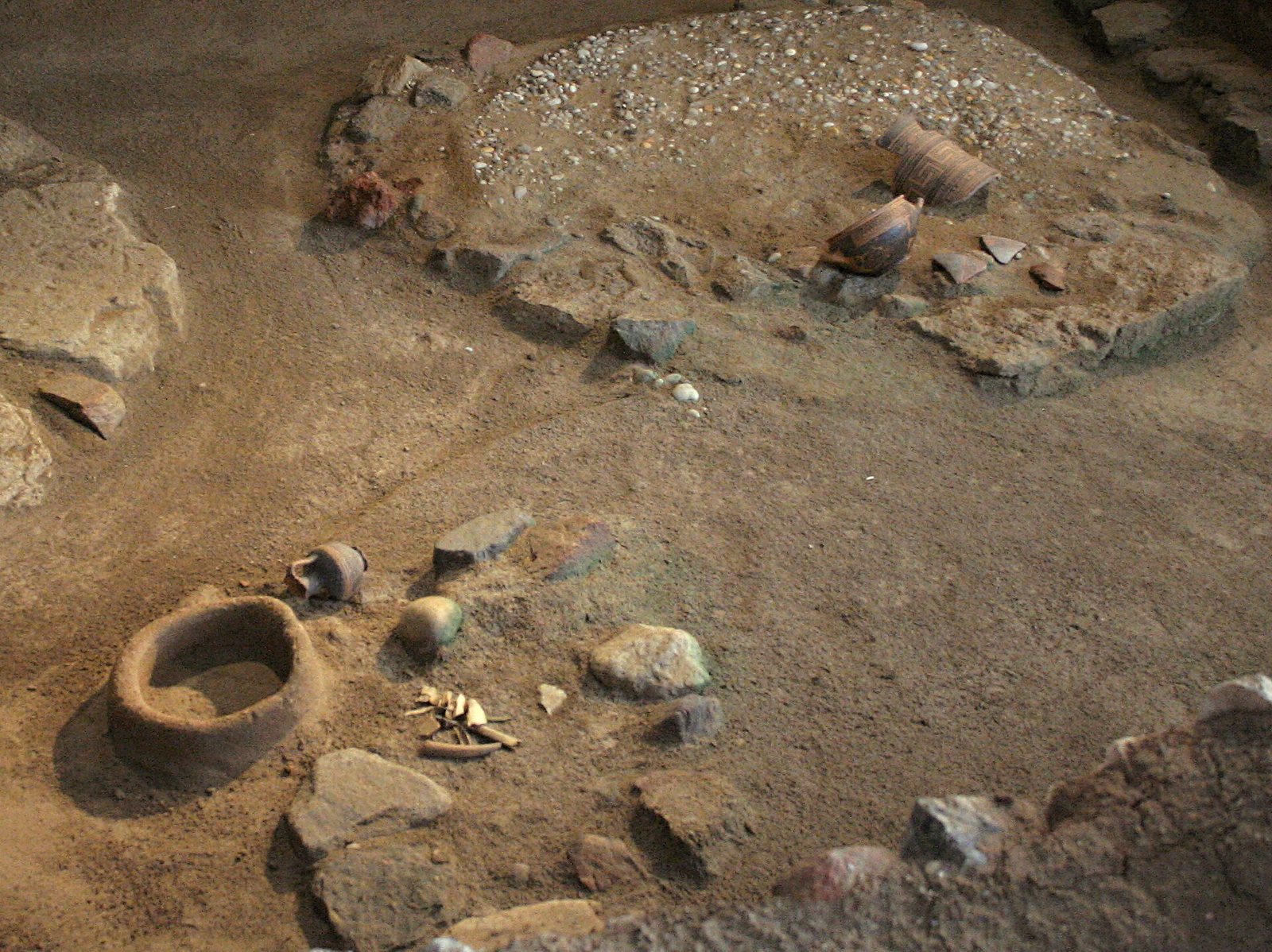
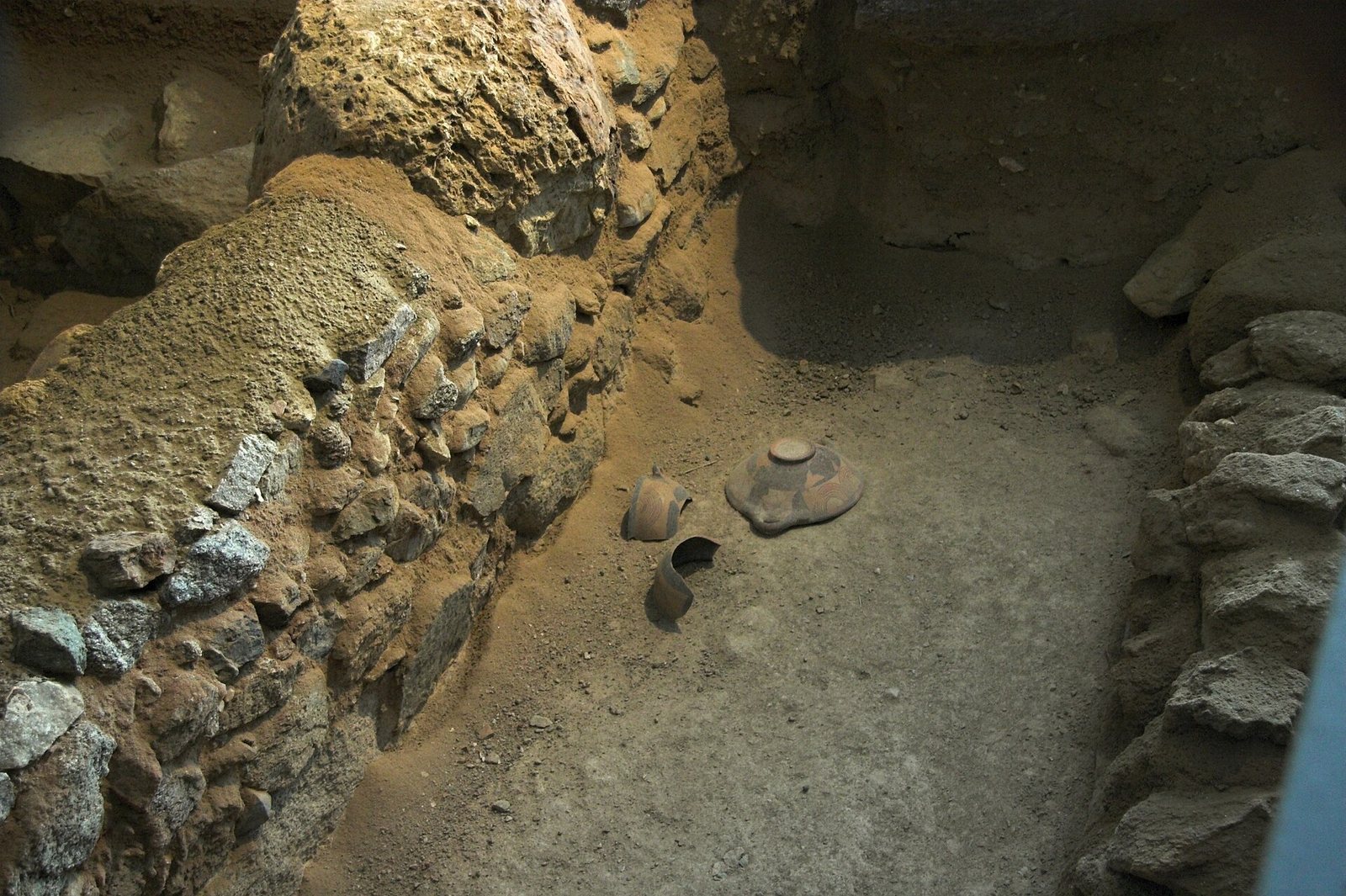
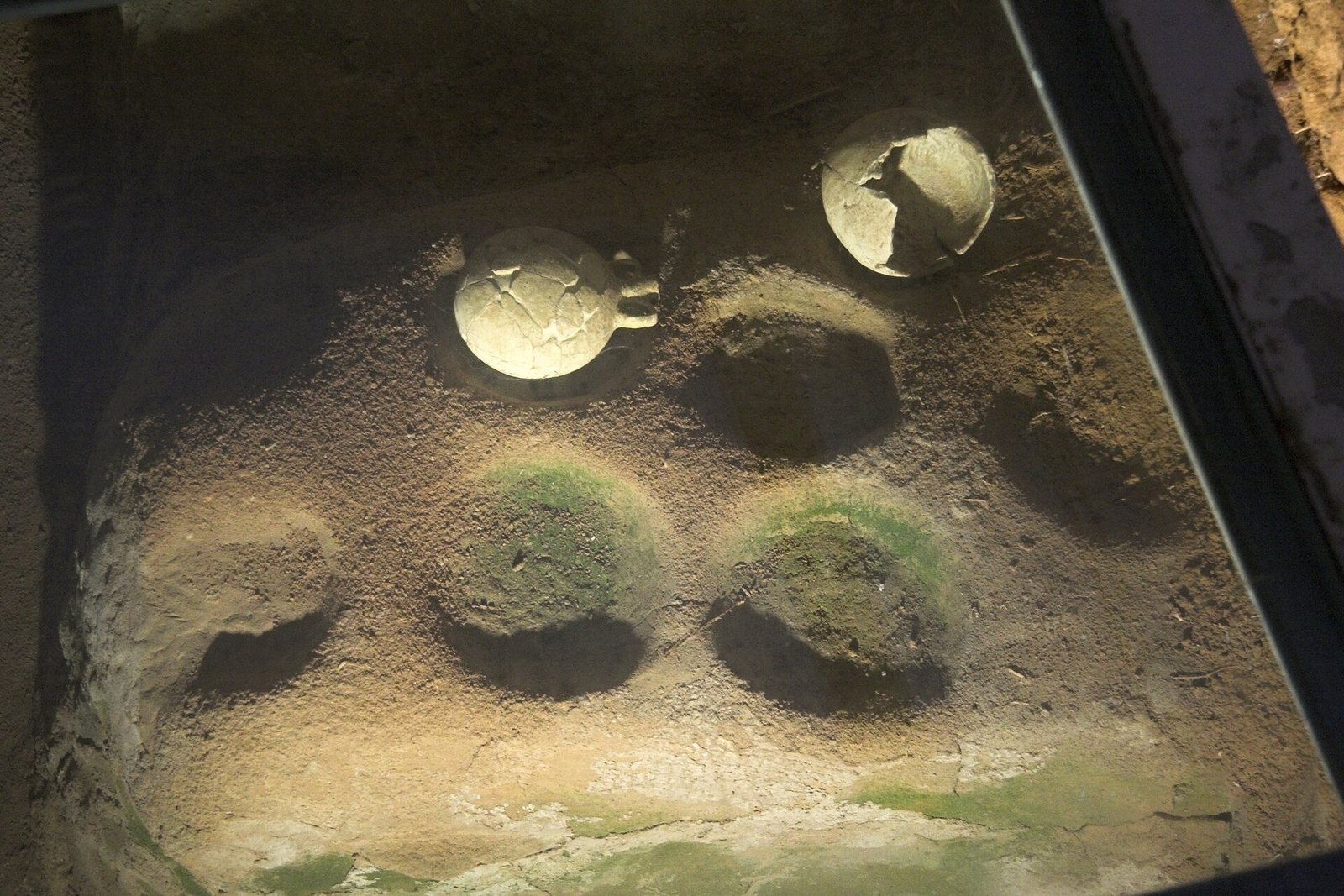
The museum stands at a site that extends on and beneath the church square. Its three levels correspond to archaeological layers spanning from the Mycenaean period, around 1300 BCE, to the Geometric period, around 700 BCE. The settlement remains include walls and pottery from the Mycenaean period, Geometric pottery, and ruins dated to the Late Mycenaean period, approximately 1250–1100 BCE.
Late Bronze Age features included port installations, distinct residential and burial areas, and defensive installations. Rectangular buildings were constructed during Late Helladic IIIA.
Cemeteries
Aplomata
Three chamber tombs, burial chambers cut into rock, were found at Aplomata. Their grave goods included abundant pottery, gold jewelry and rosettes, bronze weapons, gold rings, bead necklaces, a cylinder seal, a silver vase, and fragments of ivory, lead, and iron. Some gold foil showed lions. The rosettes may have decorated the tunics in which the dead were wrapped. Burnt earth and charcoal fragments on some bones may point to cremation.
Kamini
At Kamini, excavators found three rock-cut chamber tombs and another tomb that may have belonged to the same type. A child was buried separately in a pit with one side walled, and one tomb contained burnt animal remains. Finds included pottery, with four vessels decorated with dancing scenes; seals; bronze weapons; gold and silver rings and beads; semiprecious-stone beads; and an iron knife. Gold foil bore bull heads on some pieces and figures of children on others. Several long bronze fibulae, clothing pins, were also found. This type of pin was common on the Greek mainland at the end of the Bronze Age and beginning of the Iron Age.