Vladimirskaya Church: An Orthodox Church in Russia
Site at a Glance
- Popularity
- Low
- Country
- Russia
- Primary era
- Early Modern
- Eras represented
- Early Modern, Modern
- Civilizations
- Russian
- Site type
- Religious
- Remains
- Church
On this page15 sections
History
Origins and construction
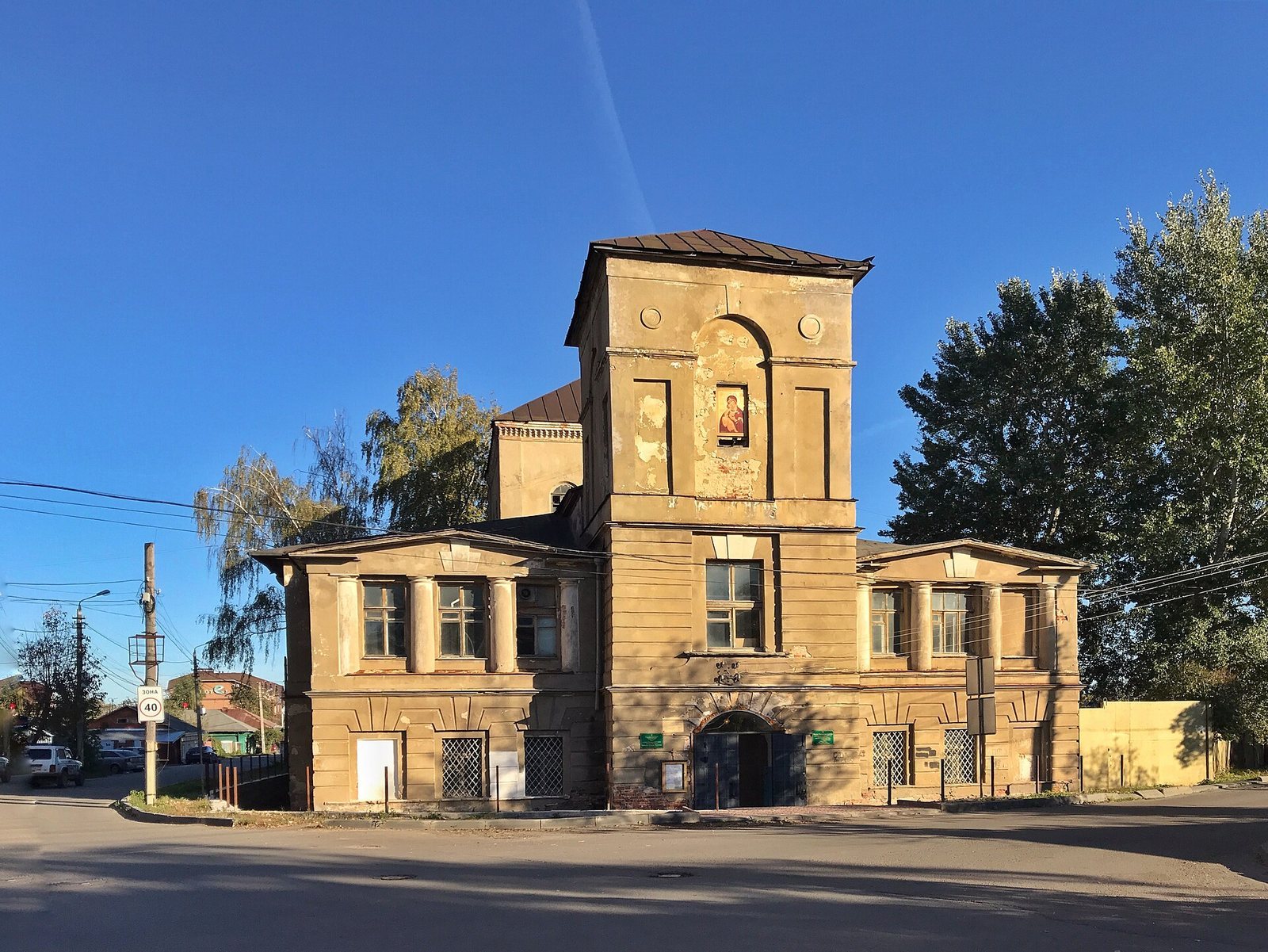
Vladimirskaya Church is an Orthodox church in Russia, historically associated with the Tula Eparchy, an Eastern Orthodox church district broadly comparable to a diocese. Its stone building was erected in 1705 for Nicholas of Myra, an early Christian bishop venerated as a saint. By 1712, a second storey had been added and dedicated to the Vladimir Icon of the Mother of God, a revered Orthodox image of Mary and the Christ Child.
A wooden church may have stood on the site around 1600, outside Tula’s earthen rampart. It was dismantled in the early eighteenth century before construction of the stone church. Simeon Yakovlevich Gubin and the Paltsov, Druzhinin, Ksenofontov, and Sabinin families provided major contributions. The church appeared under several names, including St Nicholas Behind the Earthen Rampart and the church in Paltsev Settlement.
Chapels, flood damage, and the bell tower
A chapel for Nil Stolobensky, a Russian Orthodox monk and hermit, was added to the lower church in 1770. It was shifted from the left side to the right in 1826, while a chapel for Archdeacon Stephen, venerated as Christianity’s first martyr, was established on the left in 1835. The upper church gained a chapel for the martyrs Quiricus and Julitta in 1831, followed by one for Mitrofan of Voronezh, a Russian Orthodox bishop and saint, in 1832. Merchant M. I. Fedurkin arranged the latter.
On 1 April 1800, floodwater entered the lower church and displaced the altar table in Nil Stolobensky’s chapel, among other damage. Later floods caused no comparable consequences. A stone bell tower was erected in 1833 with contributions from Ivan and Alexander Tatarinov. Although Tula’s rampart had disappeared by the end of the eighteenth century, the church continued to be called St Nicholas Behind the Rampart in the mid-nineteenth century, distinguishing it from other Tula churches dedicated to Nicholas.
Charity and parish life
From 1851 to 1856, churchwarden Evfimiy Neglinsky supervised construction of a two-storey stone almshouse and a two-storey stone wing, replacing an almshouse known since 1782. An almshouse provided accommodation for people in need. The institution initially served poor people without shelter and housed 20 men and women. In 1862 it was designated as especially suitable for poor members of the clergy. A parish school opened at the church in 1895.
Maps of Tula identified the street by the church as Vladimirskaya in 1891 and Nikolozavalskaya in 1908. It was renamed Voikova Street in 1927. The church itself was also known as Nikolozavalskaya, among other names.
Closure, archive, and return to worship
The church was sealed in February 1923 and formally closed by a provincial committee resolution dated 19 February 1924. The authorities cited the building’s unsafe condition, including the risk of its spire collapsing, and the lack of services since it had been sealed. The resolution also ordered the removal of objects considered to have artistic or historical value. A later proposal to dismantle the church was abandoned after documents from dissolved institutions were stored inside.
The Tula regional archive occupied the building from 1926. State protection as a regional monument of history and culture followed in 1991. The church was returned to worshippers in September 2014, and restoration work followed. On 9 June 2022, the Tula Eparchy opened the Chamber of Antiquities museum there. It continues a Tula provincial museum founded by local historian and antiquities curator Nikolai Troitsky, which operated until 1917. The present collection grew through parishioners’ donations and focuses on the eparchy and Orthodox Christianity in the Tula region.
Remains
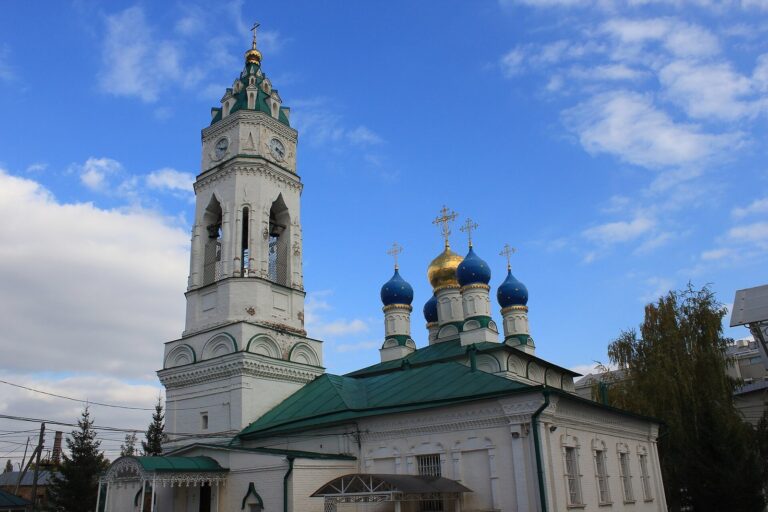
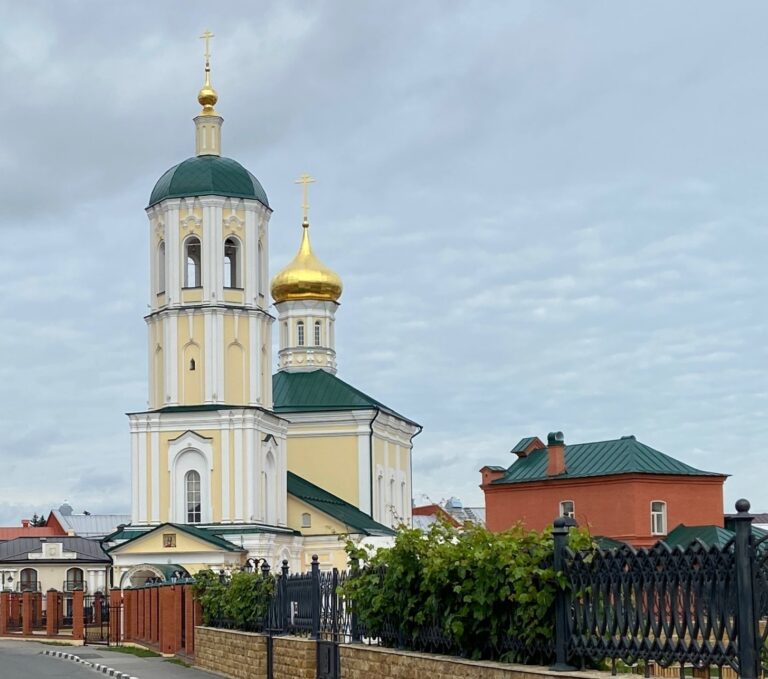
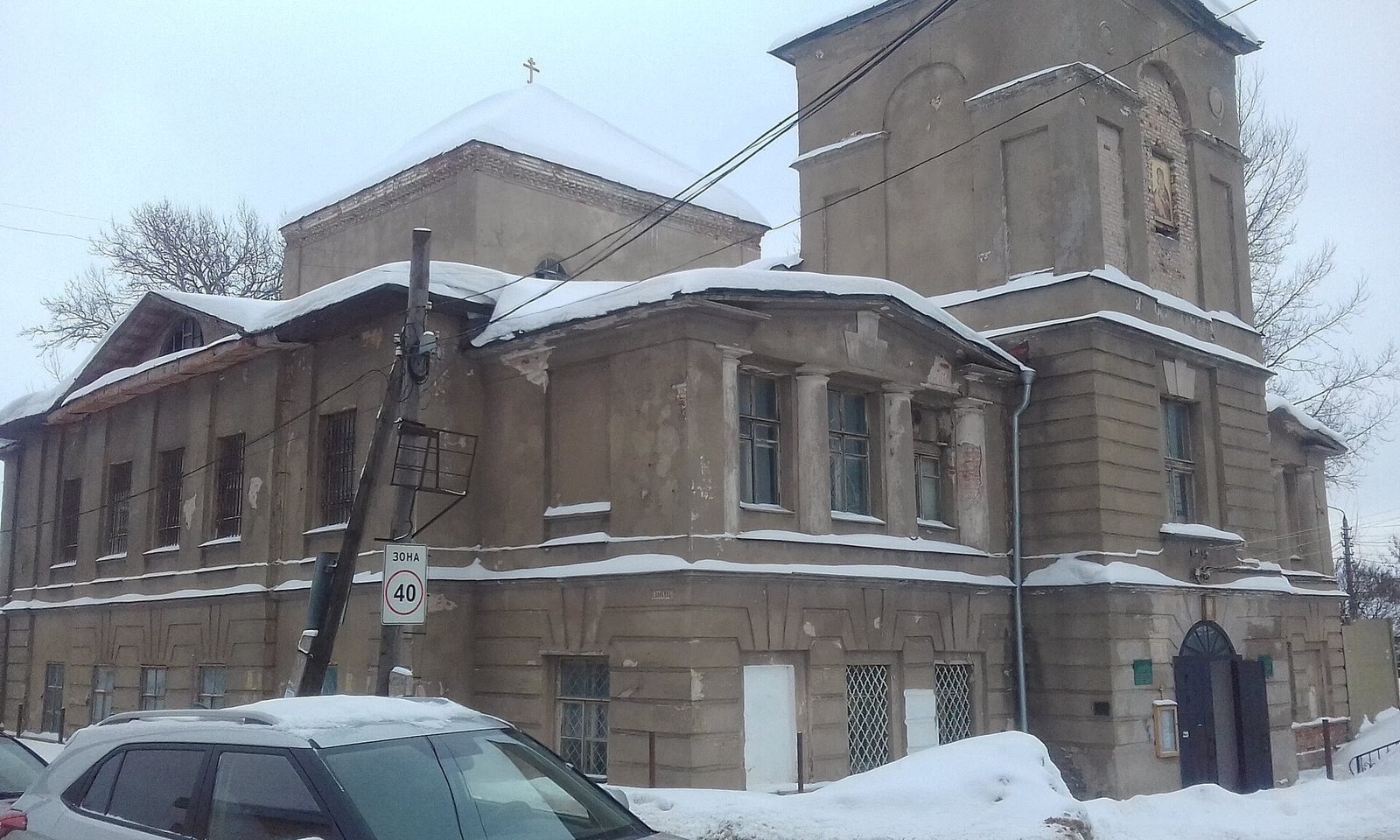
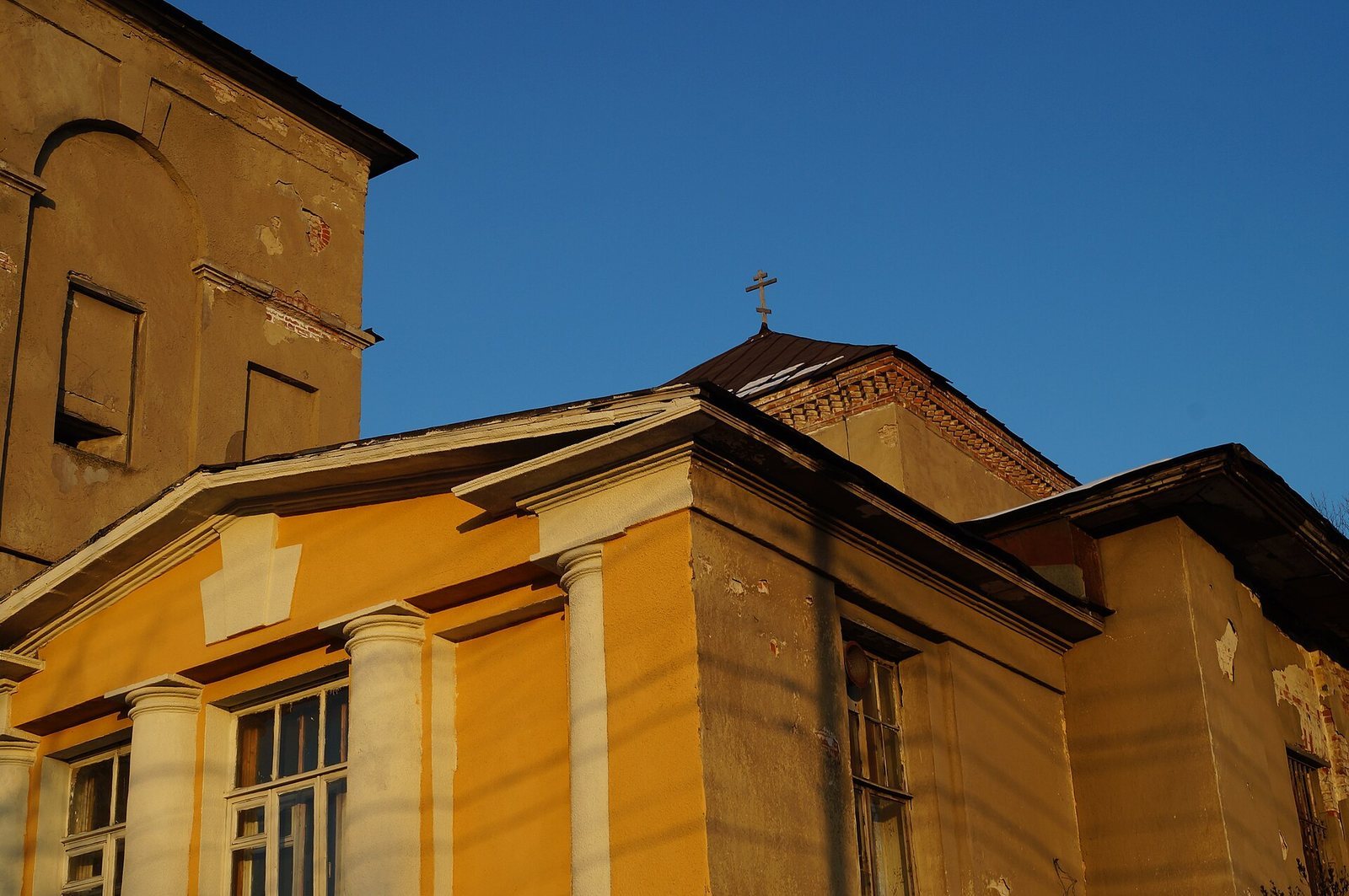
The church is a two-storey stone building, with separate lower and upper worship spaces. Its associated features include chapels, a stone bell tower, and buildings that served charitable and parish purposes.
Church and interior
Two-storey church
The lower church was heated, while the upper church was unheated. Their arrangement reflects the building’s division into two worship spaces.
Chapels
The lower church has a chapel for Nil Stolobensky on the right and one for Archdeacon Stephen on the left. In the upper church, the chapel for Quiricus and Julitta is on the right; the chapel for Mitrofan of Voronezh is also located on this level.
Icons and relic
The Vladimir Icon and other images in the iconostasis, the screen of icons separating the sanctuary from the main church, were copied from icons in the Dormition Cathedral of the Moscow Kremlin and other ancient Moscow images. A special icon case in Mitrofan’s chapel held a fragment of the saint’s incorrupt omophorion, a ceremonial vestment worn by an Orthodox bishop. The fragment had been found with his relics.
Bell tower
The stone bell tower had seven bells. The largest weighed 100 poods, a traditional Russian unit of weight, and had been cast in Moscow in 1794.
Associated buildings and setting
Almshouse and wing
The church’s associated charitable buildings comprised a two-storey stone house and a two-storey stone wing. The house’s lower floor was used for the almshouse; its upper floor and the wing were rented, with the income supporting the church and its residents.
Former rampart
The line of Tula’s former earthen rampart ran approximately along the odd-numbered side of present-day Sovetskaya Street.
Museum collection
The Chamber of Antiquities at the church displays church art, religious literature, liturgical vessels, and clerical vestments.