Santa Maria della Matina: A Benedictine and Cistercian Abbey in Italy
Site at a Glance
- Popularity
- Medium
- Country
- Italy
- Primary era
- Medieval
- Eras represented
- Medieval
- Civilizations
- Unclassified
- Site type
- Religious
- Remains
- Monastery
On this page9 sections
History
Foundation and Benedictine abbey
Santa Maria della Matina is a medieval monastery near San Marco Argentano in Italy, founded around 1065 by the Norman ruler Robert Guiscard and his wife Sichelgaita as a Benedictine house. A later date, 1066, was given by Gregorio de Laude, who had seen the monastery’s now-lost foundation papers.
On 31 March, the church was dedicated to Santa Maria in a ceremony led by Arnulf, archbishop of Cosenza, with Odo of Rapolla and Lawrence of Malvito. Robert, Sichelgaita, and Abelard, the monastery’s first abbot, attended. The founders endowed the abbey generously, including with land formerly within the Diocese of Malvito, a church district administered by a bishop. Malvito’s bishop received 30 gold schifani, a type of currency, in compensation. Papal and royal privileges helped the abbey become wealthy and influential.
Pope Alexander II placed the monastery under direct papal authority. Its name appears in early versions of the Liber censuum, a papal register of church revenues and rights; one version was associated with Cencio, a senior papal official who served as chamberlain. Pope Urban II visited on 18 November 1092.
William of Blois became abbot in 1167 and had resigned by 1169. By the late twelfth century, the monastery was in serious decline. King Tancred of Sicily proposed moving Joachim of Fiore’s religious community from Fiore to Matina, but Joachim refused while the abbey was already declining.
Cistercian affiliation
Matina formally became a Cistercian monastery in October 1221, at the request of the abbot of Sambucina and with papal and local church approval. The Cistercians were a reform movement within Benedictine monasticism. Emperor Frederick II approved the arrangement in February 1222, and the pope confirmed it that June. Claims that the change had occurred in 1179 or 1180 conflict with this chronology.
In 1235, the abbot of Casamari asked the Cistercian general chapter, the order’s central assembly of abbots, for permission to send monks to Sambucina for three months each summer because of the climate. In 1660, Gregorio de Laude described Matina as a daughter house, or affiliated monastery, of Casamari.
Commendation, suppression, and later use
From 1410, the monastery was commonly granted in commendam, a system assigning its revenues or administration to a holder outside its ordinary monastic leadership. This practice was associated with further decline. Matina joined the Cistercian Congregation of Calabria and Basilicata, a regional grouping of monasteries, in 1633. Pope Innocent X suppressed the monastery in 1652, although the commendatory arrangement continued until feudalism was abolished in 1809.
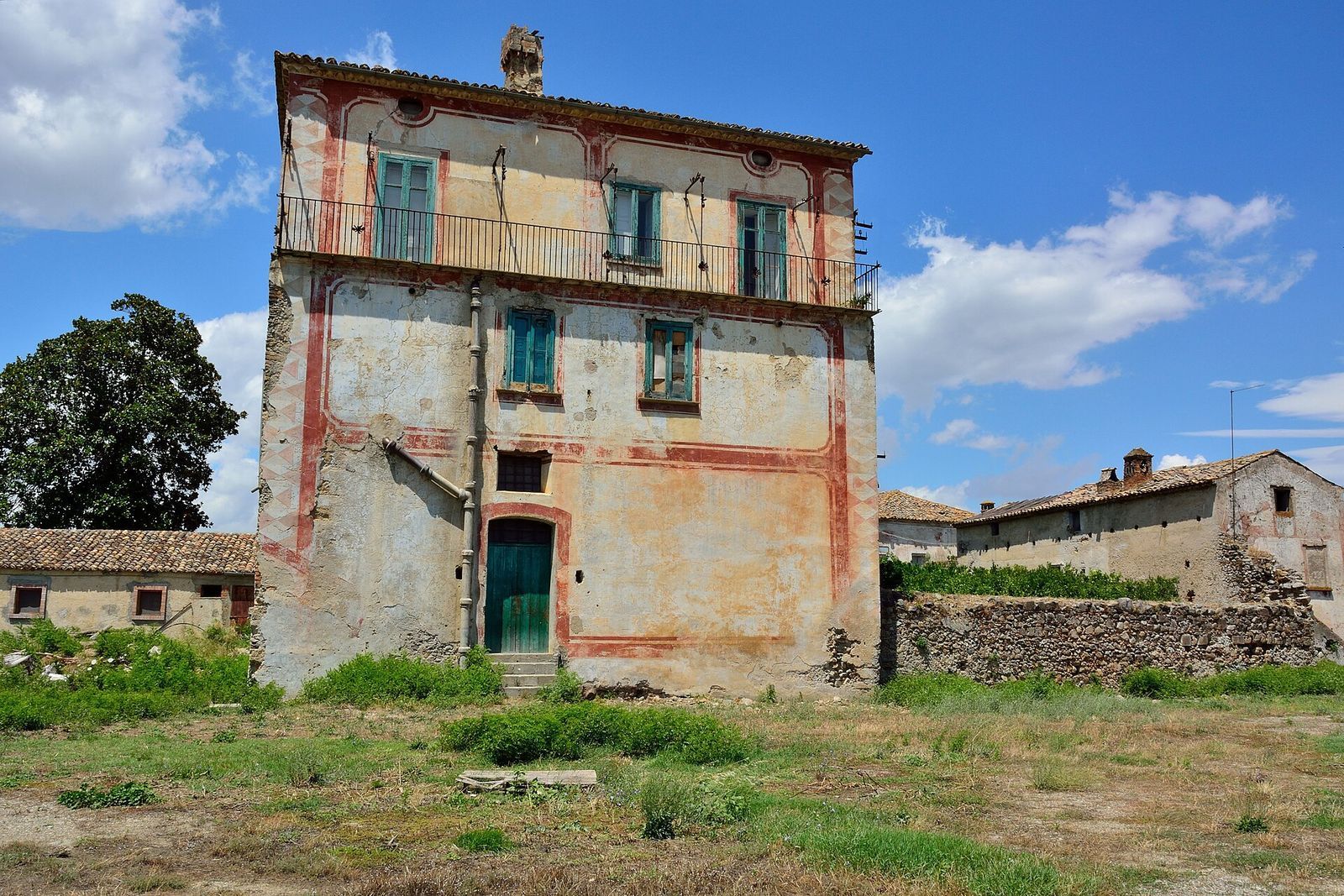
After 1809, the property became state-owned and was later granted to General Luigi Valentoni, who turned it into a farm. It subsequently passed to his descendants and is now an agricultural estate known as La Matina.
Remains
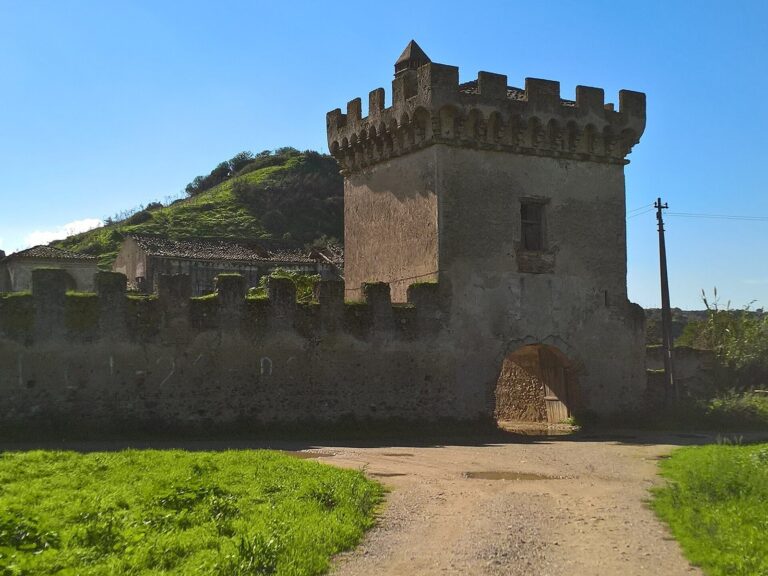
The abbey stood about four kilometres northeast of San Marco Argentano, beside the Fullone stream, whose waters flow through the Crati River to the Ionian Sea. Its surviving remains include traces of the Gothic church and parts of the thirteenth-century monastic buildings.
Church
The Cistercians built the church in the Gothic style. Only ruins or traces of it remain.
Monastic buildings
Parlour, scriptorium, and staircase
Most of the abbey buildings dated to the thirteenth century and were still intact in the seventeenth century. The better-preserved parts include the monastic parlour, the scriptorium, a room for writing and copying texts, and a staircase leading to the upper floors.
Chapter house chapel
The former chapter house, the monastery’s meeting room, is now arranged as a chapel. It has three aisles, ribbed vaults whose stone ribs divide the ceiling into sections, and clustered Gothic columns. The vaults and columns recall those of Casamari Abbey.