Farmakokefalo: A Classical–Hellenistic Settlement in Crete
Site at a Glance
- Popularity
- Very Low
- Country
- Greece
- Primary era
- Classical
- Eras represented
- Classical, Modern
- Civilizations
- Ancient Greek, Ottoman
- Site type
- City
On this page12 sections
History
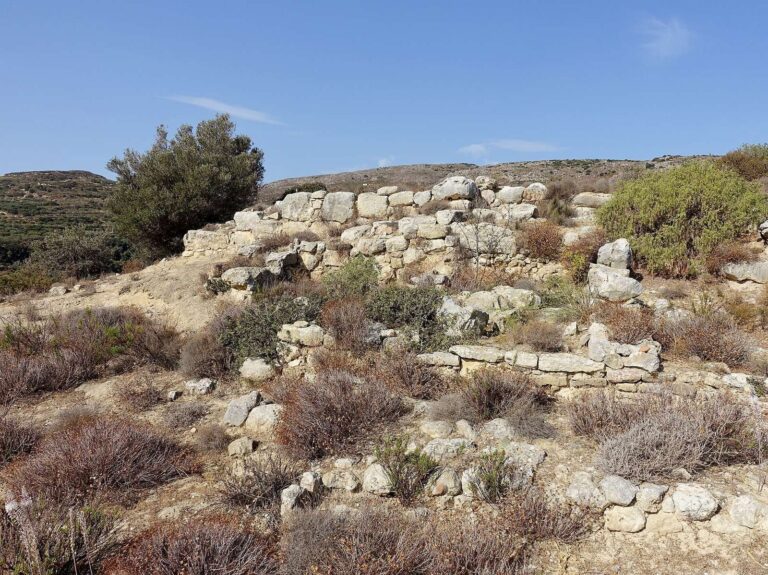
Farmakokefalo is an ancient Greek settlement on a coastal plateau in eastern Crete, Greece. Its principal urban phase belongs to the Classical and Hellenistic periods, successive phases of ancient Mediterranean history, when it developed as a city with links to other Cretan communities.
Ancient identity and regional connections
The settlement’s ancient name has not been established. Robert Pashley and Thomas Spratt identified it as Ampelos, a town mentioned by the ancient writers Pliny and Ptolemy. That identification gained wide acceptance, but archaeologist Nikos Papadakis questioned it because geographical descriptions are unclear and local inscriptions do not settle the matter. Norbert Schlager proposed Stalai instead. The proposal is supported by the lack of Classical–Hellenistic settlement remains at Makry Gialos, where Stalai had previously been placed, although investigation at both locations has been limited.
Ampelos is understood to have been a port of Praisos. Inscriptions connect Praisos with Stalai and Sitia during the Hellenistic period, including relationships of dependence. The history of Farmakokefalo’s relationship with nearby Kastri is also uncertain. Schlager proposed that the community moved from a fortified position on Kastri to Farmakokefalo by the Hellenistic period. Nadia Coutsinas instead suggested that the two sites may have been used at the same time, with Kastri serving as a refuge and Farmakokefalo supporting maritime communication and economic activity.
Finds indicate activity at Farmakokefalo during the Roman period, though the settlement’s condition and character at that time are unclear. Coastal salt production and nearby quarries have been cited, along with the settlement’s defenses and possible stronghold, in interpretations of Farmakokefalo as prosperous and oriented toward the wider coast.
Investigation and interpretation
British travelers Pashley and Spratt identified the ancient remains in the nineteenth century. In 1896, archaeologist Arthur Evans visited nearby Kastri and noted a tower there. Other researchers examined the area or gathered archaeological material during the nineteenth and early twentieth centuries.
In 1963, archaeologist Nikolaos Platon carried out a small investigation at Farmakokefalo during research around Zakros and assigned the remains to the Classical Greek period. Systematic excavations led by Papadakis in the 1980s exposed parts of the settlement and established its importance as a Classical–Hellenistic city. Buildings A and B were uncovered in 1984, and excavators exposed the western side of the enclosure in 1986. In the late 1980s, a survey led by Schlager connected Kastri with the settlement. An earthquake on 12 October 2021 severely damaged the chapel of Saint Nicholas.
Remains
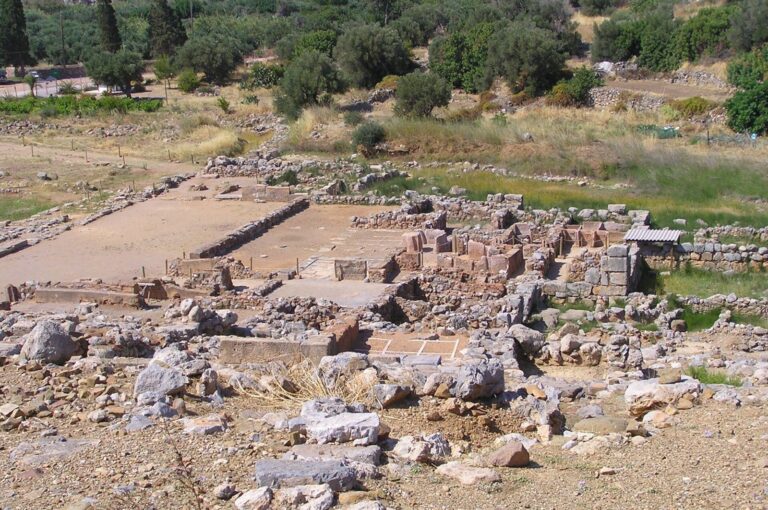
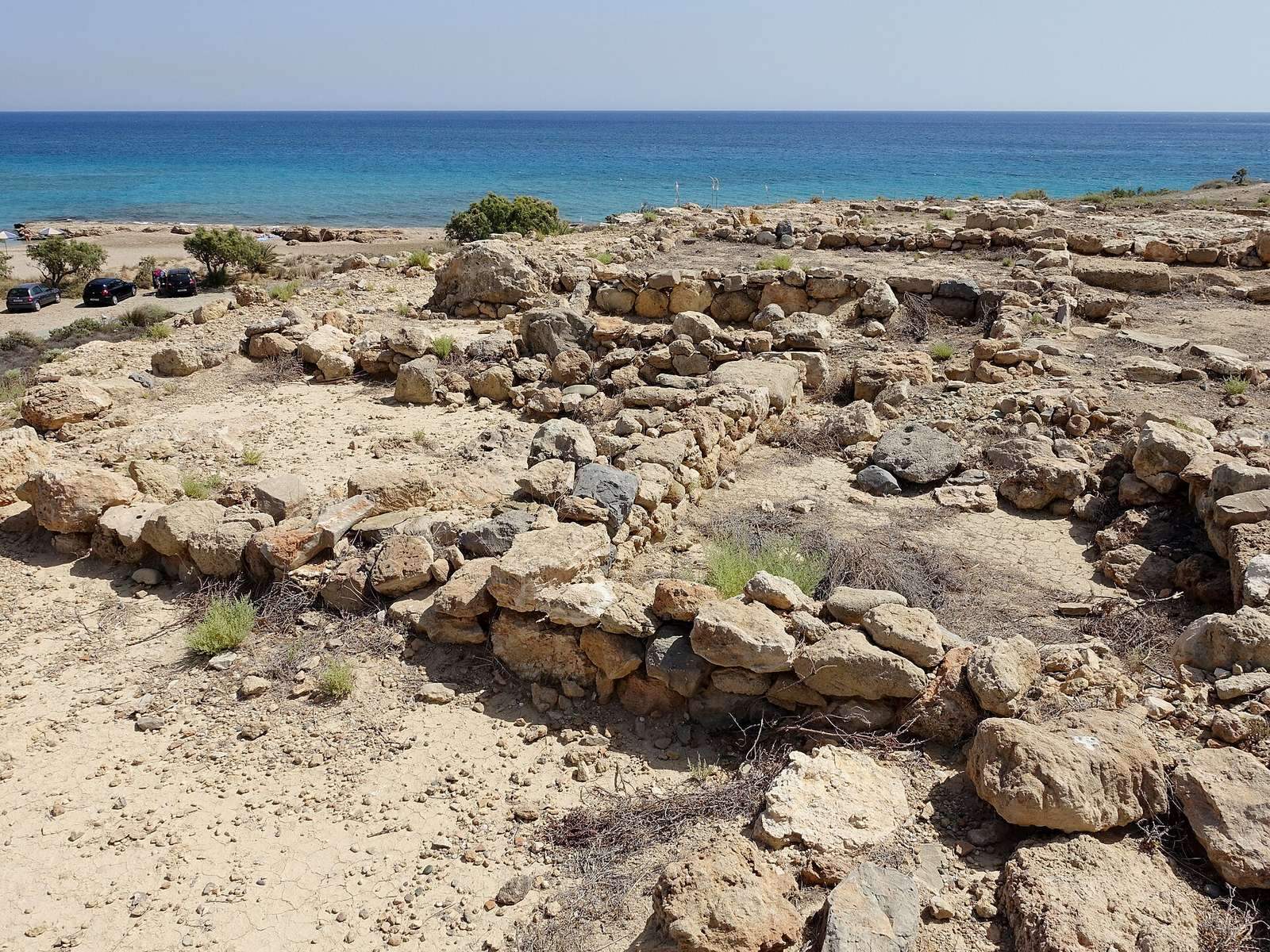
The settlement occupies the northern part of an ancient site on a coastal plateau atop Farmakokefalo hill, which rises about 15 metres. The hill lies roughly 300–350 metres northeast of Cape Trachilas. The chapel stands on the plateau’s western side, with settlement remains to the northeast. Psili Ammos inlet lies west of the cape, between it and Kastri, and the Kavaloi islets are offshore opposite the cape.
The settlement plateau
Enclosure
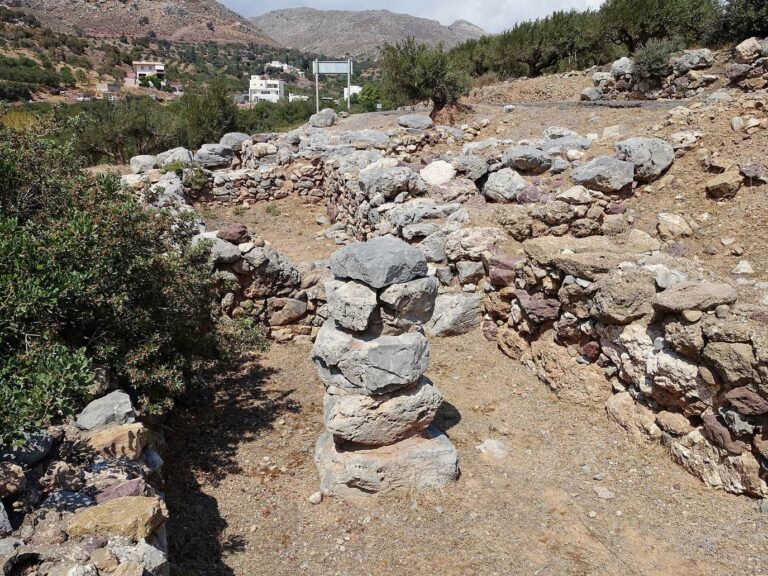
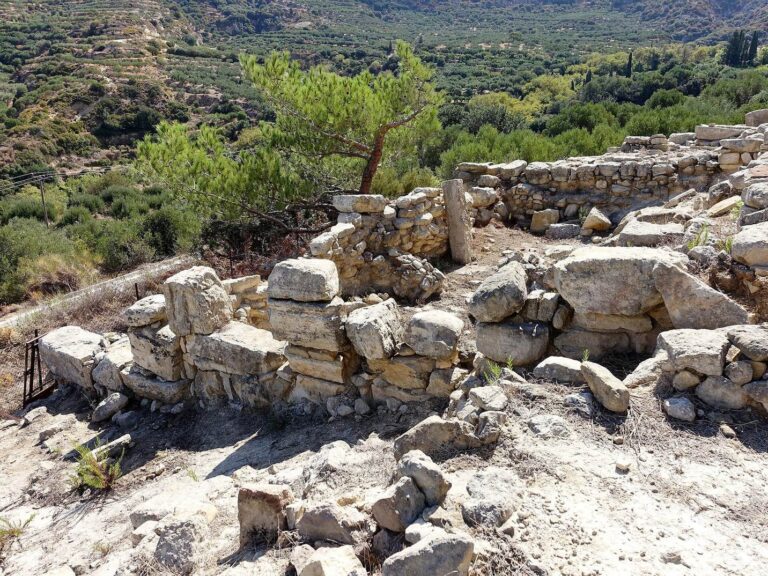
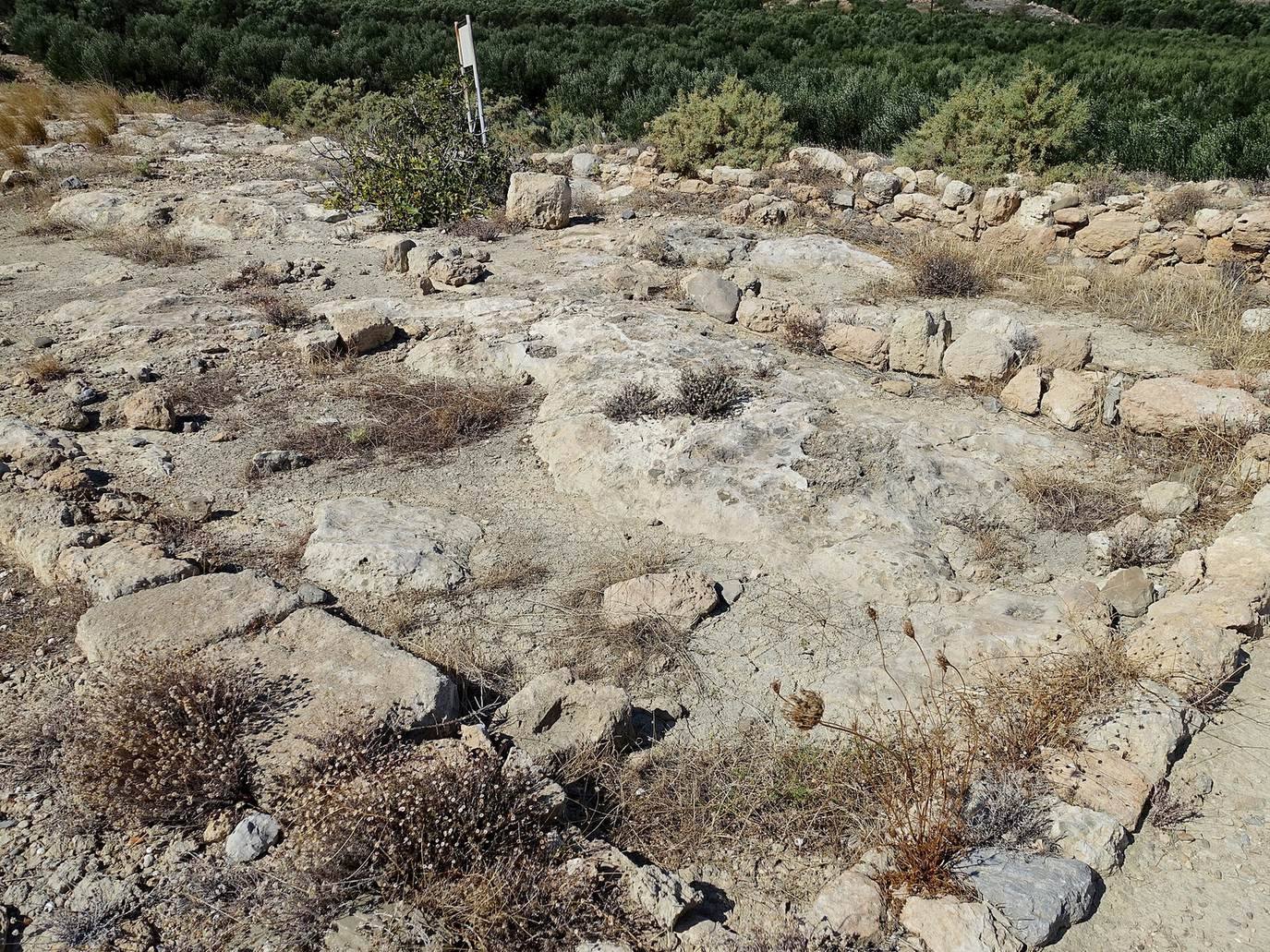
A wall enclosed an irregular area of about 12,000 square metres. It was 2–2.5 metres thick and built from small stones set in mortar; cut poros, a stone used in Greek building, was probably used at the corners and door jambs. The wall dates no earlier than the fifth century BC. Its north side measured 157 metres, while the traced west side extends for 79 metres. A 22-metre stretch survives on the east. Landslides have affected the southern side, where wall remains were visible in the past. Most surviving sections rise only to ground level, although the western side reaches about a metre.
Buildings A and B
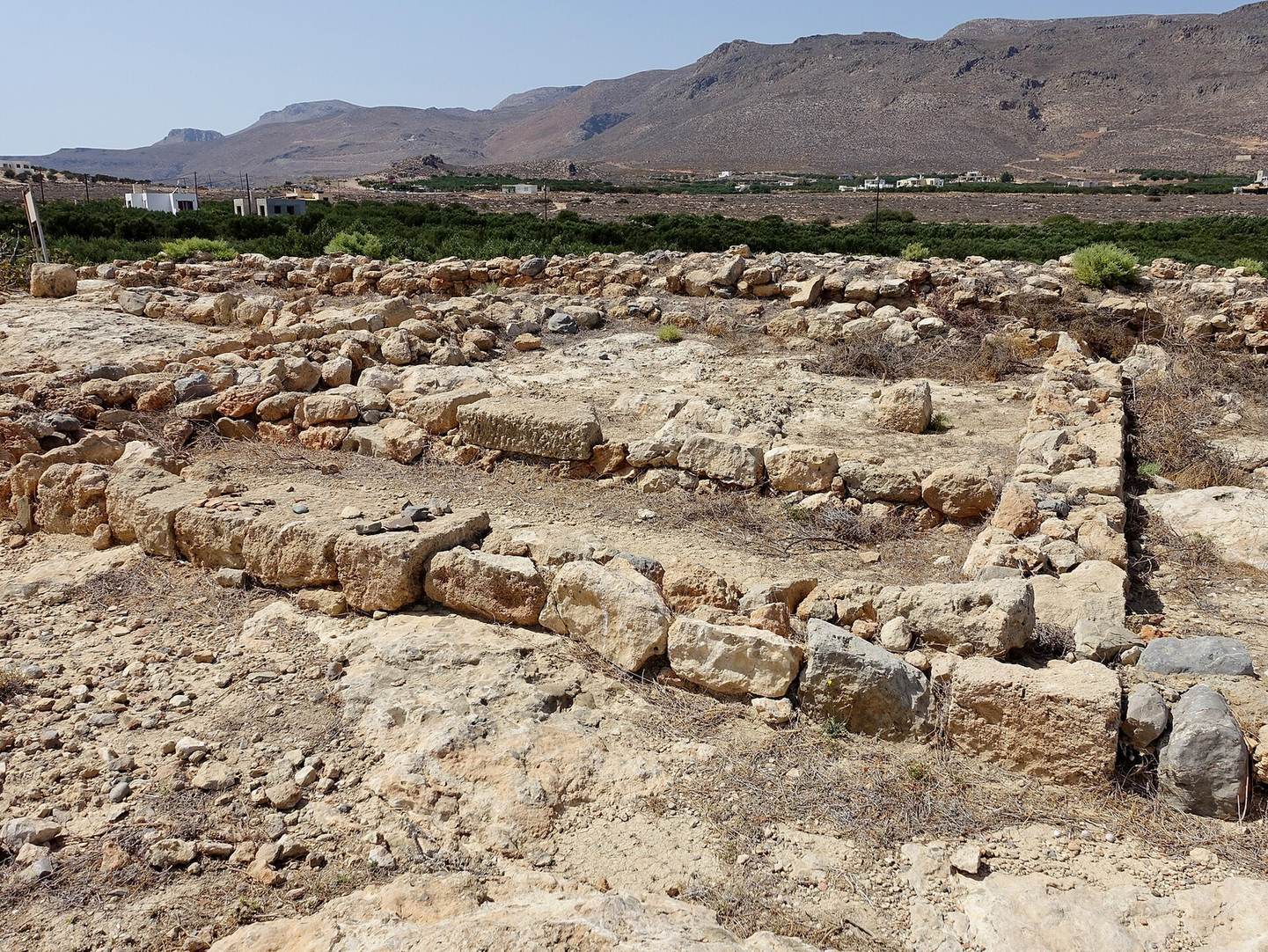
Buildings A and B stand near the enclosure in the northeastern corner of the plateau. Each has a vestibule and a main room, with a poros-stone threshold set midway along the cross-wall at the entrance. Building B’s main room abuts the enclosure on its north side. A further group of buildings lies south of A and B. The layout of the two excavated buildings has been interpreted as indicating religious use.
Chapel of Saint Nicholas
The chapel, built in 1895, occupies the western part of the plateau. A Classical–Hellenistic temple has been proposed in its vicinity. The earthquake of 2021 severely damaged the chapel.
Finds
Finds from the settlement include pottery, clay and stone vessels and tools, figurines, metal-object fragments, loom weights, and stamped amphora handles. Some date to the fifth century BC, while most belong to the fourth through first centuries BC; Roman-period pottery is also present. Objects associated with Building B include a bronze disc decorated with openwork bands, rosettes, interlace, and lotus flowers, as well as loom weights, a seated female figurine from the mid-fifth century BC, and a Hellenistic lamp. Other finds include a Rhodian silver hemidrachm, a coin worth half a drachm, bronze coins of Chios and Hierapytna, and a Rhodian amphora. Excavated finds are displayed at the Archaeological Museum of Sitia.
Kastri and coastal installations
Kastri
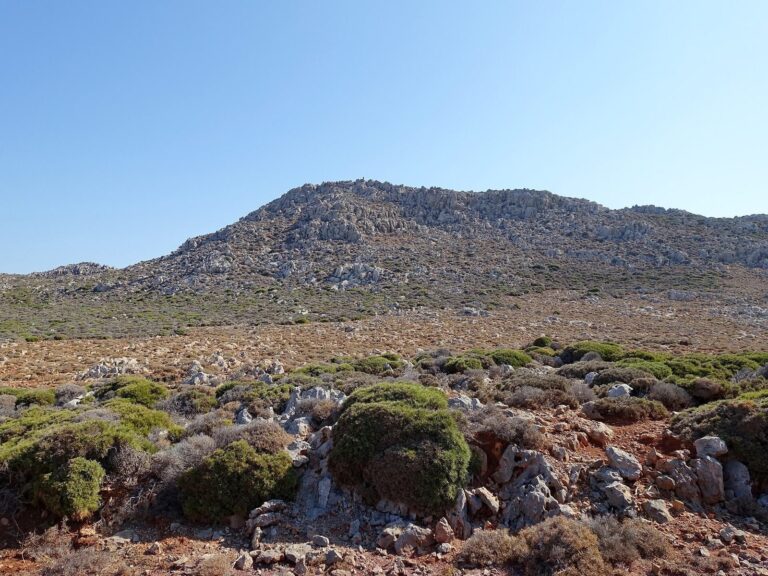
Kastri rises about 70 metres and forms a natural stronghold accessible only from the north. Tower remains have been observed on the hill, and a wall may have been built there during the Hellenistic period. Archaeological remains indicate habitation from the Neolithic, the period before the Bronze Age, through the Early Minoan period, an early phase of Bronze Age Crete. Pottery also points to renewed occupation in the Archaic period and especially during the Classical and Hellenistic periods.
Coastal salt-working installations
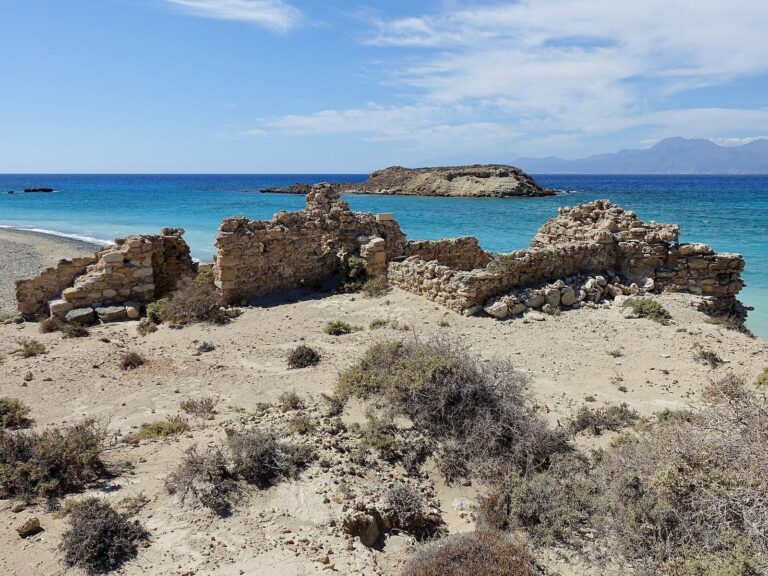
Salt-working installations stood on the coast near the settlement. They have been assigned to Greco-Roman times, but their precise date remains unresolved.