Church of Our Lady of Częstochowa in Świeszewo: A Roman Catholic Parish Church
Site at a Glance
- Popularity
- Very Low
- Country
- Poland
- Primary era
- Early Modern
- Eras represented
- Early Modern
- Civilizations
- Brandenburg-Prussia, Holy Roman Empire
- Site type
- Religious
- Remains
- Church
On this page8 sections
History
The Church of Our Lady of Częstochowa in Świeszewo is a Roman Catholic parish church in Poland, completed and put into use in 1696. The Steinwehr family financed its construction. The church is dedicated to Our Lady of Częstochowa, a title of the Virgin Mary associated with a widely venerated Polish image. Its liturgical memorial is observed on 26 November.
The building was remodelled in 1842. After the Second World War, it was consecrated as a Catholic church on 11 December 1945.
Remains
Exterior and tower
Church building
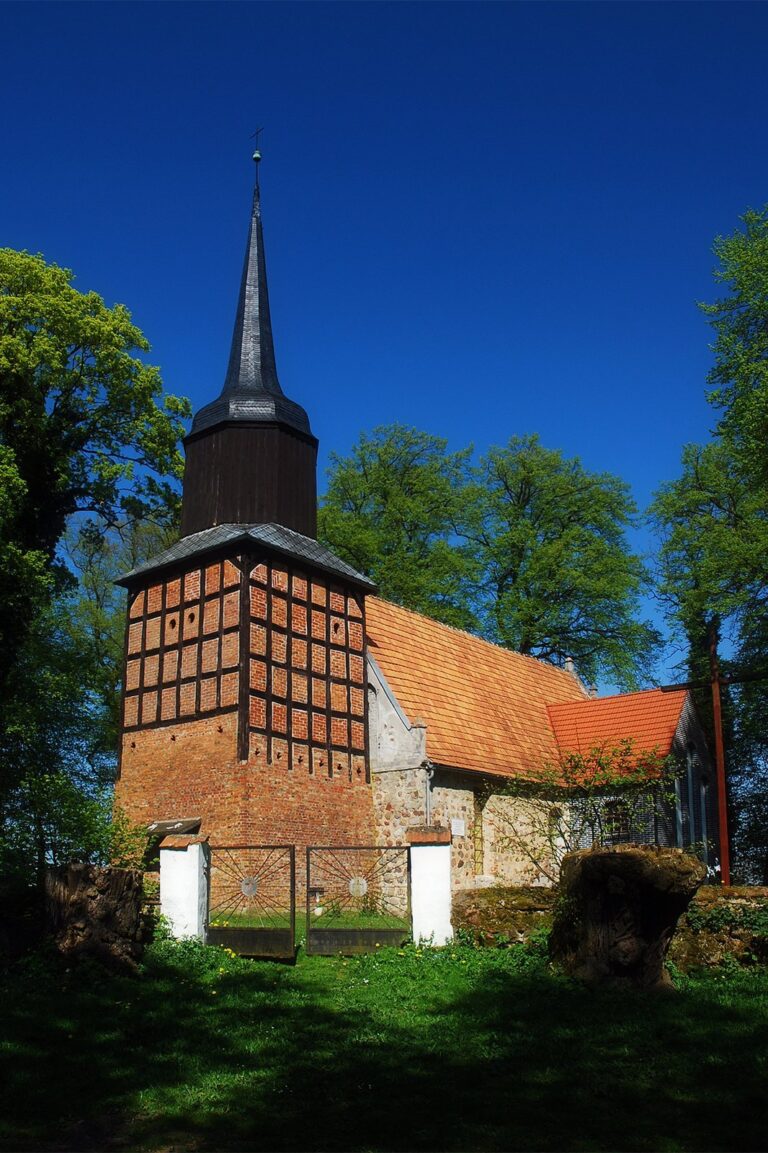
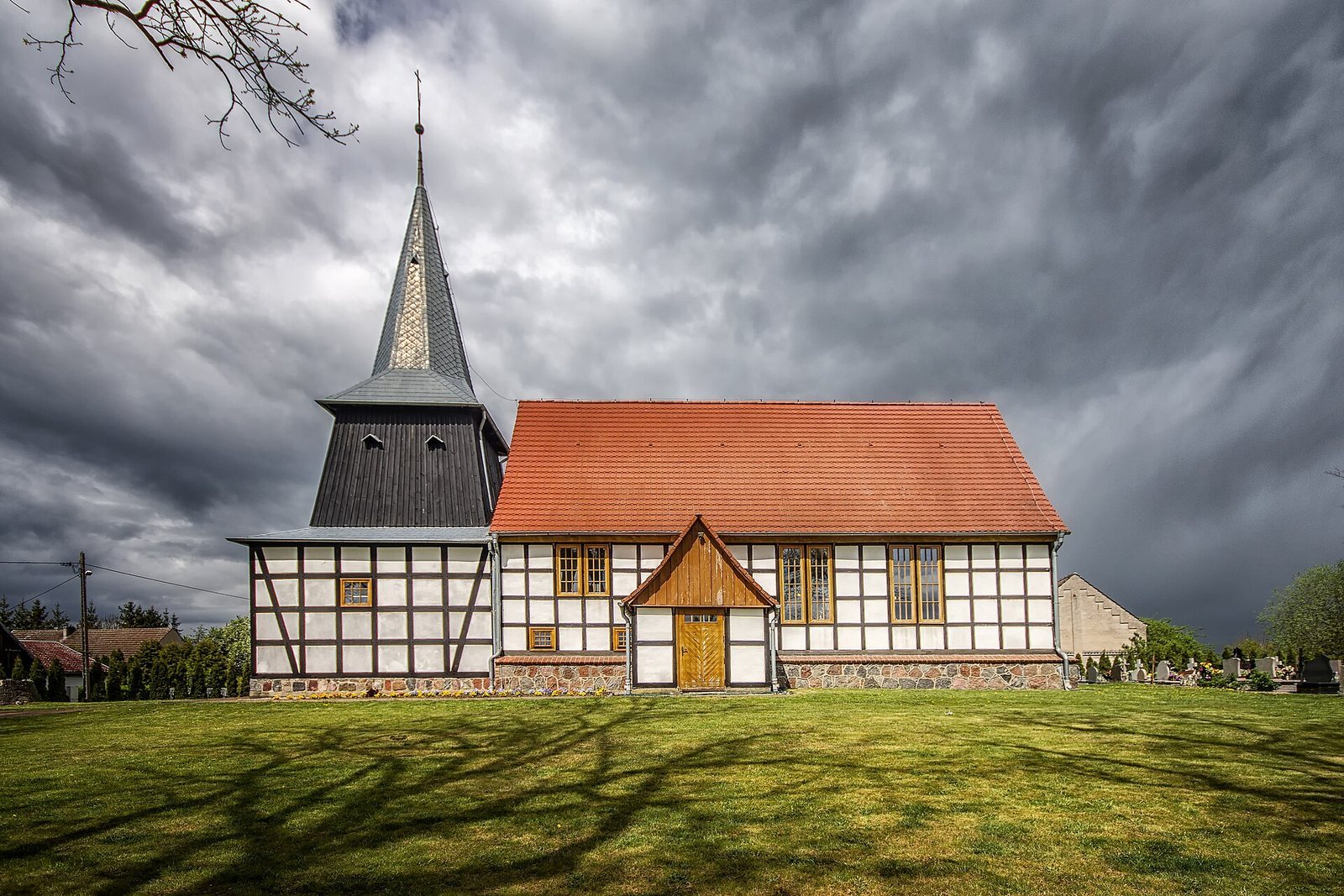
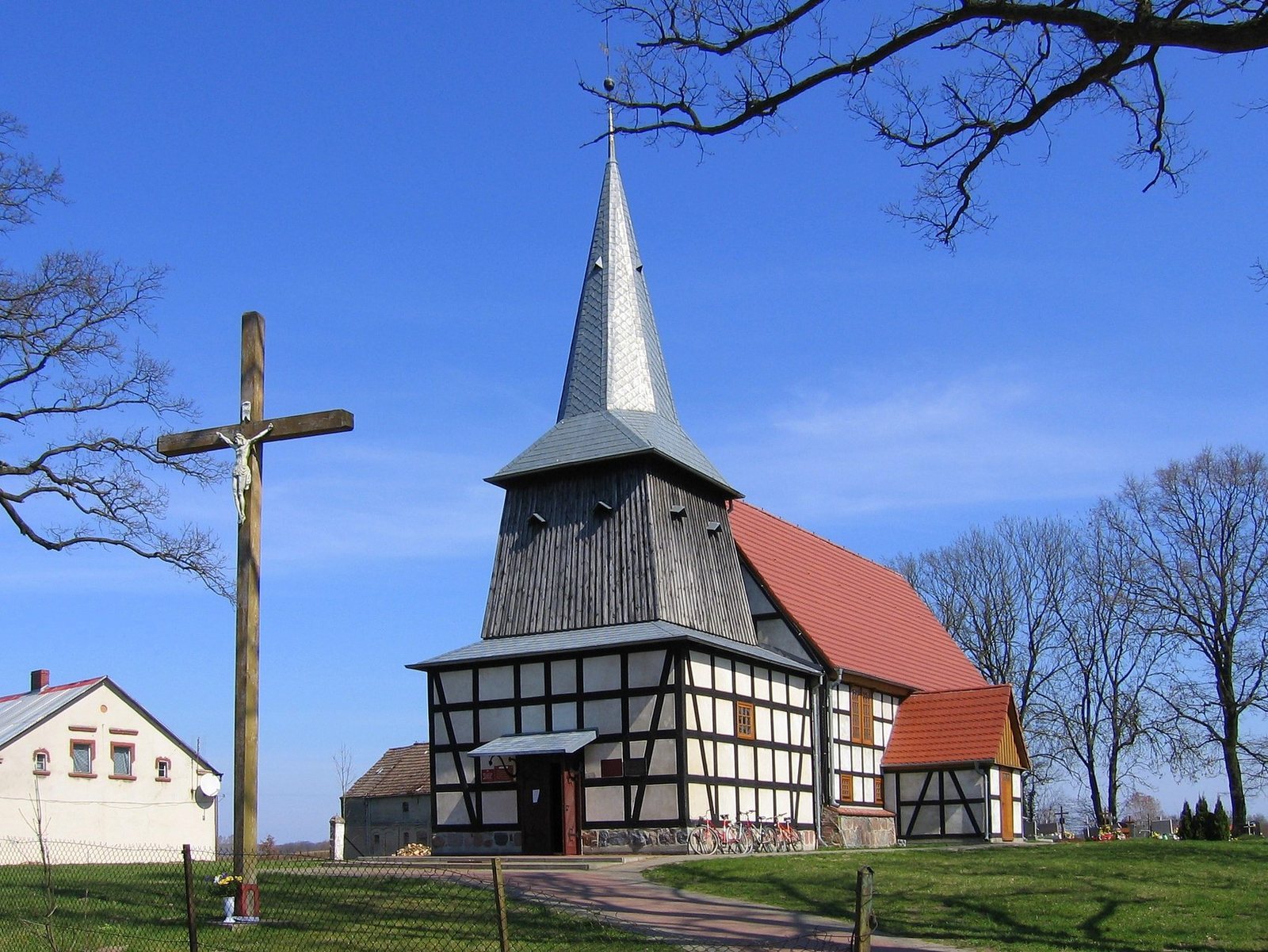
The church has a rectangular plan and a single, unified hall interior. Its timber frame forms the structure, with infill between the frame members. A gabled roof is covered with beaver-tail tiles, flat tiles with rounded lower ends.
Detached tower
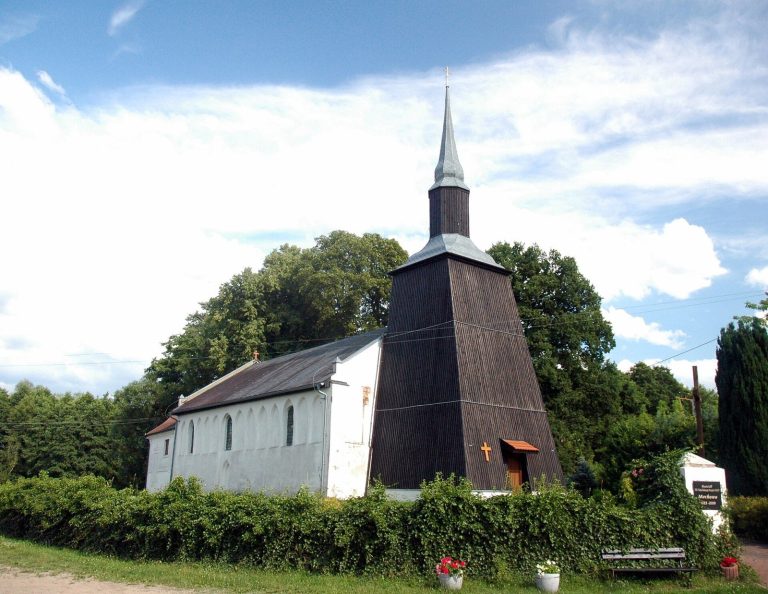
A separate, two-storey tower stands beside the church and is probably older than it. The upper storey is timber, clad in boards. An octagonal, pointed roof above it is covered with slate. Two bells dated 1937 hang in the tower.
Interior
Altar and pulpit
A wooden beamed ceiling spans the interior. The Baroque altar, in a style known for dramatic ornament and movement, is decorated with columns and figures of angels. It holds a copy of the image of Our Lady of Częstochowa. A late Baroque pulpit is fixed to the chancel’s north wall; it has a backboard, a decorated body and a sounding board, the canopy above the pulpit that helps project the speaker’s voice.
Choir gallery and organ
Above the entrance, a Classicist choir gallery rests on four pillars. Its balustrade has small columns and coats of arms, and its design draws on classical Greek and Roman forms. The gallery holds an organ with ten stops, which select groups of pipes, and an action dating to the mid-19th century, the mechanism linking the keys to the pipes.